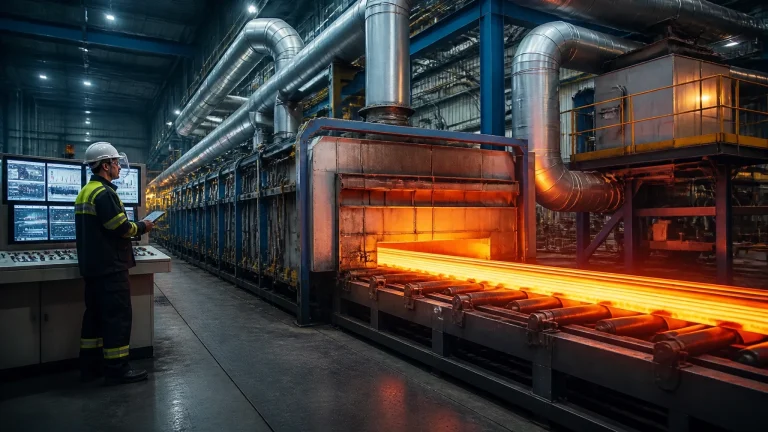
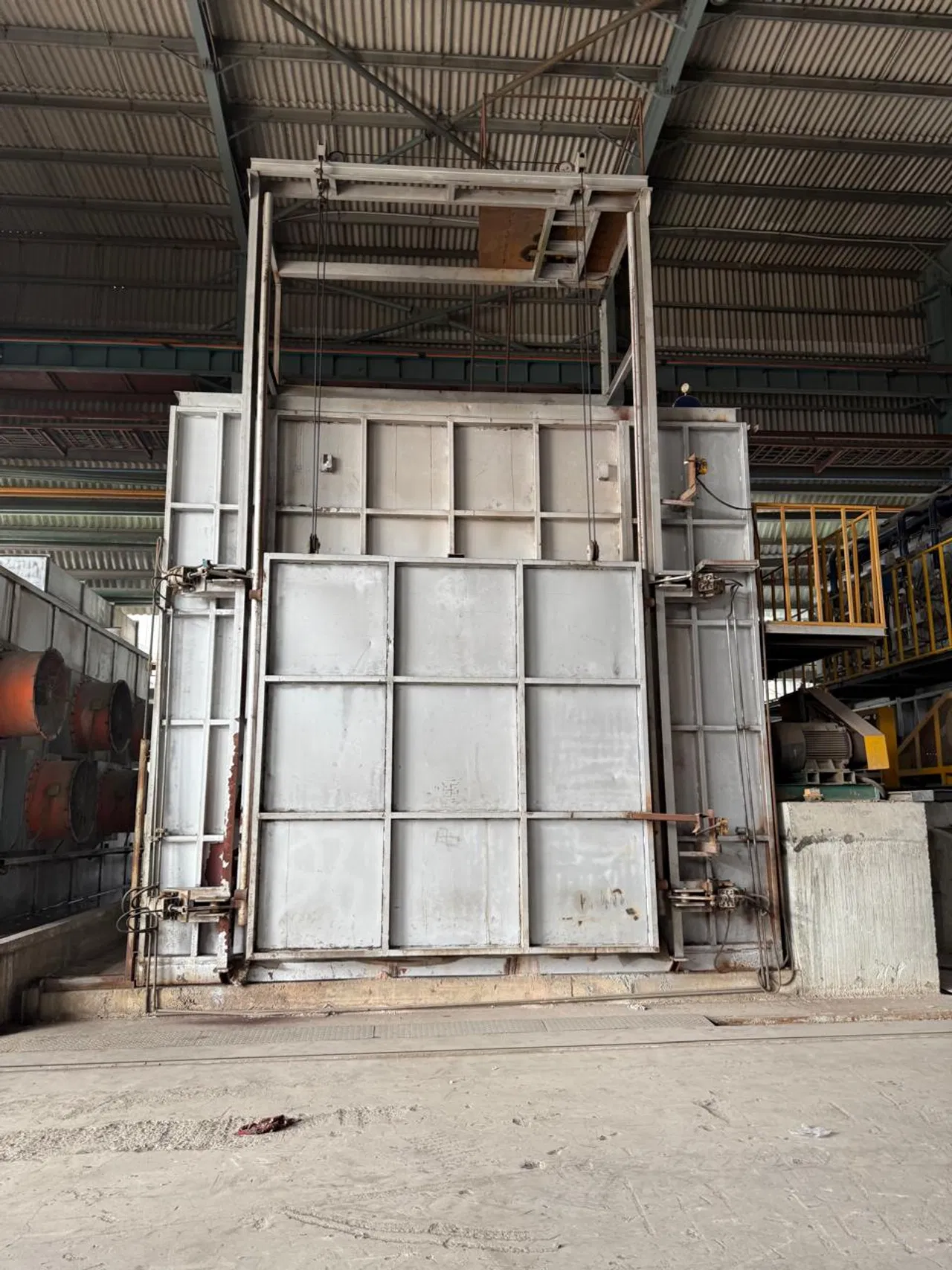
In the high-stakes world of industrial manufacturing, your heat treatment furnaces are not merely equipment; they are the heart of your metallurgical integrity. Whether you are operating a steel rolling mill, a high-capacity aluminum melting furnace, or a specialized hot dip galvanizing plant, the precision of your thermal cycles determines the yield, profitability, and safety of your entire operation.
With over 35 years of expertise as a leading industrial furnace manufacturer, Continental Furnaces has observed a recurring pattern: even the most sophisticated facilities often succumb to subtle maintenance oversights that lead to catastrophic downtime. In 2026, as Industry 4.0 and predictive diagnostics become the standard, clinging to "run-to-fail" mentalities is a strategic liability.
Below, we outline the seven critical maintenance mistakes currently eroding your ROI and provide the technical roadmap to rectify them.
1. Tolerating Thermocouple Drift and Calibration Lag
The most dangerous error in thermal processing equipment is the assumption that the temperature displayed on your PLC is the actual temperature inside the chamber. Thermocouples, particularly Type K and N, undergo metallurgical changes over time: a phenomenon known as "drift."
The Fix:
Implement a rigorous calibration schedule that aligns with CQI-9 or NADCAP standards. In 2026, we recommend a secondary "check" thermocouple for continuous verification. If your drift exceeds ±3°C, the probe must be replaced immediately. This is especially vital in the wire and cable industry, where precise annealing temperatures prevent brittle fractures.
2. Neglecting Refractory Integrity and Insulation Seepage
Refractory linings are the primary defense against energy loss. However, many operators ignore hairline cracks or "spalling" until hot spots appear on the furnace shell. Degraded insulation forces your melting furnace for steel to work 15-20% harder to maintain setpoints, skyrocketing your fuel consumption.

The Fix:
Conduct weekly visual inspections and monthly thermal imaging of the furnace exterior. Any exterior surface temperature exceeding 60°C above ambient (depending on the furnace type) indicates a compromise in the insulation. Utilize high-quality furnace spare parts, such as ceramic fiber modules with higher density ratings, to restore thermal efficiency.
3. Combustion Imbalance and Burner Misalignment
A furnace is only as efficient as its combustion system. We frequently see burners that are either "fuel-rich" (wasting gas and causing soot) or "lean" (causing oxidation and scale on the product). In a metal recycling furnace, poor combustion can lead to significant metal loss through excessive dross formation.
The Fix:
Quarterly combustion analysis is essential. Use digital manometers to check air-fuel ratios and ensure burners are firing squarely within their ports. Modern industrial furnace systems now utilize automated oxygen sensors in the flue to provide real-time adjustments, a "quantum leap" in fuel economy that often pays for itself within 12 months.
Comparison: Traditional vs. Modern Maintenance Benchmarks (2026)
| Metric | Traditional Method (Reactive) | 2026 Best Practice (Predictive) | Improvement |
|---|---|---|---|
| Downtime | 10–15% Annual | < 2% Annual | 80% Reduction |
| Energy Consumption | Variable/High | Optimized via AI | 12–18% Savings |
| Refractory Life | 3–5 Years | 7–10 Years (Monitored) | 100% Increase |
| Calibration Frequency | Annual | Continuous / Bi-monthly | Higher Yield |
4. Underestimating Door Seal and Gasket Decay
A leaky door seal is more than a safety hazard; it is an atmospheric disaster. For heat treatment furnaces performing carburizing or nitriding, a failed seal allows oxygen ingress, leading to decarburization and surface oxidation. This results in "scrap" that should have been "premium" output.
The Fix:
Replace compression gaskets at the first sign of hardening or fraying. For batch furnaces, ensure the pneumatic clamping pressure is uniform across all contact points. At Continental Furnaces, we engineer our seals to withstand 1,200°C+, but they still require proactive replacement to maintain a true "zero-leak" environment.
5. Reactive Rather Than Proactive Spare Parts Management
Waiting for a fan motor or a heating element to fail before ordering a replacement is a recipe for weeks of lost production. In the rolling mill industry, where every hour of downtime costs thousands of dollars, relying on "just-in-time" logistics for critical furnace spare parts is a high-risk gamble.

The Fix:
Maintain a strategic on-site inventory of high-wear items: thermocouples, igniters, flame sensors, and specific refractory shapes. Our Technical Insights division recommends a "criticality audit" to identify which parts have the longest lead times and the highest impact on operations.
6. Overlooking Mechanical Handling and Lubrication
The automated loading systems in a continuous-type heat treatment furnace are often the most neglected. Bearings operating near high-heat zones require specialized synthetic lubricants. Using standard grease leads to carbonization, which seizes the bearings and causes conveyor jams.
The Fix:
Adhere to a strict lubrication schedule using high-temperature, PFPE-based lubricants. Inspect drive chains and rollers for "elongation" or uneven wear. In a wire rod mill, mechanical synchronization is the difference between a smooth draw and a catastrophic line break.
7. Ignoring Digital "Early Warning" Data
Most modern furnaces generate a wealth of data through their PLC systems. A common mistake is using these panels only for start/stop operations, ignoring the trends in power draw, cycle times, and ramp-up speeds. A 5% increase in time-to-temperature is an essential early warning sign of element degradation or burner clogging.

The Fix:
Leverage the Product Highlights of 2026-era control systems. Enable data logging and set "deviation alarms" that trigger before a failure occurs. This shift toward Predictive Maintenance transforms your maintenance department from a "cost center" into a "value driver."
Phase-Based Roadmap to Maintenance Excellence
To ensure your facility achieves a sustained competitive advantage, we recommend the following professional transition plan:
- Phase 1: The Technical Audit (Weeks 1-2) – Conduct a full-system baseline study, including thermal imaging, combustion analysis, and atmosphere leak testing.
- Phase 2: Restoration (Weeks 3-6) – Replace all "drifting" sensors, failing seals, and compromised refractory. Standardize your spare parts inventory.
- Phase 3: Digital Integration (Weeks 7-12) – Implement cloud-based monitoring for real-time KPI tracking and predictive alerts.
- Phase 4: Workforce Training – Elevate your team's skills through our specialized Workforce Training programs to recognize early failure signatures.
Conclusion: Partnering for Performance
The complexity of modern thermal processing equipment demands more than a "fix-it" mentality; it requires a partnership with a seasoned authority. By avoiding these seven common mistakes, you not only extend the life of your assets but also guarantee the metallurgical precision your clients demand.
Continental Furnaces remains committed to engineering the world’s most efficient and durable furnace solutions. From zinc melting furnaces to massive steel rolling mill installations, our expertise is your greatest asset.
Ready to optimize your thermal efficiency?
Contact our engineering team today for a comprehensive facility audit and secure your competitive edge for the decade ahead.