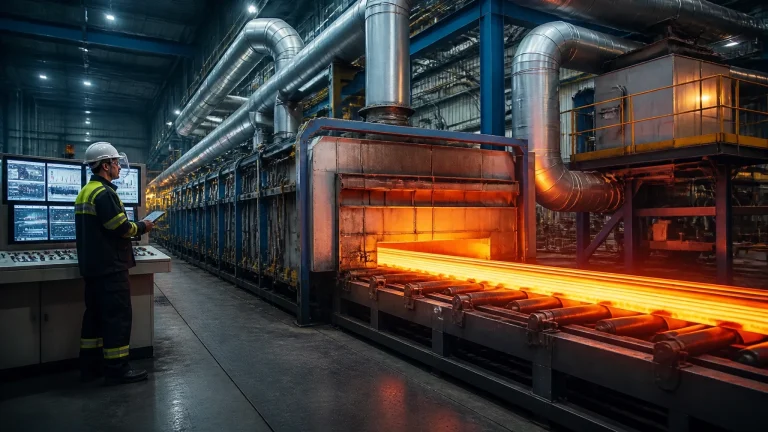
In the current landscape of global manufacturing, thermal processing is no longer just a utility, it is a critical lever for competitive advantage. For facilities operating an aluminum melting furnace, the margin between profitability and stagnation often resides in a few percentage points of thermal efficiency. As a leading industrial furnace manufacturer with over 35 years of tenure, Continental Furnaces has observed a fundamental shift: the transition from "running hot" to "running smart."
This guide serves as a technical roadmap for plant managers and executive leadership seeking to optimize their industrial furnace systems. Whether you are integrating a new metal recycling furnace or upgrading existing thermal processing equipment, the following data-driven insights will provide the empirical foundation required for a quantum leap in operational yield.
The Metrics of Success: Beyond the Thermometer
To manage efficiency, one must first master the metrics. We move beyond simple temperature readings to focus on Specific Energy Consumption (SEC), the gold standard for auditing furnace performance.
- Specific Energy Consumption (SEC): Calculated as the total energy input divided by the mass of metal processed. For a high-efficiency aluminum melting furnace, aim for 1,200–1,800 BTU/lb. Conventional systems often languish at 2,500 BTU/lb, representing a massive drain on operational capital.
- Thermal Efficiency: This is the fraction of total energy that actually enters the metal. While traditional reverberatory units may operate at a mere 15–39%, modern induction furnaces can achieve a staggering 65–85%.
- Melt Loss & Yield: Every percentage point of dross represents lost revenue. Advanced metal recycling furnace designs focus on minimizing surface oxidation to preserve high-value alloy integrity.
Technology Comparison: Selecting the Right Asset
Choosing the correct furnace architecture is the most significant capital decision your facility will make. The following table contrasts modern technologies against traditional benchmarks.
| Furnace Type | Thermal Efficiency | Energy Use (kWh/ton Al) | Primary Advantage |
|---|---|---|---|
| Induction Melting | 65–85% | 500–600 | Minimal melt loss; high precision |
| Advanced Tower Furnace | 40–55% | 700–900 | High throughput; excellent for scrap |
| Traditional Reverberatory | 15–30% | 1,000–1,400 | Lower initial CAPEX; high volume |
| Electric Resistance | 50–70% | Variable | Ideal for high-quality, small-batch holding |
For industries like wire and cable manufacturing or the steel rolling mill sector, the integration of specialized heat treatment furnaces alongside melting operations ensures a seamless thermal workflow that maximizes total plant ROI.

5 Strategic Pillars of Furnace Optimization
Sustained efficiency is rarely the result of a single upgrade; it is the outcome of a holistic engineering strategy.
1. Advanced Process Monitoring
Integrating an industrial furnace system with Industry 4.0 capabilities allows for real-time adjustments. Replacing manual door-opening checks with optical measurement systems can improve energy efficiency by up to 15% and reduce cycle times by approximately 20 minutes per batch. Continental Furnaces provides integrated PLC/SCADA solutions that transform your furnace into a data-generating asset.
2. Regenerative and Recuperative Burners
Waste heat is the primary enemy of efficiency. By implementing flue gas heat recovery, systems can reduce SEC significantly. Regenerative systems, in particular, offer an effectiveness of 60–75%, recycling exhaust heat to preheat combustion air, thereby slashing fuel consumption.
3. Precision Refractory and Insulation
The "skin" of your furnace dictates its heat retention. Modern high-performance refractories minimize shell losses. At Continental Furnaces, we emphasize custom-engineered insulation profiles that ensure the heat stays where it belongs: in the melt.
4. Load-Matched Firing Strategies
Operating at a constant high-fire state is an obsolete practice. Efficiency is found in staged operation:
- Phase 1 (Ramp): High heat input for rapid melting.
- Phase 2 (Active): Moderate input to maintain steady state.
- Phase 3 (Holding): Minimal input to counteract wall losses.
5. Scrap Preparation and De-coating
For those utilizing a metal recycling furnace, the quality of the charge is paramount. Pre-heating and de-coating scrap: removing paints and contaminants before they enter the melt: reduces dross formation and prevents the "energy sink" caused by melting impurities.

The Roadmap to Modernization
Transitioning to a high-efficiency environment requires a phased approach. Our consulting team recommends the following professional roadmap:
Phase 1: The Thermal Audit
Perform a baseline assessment of your current SEC and melt loss. Identify "low-hanging fruit" such as seal leaks, burner misalignment, or outdated furnace spare parts.
Phase 2: Component Upgrades
Before full replacement, consider tactical upgrades. Replacing traditional burners with high-efficiency models or updating to a centralized control deck can yield immediate ROI.
Phase 3: System Integration
Align your melting capacity with your downstream needs, such as a hot dip galvanizing plant or a steel rolling mill. Over-sizing a furnace by even 30% can lead to significant energy waste during holding periods.
Phase 4: Lifecycle Management
Partner with an industrial furnace manufacturer that offers comprehensive support. Efficiency is not a "set and forget" metric; it requires regular calibration and the use of high-quality furnace spare parts to maintain peak performance over decades of operation.

Engineering Your Competitive Edge
Efficiency in aluminum melting is no longer a matter of mere cost-cutting; it is a matter of survival in a carbon-conscious and margin-thin global market. By focusing on Specific Energy Consumption, embracing Industry 4.0 monitoring, and selecting the correct thermal processing equipment, your facility can achieve the high-yield, low-emission performance that defines industry leaders.
At Continental Furnaces, we don’t just sell hardware; we deliver engineered solutions backed by 35 years of metallurgical expertise. From melting furnaces for steel to sophisticated pickling plants and wire industry applications, our mission is to ensure your operation runs at the absolute zenith of technical possibility.
Ready to redefine your efficiency benchmarks?
Contact our engineering consultants today to schedule a comprehensive thermal audit and discover how Continental Furnaces can transform your production facility into a model of modern industrial excellence.