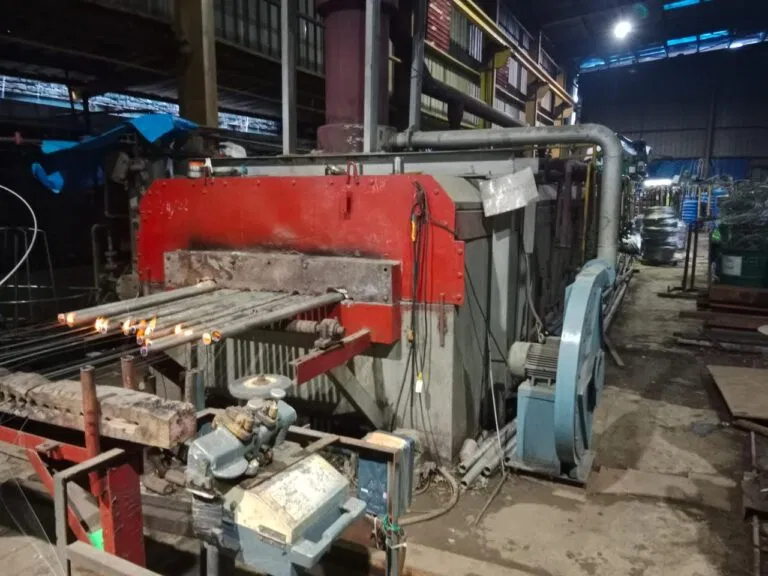
A steel rolling mill is no longer evaluated only by tonnes produced per hour. Modern buyers, plant managers, and engineering teams measure specific energy consumption, yield, product consistency, emissions intensity, uptime, and lifecycle profitability. This shift is transforming the role of thermal processing equipment from a conventional production utility into a strategic operating asset.
Reheating and heat treatment can represent approximately 40–45% of primary energy use in some rolling mill operations. Industry benchmarks place total rolling mill energy consumption in the range of 150–300 kWh per tonne, depending on the process route, product mix, automation level, and material temperature at entry. These figures make furnace selection and thermal integration essential to sustained competitiveness.
The modern industrial furnace manufacturer must therefore deliver more than a combustion chamber. The requirement is an integrated system combining high-efficiency heating, intelligent controls, heat recovery, automation, safety, and long-term service support.
From Conventional Reheating to Integrated Thermal Processing
Traditional rolling mill layouts commonly relied on separate reheating stages, batch handling, manual temperature checks, and fixed firing schedules. This approach created several sources of avoidable loss:
- Excessive furnace idling between production batches
- Overheating and scale formation
- Uneven temperature distribution across billets, bars, or slabs
- Manual charging and discharging delays
- High flue-gas losses
- Unplanned downtime caused by burner, refractory, or control-system failure
- Repeated heating cycles when material moved between disconnected processes
The evolution of the steel rolling mill has addressed these limitations through direct rolling, continuous processing, in-line cooling, regenerative combustion, digital control, and heat recovery.
Direct rolling and thin-slab routes can substantially reduce or eliminate billet reheating. Some reported thin-strip casting and direct-rolling configurations reduce total energy consumption by as much as 75% compared with conventional slab casting followed by reheating. However, many plants will continue to require reheating and downstream heat treatment because of product specifications, feedstock variability, plant configuration, or expansion constraints.
For these facilities, the objective is not simply to remove the furnace. It is to make every thermal cycle more productive.
What Defines an Energy-Smart Furnace System?
A modern furnace system is designed around the complete material flow rather than the furnace shell alone. The most important features include:
1. High-efficiency combustion and heat transfer
Modern industrial furnace systems may incorporate:
- Recuperative or regenerative burners
- Oxygen-enriched combustion
- Low-NOx burner technology
- High-performance refractory linings
- Multi-zone temperature control
- Optimized furnace pressure management
- Automated air-fuel ratio control
- Waste-heat recovery for combustion air or charge preheating
Modern reheating furnace efficiency is commonly benchmarked within the 75–95% range, although actual performance depends on furnace geometry, fuel, throughput, charge temperature, operating discipline, and heat recovery design.
Oxygen enrichment can improve heat transfer and reduce flue-gas volume. One reported study indicated approximately 6% fuel savings after increasing oxygen concentration in the combustion system. Such results must be validated against the plant’s fuel, production profile, emissions requirements, and operating conditions: but they demonstrate the value of engineering-led combustion optimization.
2. Precise temperature uniformity
Temperature uniformity directly affects:
- Metallurgical properties
- Rolling load
- Surface quality
- Scale formation
- Dimensional accuracy
- Rejection and downgrade rates
- Downstream heat treatment performance
A furnace that reaches its target temperature quickly but produces uneven heating is not efficient. The relevant KPI is usable heat delivered uniformly to the workpiece, not simply burner capacity.
This is why modern heat treatment furnaces use multiple control zones, thermocouples, infrared measurement, recipe-based heating curves, and automated material tracking. A controlled profile is especially important for alloy steels, high-strength grades, wire rod, bars, and components requiring repeatable mechanical properties.

Technology Comparison: Conventional Versus Modern Thermal Processing
| Performance area | Conventional furnace approach | Modern energy-smart approach |
|---|---|---|
| Temperature control | Manual checks and broad setpoints | Multi-zone control, recipes, and non-contact measurement |
| Combustion | Fixed air-fuel settings | Automated ratio control, recuperation, or regeneration |
| Energy performance | High flue-gas and shell losses | Heat recovery, improved insulation, and optimized firing |
| Material handling | Manual or semi-automatic | Automated charging, conveying, and tracking |
| Maintenance | Reactive replacement | Predictive monitoring and planned intervention |
| Product quality | Variable heating and greater scale risk | Repeatable thermal profiles and lower defect exposure |
| Workforce requirement | High operator dependence | Fewer manual interventions with stronger process visibility |
| Upgrade path | Major replacement often required | Modular burner, control, insulation, and sensor upgrades |
| Business outcome | Higher operating cost and inconsistent yield | Lower energy per tonne, improved uptime, and stronger ROI |
The correct comparison is not furnace purchase price alone. A lower-cost furnace with poor temperature uniformity, limited instrumentation, or weak service support can create a significantly higher total cost of ownership.
Digitalization: The Furnace as a Production Intelligence Platform
Industry 4.0 is changing the way thermal equipment is operated and maintained. A connected furnace can capture:
- Fuel or electricity consumption per batch
- Energy consumption per tonne
- Zone temperatures and thermal deviations
- Burner performance
- Door-opening duration
- Charge and discharge times
- Flue-gas temperature
- Alarm history
- Maintenance intervals
- Product-specific heating recipes
This information supports real-time decisions and long-term optimization. Digital twins can test production schedules, heating curves, and energy-saving measures before implementation. AI-assisted predictive maintenance can identify burner degradation, fan imbalance, refractory deterioration, or control instability before these issues cause a line stoppage.
Industry analysis indicates that predictive maintenance can reduce unplanned downtime by up to 30% in suitable applications. The precise result depends on sensor coverage, data quality, maintenance maturity, and the criticality of the equipment.
For a steel rolling mill, the business impact extends beyond furnace availability. Better thermal control can reduce:
- Scale losses
- Rework
- Off-grade production
- Rolling force variation
- Unscheduled cooling periods
- Product changeover losses
The Wider Thermal Processing Portfolio
Rolling mill efficiency is connected to other thermal operations across the metal value chain.
A melting furnace for steel must deliver reliable melting, controlled chemistry, safe tapping, and efficient refractory performance. In non-ferrous operations, an aluminum melting furnace must minimize oxidation, metal loss, and fuel consumption while supporting consistent melt quality.
For circular-economy projects, a metal recycling furnace converts scrap into a productive raw-material stream. Efficient charging, exhaust management, slag control, and heat recovery are essential to maximize recovered metal and reduce environmental impact.
Downstream, a hot dip galvanizing plant depends on coordinated cleaning, pickling, fluxing, preheating, zinc bath management, and material handling. These systems must maintain coating quality while controlling energy use and emissions.
The same lifecycle principle applies to furnace spare parts. Burners, thermocouples, refractory components, fans, seals, control modules, and heating elements must be selected for compatibility and kept available according to their failure criticality. A structured spare-parts program is an operational safeguard: not an administrative afterthought.
These requirements are equally relevant to the wire and cable industry, where continuous annealing, bright annealing, galvanizing, and controlled cooling determine conductivity, ductility, surface quality, and line speed.
A Practical Roadmap for Rolling Mill Furnace Modernization
Phase 1: Assessment and planning
Begin with a complete thermal and production audit:
- Record fuel or electricity use per tonne
- Map furnace loading, dwell time, and idle time
- Measure temperature uniformity
- Identify heat losses through doors, seals, refractory, and exhaust
- Review burner performance and maintenance history
- Quantify scale loss, rejection, and rework
- Document current automation and data availability
The output should be a baseline using measurable KPIs rather than general statements about efficiency.
Phase 2: Engineering and technology selection
Evaluate the most suitable combination of:
- Continuous or batch heat treatment
- Gas, electric, induction, or hybrid heating
- Recuperative or regenerative combustion
- Waste-heat recovery
- Automated handling
- Product-specific thermal recipes
- Hydrogen-ready or lower-carbon fuel capability
- In-line cooling, quenching, or direct-rolling integration
The selected design must match the actual product range, throughput, material dimensions, fuel infrastructure, emissions regulations, and future expansion plan.
Phase 3: Installation and commissioning
A successful project requires disciplined execution:
- Confirm mechanical and electrical interfaces
- Verify refractory curing procedures
- Calibrate sensors and temperature instruments
- Validate safety interlocks
- Establish burner tuning protocols
- Test no-load and full-load operation
- Run representative product trials
- Train operators and maintenance teams
Commissioning should conclude with an agreed performance protocol covering throughput, temperature uniformity, energy consumption, emissions, and availability.
Phase 4: Optimization and lifecycle support
The strongest results emerge after commissioning. Continuous improvement should include:
- Monthly energy-per-tonne reviews
- Recipe optimization by grade and section size
- Burner and refractory inspections
- Critical furnace spare parts planning
- Control-system backups
- Predictive maintenance analysis
- Annual efficiency audits
- Planned modernization of sensors and automation
This is where an enduring partnership with an experienced industrial furnace manufacturer delivers its greatest value.
Building the Next Generation of Efficient Mills
Steel producers are being asked to deliver higher-strength products, lower-carbon materials, improved traceability, and competitive pricing at the same time. The answer is a system-level approach that connects the rolling mill, furnace, controls, utilities, maintenance strategy, and sustainability roadmap.
Continental Furnaces brings more than 35 years of expertise in thermal processing solutions, including heat treatment furnaces, melting systems, galvanizing plants, pickling plants, furnace spare parts, and customized industrial furnace systems. Our approach combines engineering design, energy-efficient technology, ISO-certified quality, and prompt service intended to keep downtime minimal.
Explore our technical insights and view examples of pit-type annealing furnace solutions and hot dip galvanizing plants.
The next efficiency improvement in your steel rolling mill should be measured, engineered, and aligned with long-term profitability. Contact Continental Furnaces to assess your thermal process, define the right modernization roadmap, and convert furnace performance into sustained competitive advantage. Request a consultation.