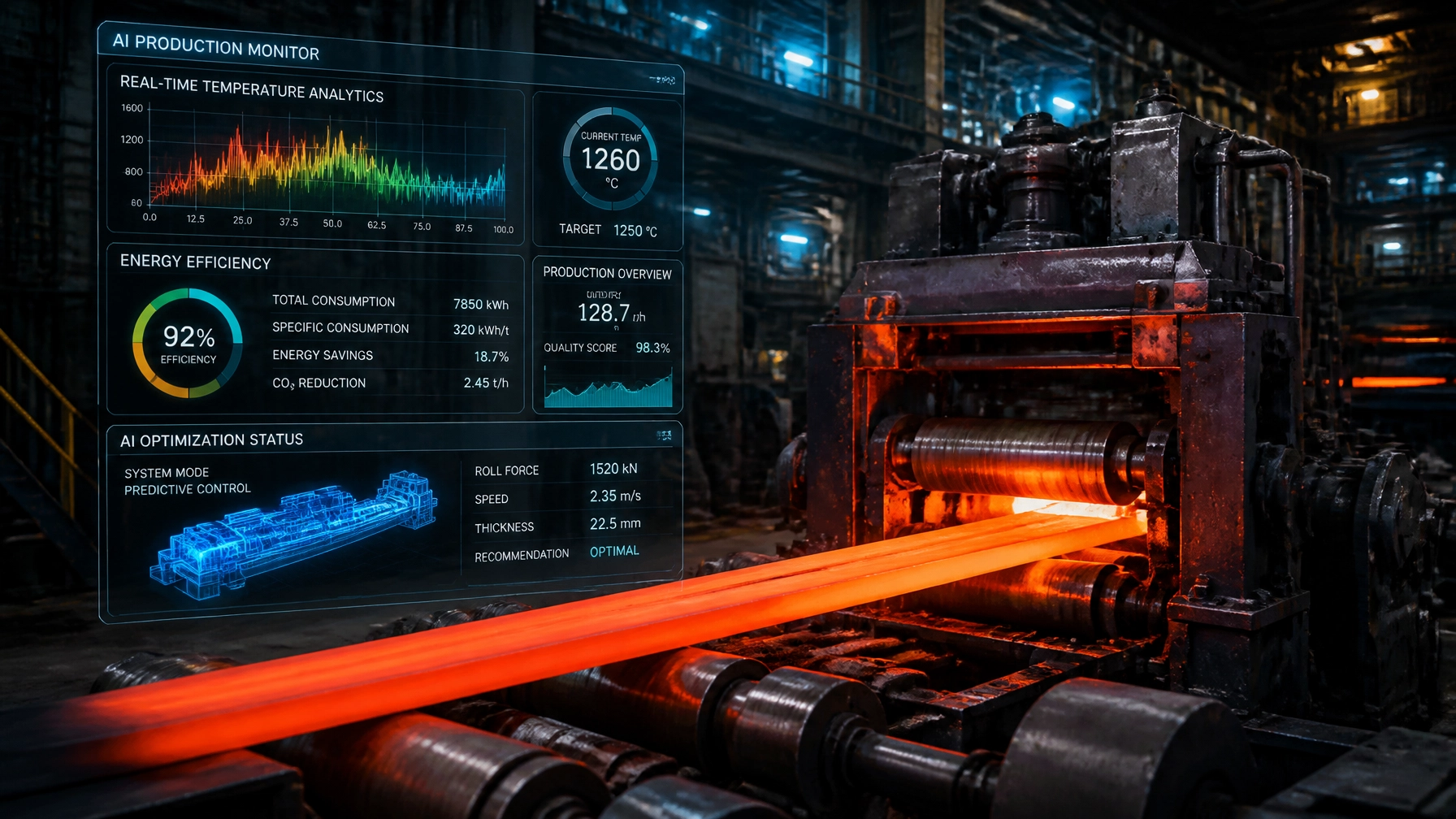
The steel manufacturing landscape of 2026 is no longer defined solely by tonnage and raw power. Instead, the industry has pivoted toward a new metric of success: thermal intelligence. As a veteran industrial furnace manufacturer with over 35 years of engineering pedigree, Continental Furnaces has observed the transition from manual, reactive operations to proactive, data-driven systems.
The question facing plant managers today is no longer "Does my steel rolling mill need AI?" but rather "How much efficiency am I losing by delaying its integration?" In an era where energy costs account for nearly 20–40% of total production expenses, ignoring these technological shifts is a strategic liability.
Below, we analyze the five critical energy-efficiency trends that are redefining the steel rolling mill and broader thermal processing equipment sector in 2026.
1. AI-Driven Predictive Thermal Management
Artificial Intelligence in the rolling mill is not about replacing the human operator; it is about augmenting the furnace's ability to "breathe" with the production cycle. Modern industrial furnace systems now utilize machine learning algorithms to synchronize reheating cycles with real-time rolling speeds.
- Dynamic Setpoint Optimization: AI analyzes the entry temperature of billets and adjusts burner output in real-time, preventing "over-soaking."
- Fuel Consumption Reduction: By predicting delays in the rolling stand, AI can automatically put heat treatment furnaces into a "low-fire" standby mode, reducing fuel waste by up to 12-15%.
- Metallurgical Precision: Precise control over the temperature gradient ensures that the grain structure of the steel remains consistent, reducing internal rejects and subsequent energy-intensive re-processing.

2. High-Efficiency Waste Heat Recovery (WHR) & Advanced Recuperators
In 2026, releasing exhaust gases directly into the atmosphere is viewed as a financial leak. The latest trend in melting furnace for steel and reheating operations involves closed-loop waste heat recovery.
Traditional systems often lose 30-40% of their thermal energy through the flue. Continental Furnaces' latest thermal processing equipment incorporates high-efficiency recuperators that capture this "lost" heat to preheat combustion air.
- Thermal Efficiency Benchmarks: Modern WHR systems can achieve a thermal efficiency of 65-70%, a significant leap from the 45% industry standard of the previous decade.
- Recuperative Burners: Integrating the recuperator directly into the burner assembly allows for a more compact footprint and higher preheat temperatures, directly lowering the specific fuel consumption (SFC).

3. Transition to Hydrogen-Ready and Electrified Furnaces
Sustainability is no longer a "soft" goal; it is a regulatory requirement. The steel rolling mill industry is increasingly looking toward hydrogen and electricity as primary energy sources to decouple production from carbon volatility.
While full-scale hydrogen transition is a multi-phase roadmap, "Hydrogen-Ready" burners are now essential for any new installation. These systems allow for a seamless blend of natural gas and hydrogen, providing a future-proofed investment.
| Feature | Traditional Gas-Fired Furnace | 2026 Hybrid/Hydrogen-Ready System |
|---|---|---|
| Fuel Versatility | Single Fuel (NG/LPG) | Multi-fuel (NG, H2, Electric Hybrid) |
| Carbon Footprint | High (Baseline) | Up to 80% Reduction (with Green H2) |
| Energy Control | Manual/PID Control | AI-Integrated Load Balancing |
| ROI Period | 5–7 Years | 3–4 Years (via carbon credits/efficiency) |
For non-ferrous applications, such as the aluminum melting furnace, electrification via high-power induction or infrared heating is becoming the standard for precision and environmental compliance.

4. Integration of Hot Charging and Direct Rolling
The most efficient way to use energy is to never lose it in the first place. Hot Charging: the process of transferring hot billets directly from the continuous casting machine (CCM) to the reheating furnace: is a cornerstone of the 2026 efficiency model.
By maintaining the latent heat of the billet, energy requirements for reheating can be slashed by 20% to 30%. Continental Furnaces specializes in custom-engineered material handling systems that bridge the gap between casting and rolling, ensuring that thermal integrity is maintained throughout the transfer.
This trend is particularly vital for the wire and cable industry, where continuous casting and rolling (CCR) mills rely on high-speed, high-efficiency thermal transitions to maintain wire quality and conductivity.
5. Proactive Maintenance and Smart Furnace Spare Parts
A mill is only as efficient as its weakest component. In 2026, maintenance has shifted from "Corrective" to "Prescriptive." Using IoT sensors on critical furnace spare parts, such as burners, radiant tubes, and conveyor rollers, plants can now predict failures before they occur.
- Burner Health Monitoring: Real-time flame analysis detects deviations in combustion, ensuring the furnace always operates at the stoichiometric peak.
- Refractory Integrity: Sensors embedded in the furnace lining monitor heat flux, alerting operators to thinning insulation that could lead to significant heat loss.
- Minimized Downtime: In high-stakes environments like a hot dip galvanizing plant or a pickling plant, unplanned downtime can cost thousands of dollars per hour. Predictive maintenance ensures that the plant remains operational 98% of the year.

The Strategic Roadmap: Transitioning Your Mill
Implementing these trends is a phased journey. As your strategic partner, Continental Furnaces recommends the following 3-phase approach for modernizing your thermal operations:
Phase 1: Thermal Audit and Baseline Mapping
Conduct a comprehensive energy audit to identify "hot spots" where energy is being wasted. This includes flue gas analysis and insulation checks.
Phase 2: Digital and Component Upgrades
Install AI-driven control systems and upgrade to high-efficiency burners. Replace legacy furnace spare parts with smart-compatible components.
Phase 3: Deep Process Integration
Explore the implementation of hot charging and evaluate the feasibility of hydrogen blending or electrification for your specific production needs.
Conclusion: A Quantum Leap in Productivity
The steel industry is at a crossroads. Those who embrace AI-driven efficiency, waste heat recovery, and sustainable thermal processing will secure a sustained competitive advantage in the global market. Those who remain tethered to legacy methods will find their margins squeezed by both energy costs and carbon taxes.
At Continental Furnaces, we don't just manufacture equipment; we engineer thermal solutions that drive profitability. Whether you are looking to upgrade an existing steel rolling mill or install a state-of-the-art metal recycling furnace, our 35+ years of expertise are at your service.
Ready to optimize your thermal performance?
Contact our engineering team today for a consultation on how to integrate 2026 efficiency trends into your facility.