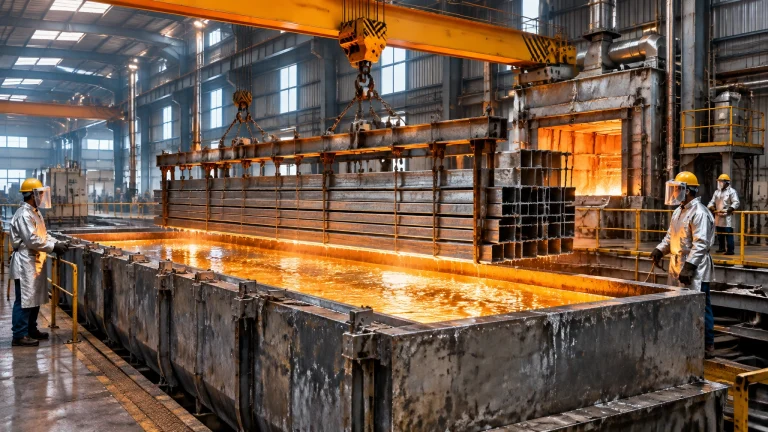

In the high-stakes world of metallurgical processing, thermal uniformity is not merely a technical preference; it is a critical baseline for quality assurance and regulatory compliance. Whether you are operating a steel rolling mill, a melting furnace for steel, or an aluminum melting furnace, the consistency of your thermal profile dictates the structural integrity, grain size, and durability of your final product.
At Continental Furnaces, with over 35 years of engineering pedigree, we have observed that even a minor deviation: as little as ±5°C outside the qualified work zone: can lead to catastrophic material failure, rework, and diminished yield. For industries such as aerospace and automotive, adhering to standards like AMS 2750F is a non-negotiable prerequisite.
If your heat treatment furnaces are failing to achieve the required temperature uniformity, it is rarely due to a single catastrophic failure. More often, it is a combination of design oversights, maintenance neglect, and operational inefficiencies. Below is our comprehensive roadmap to identifying and rectifying the top 10 reasons for non-uniformity.
1. Suboptimal Burner Tuning and Layout
In fuel-fired industrial furnace systems, burner performance is the primary determinant of heat distribution. When burners are not tuned to a consistent air-to-gas ratio (ideally 10:1 for most applications), localized "hot spots" or oxygen-rich zones develop.
- The Fix: Implement bi-annual combustion analysis. Every burner must be synchronized to ensure uniform heat release. Utilizing modern pulse-firing control systems can also enhance uniformity by alternating burner output to prevent stagnant air pockets.
2. Degraded Insulation and Refractory Lining
The integrity of your furnace’s "envelope" is vital. Over time, thermal cycling causes refractory materials to crack or thin, creating "cold spots" near the walls. This is particularly prevalent in metal recycling furnaces where the environment is corrosive.
- The Fix: Conduct a comprehensive thermal imaging audit. Identify areas of excessive casing temperature and reline the hot zone using high-performance ceramic fiber modules or high-alumina bricks to restore a consistent thermal barrier.
3. Mislocated or Uncalibrated Sensors
Accuracy in thermal processing is only as good as the measurement chain. If your control thermocouples (TCs) are placed too close to a burner or in a "dead zone" behind a baffle, the controller will respond to non-representative data.

- The Fix: Perform a Temperature Uniformity Survey (TUS) at least every six months. Calibrate the entire loop: from the sensor to the digital controller: ensuring that the system’s measurement accuracy is within ±0.5% of the full scale.
4. Obstructed Airflow and Poor Recirculation
In furnaces relying on convection, such as those used in the wire and cable industry, airflow is the heat transfer vehicle. If the circulation fans are underperforming or the internal baffles are misaligned, heat will stratify, leaving the bottom of the chamber significantly cooler than the top.
- The Fix: Ensure your thermal processing equipment uses high-static pressure recirculating fans. Inspect fan impellers monthly for scale buildup and verify that internal ductwork is clear of debris.
5. Improper Load Configuration
One of the most common operational errors is overloading or uneven part placement. A dense load acts as a thermal heat sink, blocking the path of radiant and convective energy to the center of the batch.
- The Fix: Develop standardized loading patterns. Maintain a minimum gap of 50mm to 100mm between parts and ensure that the load is symmetrical. Avoid "shading" parts from the direct line of sight of heating elements.
Comparison: Traditional vs. Precision-Engineered Furnaces
| Feature | Legacy Furnace Systems | Continental Furnaces Solutions |
|---|---|---|
| Uniformity Tolerance | ±15°C to ±20°C | ±3°C to ±5°C |
| Fuel Efficiency | Low (Manual Tuning) | High (Automatic Combustion Control) |
| Compliance Level | Basic Industrial | AMS 2750F / Nadcap Compliant |
| ROI Period | 3–5 Years | 18–24 Months (Energy Savings) |
| Downtime | Frequent (Reactive Maintenance) | Minimal (Predictive Alerts) |
6. Leaking Door Seals and Through-Metal Heat Loss
Even the most efficient industrial furnace manufacturer cannot compensate for a faulty door seal. Cold air ingress near the hearth or door interface creates a localized "cool zone" that is nearly impossible to eliminate through burner adjustment alone.
- The Fix: Upgrade to pneumatic or cam-action door clamping mechanisms. Replace worn tadpole seals with high-temperature silicone or ceramic gaskets to ensure a hermetic seal during the soak cycle.
7. Aging or Damaged Heating Elements
In electric heat treatment furnaces, the resistance of heating elements changes as they age. A single failed element in a multi-zone furnace can drop the temperature of that zone by 20% to 30% before the system attempts to compensate, leading to severe lack of uniformity.

- The Fix: Stock high-quality furnace spare parts and monitor the amperage of each zone. If a zone’s current draw deviates from the baseline, replace the elements immediately to prevent cascading failures.
8. Suboptimal Chamber Geometry
A furnace that is too large for its typical load will suffer from excessive radiant losses and erratic airflow patterns. Conversely, a chamber that is too small for its burner capacity will experience rapid temperature spikes and overshooting.
- The Fix: Consult with our engineering team for custom-tailored solutions. We design metal recycling projects and furnaces specifically scaled to your production volumes, optimizing the volume-to-surface area ratio.
9. Poor PLC Logic and Control Tuning
Traditional PID (Proportional-Integral-Derivative) tuning often fails during the "ramp-to-soak" transition. If the PID parameters are too aggressive, the furnace will overshoot; if they are too sluggish, it will take too long to stabilize, leading to inconsistent cycle times.
- The Fix: Utilize auto-tuning controllers with "Fuzzy Logic" or "Artificial Intelligence" modules that adapt to varying load sizes. This ensures the furnace reaches the setpoint with zero overshoot, maintaining uniformity from the moment the soak timer starts.
10. Lack of a Preventive Maintenance Program
Temperature uniformity is a "decaying" metric. Without a structured maintenance roadmap, every component: from the burners to the insulation: gradually loses efficiency.

- The Fix: Shift from reactive to predictive maintenance. Implement a quarterly audit that includes TUS, SAT (System Accuracy Tests), and burner analysis. This lifecycle approach is what distinguishes a profitable operation from an inefficient one.
Phase-Based Roadmap to Thermal Excellence
- Phase 1: Diagnostic Assessment – Perform a baseline TUS and thermal imaging audit to identify the magnitude of non-uniformity.
- Phase 2: Mechanical Restoration – Repair insulation, replace seals, and update furnace spare parts to restore the physical integrity of the chamber.
- Phase 3: Control Optimization – Recalibrate sensors and retune PID loops to ensure precise thermal management.
- Phase 4: Continuous Verification – Establish a recurring schedule for compliance testing and burner synchronization to sustain competitive advantage.
The Continental Furnaces Advantage
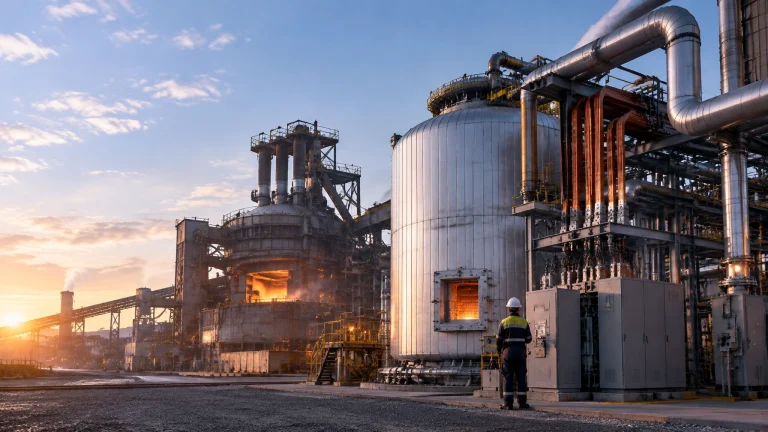
As a leading industrial furnace manufacturer, Continental Furnaces provides more than just hardware; we deliver integrated thermal processing intelligence. Our solutions for the recycling industry and steel rolling mills are engineered for maximum yield and minimum downtime.
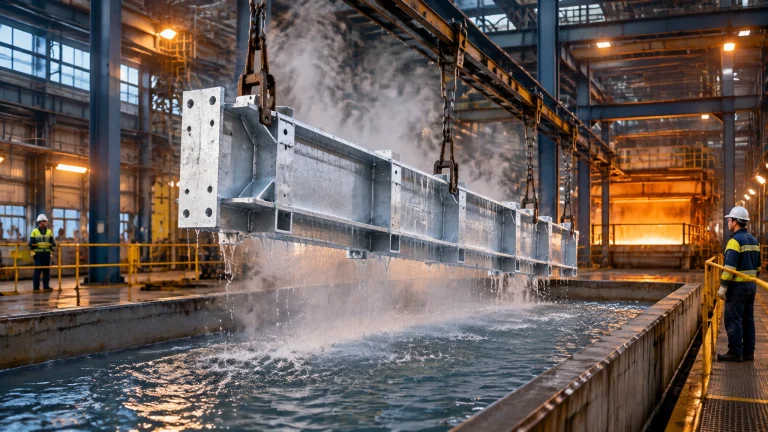
Whether you require a new hot dip galvanizing plant, a pickling plant, or a retrofit of your existing melting furnace for steel, our ISO-certified team is ready to engineer a solution that guarantees uniformity, efficiency, and long-term profitability.

Stop settling for inconsistent metallurgical results. Contact our senior engineering consultants today to schedule your comprehensive Thermal Uniformity Survey and take a quantum leap in your production quality.