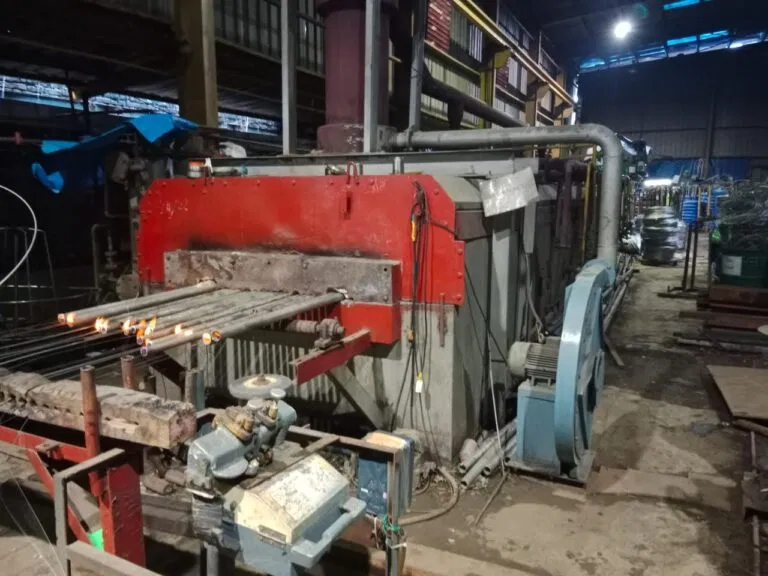
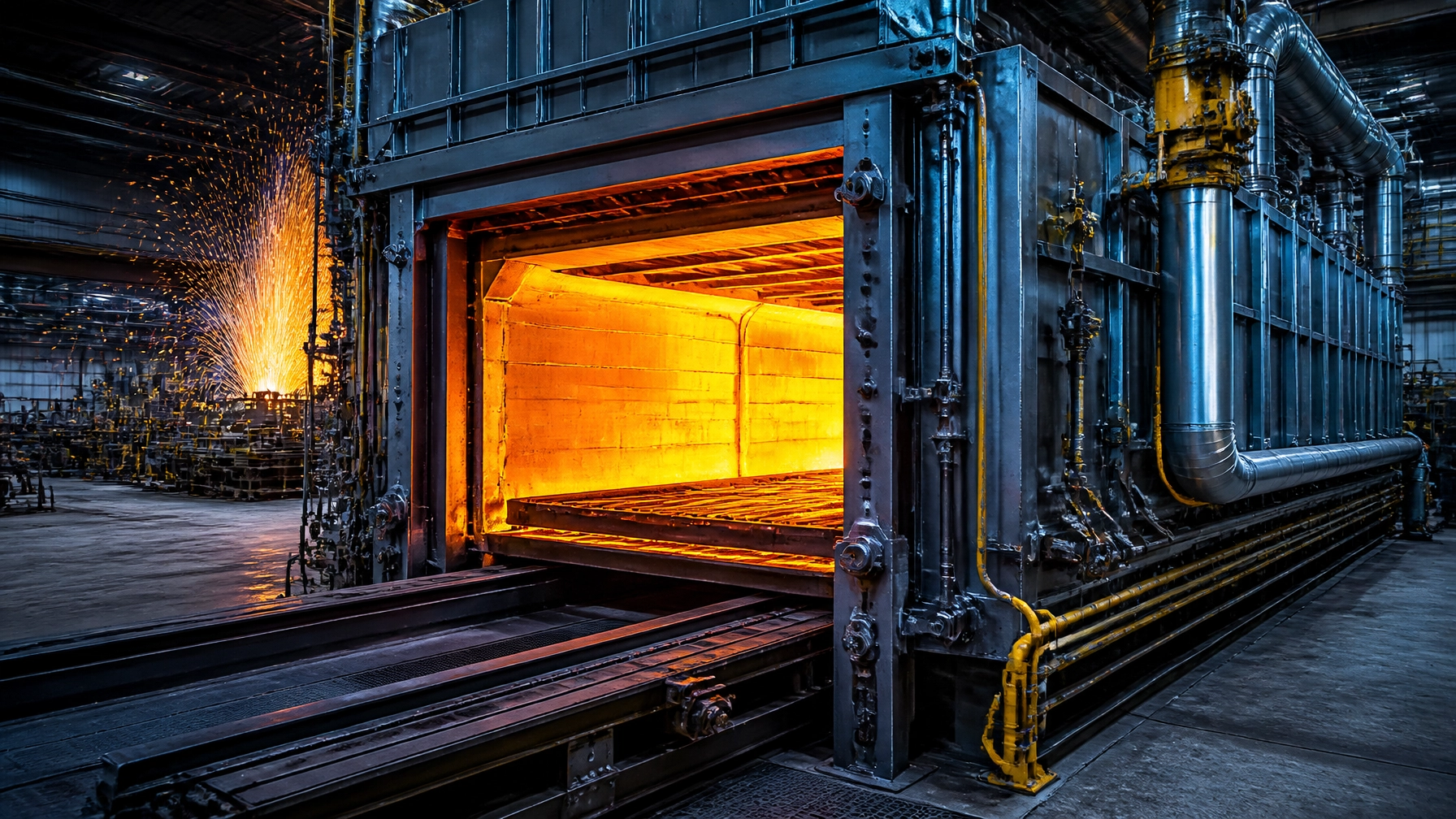
In the high-stakes arena of heavy industry: spanning from the steel rolling mill to the high-precision wire and cable industry: thermal processing is the heartbeat of production. However, even the most seasoned plant managers often overlook granular inefficiencies that silently erode profit margins. At Continental Furnaces, with over 35 years of tenure as a premier industrial furnace manufacturer, we have observed that the difference between a high-yield operation and a struggling facility often comes down to seven critical operational oversights.
Optimizing your industrial furnace systems is not merely about maintenance; it is about a strategic commitment to the circular economy and Industry 4.0 standards. This guide serves as a roadmap to identifying these "silent killers" of efficiency and implementing the quantum leaps necessary for sustained competitive advantage.
1. Neglecting Periodic Calibration and Preventive Maintenance
The most common mistake in thermal processing is treating heat treatment furnaces as "set-and-forget" assets. Over time, thermocouples degrade, and sensors drift, leading to inaccurate temperature readings.
- The Technical Cost: A drift of just 10°C can result in a 5-8% increase in energy consumption or, worse, a batch of non-compliant parts that fail metallurgical testing.
- The Professional Fix: Implement a rigorous preventive maintenance schedule. This must include the calibration of all controllers and sensors every quarter, or immediately following any significant downtime.
- Pro-Tip: Stock essential furnace spare parts, such as high-grade thermocouples and heating elements, to ensure that "minor" drifts don't lead to major shutdowns.
2. Disregarding Temperature Uniformity Surveys (TUS)
For industries requiring precise metallurgy: like aerospace or automotive components: temperature uniformity is non-negotiable. Many operators fail to perform regular TUS, leading to "cold spots" within the chamber.

- The Technical Cost: To compensate for cold spots, operators often raise the overall setpoint. This wastes fuel and risks over-tempering parts in the "hot zones."
- The Professional Fix: Conduct a TUS at least bi-annually. Use the data to adjust burner tuning or heating element distribution. Modern thermal processing equipment should maintain uniformity within ±5°C for optimal metal performance.
3. Suboptimal Air-Fuel Ratios in Combustion
In fuel-fired systems, such as a melting furnace for steel or an aluminum melting furnace, poor combustion control is a leading cause of energy waste. Running with excessive air means you are essentially paying to heat the atmosphere, which then escapes through the stack.
- The Technical Cost: Excess air can increase fuel consumption by up to 12%. Conversely, too little air results in incomplete combustion, producing hazardous carbon monoxide and soot.
- The Professional Fix: Utilize portable or integrated gas analyzers to monitor oxygen levels in the flue gas. Aim for the "sweet spot" of 2-3% excess oxygen for gas-fired systems to maximize thermal efficiency.
4. Ignoring Heat Leaks and Refractory Degradation
The integrity of your furnace shell and doors is paramount. Worn seals, cracked refractory bricks, and gaps in insulation allow radiant energy to escape into the plant floor.

- The Technical Cost: Radiant heat loss through a poorly sealed door can account for 15% of total energy loss. Furthermore, degraded refractory increases the "casing temperature," posing a safety risk to your workforce.
- The Professional Fix: Conduct a thermal imaging audit of your furnace shell. Patch refractory cracks immediately and replace compressed door gaskets. High-efficiency ceramic fiber modules are often an essential upgrade for aging industrial furnace systems.
5. Inefficient Loading and Scheduling Practices
Running a furnace at 50% capacity consumes nearly as much energy as running it at 100%. Many facilities suffer from fragmented scheduling, leading to frequent starts and stops.
- The Technical Cost: Every time a furnace cools down, you lose the "stored heat" in the refractory. Reheating the furnace mass is a massive energy sink that provides zero ROI.
- The Professional Fix: Group your production runs to maximize load density. In a steel rolling mill environment, synchronizing the furnace output with the mill's throughput is a critical "Phase 1" optimization.
- Strategic Roadmap: If you are operating a hot dip galvanizing plant or a metal recycling furnace, ensure that the upstream supply chain is robust enough to keep the furnace at its optimal operating temperature consistently.
6. Poor Atmosphere Control and Leakage
For processes like carburizing or bright annealing in the Wire and cable industry, the furnace atmosphere is as critical as the temperature. Inadequate monitoring leads to oxidation and surface decarburization.
- The Technical Cost: Reworking oxidized parts or losing yield due to surface defects is a direct hit to profitability.
- The Professional Fix: Integrate automated carbon potential (Cp) controllers and oxygen probes. Ensure the furnace maintains a slight positive pressure to prevent ambient air from infiltrating the chamber. Visit our Wire Industry Solutions for more on specialized atmosphere control.
7. Over-Processing and Excessive "Soak" Times
Many operators use "safety margins" by keeping parts in the furnace longer than required or at higher temperatures than necessary.
- The Technical Cost: Unnecessarily long cycles reduce throughput and accelerate the wear and tear on your furnace internals.
- The Professional Fix: Verify your process recipes against modern metallurgical standards. Use simulation software or real-time load thermocouples to determine the exact moment the core of the load reaches the required temperature, then initiate the quench or cooling cycle immediately.
Comparative Analysis: Legacy vs. Modern Industrial Furnace Systems
To visualize the ROI of fixing these mistakes, consider the following benchmarks comparing a traditional 20-year-old furnace with a modern, optimized solution from an industrial furnace manufacturer like Continental Furnaces.
| Metric | Legacy Furnace (Unoptimized) | Modern High-Efficiency System | Competitive Advantage |
|---|---|---|---|
| Fuel/Energy Consumption | Base (100%) | 65% – 75% | 25-35% Cost Reduction |
| Temperature Uniformity | ±15°C | ±5°C | Superior Metallurgy |
| Atmosphere Control | Manual / Analog | Automated PLC / AI | Zero Oxidation/Scale |
| Maintenance Cycle | Reactive (High Downtime) | Predictive (Scheduled) | 98% Uptime |
| Start-up Time | 6 – 8 Hours | 2 – 3 Hours | Greater Agility |
The Path to Sustained Competitive Advantage
Rectifying these seven mistakes is not just a maintenance task; it is a strategic repositioning of your manufacturing capability. As the global industry shifts toward sustainability and higher quality standards, the efficiency of your thermal processing equipment will be the deciding factor in your market leadership.

At Continental Furnaces, we don't just supply hardware; we provide enduring partnerships. Whether you are upgrading a metal recycling furnace, commissioning a new hot dip galvanizing plant, or seeking high-performance furnace spare parts, our engineering wisdom is at your disposal.
Take the next step in your thermal processing evolution. Contact our consulting team today at confur.net for a comprehensive facility audit and discover how our ISO-certified solutions can transform your operational yield.