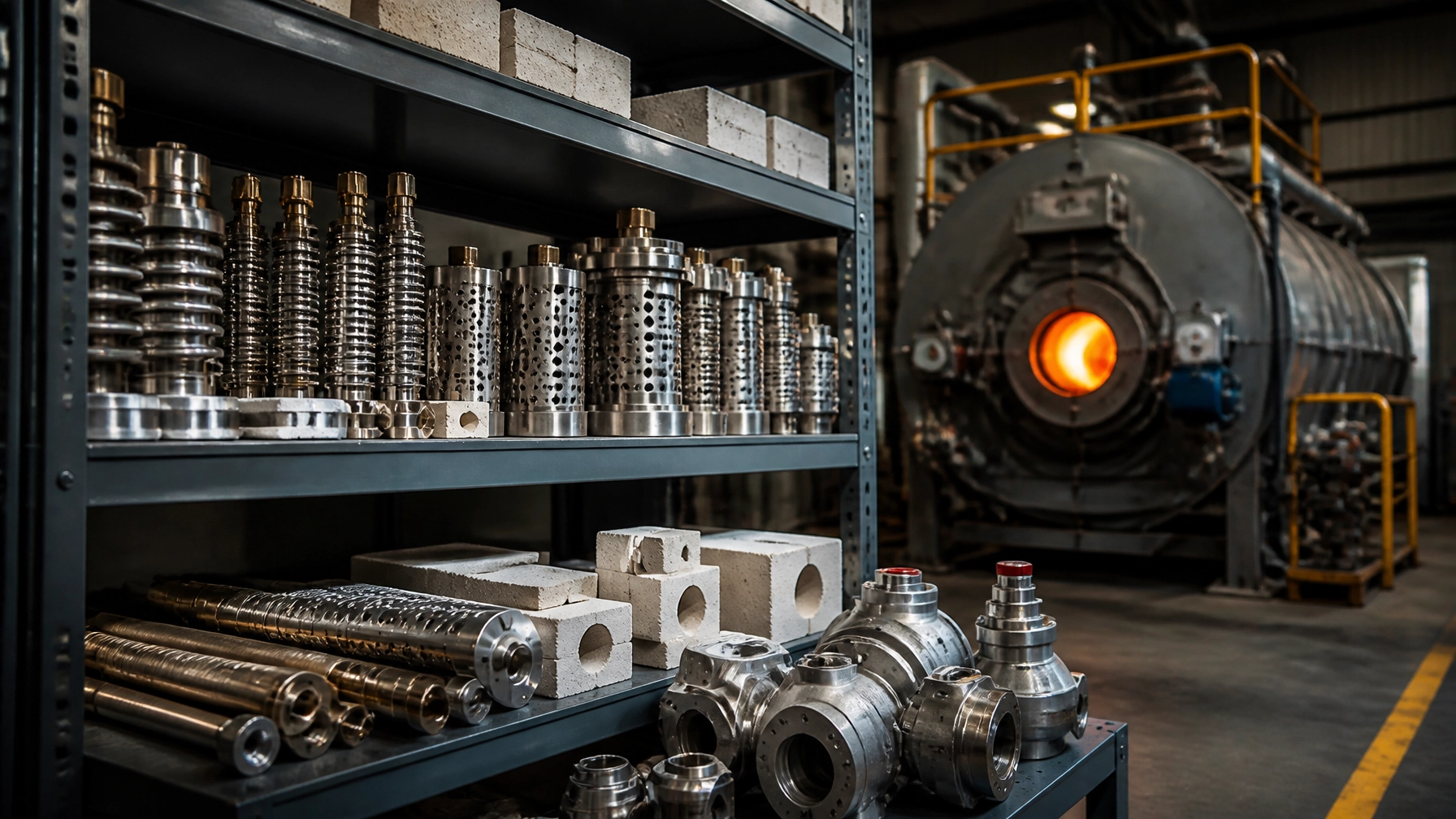
In the high-stakes world of thermal processing, the difference between a high-yield production cycle and a catastrophic, six-figure shutdown often rests on the integrity of a single component. Whether you are managing a steel rolling mill, an aluminum melting furnace, or a hot dip galvanizing plant, the precision of your hardware determines your competitive edge.
At Continental Furnaces, we have spent over 35 years as a premier industrial furnace manufacturer, witnessing the evolution of thermal technology from manual operations to the AI-driven predictive maintenance of 2026. Through our experience in the wire and cable industry and metal recycling sectors, we have identified recurring strategic failures in how facilities manage their furnace spare parts.
Below is our professional roadmap to identifying these common pitfalls and implementing "quantum leap" solutions that ensure sustained operational excellence.
1. The Reactive "Run-to-Failure" Strategy
The most expensive mistake in any industrial facility is treating spare parts management as a reactive task rather than a strategic asset. Waiting for a burner or a conveyor roller to fail before ordering a replacement is a recipe for extended downtime.
The Fix: Develop a Critical Spares Inventory (CSI). Based on our empirical data, 80% of unplanned downtime can be avoided by stocking high-failure, long-lead items.
- Essential Spares to Stock: Flame rods, thermocouples, burner nozzles, fan belts, and door gaskets.
- 2026 Tech Integration: Utilize your industrial furnace systems' integrated sensors to track part lifecycles in real-time, moving from calendar-based to condition-based replacement.
2. Neglecting the "Nervous System" (Calibration & Sensors)
Your furnace is only as accurate as its sensors. A common error is ignoring the drift in thermocouples and temperature controllers. In a heat treatment furnace, even a 5°C variance can compromise the metallurgical integrity of the metal, leading to scrapped batches and lost revenue.

The Fix: Implement a rigorous, monthly calibration schedule.
- Numerical Benchmark: For high-precision aerospace or automotive components, sensors should be calibrated to within ±1.1°C or 0.4% of the temperature range.
- Actionable Step: Replace thermocouples after a predetermined number of "heat hours" rather than waiting for an open-circuit error.
3. Ignoring the Thermal Envelope (Seals and Refractory)
Energy efficiency is the cornerstone of the modern metal recycling furnace. Small air leaks through worn door gaskets or micro-cracks in the refractory lining act as thermal "hemorrhages," forcing your burners to work harder and increasing your fuel consumption by up to 15%.
The Fix: Perform a "Thermal Leak Audit" using infrared thermography once per quarter.
- Comparative Advantage: Modern silicon carbide or high-density ceramic fiber modules offer 30% better insulation than traditional brick linings, providing a rapid ROI through fuel savings alone.
- Seal Integrity: Treat gaskets as high-frequency consumables. If the seal isn't airtight, you aren't just losing heat: you're losing money.
4. Prioritizing Low-Cost Over OEM Quality
In a bid to reduce "Maintenance, Repair, and Operations" (MRO) spend, many procurement teams source non-OEM spare parts. While the initial invoice may be lower, the secondary costs: shorter component lifespan, increased risk of fire, and voided warranties: are staggering.

The Fix: Insist on ISO-certified quality for all furnace spare parts.
| Feature | Generic Parts | Continental OEM Parts |
|---|---|---|
| Material Grade | Standard Alloy | Precision-Engineered Heat-Resistant Alloys |
| Life Expectancy | 6-12 Months | 24-36+ Months |
| Energy Efficiency | Variable | Optimized for Specific Burner Geometry |
| Safety Compliance | Unknown | Fully Certified to International Standards |
5. Poor Storage Conditions for Critical Electrical Spares
Electrical components: such as PLC boards, ignition transformers, and high-precision sensors: are highly sensitive to the industrial environment. Storing these in a humid, dusty corner of a steel rolling mill often results in "Dead on Arrival" (DOA) parts when they are finally needed during an emergency.

The Fix: Maintain a climate-controlled "Clean Zone" for all electrical and sensitive mechanical spares.
- Pro Tip: Use vacuum-sealed packaging and silica desiccant packs to prevent oxidation on contact points.
6. Lack of Lifecycle Data and Performance Tracking
Many plants replace parts without recording why they failed. Without this data, you cannot distinguish between a part that reached the end of its natural life and one that failed prematurely due to a deeper system imbalance.
The Fix: Integrate your spare parts usage with a Computerized Maintenance Management System (CMMS).
- Phase 1 Assessment: Track the "Mean Time Between Failures" (MTBF) for every critical component.
- Strategic Adjustment: If a specific burner in your melting furnace for steel fails consistently every 4 months when it should last 12, it indicates a fuel-air ratio imbalance or a design flaw that requires professional consultation.
7. Inadequate Training for Installation Teams
The best spare part in the world will fail if it is installed incorrectly. We frequently see high-grade heating elements snapped during installation or sensors placed in "shadow zones" where they cannot get an accurate reading of the heat chamber.

The Fix: Leverage the technical wisdom of your industrial furnace manufacturer.
- The Continental Partnership: We provide comprehensive training modules for your on-site maintenance teams, ensuring that every installation adheres to the exact engineering tolerances required for peak performance.
The Strategic Roadmap to Furnace Optimization
Transitioning your facility from reactive chaos to precision performance requires a structured approach:
- Audit (Week 1-2): Conduct a comprehensive audit of all thermal processing equipment. Identify aging components and potential failure points.
- Stocking Strategy (Week 3-4): Procure a "Safety Stock" of critical spares directly from an ISO-certified manufacturer.
- Digital Integration (Week 5+): Implement 2026-era sensor monitoring to provide real-time feedback on component health.
Conclusion: Secure Your Competitive Advantage
In the global manufacturing landscape, downtime is the ultimate predator. By addressing these seven mistakes, you transform your maintenance department from a cost center into a strategic pillar of profitability and reliability.
Don't wait for the next "Red Light" on your control panel. Partner with the experts who have defined industrial thermal excellence for over three decades.
Contact Continental Furnaces today for a comprehensive spare parts audit and customized maintenance roadmap. Let’s ensure your operations remain resilient, efficient, and future-proof.