In the current industrial landscape, the mandate for high-performance thermal processing has evolved from a matter of operational preference to a critical strategic necessity. As we move through the third quarter of 2026, the convergence of stringent environmental regulations, escalating energy costs, and the rapid maturation of Industry 4.0 technologies has redefined the benchmarks for success. At Continental Furnaces, our 35-plus years of engineering tenure have provided us with a unique vantage point: we do not merely manufacture equipment; we engineer the thermal foundations of global infrastructure.
This Morning Edition of Industrial Insights explores the quantum leaps in industrial furnace systems, focusing on how seasoned manufacturers are leveraging advanced thermodynamics and digital integration to secure a sustained competitive advantage.
The Shift Toward Ultra-High Efficiency: Beyond Conventional Insulation
Traditional thermal processing often accepted a baseline of energy "drift": heat lost to the atmosphere through suboptimal casing or inefficient exhaust. In 2026, these losses are considered operational failures. Modern heat treatment furnaces now utilize advanced ceramic fiber modules and multi-layer lightweight refractories that have demonstrated the ability to cut energy expenditures by up to 20%.
Advanced Heat Management Strategies
To achieve world-class efficiency, a holistic approach to the thermal cycle is essential. We categorize these advancements into three primary technical pillars:
- Waste Heat Recovery (WHR): Utilizing high-efficiency recuperators and regenerators to preheat combustion air with exhaust gases. This process can reclaim significant energy, directly reducing the fuel input required to maintain peak process temperatures.
- Pulse-Firing Combustion: Rather than a constant, inefficient burn, modern systems employ AI-synchronized pulse-firing. This ensures that the melting furnace for steel or aluminum operates at peak stoichiometric efficiency, reducing excess air heating and associated NOx emissions.
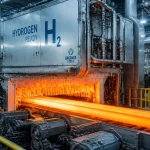
- High-Emissivity Internal Coatings: By applying specialized ceramic coatings to the interior of furnace boxes, we enhance radiant heat transfer, significantly shortening cycle times and improving throughput in a steel rolling mill environment.

For plant managers looking to optimize existing assets, understanding the 7 mistakes you’re making with heat treatment furnaces is a critical first step toward reducing the carbon footprint of your facility.
Industry 4.0: The Digital Twin of Thermal Processing
The integration of the Internet of Things (IoT) and Artificial Intelligence has transformed the industrial furnace manufacturer's role from a hardware provider to a systems architect. Today, thermal processing equipment is equipped with a dense array of sensors that feed real-time data into a "Digital Twin."
The Power of Real-Time Analytics
- Predictive Maintenance: Through continuous monitoring of burner performance and refractory health, systems can predict failure points before they lead to catastrophic downtime. This extends the lifecycle of critical furnace spare parts such as heating elements, thermocouples, and radiant tubes.
- Automated Thermal Profiling: AI-driven control decks now stabilize heat profiles with a precision that was previously unattainable. For B2B clients in the wire and cable industry, this ensures absolute uniformity in annealing, which is paramount for electrical conductivity and tensile strength.
- Variable Frequency Drives (VFDs): By matching the speed of combustion air blowers to real-time demand, power consumption in auxiliary systems can be reduced by nearly 50% during low-demand cycles.

Our involvement in the Cable & Wire Fair 2025 showcased these very advancements, demonstrating how digital integration is the primary driver of ROI in high-throughput environments.
Precision Engineering for Specialized Sectors
Different metallurgical processes demand distinct thermal signatures. Whether it is the rapid melting required in a foundry or the slow, controlled cooling in a hot dip galvanizing plant, the equipment must be custom-engineered for the specific chemistry of the metal.
Aluminum and Non-Ferrous Excellence
The aluminum melting furnace has seen significant evolution to address the high reactivity and dross formation issues inherent in the metal. Modern tilting rotary furnaces and central melting stations now offer industry-leading yields by minimizing oxidation. The strategic importance of these systems is further explored in our guide on industrial aluminum melting furnace applications.

The Circular Economy and Metal Recycling
Sustainability is no longer a corporate social responsibility (CSR) checkbox; it is a regulatory mandate. The modern metal recycling furnace is the engine of the circular economy. By preheating scrap and utilizing oxygen-enriched combustion, manufacturers can reduce the energy intensity of secondary metal production by up to 60% compared to primary smelting.
Our expertise in metal recycling projects allows our clients to turn waste streams into high-value raw materials with minimal environmental impact.
Comparative Analysis: Traditional vs. Modern Thermal Systems
The following table contrasts legacy furnace technology with the current state-of-the-art systems provided by Continental Furnaces, highlighting the clear economic advantages of modernization.
| Feature | Legacy Systems (Pre-2015) | Continental Furnaces 2026 Systems | Competitive Advantage |
|---|---|---|---|
| Fuel Efficiency | 35% – 45% Efficiency | >75% (with WHR) | ~30% Reduction in OPEX |
| Control Precision | Manual/PID Control (±10°C) | AI-Driven Predictive (±1°C) | Enhanced Product Yield |
| Cycle Times | Fixed Schedules | Dynamic, Schedule-Optimized | 15-20% Throughput Increase |
| Maintenance | Reactive (Fix when broken) | Predictive (AI-Monitored) | 40% Reduction in Downtime |
| Sustainability | High Emissions | ISO-Certified, Low-NOx | Regulatory Compliance |
Strategic Roadmap: From Assessment to Competitive Advantage
Transitioning to high-efficiency thermal processing is a multi-phase strategic undertaking. As your consultants, we recommend the following chronological roadmap for a successful facility upgrade:
- Phase 1: Thermal Audit & Baseline Establishment: We perform a granular analysis of your current energy flow, identifying specific points of heat loss and "bottleneck" processes.
- Phase 2: Custom Engineering & System Simulation: Utilizing CAD and thermal modeling, we design a solution: be it a new steel rolling mill furnace or a retrofit: that integrates seamlessly with your existing infrastructure.
- Phase 3: Implementation & Integration: Our ISO-certified teams oversee the installation, ensuring that the new industrial furnace systems are fully calibrated and integrated into your plant’s ERP/SCADA systems.
- Phase 4: Continuous Optimization: Post-installation, we provide ongoing support and a steady supply of high-quality furnace spare parts to maintain peak performance throughout the equipment's lifecycle.

Conclusion: Partnering for a Sustainable Industrial Future
The future of manufacturing belongs to those who view energy efficiency not as a cost, but as a strategic asset. The complexity of today’s thermal requirements: from the ultimate guide to modern steel rolling mills to specialized wire annealing: demands a partner with deep technical wisdom and an unwavering commitment to quality.
At Continental Furnaces, we are dedicated to providing the engineering excellence that drives your profitability and ensures your compliance in an increasingly regulated world. Do not let legacy equipment dictate your future margins.
Strategic Consultation Invitation:
We invite you to contact our senior engineering team today for a comprehensive evaluation of your thermal processing needs. Let us co-create a roadmap that positions your facility at the forefront of industrial efficiency.
Contact Continental Furnaces today to secure your sustained competitive advantage.