As we navigate the third quarter of 2026, the global manufacturing landscape is witnessing a seismic shift in thermal processing requirements. For the industrial veteran, this is not merely a cycle of incremental upgrades but a fundamental transition toward Industry 4.0 integration, decarbonization, and hyper-efficiency. At Continental Furnaces, our three decades of engineering tenure have taught us that the difference between a profitable facility and a struggling one often lies in the precision of its thermal assets.
In this Afternoon Edition, we examine the technical roadmap for maintaining a competitive edge in 2026, focusing on the convergence of advanced metallurgy and digital oversight.
The 2026 Technology Frontier: Beyond Basic Combustion
The era of "set and forget" furnace operation is officially over. Modern industrial furnace systems now function as intelligent nodes within a connected factory ecosystem. By 2026, the transition to hybrid gas-electric designs and hydrogen-ready burners has become a regulatory and economic necessity.
For the wire and cable industry, the demand for higher throughput without compromising grain structure has led to the adoption of sophisticated thermal processing equipment featuring multi-zone PLC control. We are seeing a "quantum leap" in efficiency through:
- Pulse-Fired High Velocity Systems: Utilizing diagonal burner placement to ensure maximum temperature uniformity.
- AI-Driven Atmosphere Control: Real-time oxygen and carbon potential monitoring to eliminate oxidation and decarburization.
- Remote Diagnostic Integration: Systems like the Ewon industrial VPN router now allow our engineers to perform real-time PLC troubleshooting globally, minimizing downtime to minutes rather than days.
Optimizing the Steel Rolling Mill: A Yield-Centric Approach
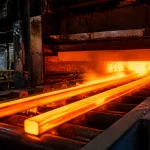
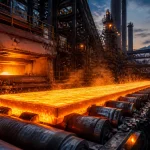
In a high-output steel rolling mill, the reheating stage is the primary determinant of final product quality. Our latest Billet Reheating Furnaces are engineered for capacities ranging from 10 TPH to 120 TPH, achieving consistent discharge temperatures between 700°C and 1320°C.
To maximize yield, the focus must be on soak uniformity. A 10°C deviation across a billet can lead to uneven rolling, increased mill motor load, and high scrap rates. Continental’s 2026 models utilize advanced recuperators to recover waste heat, effectively reducing specific fuel consumption by up to 18% compared to traditional 2020-era designs.

Strategic Maintenance: The Predictive Paradigm
The cost of unplanned downtime in a 24/7 production environment is catastrophic. As a leading industrial furnace manufacturer, we advocate for a shift from reactive to predictive maintenance. By 2026, sensor density in our heat treatment furnaces has tripled, providing a data stream that predicts component fatigue before it occurs.
Critical Maintenance Benchmarks for 2026:
- Refractory Integrity: High-density ceramic fiber insulation (128 kg/m³) with a melting point of 1760°C must be inspected via thermography quarterly.
- Burner Calibration: UV flame supervision and pressure switch checks should be automated via the PLC to ensure 99.9% combustion efficiency.
- Spare Parts Inventory: Critical furnace spare parts, including Honeywell flame scanners and Siemens I/O modules, should be stocked on-site to ensure a Mean Time To Repair (MTTR) of under 4 hours.
Advanced Metal Processing: Efficiency Metrics
Whether you are operating an aluminum melting furnace or a specialized melting furnace for steel, the metrics of success are now granular. In the circular economy, the metal recycling furnace has become a profit center, requiring high-thermal-rating burners (up to 7.4 million Btu/hr) to handle diverse scrap grades.
For those operating a hot dip galvanizing plant, the 2026 efficiency standard is defined by the bath management. Our data indicates that simply implementing an automated bath cover during idle periods can reduce fuel consumption by ~46%.
Comparative Performance: Modern vs. Traditional Systems
| Feature | Traditional System (Pre-2022) | Continental 2026 Smart System | Competitive Advantage |
|---|---|---|---|
| Control Logic | Basic PID Loops | AI-Optimized Multi-Zone PLC | ±3°C Temperature Precision |
| Fuel Efficiency | 35-40% Thermal Efficiency | >65% with Waste Heat Recovery | 30% Lower OPEX |
| Data Access | Manual Log Sheets | Real-Time SCADA & Cloud Sync | ISO 14001 Compliance |
| Downtime | Reactive (Breakdown) | Predictive (Condition-Based) | 98% Annual Availability |

Roadmap to Thermal Excellence: A Phased Strategy
Modernizing your facility is a strategic journey, not a singular transaction. We recommend the following three-phase approach for any manufacturing facility looking to upgrade their industrial furnace systems:
- Phase 1: Thermal Audit & Baseline: Conduct a comprehensive assessment of current fuel-to-yield ratios and heat loss. Use digital twins to simulate the ROI of a furnace re-lining or burner upgrade.
- Phase 2: Digital Overlay: Integrate IoT sensors and Siemens SIMATIC PLC controls onto existing assets. This allows for immediate visibility into inefficiencies without the CAPEX of a full replacement.
- Phase 3: Deep Decarbonization: Transition to high-velocity pulse firing or full electrification. For heavy-duty applications, consider our Bogie Hearth furnaces which handle up to 15 Tons per batch with high-temp designs capable of reaching 1400°C.
Engineering the Future of Industry
The industrial world does not wait for those tethered to legacy technology. As we move further into 2026, the integration of sustainability and profitability is no longer a choice: it is the prerequisite for survival.
At Continental Furnaces, we don't just provide hardware; we deliver a legacy of engineering excellence. Whether you require a customized pit-type annealing furnace or a high-throughput continuous normalising line, our team is ready to consult on your next quantum leap in production efficiency.

Ready to redefine your thermal efficiency? Consult with our senior engineering team today to begin your facility’s 2026 modernization roadmap.