In the demanding landscape of heavy manufacturing, ensuring long-term structural integrity and corrosion resistance is a paramount engineering challenge. Whether you operate a high-throughput steel rolling mill, an automotive stamping facility, or heavy infrastructure production lines, safeguarding metal assets against environmental degradation is non-negotiable. For over three decades, Continental Furnaces has served as a trusted industrial furnace manufacturer, engineering cutting-edge thermal processing equipment that powers modern industrial operations worldwide.
When capital expenditure and operational reliability intersect, investing in or upgrading a hot dip galvanizing plant represents a strategic quantum leap for production facilities. Below are the 10 essential things plant managers, metallurgists, and B2B decision-makers must know before commissioning or expanding a hot dip galvanizing operation.
1. Metallurgical Bonding vs. Simple Barrier Coatings
Unlike traditional paints or organic coatings that merely sit on the surface of steel, hot-dip galvanizing creates an integral metallurgical bond between zinc and iron. When fabricated steel is immersed in a molten zinc bath, a diffusion reaction occurs, forming a series of robust zinc-iron alloy layers topped by an outer layer of pure zinc. This multi-layered metallurgical structure provides exceptional abrasion resistance and cathodic protection, ensuring a maintenance-free service life exceeding 50 years in most atmospheric conditions.
2. Surface Preparation is the Cornerstone of Quality
No matter how advanced your industrial furnace systems are, poor surface preparation will inevitably result in coating failure. The pre-treatment sequence dictates whether the molten zinc will react uniformly with the steel substrate. A world-class plant requires a rigorous multi-stage chemical preparation line:
- Caustic Degreasing: Removing rolling oils, grease, and fabrication lubricants in high-pH alkaline solutions.
- Acid Pickling: Utilizing hydrochloric or sulfuric acid to dissolve mill scale and rust down to bare metal.
- Fluxing: Immersing the cleaned steel in a zinc ammonium chloride solution to prevent oxidation prior to dipping and to promote optimal zinc wetting.

3. Precision Engineering of the Zinc Kettle and Furnace
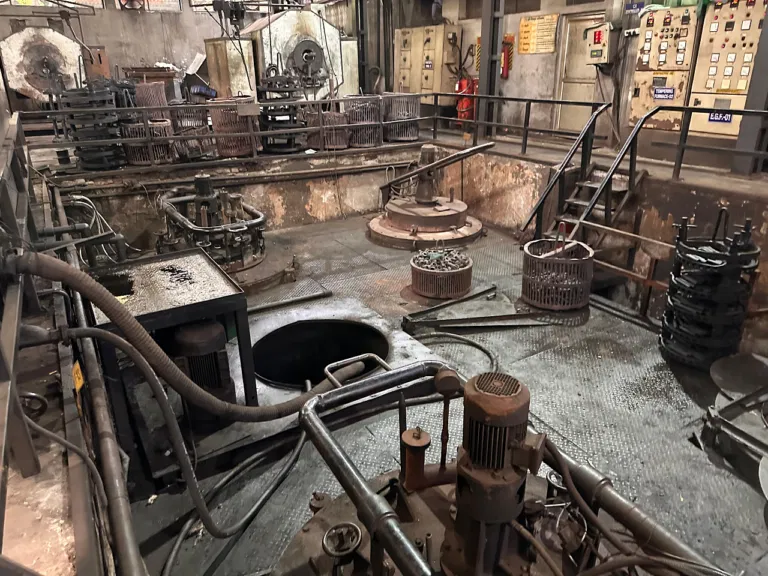
The heart of any galvanizing facility is the zinc kettle and its supporting combustion or heating system. Operating at temperatures around 450°C to 465°C (approx. 830°F–870°F), the kettle requires precise thermal control to avoid localized overheating, which accelerates kettle wall degradation and dross formation. Modern systems incorporate high-efficiency gas, oil, or electric heating designs that ensure temperature uniformity within ±2°C, maximizing energy efficiency and extending vessel lifespan.
4. Integration with Upstream Steel Rolling Mills and Fabrication
For integrated steel mills and heavy fabricators, the galvanizing line should not operate in an isolated silo. Seamless coordination between upstream processes: such as a steel rolling mill or structural fabrication shop: and the galvanizing department eliminates logistical bottlenecks. Automated overhead cranes, conveyor systems, and programmable hoists ensure precise immersion timing and controlled withdrawal speeds, which are vital for controlling coating thickness and surface finish across diverse batch geometries.
5. Managing Bath Chemistry and Alloying Additions
While pure zinc is the primary medium, modern galvanizing lines frequently utilize specialized bath chemistry optimization. Controlled additions of elements such as aluminum, nickel, bismuth, and tin are introduced to enhance bath fluidity, reduce zinc consumption, minimize dross generation, and improve coating brightness. Maintaining strict chemical parameters requires routine laboratory analysis and robust filtration systems to ensure consistent metallurgical performance.
6. Design-for-Galvanizing: Venting, Draining, and Geometry
Before steel enters the galvanizing bath, component design must account for the physical dynamics of molten metal and trapped gases. Inadequate engineering can lead to trapped acid, localized explosions, or bare spots. Plant engineers must ensure that all hollow structural sections, tubular frames, and overlapping joints feature properly sized vent and drain holes. Addressing these geometric considerations during the initial design phase guarantees complete drainage and uniform zinc coverage.

7. Environmental Compliance, Fume Extraction, and Waste Management
Regulatory compliance is a critical operational pillar for modern manufacturing facilities. Acid pickling tanks and molten zinc kettles generate fugitive emissions, acid vapors, and flux fumes that require state-of-the-art extraction hoods and scrubber systems. Furthermore, sustainable plant design mandates efficient management of by-products: such as spent acid, rinse water, zinc ash, and iron-zinc dross: ensuring compliance with global environmental standards and supporting the principles of the circular economy.
8. Synergies Across Thermal Processing Portfolios
A comprehensive thermal processing strategy often extends beyond galvanizing. Industrial facilities frequently integrate their galvanizing lines with specialized heat treatment furnaces (such as pit-type, bell-type, or bogie hearth units), aluminum melting furnaces, and melting furnaces for steel. Additionally, plants operating in the wire and cable industry rely on continuous annealing and galvanizing lines to impart superior mechanical properties to high-tensile wire products. Having a unified equipment ecosystem streamlines maintenance, operator training, and spare parts management.
Comparative Overview: Traditional vs. Modern Advanced Galvanizing Systems
| Performance Parameter | Traditional Galvanizing Setup | Modern Continental Furnaces System |
|---|---|---|
| Thermal Efficiency | Moderate; higher heat loss | High-efficiency combustion / electric heating (90%+ utilization) |
| Temperature Uniformity | ±10°C to ±15°C | Precision controlled within ±2°C |
| Dross Generation | High; frequent kettle skimming required | Optimized thermal profile; minimized dross formation |
| Automation Level | Manual hoist operation; variable dwell times | Fully automated PLC/SCADA control with recipe management |
| Maintenance & Downtime | Periodic unexpected outages | Proactive monitoring, robust alloy kettles, and prompt access to furnace spare parts |
9. Economic Lifecycle and Return on Investment (ROI)
Capital investment in a hot dip galvanizing plant must be evaluated through the lens of total cost of ownership (TCO). While initial equipment costs and energy consumption represent major line items, the long-term savings delivered by eliminated maintenance, superior corrosion resistance, and minimized metal loss yield an exceptionally fast ROI: often within 2 to 3 years of continuous operation. Selecting rugged, heavy-duty equipment engineered for 24/7 industrial duty cycles prevents costly unscheduled downtime.

10. Partnering with an Experienced Industrial Furnace Manufacturer
The single most critical decision in establishing or upgrading your galvanizing facility is selecting the right engineering partner. Building an efficient plant demands deep metallurgical expertise, custom thermal engineering, and uncompromising quality standards. Whether you require a specialized metal recycling furnace, automated annealing lines for the wire and cable industry, or a turnkey hot dip galvanizing plant, collaborating with an established leader ensures end-to-end support from initial design and fabrication to on-site commissioning and lifecycle maintenance.
Elevate Your Industrial Operations Today
Navigating the complexities of thermal processing equipment and heavy galvanizing infrastructure requires a seasoned technical partner committed to your long-term success. At Continental Furnaces, we combine 35+ years of engineering excellence with cutting-edge, energy-efficient technology tailored to your exact production requirements.
Ready to transform your metal processing capabilities and achieve sustained competitive advantage? Contact our engineering consultants today to discuss your custom galvanizing plant requirements and explore our comprehensive portfolio of advanced industrial solutions.