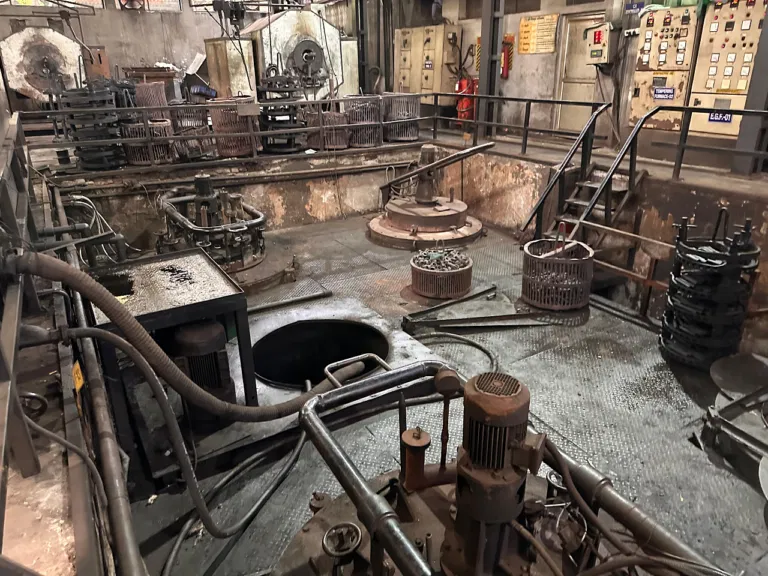
As global manufacturing enters 2026, the industrial landscape faces an unprecedented convergence of stringent environmental regulations, soaring energy costs, and relentless demands for superior metallurgical yield. For more than three decades, Continental Furnaces has stood at the vanguard of thermal processing innovation, partnering with heavy industries worldwide to engineer solutions that redefine operational efficiency. In this Morning Edition of our Industrial Insights series, we examine the macroeconomic shifts, technological leaps, and strategic imperatives shaping the sector this year, with a definitive focus on energy optimization and modern steel manufacturing.
1. The 2026 Energy Efficiency Paradigm in Thermal Processing
The global energy intensity of steelmaking and heavy metal processing has undergone a dramatic structural evolution over recent decades, dropping from historical highs of approximately 50 GJ per tonne of crude steel down to 20.95 GJ/t. However, with carbon pricing mechanisms expanding and energy volatility testing profit margins, metallurgical facilities can no longer rely on incremental adjustments. Energy efficiency is no longer merely a cost-reduction exercise; it is the primary near-term decarbonization lever, projected to deliver up to 19% of total emissions reductions on the net-zero pathway.
As an established industrial furnace manufacturer, we observe that modern plants are achieving quantum leaps in efficiency by combining advanced combustion controls, waste-heat recovery recuperators, and high-emissivity ceramic fiber linings. Specific energy consumption benchmarks in state-of-the-art facilities now demonstrate thermal efficiencies exceeding 85%, drastically slashing fuel consumption per thermal cycle.

2. Steel Manufacturing Advancements & Melting Innovations
The transition toward sustainable, low-carbon steel production is accelerating rapidly in 2026. Global operating capacity for Electric Arc Furnaces (EAFs) has climbed to 34% (727 Mtpa), representing over 71% of all new projects under construction. This structural shift reflects an industry-wide pivot away from coal-intensive blast furnaces toward electrified, scrap-compatible systems.
To support this transition, heavy-duty melting technology has evolved to handle rigorous metallurgical demands without compromising throughput:
- Melting Furnace for Steel: Modern high-capacity induction and electric arc units achieve rapid melt-down times with precise alloy homogenization, maintaining molten bath temperatures between 1,550°C and 1,650°C while minimizing electrical grid disturbances.
- Metal Recycling Furnace: Engineered for high-purity scrap recovery, our advanced rotary and tilting scrap-melting systems capture thermal off-gases to preheat incoming charge material, cutting energy requirements by up to 22%.
- Aluminum Melting Furnace: Incorporating dual-chamber configurations and electromagnetic stirring, these systems ensure zero oxidation loss and uniform thermal distribution for non-ferrous operations.
Seamlessly integrated with a modern steel rolling mill, these advanced melting and reheating platforms ensure uninterrupted hot charging, eliminating intermediate cooling losses and maximizing mill output.
3. Comparative Analysis: Legacy Systems vs. Modern Industrial Furnace Systems
To quantify the operational and financial impact of upgrading thermal assets, plant directors must evaluate traditional legacy equipment against contemporary engineered solutions. The table below outlines the clear performance divergence:
| Performance Metric | Traditional Legacy Furnaces | Modern Industrial Furnace Systems | Advantage / Impact |
|---|---|---|---|
| Thermal Efficiency | 45% – 55% | 82% – 88% | +30% fuel savings, lower OPEX |
| Temperature Uniformity | ±15°C across batch | ±3°C via multi-zone PID | Zero metallurgical defects, flawless grain structure |
| Payback Period on Retrofit | 5 to 7 years | 1.5 to 2.5 years | Rapid ROI and immediate cash flow preservation |
| Downtime & Maintenance | Frequent refractory patching | Modular, high-density monolithic linings | 98.5% plant availability and minimal unplanned outages |
| Emissions & Compliance | High NOx and CO output | Ultra-low NOx burners & off-gas scrubbing | Full regulatory compliance with 2026 environmental standards |

4. Precision Metallurgy: Heat Treatment and Specialized Industrial Applications
Achieving ultimate metallurgical integrity requires precise thermal cycles tailored to exact metallurgical phases. Beyond primary steelmaking, specialized thermal processing equipment dictates the fatigue life, tensile strength, and corrosion resistance of components across aerospace, automotive, and heavy engineering sectors.
Key Sector Applications:
- Heat Treatment Furnaces: Precision-engineered batch and continuous units: including pit, bogie hearth, bell-type, and gas carburizing configurations: deliver exact hardening, annealing, and tempering cycles with automated data logging.
- Hot Dip Galvanizing Plant: Advanced zinc-pot thermal management systems provide superior metallurgical bonding for structural steel fabrications, ensuring decades of corrosion protection in harsh marine and industrial environments.
- Wire and Cable Industry: Continuous vertical and horizontal strand annealing furnaces maintain strict atmosphere control (exothermic/endothermic gas generators) to prevent scaling and achieve optimal elongation properties for high-tensile steel and copper wires.

5. The Strategic 2026 Roadmap to Operational Excellence
Navigating capital expenditure and technological upgrades in 2026 requires a disciplined, phased roadmap. At Continental Furnaces, we champion an enduring partnership model, guiding our clients from initial audit to lifecycle maintenance.
Phase 1: Comprehensive Thermal Audit and Energy Baseline
- Conduct thermographic imaging and flue-gas analysis on existing operating assets.
- Identify parasitic heat losses, refractory degradation, and suboptimal burner stoichiometric ratios.
Phase 2: Custom Engineering and Process Integration
- Design bespoke industrial furnace systems tailored to specific plant throughput, footprint constraints, and metallurgical specifications.
- Integrate Industry 4.0 SCADA controls, enabling real-time AI-driven fuel-air ratio adjustments and predictive maintenance alerts.
Phase 3: Seamless Installation and Commissioning
- Execute precision mechanical and electrical erection during scheduled turnaround windows to eliminate production downtime.
- Calibrate multi-zone temperature uniformity profiles in compliance with international metallurgical standards (e.g., AMS 2750).
Phase 4: Lifecycle Support and Genuine Spares
- Maintain optimal uptime through our rapid-response service network and inventory of high-durability furnace spare parts, including heating elements, radiant tubes, specialized refractory bricks, and thermocouple assemblies.

Conclusion: Secure Your Competitive Advantage Today
The industrial thermal processing sector in 2026 rewards forward-thinking leadership, rigorous energy management, and uncompromising equipment reliability. As a trusted global leader with over 35 years of engineering excellence, Continental Furnaces combines deep metallurgical wisdom with cutting-edge, sustainable manufacturing technology. Whether you are modernizing an existing rolling line, expanding recycling capabilities, or commissioning a new heat treatment facility, our expert engineering team is ready to architect your next quantum leap in profitability.
Contact Continental Furnaces today to schedule your comprehensive thermal audit and discover how our custom-engineered furnace solutions can secure your sustained competitive advantage.