Morning Edition | 13 August 2026
The 2026 steel manufacturing agenda is defined by three commercial imperatives: lower energy intensity, measurable carbon reduction, and higher production resilience. For steelmakers, foundries, recyclers, and downstream manufacturers, furnace performance is no longer confined to the maintenance department. It directly influences yield, product quality, regulatory compliance, operating margins, and customer competitiveness.
The global steel industry produced approximately 1,886 million tonnes in 2024, with average emissions of 2.18 tonnes of CO₂e per tonne of steel, according to worldsteel. The figures establish the scale of the challenge: and the opportunity. Every improvement in combustion, insulation, control, charging, and heat recovery compounds across thousands of operating hours.
For decision-makers planning a new plant or modernizing an existing line, the correct objective is not simply to buy a furnace. It is to develop an integrated, data-driven thermal strategy.
The 2026 Agenda: From Furnace Ownership to Thermal Performance
A modern steel plant must evaluate its furnace systems against five measurable outcomes:
- Specific energy consumption: Fuel or electricity consumed per tonne of saleable output
- Thermal uniformity: Temperature consistency across the workpiece and throughout the load
- Material yield: Reduction in scale, oxidation, melt loss, and rejected product
- Availability: Uptime, maintenance response, and restoration speed after faults
- Carbon intensity: Scope 1 and Scope 2 emissions associated with thermal processing
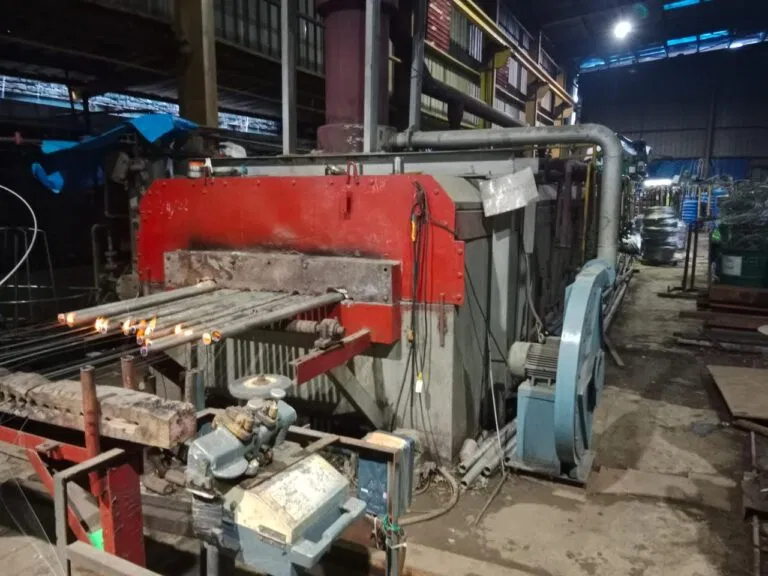
This shift is particularly important for a steel rolling mill, where a reheating furnace is connected directly to mill productivity. A temperature deviation can create cobbles, dimensional variation, surface defects, excess scale, and downstream rejection.
Continental Furnaces’ billet reheating solutions target billets in the approximate range of 1,200°C to 1,250°C, with multi-zone heating and controlled soaking designed to support consistent rolling conditions. Properly engineered recuperative or regenerative systems can reduce fuel consumption by approximately 15–25%, depending on plant configuration, operating profile, and incoming billet temperature.

Where Energy Efficiency Is Created
1. Efficient combustion and heat recovery
Burner selection is a high-impact decision. High-efficiency, oxy-fuel, recuperative, and regenerative technologies can improve heat transfer while reducing exhaust losses. The design must also control excess air, flame distribution, furnace pressure, and combustion stability.
Priority measures include:
- Recuperators that preheat combustion air using exhaust gas
- Regenerative burners for high-temperature applications
- Oxy-fuel systems where oxygen availability and economics support adoption
- Automated air-to-fuel ratio control
- Flue-gas monitoring and off-gas analysis
- Heat recovery for billet preheating, combustion air, or auxiliary process use
The business case must be evaluated through specific fuel consumption, not burner efficiency alone. A furnace that produces a stable flame but loses heat through poor insulation, excessive openings, or long idle periods will underperform.
2. Insulation, refractory, and mechanical integrity
Refractory degradation creates continuous energy leakage and increases shell temperature. Door gaps, damaged hearths, worn seals, and unplanned openings have the same effect.
A disciplined refractory program should track:
- Hot-face wear and cracking
- Shell temperature by zone
- Door and skid-seal condition
- Hearth settlement
- Burner-block integrity
- Heat loss during holding and idle periods
For high-throughput operations, planned maintenance is essential. A small refractory repair during a scheduled shutdown is less disruptive than an emergency failure that stops the entire line.
3. Hot charging and scrap preheating
Hot charging reduces the energy required to bring billets or slabs from ambient temperature to rolling temperature. Similarly, scrap preheating can lower the electrical demand of melting operations.
These measures depend on logistics, material handling, and production synchronization. They require:
- Reliable upstream scheduling
- Insulated transfer systems
- Accurate temperature measurement
- Short transfer distances
- Automated coordination between furnace and mill
The greatest efficiency improvement is often the energy that the furnace does not need to supply.
Comparing Traditional and Modern Furnace Strategies
The following ranges are indicative engineering benchmarks. Actual performance depends on furnace type, material, fuel, production rate, atmosphere, and maintenance quality.
| Performance factor | Traditional furnace operation | Modern integrated furnace system |
|---|---|---|
| Specific fuel consumption in billet reheating | 450–650 MJ/t | 280–380 MJ/t |
| Temperature uniformity | ±20–40°C | Approximately ±10°C with optimized control |
| Heat recovery | Limited or absent | Recuperative/regenerative recovery |
| Scale loss in steel reheating | 2–5% of billet weight | Targeted reduction through controlled heating |
| Process control | Manual setpoints and periodic checks | PLC, SCADA, sensors, historian, analytics |
| Maintenance model | Reactive breakdown repair | Preventive and predictive maintenance |
| Typical modernization route | Full replacement often considered | Controls, burners, refractory, and heat-recovery retrofit |
| Labour requirement | High operator dependence | Lower manual intervention with automation |
| Commercial outcome | Higher fuel cost and variable yield | Improved throughput, yield, compliance, and lifecycle value |
For example, a rolling mill processing 200,000 tonnes annually can recover substantial value by reducing scale loss from 3% to 1.5%. The theoretical recovery is approximately 3,000 tonnes of steel, before accounting for market price and downstream quality benefits.
The Wider Thermal Processing Portfolio
Steel manufacturing is only one part of the industrial thermal ecosystem. A strategic furnace program should address every process that affects energy, quality, and material circularity.
Heat treatment furnaces
Annealing, normalizing, hardening, tempering, and stress relieving demand precise temperature profiles and repeatable cycle control. Modern heat treatment furnaces integrate calibrated thermocouples, atmosphere management, automated loading, and data logging.
For the wire and cable industry, annealing consistency directly affects ductility, tensile performance, surface quality, and drawing performance. A furnace support program should also include rapid access to furnace spare parts, including thermocouples, burners, heating elements, seals, sensors, refractory components, and control modules.
Melting and recycling
A melting furnace for steel must balance capacity, refractory life, electrical or fuel consumption, charge preparation, and metallurgical control. Induction, arc, rotary, and other furnace configurations each serve different feedstocks and production goals.
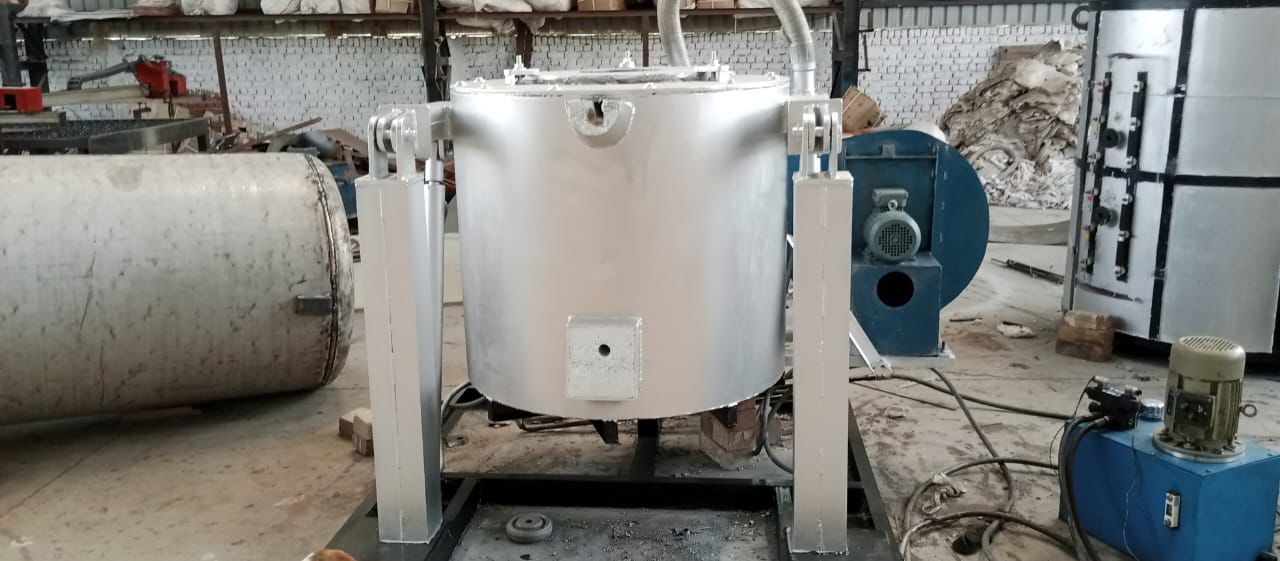
For non-ferrous operations, an aluminum melting furnace can support automotive, casting, extrusion, and recycling applications. Properly designed systems reduce oxidation and dross formation while improving metal recovery. Continental Furnaces’ published technical guidance identifies potential recovery rates above 99% in optimized aluminum melting applications, with energy reductions of approximately 20–30% through efficient burners, automation, and heat recovery.
A dedicated metal recycling furnace also advances the circular economy by converting internal scrap, machining waste, and end-of-life material into saleable feedstock. Worldsteel reports that every tonne of steel scrap used can avoid approximately 1.5 tonnes of CO₂, alongside the consumption of virgin raw materials.
Galvanizing and surface protection
A hot dip galvanizing plant must deliver consistent bath temperature, coating thickness, surface cleanliness, and line speed. Furnace performance is connected to the complete process chain, including pickling, fluxing, drying, zinc control, and emissions management.
The correct approach is therefore an integrated one: thermal processing equipment should be selected around the material, throughput, quality standard, available utilities, and future expansion plan: not around catalogue capacity alone.
Industry 4.0: Turning Furnace Data into Operating Advantage
Digitalization is now an essential part of thermal efficiency. A connected furnace system can capture:
- Energy consumption per batch or tonne
- Zone temperature and load temperature
- Burner status and combustion trends
- Cycle time and idle time
- Door-open duration
- Off-gas temperature and composition
- Refractory and component condition
- Alarm history and maintenance events
This information supports predictive maintenance, real-time setpoint optimization, and traceability. It also allows plant managers to compare actual performance with design intent.
The most valuable Industry 4.0 projects begin with a focused KPI dashboard:
- Energy per tonne
- Furnace availability
- First-pass quality rate
- Scale or melt loss
- Unplanned downtime hours
- Maintenance cost per operating hour
- Carbon emissions per tonne
Digital technology creates value only when the data leads to corrective action.
A Four-Phase Roadmap for 2026 Modernization
Phase 1: Assessment and planning : Weeks 1–4
- Audit fuel, electricity, production, and downtime data
- Map temperature profiles and material flow
- Inspect refractory, burners, seals, controls, and mechanical systems
- Identify regulatory and emissions requirements
- Establish baseline KPIs and a payback model
Phase 2: Engineering and design : Weeks 5–12
- Select furnace type and capacity
- Develop heat-balance and combustion studies
- Specify insulation, refractory, burners, controls, and safety interlocks
- Plan heat recovery and hot-charging integration
- Define spare-part strategy and maintenance access
Phase 3: Implementation and commissioning : Weeks 13–20
- Manufacture or retrofit the system
- Integrate PLC, SCADA, sensors, and production interfaces
- Conduct cold commissioning and hot trials
- Validate temperature uniformity and energy performance
- Train operators, maintenance teams, and quality personnel
Phase 4: Optimization and lifecycle support : Ongoing
- Review energy and yield KPIs monthly
- Calibrate instruments and optimize burner settings
- Maintain critical furnace spare parts
- Use predictive alerts to prevent failures
- Plan control upgrades and capacity expansion
Why the Industrial Furnace Manufacturer Matters
The equipment supplier determines more than the initial capital cost. Over a furnace lifecycle of 15–20 years, energy, maintenance, downtime, spares, training, and modernization can account for the majority of total ownership cost.
Continental Furnaces brings 35+ years of engineering experience, ISO-certified quality practices, customized design capability, and responsive technical support to industrial furnace projects. The objective is an enduring partnership that protects uptime, improves yield, and keeps the system commercially relevant as production requirements change.
Learn more about billet reheating furnace engineering, industrial aluminum melting applications, and long-term furnace service and spare-parts support.
The Morning Decision for Industrial Leaders
The 2026 steel agenda is not a distant sustainability exercise. It is an immediate profitability and resilience mandate. Efficient furnace systems reduce energy exposure, protect material yield, improve production consistency, and strengthen regulatory readiness.
Begin with an energy and thermal-performance assessment. Contact Continental Furnaces to discuss your steel rolling mill, heat treatment, melting, recycling, galvanizing, or wire and cable industry requirements.
A technically correct furnace decision today is a direct investment in sustained competitive advantage.