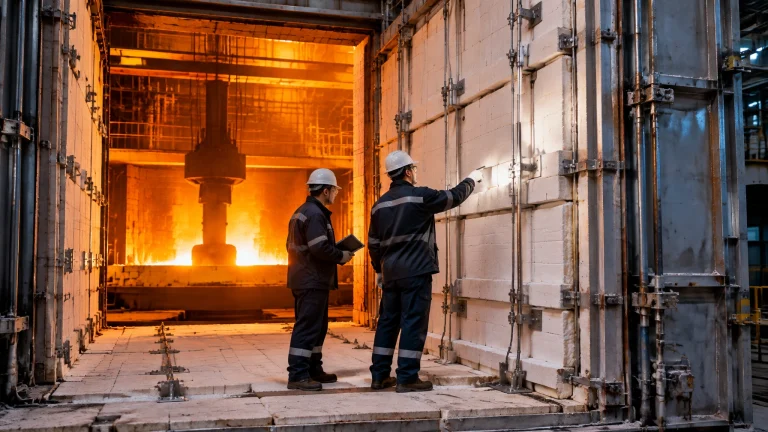
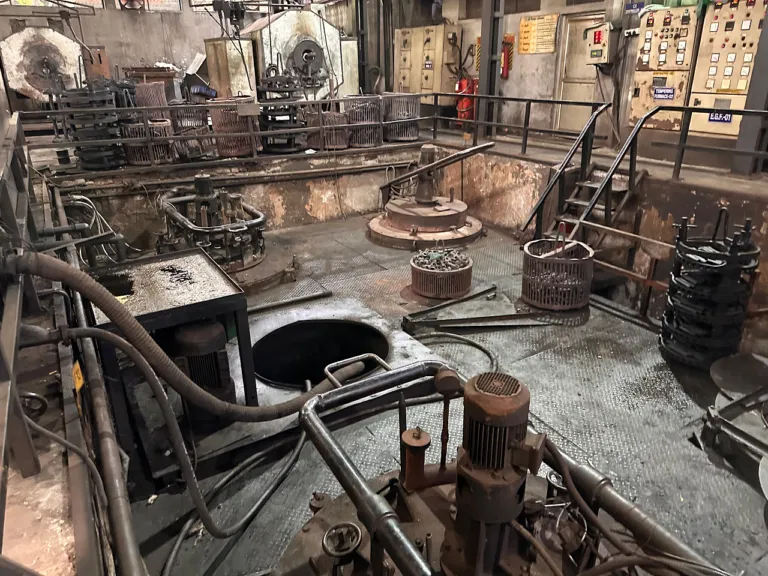
The industrial furnace is entering its most significant transformation in decades. In 2026, thermal processing is moving beyond fixed recipes, manual adjustments, and reactive maintenance toward autonomous, data-driven production.
Artificial intelligence is now being integrated with temperature sensors, burner-management systems, energy meters, quality databases, and plant-wide automation platforms. The objective is precise and measurable: reduce energy consumption, improve metallurgical consistency, prevent unplanned downtime, and increase production yield.
For steel rolling mills, wire and cable plants, foundries, galvanizing operations, and non-ferrous metal processors, autonomous thermal processing represents a quantum leap in operational control. It does not eliminate engineering expertise. It amplifies it.
What Is Autonomous Thermal Processing?
Autonomous thermal processing combines conventional furnace engineering with digital technologies that continuously interpret operating conditions and optimize process decisions.
A modern system may integrate:
- Multi-zone temperature measurement
- Oxygen, pressure, flow, and combustion monitoring
- Fuel and electricity metering
- Product tracking and load identification
- PLC, SCADA, and MES connectivity
- Digital twins and physics-based furnace models
- Machine learning and model predictive control
- Predictive maintenance alerts
- Automatic quality and energy reporting
The evolution generally follows three stages:
- Advisory control: The system recommends setpoint or maintenance actions.
- Semi-autonomous control: The system applies approved adjustments within defined safety limits.
- Autonomous control: The system continuously optimizes the furnace, while operators retain strategic oversight and exception authority.
This progression is particularly valuable for facilities operating continuous heat treatment furnaces, reheating furnaces, annealing lines, melting furnaces, and galvanizing plants.
AI-Driven Furnace Control: From Fixed Recipes to Dynamic Optimization
Traditional furnace recipes are usually based on nominal load conditions. They may not respond quickly enough to changes in:
- Billet or slab dimensions
- Alloy chemistry
- Charging temperature
- Line speed
- Mill delays
- Ambient conditions
- Burner performance
- Refractory degradation
AI-driven control changes this model. It evaluates live data and adjusts the thermal process before deviations become defects or energy losses.
For example, a reheat furnace serving a rolling mill can coordinate:
- Zone temperatures
- Slab residence time
- Discharge temperature
- Mill speed
- Fuel flow
- Combustion air
- Furnace pressure
Research and industrial case studies report 5–12% fuel savings in reheat furnace optimization, while advanced model predictive control platforms report potential reductions of 10–25% in fuel, electricity, and associated emissions, depending on the furnace design, baseline performance, and operating discipline.
The critical point is not the headline percentage. It is the control philosophy: the furnace responds to production reality rather than operating on assumptions.

The Business Case: Traditional Control Compared with Autonomous Operation
| Performance area | Traditional furnace operation | Autonomous thermal processing |
|---|---|---|
| Temperature management | Fixed recipes and periodic operator checks | Continuous sensing and dynamic setpoint optimization |
| Energy consumption | Higher risk of over-heating and idle losses | Typically targeted reduction of 5–25%, subject to validation |
| Temperature uniformity | Dependent on manual adjustment and burner balance | Zone-by-zone control with predictive correction |
| Maintenance strategy | Calendar-based or breakdown maintenance | Condition-based and predictive maintenance |
| Operator workload | Frequent manual intervention | Strategic supervision and exception management |
| Quality response | Defects identified after processing | Early warning and quality prediction |
| Reporting | Manual logs and disconnected records | Automatic energy, quality, and compliance dashboards |
| Return on investment | Difficult to quantify | Measured through energy, uptime, yield, and maintenance KPIs |
A properly engineered project establishes a baseline before automation begins. This allows the plant to validate improvements in energy per tonne, first-pass yield, unplanned downtime, cycle time, and maintenance cost.
Predictive Maintenance: Protecting the Furnace Before Failure
A furnace rarely fails without warning. Burner instability, rising exhaust temperature, fan vibration, thermocouple drift, refractory wear, hydraulic leakage, and abnormal electrical demand often develop over weeks or months.
Predictive maintenance systems identify these patterns before they become production stoppages.
Key assets monitored by AI analytics
- Burners, valves, regulators, and ignition systems
- Thermocouples and pyrometers
- Heating elements and electrical connections
- Combustion air fans and exhaust systems
- Furnace doors, seals, and lifting mechanisms
- Refractory linings and insulation
- Conveyor drives and charging systems
- Cooling-water circuits
- Hydraulic and pneumatic equipment
A digital maintenance layer compares live performance with historical and physics-based baselines. It can flag conditions such as:
- A burner consuming more fuel for the same thermal output
- A fan drawing abnormal current
- A thermocouple producing unstable readings
- A refractory zone losing thermal efficiency
- A door seal causing heat leakage
- A heating element approaching failure
This enables maintenance teams to schedule interventions during planned shutdowns instead of reacting to emergency stoppages. In high-throughput metal operations, that distinction is decisive. Continental Furnaces’ guidance on furnace spares and accessories reinforces the same principle: critical components must be identified, stocked, and replaced according to actual condition and operational risk.
Digital Twins and Industry 4.0 Integration
A digital twin is a virtual representation of a furnace or thermal line that combines equipment data, process models, and operating history.
For a rolling mill reheating furnace, the digital twin can estimate:
- Heat transfer through each zone
- Product temperature gradients
- Energy consumption per tonne
- Expected discharge temperature
- Impact of mill delays
- Burner and refractory performance
- Production bottlenecks
For melting and recycling operations, it can support charge planning, melt-rate analysis, fuel optimization, and metal-loss reduction. These capabilities are directly relevant to high-capacity melting furnace operations and aluminium recycling projects.
The digital twin also creates a common information layer between the furnace and the wider factory. Data can flow to:
- MES platforms for production scheduling
- ERP systems for cost analysis
- Quality systems for traceability
- Energy-management systems for sustainability reporting
- Maintenance platforms for work-order generation
This is the foundation of smart manufacturing: the furnace becomes an intelligent production asset rather than an isolated machine.
A Practical 2026 Roadmap for Autonomous Furnace Adoption
Phase 1: Assessment and Planning
Begin with a detailed operational baseline.
Measure:
- Fuel and electricity consumption
- Energy per tonne or per batch
- Temperature uniformity
- Cycle and residence time
- Reject and rework rates
- Unplanned downtime
- Maintenance expenditure
- Current instrumentation quality
Select one high-value business problem. Energy optimization, refractory-life prediction, or burner performance often provides a clear starting point.
Phase 2: Data and Instrumentation
AI cannot correct poor data. The plant must first establish reliable measurement.
Priorities include:
- Calibrated temperature sensors
- Fuel-flow and electricity meters
- Combustion and furnace-pressure transmitters
- Vibration monitoring for rotating equipment
- Consistent product and quality records
- Secure PLC, SCADA, and historian connectivity
Phase 3: Advisory Analytics
Deploy dashboards and alerts without immediately changing automatic control logic. Operators and engineers should validate the recommendations against actual production conditions.
This stage builds confidence while identifying:
- False alarms
- Sensor faults
- Data gaps
- Unsafe operating boundaries
- Process constraints that require redesign
Phase 4: Semi-Autonomous Control
Allow the system to adjust approved parameters within strict limits. Maintain manual override, alarm management, and documented escalation procedures.
Suitable early applications include:
- Fuel-air ratio optimization
- Zone-temperature correction
- Idle-mode reduction
- Fan-speed optimization
- Charge scheduling
- Maintenance alerts
Phase 5: Autonomous Optimization and Continuous Improvement
Once the system demonstrates stable results, expand control across connected furnaces and auxiliary equipment. Review performance monthly using verified KPIs rather than software activity.
The objective is not simply more automation. It is sustained improvement in profitability, quality, safety, and regulatory compliance.
Sustainability and the Circular Economy
Autonomous control supports the circular economy by reducing energy waste and improving material yield. Better thermal uniformity reduces scrap and rework. More accurate melting control limits oxidation and metal loss. Predictive maintenance extends the service life of refractories, burners, fans, and structural components.
For galvanizing and metal-coating operations, intelligent process control can also improve bath management, heating stability, and coating consistency. Continental Furnaces’ cold dip galvanizing plant solutions demonstrate how thermal equipment forms part of a broader corrosion-protection and metal-value chain.
Energy and emissions data can additionally support internal sustainability targets and energy-management frameworks such as ISO 50001, provided the plant validates its measurement methodology and maintains auditable records.

The Enduring Partnership Behind Autonomous Thermal Processing
Technology alone does not deliver autonomous performance. Success depends on furnace design, sensor selection, control engineering, operator training, commissioning, spare-parts availability, and lifecycle service.
With more than 35 years of thermal-processing expertise, Continental Furnaces approaches modernization as an enduring partnership. Each solution must reflect the client’s alloy range, throughput, product geometry, fuel availability, labour model, emissions requirements, and expansion plans.
The winning strategy for 2026 is clear: start with a measurable operational problem, build a reliable data foundation, and scale autonomy through controlled engineering phases.
Contact Continental Furnaces through our consultation and quotation page to assess your furnace performance, identify the highest-value automation opportunity, and begin the move toward sustained competitive advantage.