Afternoon Edition | 23 August 2026
Industrial furnace performance is now measured beyond temperature and throughput. Plant leaders are evaluating energy intensity, equipment availability, product yield, emissions performance, and the speed at which operating teams can act on reliable data.
For a steel rolling mill, heat-treatment line, galvanizing facility, foundry, or operation in the Wire and cable industry, three priorities define the next technology cycle:
- Recovering thermal energy that would otherwise leave through the stack
- Predicting failures before they become production stoppages
- Building an automation architecture ready for 2026 and beyond
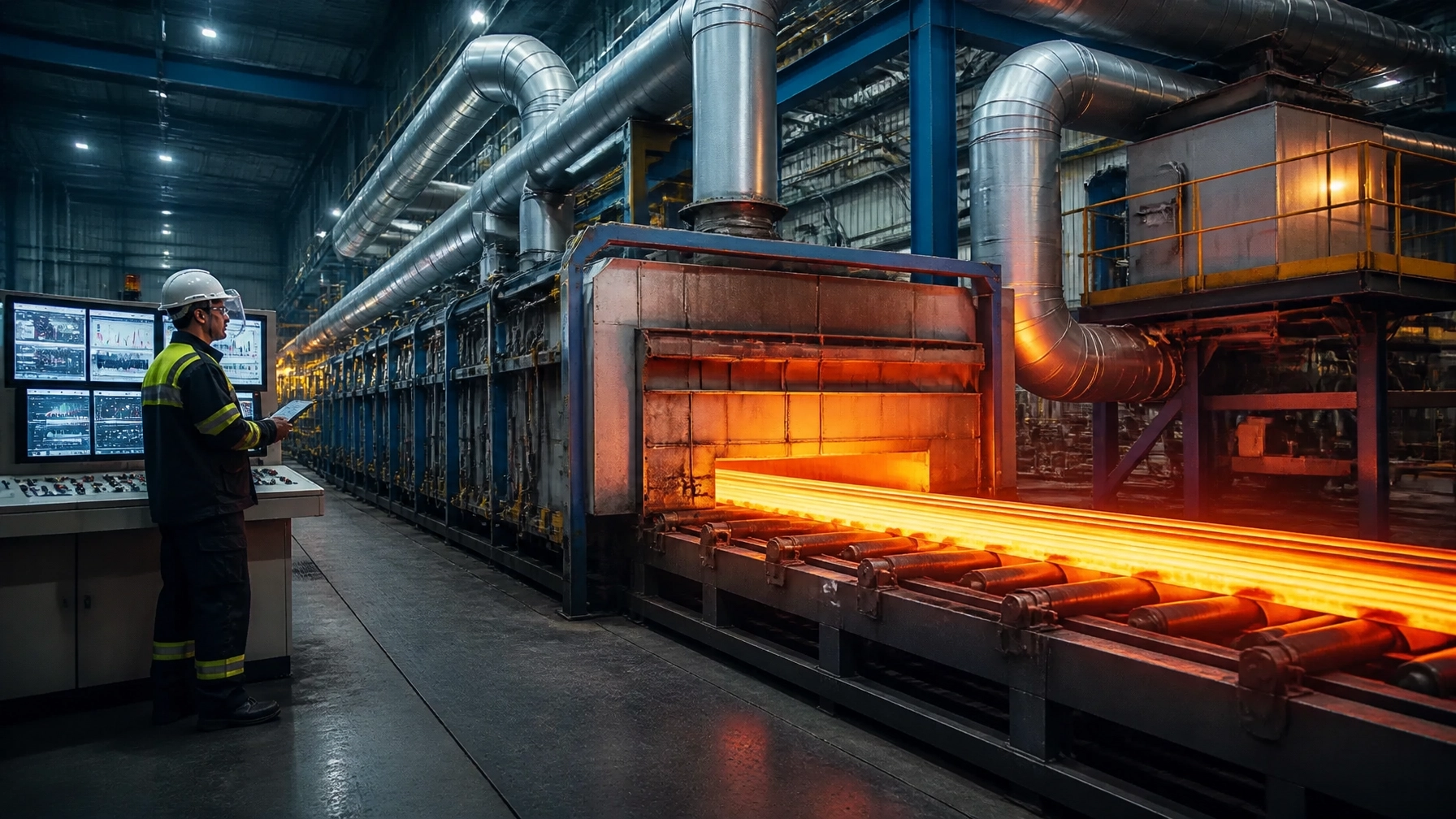
The modern furnace is no longer an isolated heating chamber. It is a connected production asset within a broader system of thermal processing equipment, digital controls, maintenance intelligence, and energy compliance.
Heat Recovery Economics: Convert Exhaust Losses into Operating Profit
In many gas-fired industrial furnace systems, a significant portion of the fuel input exits as hot exhaust gas. The economic question is not whether waste heat exists. It is whether the plant can recover it safely, use it productively, and achieve a measurable return on investment.
Where Waste Heat Recovery Creates Value
Common recovery routes include:
- Recuperators: Transfer exhaust heat directly to combustion air.
- Regenerative burners: Store heat cyclically and deliver very high combustion-air preheat.
- Waste heat recovery units: Transfer exhaust energy to process air, water, steam, or other plant utilities.
- Scrap or billet preheating: Use recovered energy before material enters the furnace.
- Thermal storage: Store recovered heat for use during peak energy-price periods.
Depending on furnace design, load profile, exhaust temperature, and baseline condition, recuperative systems can deliver 15–30% fuel-saving potential. Broader furnace modernization programmes, including sealing, insulation, burner balancing, and automated air-to-fuel control, can achieve 20–30% energy reduction in suitable applications.
A European Union-funded continuous furnace project demonstrated heat recovery from exhaust at approximately 450°C, raising the recovered energy to 600°C for storage and reuse. The project illustrates an important principle: heat recovery economics improve when recovered energy can be decoupled from the exact timing of furnace demand.
A Practical ROI Model
A credible business case should quantify:
- Annual fuel or electricity consumption
- Exhaust temperature and flow
- Recoverable thermal energy
- Operating hours and production load
- Energy tariff and demand-charge exposure
- Installation and integration costs
- Maintenance and cleaning requirements
- Expected annual savings
For example, if a furnace consumes ₹1.2 crore of fuel annually and a recovery project reduces fuel demand by a validated 18%, the gross annual saving is approximately ₹21.6 lakh before maintenance and financing costs. On a project investment of ₹60 lakh, the simple payback is approximately 2.8 years.
Actual performance must be confirmed through an engineering survey. A heat exchanger that creates excessive pressure drop, fouling, corrosion, or production instability will not deliver its projected financial value.
| Performance area | Traditional furnace approach | Modern recovery-led approach |
|---|---|---|
| Exhaust management | Hot gases discharged to atmosphere | Exhaust energy measured and recovered |
| Combustion air | Ambient temperature | Preheated through recuperation or regeneration |
| Fuel intensity | High and difficult to track | Targeted in GJ/t or kWh/t |
| Scrap or billet charging | Cold charge | Preheating opportunity evaluated |
| ROI visibility | Based on estimated fuel reduction | Validated through metering and baseline comparison |
| Typical project outcome | Ongoing thermal loss | 15–30% fuel-saving potential in suitable applications |

Sector Applications: One Strategy, Different Thermal Duties
Heat recovery must be engineered around the process, not installed as a generic package.
Steel Rolling Mill Operations
A reheating furnace serving a steel rolling mill must coordinate furnace temperature with billet grade, section size, charging temperature, and mill speed. The highest-value upgrades typically include:
- Recuperative or regenerative burners
- Automated air-to-fuel ratio control
- Billet temperature measurement at discharge
- Furnace-pressure monitoring
- Digital coordination between furnace and rolling mill
- Heat recovery for combustion air or billet preheating
The critical KPI is not furnace temperature alone. It is fuel consumption per tonne at the required discharge temperature, without increasing scale formation or reducing rolling quality.
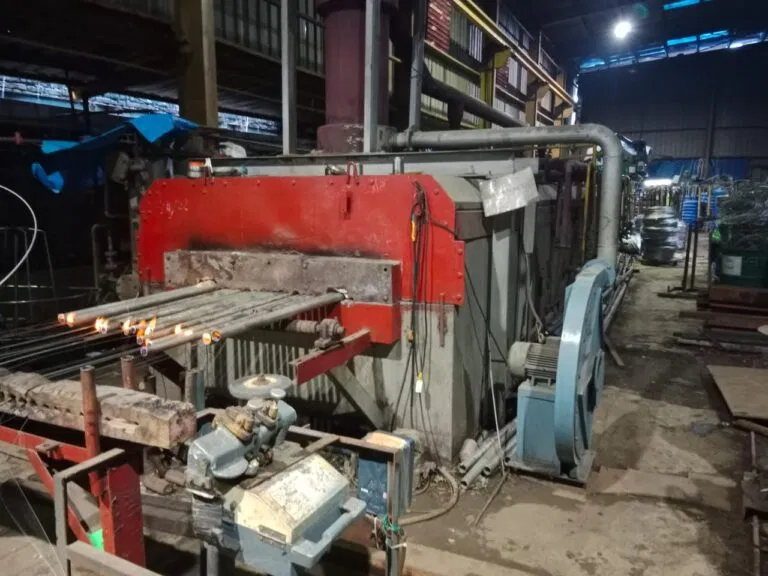
Heat Treatment Furnaces and the Wire and Cable Industry
In continuous annealing and wire-processing applications, temperature uniformity and residence time directly affect tensile strength, ductility, surface quality, and downstream drawing performance.
A modern system should monitor:
- Zone temperature and strip or wire temperature
- Line speed and residence time
- Atmosphere composition
- Burner or heating-element performance
- Cooling rate
- Protective atmosphere consumption
- Energy per tonne of treated product
For the Wire and cable industry, stable operation is essential because a furnace interruption can disrupt drawing, coating, spooling, and delivery schedules across the entire line.
Galvanizing and Metal Recycling
A hot dip galvanizing plant requires accurate thermal control to prepare steel for consistent coating quality. Recovery systems can preheat combustion air or incoming material while digital controls maintain zone stability and reduce unnecessary holding energy.
In a metal recycling furnace, the challenge is variable charge composition. Scrap moisture, contamination, alloy mix, and bulk density change the melt curve. Automated charging, off-gas monitoring, and recovered heat for scrap preheating improve both energy performance and melt consistency.
For an aluminum melting furnace, improved control also protects yield. Lower oxidation and shorter holding periods can reduce dross formation and preserve saleable metal. Continental Furnaces’ published application guidance identifies 20–30% energy-saving potential for suitable combinations of automation, efficient burners, and regenerative heat recovery, with project payback commonly assessed over 12–24 months depending on operating conditions.
Predictive Maintenance Roadmap: From Failure Response to Asset Intelligence
Reactive maintenance treats symptoms. Predictive maintenance identifies deterioration while the furnace is still producing.
A sensor-driven programme should trend:
- Burner ignition time and flame stability
- Fan vibration and motor current
- Valve response and actuator travel
- Recuperator temperature differential
- Furnace pressure
- Thermocouple drift and pyrometer disagreement
- Refractory hot spots
- Door and expansion-joint leakage
- Hydraulic and pneumatic cycle performance
- Off-gas temperature, oxygen, and pressure loss
The objective is not to collect data for its own sake. The objective is to connect abnormal behaviour to a maintenance decision.
Phase 1: Establish the Baseline
Record normal operating signatures for each furnace duty:
- Temperature profile
- Fuel flow
- Energy per tonne
- Start-up duration
- Cycle time
- Fan vibration
- Burner performance
- Alarm frequency
- Product quality results
Phase 2: Classify Failure Modes
Rank components by production impact and failure probability. A thermocouple may be inexpensive, but its failure can invalidate a heat-treatment cycle. A fan bearing or safety relay may stop an entire continuous line.
Phase 3: Connect Sensors to Action
Integrate PLC and SCADA data with a historian, CMMS, or ERP platform. A useful alert should state:
- What is changing
- Why it matters
- The likely failure mode
- The recommended inspection
- The required spare part
- The available maintenance window
Phase 4: Build a Critical Furnace Spare Parts Strategy
A site-specific inventory should typically include:
- Burner nozzles, ignition electrodes, flame scanners, and valves
- Thermocouples, pyrometers, transmitters, and signal conditioners
- Recuperator and regenerator components
- Refractory modules, castables, anchors, and seals
- Fans, bearings, dampers, and VFD components
- PLC modules, HMI components, safety relays, and communication cards
- Hydraulic cylinders, pneumatic actuators, and solenoid valves
Stocking every component is inefficient. Stocking the right furnace spare parts is essential. Rank each item by lead time, interchangeability, failure criticality, and production exposure.
Continental Furnaces’ service guidance identifies preventive maintenance programmes as capable of delivering 25–40% downtime reduction in suitable operations through early detection, calibration, planned replacement, and improved operating discipline.

The 2026 Automation Roadmap
Phase 1: Assessment and Planning
Complete a four-week engineering baseline covering:
- Fuel and electricity consumption
- Production throughput
- Temperature uniformity
- Exhaust temperature and composition
- Downtime history
- Refractory condition
- Existing PLC, SCADA, and data systems
- Energy and emissions compliance obligations
Phase 2: Digital Foundation
Install calibrated instrumentation for temperature, flow, pressure, oxygen, vibration, and energy consumption. Standardize equipment tags and connect systems through secure industrial communication protocols such as OPC UA, published as IEC 62541.
Phase 3: Controls and Energy Upgrade
Prioritize improvements that produce measurable operational value:
- Closed-loop air-to-fuel ratio control
- Automated furnace-pressure regulation
- Digital recipes and batch traceability
- Off-gas analytics
- Recuperators or regenerative burners
- Emissions monitoring
- Remote diagnostics
- Safety-system modernization
Hydrogen-ready combustion is also entering strategic planning. However, hydrogen readiness requires validated burner capacity, gas-train compatibility, flame detection, ventilation, purge logic, safety zoning, and NOx management. It is an integrated engineering specification, not a label applied to a burner.
Phase 4: Digital Twin and Continuous Optimization
A validated digital twin can model:
- Zone temperature
- Material temperature at discharge
- Residence time
- Fuel intensity
- Burner performance
- Refractory degradation
- Production scheduling
- Energy-price response
The Fraunhofer digital furnace twin programme distinguishes between fast models for real-time control and high-precision models for furnace development. This distinction matters: a dashboard is not a digital twin unless it supports validated operating decisions.
Why the Industrial Furnace Manufacturer Matters
The technology roadmap is only as strong as the engineering partner supporting it. Continental Furnaces brings more than 35 years of expertise in customized thermal processing solutions, energy-efficient technology, ISO-certified quality, and responsive lifecycle service.
Our capabilities include:
- Steel rolling mill reheating and thermal processing
- Heat treatment furnaces and annealing systems
- A melting furnace for steel and non-ferrous applications
- Aluminum melting furnace solutions
- Hot dip galvanizing plant systems
- Metal recycling furnace projects
- Furnace spare parts and accessories
- Continuous systems for the Wire and cable industry
Explore metal recycling projects, review aluminum melting applications, or examine our furnace spare parts and accessories.
Conclusion: Make Thermal Intelligence a Competitive Advantage
Heat recovery reduces energy intensity. Predictive maintenance protects uptime. Digital automation creates the visibility required for compliance, quality, and continuous improvement.
The winning strategy for 2026 is clear:
- Measure the thermal baseline
- Recover economically usable heat
- Monitor failure indicators continuously
- Maintain critical furnace spare parts
- Upgrade controls in defined phases
- Build toward digital-twin-enabled optimization
Do not treat modernization as a collection of isolated upgrades. Treat it as an enduring partnership between your production team and an experienced industrial furnace manufacturer.
Contact Continental Furnaces for a plant-specific assessment of your furnace efficiency, maintenance exposure, automation maturity, and recovery potential. Take the decisive step toward sustained competitive advantage.