The 2026 Furnace Agenda: Reliability, Efficiency and Intelligent Thermal Processing
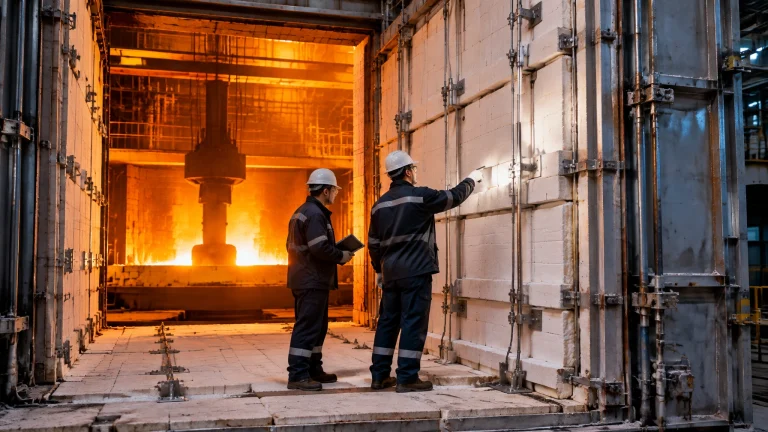
As the afternoon shift moves into its most demanding production window, furnace performance becomes a direct measure of operational discipline. A small deviation in furnace temperature, combustion, refractory condition or material handling can increase fuel consumption, scale loss, rejected output and unplanned downtime.
For manufacturers operating a steel rolling mill, wire drawing line, galvanizing facility, recycling plant or heat-treatment department, furnace performance must now be managed as a complete business system: not as an isolated heating chamber.
The 2026 agenda is clear:
- Reduce specific energy consumption per tonne processed.
- Protect yield and metallurgical quality.
- Increase equipment availability.
- Replace reactive maintenance with condition-based intervention.
- Prepare existing assets for electrification, hydrogen-ready combustion and digital control.
- Build a reliable supply chain for furnace spare parts and critical components.
Continental Furnaces brings 35+ years of expertise to this challenge, combining energy-efficient technology, customized engineering, ISO-certified quality and prompt service to support customers throughout the complete equipment lifecycle.
Why Furnace Reliability Is a Profitability KPI
A furnace affects more than temperature. It determines the quality, throughput and cost structure of the downstream process.
In a steel rolling mill, reheating commonly takes place around 1,100–1,250°C, depending on grade, billet dimensions and rolling requirements. The UNDP’s Low-carbon Technology Packages for Mini Steel Plants identifies several proven efficiency measures, including recuperators, automated combustion control, improved refractory design and direct rolling.
The same principle applies across industrial furnace systems:
- In heat treatment, temperature uniformity and atmosphere control determine hardness, strength and distortion.
- In aluminum melting furnace operations, charge preparation, superheat control and dross management influence metal recovery.
- In a melting furnace for steel, power quality, refractory integrity and tapping discipline determine cycle time and yield.
- In a hot dip galvanizing plant, strip heating and annealing stability directly affect coating quality and line speed.
- In the wire and cable industry, annealing consistency influences ductility, conductivity and surface finish.
The commercial impact is measurable. The UNDP compendium cites examples of energy-efficient reheating furnace projects achieving 15–24-month payback periods, while high-efficiency recuperator upgrades can achieve payback in approximately 5–12 months, depending on operating hours, fuel costs and furnace design.
Maintenance Strategy: From Calendar-Based to Condition-Based
Maintenance must protect the furnace’s three most important performance zones:
- Thermal containment
- Combustion or electrical heating
- Measurement and control
A disciplined maintenance plan should combine preventive inspections with predictive monitoring.
Daily and Weekly Checks
Operators should record:
- Furnace temperature by zone.
- Furnace pressure and draft.
- Fuel, electricity and combustion-air consumption.
- Burner flame condition or electrical load stability.
- Door, seal and charging-system condition.
- Abnormal shell temperatures and visible hot spots.
- Thermocouple alarms and control-system deviations.
- Cooling-water pressure, flow and temperature where applicable.
The purpose is not simply recordkeeping. Trend data reveals deterioration before it becomes a shutdown.
Monthly and Quarterly Checks
Maintenance teams should inspect:
- Burner nozzles, pilots, flame scanners and air registers.
- Recuperator or regenerative burner surfaces.
- Flue ducts, dampers, fans and expansion joints.
- Thermocouples, oxygen probes, pressure sensors and wiring.
- Refractory cracks, spalling, chemical attack and hot spots.
- Conveyor rollers, pusher mechanisms, hearth components and drives.
- Power cables, capacitors, cooling circuits and control panels in electric furnaces.
Infrared scanning is particularly effective for detecting developing refractory failure. A gradual increase in shell temperature indicates a potential loss of lining thickness or insulation performance.
Annual Shutdown and Overhaul
An annual outage should include:
- Full refractory inspection and thickness assessment.
- Thermocouple and instrument calibration.
- Burner combustion analysis.
- Fan, bearing and motor inspection.
- Door seal replacement where required.
- Flue and recuperator cleaning.
- PLC, HMI and safety-interlock verification.
- Review of maintenance history and recurring failures.
- Critical inventory audit for furnace spare parts.
Continental Furnaces supplies furnace spares and accessories to support maintenance across different furnace types. Maintaining a defined stock of thermocouples, burner components, seals, refractory materials, heating elements and control hardware reduces the risk of extended downtime.

2026 Technology Updates to Watch
1. Intelligent Heat Treatment Furnaces
Heat treatment furnaces are evolving into intelligent production assets. The latest industry discussions emphasize:
- Automated recipe management.
- Real-time temperature uniformity monitoring.
- Digital quality records.
- Predictive maintenance.
- Automated gas cooling and quench control.
- Data integration with plant-level manufacturing systems.
The Furnace Technology Track at FNA 2026 highlights technologies designed to reduce heat loss, improve temperature uniformity and identify chamber deterioration before failure. This shift is essential for automotive, aerospace, toolmaking and high-value component manufacturing, where repeatability is a commercial requirement.
2. Hydrogen-Ready Combustion
Hydrogen-ready burners are becoming a strategic option for steel reheating and radiant-tube applications. At INFUB 2026, Fives presented flexible combustion technologies designed to operate with hydrogen-enriched fuel mixes, including systems targeting steel reheating and radiant tube furnaces.
For a steel rolling mill or galvanizing line, hydrogen readiness does not mean immediate conversion to 100% hydrogen. A practical roadmap may include:
- Burner and gas-train compatibility assessment.
- Flame-stability and heat-transfer evaluation.
- NOx measurement and control.
- Piping, safety and leak-detection review.
- Blended-fuel trials.
- Progressive integration as fuel availability improves.
3. Electrification and High-Efficiency Melting
Electrification is expanding across melting and thermal processing applications. Induction technology remains attractive because it provides rapid heating, controllable power input and clean working conditions.
The UNDP compendium reports that IGBT-based induction systems can reduce specific energy consumption compared with older thyristor-based systems. In one cited 10-tonne example, specific energy consumption decreased from 645 kWh/t to 574 kWh/t.
For an aluminum melting furnace or metal recycling furnace, the appropriate solution depends on:
- Scrap composition and bulk density.
- Required melt rate.
- Holding-time requirements.
- Dross generation.
- Available electrical capacity.
- Desired temperature and alloy control.
- Integration with casting or rolling equipment.
Electrification must therefore be engineered around the complete process rather than selected as a standalone equipment purchase.
Traditional Versus 2026-Ready Furnace Systems
| Performance area | Traditional approach | 2026-ready approach |
|---|---|---|
| Temperature control | Manual adjustment and operator experience | PLC, PID, recipe control and digital feedback |
| Maintenance | Fixed calendar intervals | Preventive plus condition-based monitoring |
| Energy management | Total fuel or power consumption | Specific energy per tonne and zone-level analysis |
| Combustion | Fixed air-fuel settings | Oxygen feedback, VFD control and automated tuning |
| Refractory management | Repair after visible failure | IR scanning, thermocouple trends and planned repair |
| Fuel strategy | Single-fuel dependency | Hydrogen-ready, hybrid or electrification pathway |
| Spare parts | Emergency procurement | Critical spares inventory and planned replenishment |
| Business result | Unstable cost and availability | Higher yield, lower downtime and lifecycle profitability |
A Practical 2026 Upgrade Roadmap
Phase 1: Assessment and Planning
Begin with a technical and commercial baseline:
- Measure fuel or electricity consumption per tonne.
- Map production losses, scale loss and furnace idle time.
- Review refractory and burner history.
- Identify critical failure modes.
- Audit controls, instrumentation and safety systems.
- Calculate the cost of one hour of furnace downtime.
Phase 2: Low-Capital Improvements
Prioritize actions with immediate operational value:
- Seal furnace doors and inspection openings.
- Repair damaged insulation.
- Clean recuperators and flues.
- Tune air-fuel ratios.
- Calibrate temperature sensors.
- Eliminate unnecessary superheating.
- Improve charging sequences.
- Align preventive maintenance with heat count and production cycles.
Phase 3: Targeted Modernization
Next, evaluate:
- Recuperative or regenerative burners.
- VFD-based combustion-air control.
- Advanced PLC and HMI systems.
- Scrap preheating and waste-heat recovery.
- IGBT induction power upgrades.
- Improved refractory systems.
- Automated material handling and direct rolling.
Phase 4: Future-Ready Integration
For the next capital cycle, specify:
- Hydrogen-compatible combustion systems.
- Electric radiant or induction heating where practical.
- Remote condition monitoring.
- Digital maintenance records.
- Energy dashboards and production analytics.
- Modular components that simplify future upgrades.
Continental Furnaces: An Enduring Engineering Partnership
Selecting an industrial furnace manufacturer is a long-term operational decision. The equipment must be correctly designed, installed, commissioned, maintained and supported over many years.
Continental Furnaces designs and supplies customized thermal processing equipment for ferrous and non-ferrous applications, including:
- Heat treatment furnaces.
- Steel and non-ferrous melting systems.
- Metal recycling furnace projects.
- Annealing systems for the wire and cable industry.
- Hot dip galvanizing plants.
- Pickling and coating plants.
- Furnace spares and accessories.
- Complete industrial furnace systems and modernization projects.
With more than 35 years of industry experience, energy-efficient technology, ISO-certified quality and prompt service, Continental Furnaces delivers more than equipment. We deliver lifecycle value, dependable technical support and a clear path toward sustained competitive advantage.
Final Insight
The most successful furnace upgrades in 2026 will not necessarily be the largest or most expensive. They will be the most intelligently engineered: focused on energy intensity, yield, quality, maintainability and future compatibility.
Review your furnace performance before the next unplanned shutdown makes the decision for you. Consult Continental Furnaces today for a technical assessment and a customized modernization roadmap designed to reduce downtime, strengthen profitability and build sustained competitive advantage.