
Key Features That Make Tilting Rotary Furnaces Superior for Scrap Recycling in Metal Processing
Introduction
In the competitive landscape of metal processing and foundry operations, efficiency, yield, and operational costs determine profitability. As environmental regulations tighten and raw material costs escalate, modern foundries are increasingly turning to advanced scrap recycling solutions that maximise metal recovery whilst minimising energy consumption and waste.
At Continental Furnaces, with over 35 years of expertise in industrial thermal processing, we’ve witnessed the transformative impact of advanced furnace technology on foundry operations. Among the various industrial furnace solutions available today, tilting rotary furnaces have emerged as the technology of choice for processing contaminated scrap, dross, chips, and other challenging feedstock materials. This comprehensive guide explores why tilting rotary furnaces represent a quantum leap over traditional melting technologies and how they’re transforming scrap recycling operations in foundries worldwide.
Understanding Tilting Rotary Furnace Technology
A tilting rotary furnace combines the proven principles of rotary drum heating with hydraulically controlled tilting mechanisms, creating a versatile melting system that offers unprecedented control over the charging, melting, and discharging processes.
Basic Operating Principle:
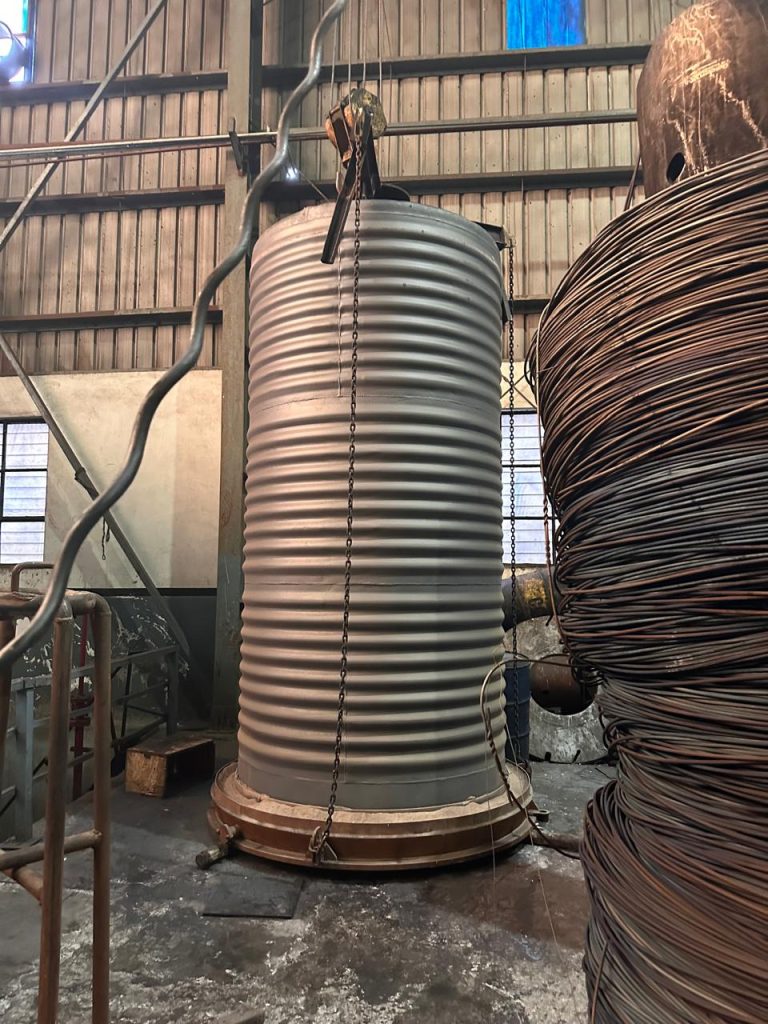
Unlike conventional fixed-axis rotary furnaces or reverberatory furnaces, tilting rotary furnaces feature a cylindrical or barrel-shaped drum mounted on a robust tilting frame. The drum rotates continuously during the melting cycle, ensuring uniform heat distribution, whilst hydraulic actuators allow the entire assembly to tilt forward for metal tapping and backward for slag removal.
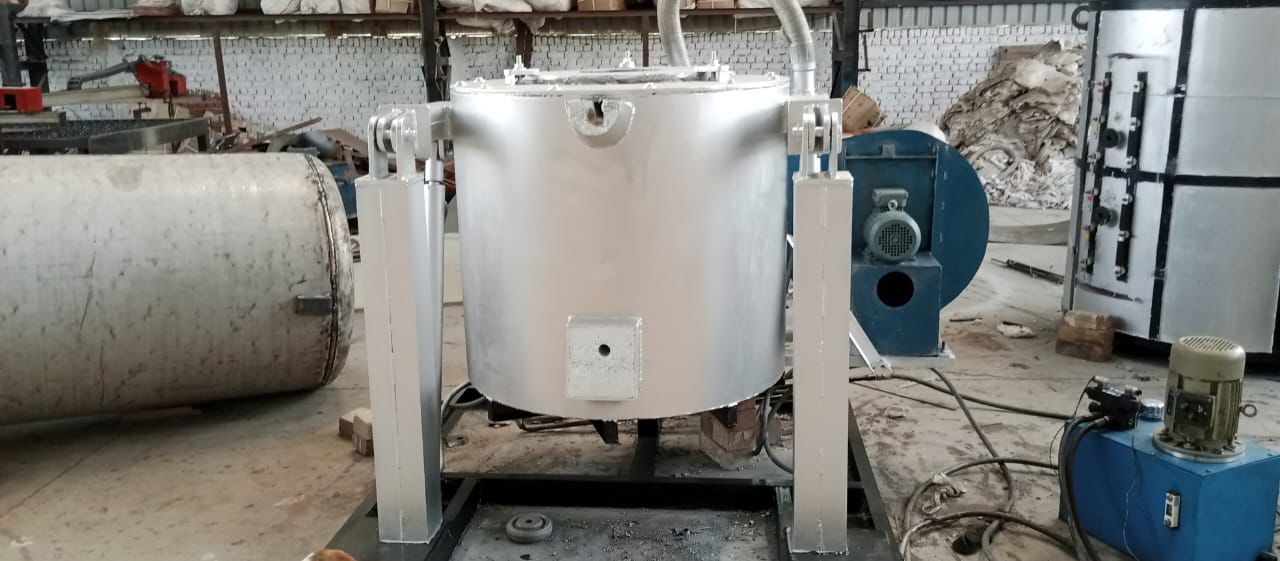
This dual-motion capability, rotation combined with tilting, fundamentally changes the economics and efficiency of scrap processing operations. At Continental Furnaces, we’ve refined this technology through decades of practical application, delivering customised solutions that maximise performance for each client’s specific requirements.
Key Features That Set Tilting Rotary Furnaces Apart
1. Superior Metal Recovery Rates
The Challenge: Traditional reverberatory furnaces and fixed-axis rotary furnaces often struggle with contaminated scrap, resulting in metal losses of 10-15% or more trapped in slag and oxidation.
The Tilting Rotary Solution: Our tilting rotary furnaces achieve metal recovery rates exceeding 95-97%, dramatically improving yield from:
- Aluminium dross and skimmings
- Mixed contaminated scrap
- Machining chips and swarf
- UBC (Used Beverage Cans)
- Hard engine blocks
- Lead concentrates
- Copper turnings
How It Works: The continuous rotation ensures that even heavily oxidised materials are thoroughly exposed to the reducing atmosphere created by the burner flame and flux additions. The tilting mechanism allows complete drainage of molten metal, minimising heel retention that plagues fixed-tap-hole designs. Continental Furnaces’ proprietary rotation control systems optimise this process for maximum efficiency.
2. Uniform Heating and Faster Melting Cycles
Rotational Advantage: As the drum rotates (typically at 0.5-3 RPM depending on capacity), the charge material cascades through the flame zone repeatedly. This tumbling action ensures:
- Consistent heat transfer to all material surfaces
- Elimination of cold spots
- Faster flux-metal reactions
- Reduced localised overheating
Production Impact: Our clients report 20-30% faster melting cycles compared to reverberatory furnaces of similar capacity. For a 10-tonne batch, this can translate to 4-6 batches per day instead of 3-4, directly impacting throughput and profitability. Continental Furnaces designs each system with optimised thermal profiles to achieve these superior cycle times.
3. Exceptional Energy Efficiency
Continental Furnaces’ modern tilting rotary furnaces incorporate multiple energy-saving features developed through our 35+ years of thermal engineering expertise:
Advanced Combustion Systems:
- High-efficiency burners (oil, gas, or dual-fuel) with precise air-fuel ratio control
- Optional regenerative or recuperative heat recovery systems
- Programmable firing profiles that match heat input to charge requirements
Optimised Refractory Design:
- High-performance insulating linings (typically 200-300mm thick)
- Low thermal mass refractories that reduce heat-up time and standby losses
- Specialised castable and brick combinations for extended campaign life
Fuel Consumption Comparison:
| Furnace Type | Fuel Consumption (per tonne of metal) | Relative Efficiency |
|---|---|---|
| Reverberatory Furnace | 800-1000 MJ/tonne | Baseline |
| Fixed-Axis Rotary | 650-800 MJ/tonne | 15-20% better |
| Continental Tilting Rotary Furnace | 500-650 MJ/tonne | 30-40% better |
4. Reduced Labour Requirements
Automation Advantages:
Traditional furnace operations are labour-intensive, requiring 4-5 operators for charging, tending, tapping, and slag removal. Continental Furnaces’ tilting rotary systems reduce this to 2-3 operators through:
- Simplified Charging: Large door openings (often 1.2-1.8m diameter) allow rapid loading with overhead cranes or front-end loaders
- Automated Tilting: Advanced hydraulic systems controlled by programmable logic controllers (PLC) ensure precise, repeatable tilt angles
- Easier Tapping: No tap hole preparation or maintenance required; simply tilt forward to pour
- Quick Slag Removal: Tilt backward to dump slag through the charging door
Safety Benefits: Reduced manual intervention means fewer operator exposures to high-temperature zones, molten metal splashes, and hazardous fumes; a priority in Continental Furnaces’ customer-centric design philosophy.
5. Versatile Capacity Range
Continental Furnaces designs and manufactures tilting rotary furnaces in capacities ranging from 2.5 tonnes to 25+ tonnes per batch, making them suitable for:
- Small Job Shops: 2.5-5 tonne furnaces for flexible, low-volume operations
- Medium Foundries: 5-10 tonne units balancing batch size with cycle frequency
- Large-Scale Operations: 15-25 tonne furnaces for high-throughput scrap processing
Modular Scalability: We can design installations with multiple units operating in parallel, creating redundancy and allowing maintenance without production shutdown; a testament to our commitment to minimising client downtime.
6. Wide Temperature Range and Material Flexibility
Operating Range: 400°C to 1250°C, accommodating diverse non-ferrous and ferrous materials:
Non-Ferrous Applications:
- Aluminium alloys (660-750°C)
- Zinc (420-450°C)
- Copper and brass (1085-1150°C)
- Lead (327-400°C)
Ferrous Applications:
- Cast iron (1150-1250°C)
- Selected steel grades
Feedstock Versatility: Process virtually any scrap form:
- Tense scrap
- Borings and turnings
- Mixed hard scrap
- Dross and skimmings
- Sludges and filter cakes
Continental Furnaces’ extensive experience across both ferrous and non-ferrous applications ensures we can tailor solutions to your specific material processing needs.
7. Advanced Rotation Drive Systems
Continental Furnaces offers three primary drive mechanisms to accommodate different load requirements:
Friction Drive:
- Suitable for smaller capacities (2.5-8 tonnes)
- Lower capital cost
- Requires good drum surface condition
Gear and Pinion Drive:
- Medium to large capacities (8-20 tonnes)
- Positive engagement ensures rotation even with sticky charges
- Higher torque capability
Chain Drive:
- Specialised applications
- Good for extreme duty cycles
Variable Frequency Drives (VFD): Our modern installations incorporate VFD-controlled motors, allowing operators to adjust rotation speed based on charge characteristics and process requirements; providing the operational flexibility that distinguishes Continental Furnaces solutions.
8. Superior Metallurgical Quality
The tumbling action in Continental Furnaces’ tilting rotary furnaces provides unique metallurgical benefits:
Improved Alloying: Better mixing ensures compositional uniformity, critical for meeting tight specification ranges
Flux Efficiency: Enhanced salt-metal contact accelerates dross reduction and impurity removal
Reduced Oxidation: Sealed design with controlled atmosphere minimises hydrogen pickup in aluminium alloys
Degassing Opportunities: Some of our installations integrate rotary degassing systems that work synergistically with the furnace rotation, delivering exceptional metal quality.
9. Minimal Refractory Maintenance
Extended Campaign Life: Continental Furnaces’ quality tilting rotary furnaces achieve 12-18 month refractory campaigns (compared to 6-12 months for reverberatory furnaces) due to:
- No tap hole erosion issues (eliminated entirely)
- Uniform wear patterns from rotation
- Lower thermal cycling stress
- Modern monolithic refractory systems specified by our engineering team
Quick Reline Procedures: The tilting capability provides excellent access for inspection and maintenance. Some of our designs feature removable barrel sections that can be relined offline, minimising downtime; reflecting our understanding of the critical importance of production continuity.
10. Environmental and Compliance Advantages
Continental Furnaces’ commitment to sustainability is reflected in how our modern tilting rotary furnaces integrate seamlessly with emissions control systems:
Fume Collection: Sealed designs with negative pressure operation capture combustion gases and metal fumes efficiently
Baghouse/Filter Integration: Ductwork connects to centralised or dedicated filtration systems meeting stringent air quality standards
Reduced Salt Slag Volume: Higher metal recovery means less waste requiring disposal or recycling
Energy Efficiency = Carbon Reduction: 30-40% lower fuel consumption directly translates to reduced greenhouse gas emissions, supporting our vision of sustainable industrial thermal processing.
Comparative Analysis: Tilting Rotary vs. Alternative Technologies
| Feature | Reverberatory Furnace | Fixed-Axis Rotary | Continental Tilting Rotary |
|---|---|---|---|
| Metal Recovery | 85-90% | 90-93% | 95-97% |
| Energy Efficiency | Baseline | +15-20% | +30-40% |
| Production Time | Longest | Medium | Shortest |
| Labour Requirements | 4-5 operators | 3-4 operators | 2 operators |
| Charging Flexibility | Limited | Medium | Excellent |
| Tapping Method | Tap hole (slow) | Tap hole (slow) | Tilt pour (fast) |
| Slag Removal | Labour intensive | Medium effort | Simple tilt dump |
| Capital Cost | Lowest | Medium | Higher |
| Operating Cost | Highest | Medium | Lowest |
| ROI Period | N/A | 2-3 years | 1.5-2.5 years |
Technical Specifications: Continental Furnaces’ Design Standards
When you choose Continental Furnaces for your tilting rotary furnace solution, you receive comprehensive engineering that addresses these critical specifications:
1. Structural Design:
- Robust frame construction (fabricated or cast steel based on application)
- Premium bearing types and sizes (roller vs. trunnion)
- Hydraulic actuators with capacity and redundancy for reliability
2. Refractory Package:
- Carefully selected working lining materials and thickness
- Optimised insulation layer specifications
- Guaranteed campaign life backed by our experience
3. Combustion System:
- Premium burner manufacturers (Riello, Kromschröder, Eclipse, Wesman)
- Flexible fuel options (natural gas, LPG, furnace oil, dual-fuel)
- Optimal heat input range and turndown ratio
- Engineered combustion air delivery systems
4. Control and Automation:
- State-of-the-art PLC-based process control
- Comprehensive temperature monitoring (thermocouples, pyrometers)
- Precise tilt angle positioning and programming
- Data logging and reporting capabilities for process optimisation
5. Emissions Control:
- Calculated flue gas handling capacity (m³/hr)
- Specified filter system requirements
- Stack emission guarantees meeting regulatory standards
6. Safety Features:
- Multiple emergency stop systems
- Hydraulic failure protections
- High-temperature interlocks
- Operator safety barriers and protocols
Installation and Site Requirements
Continental Furnaces provides complete installation support, ensuring proper foundation and utility preparation:
Foundation: Heavy-duty reinforced concrete pad designed to support:
- Furnace dead weight (varies by capacity: 15-80 tonnes)
- Dynamic loads from rotation and tilting
- Vibration isolation (if required)
Utilities Required:
- Electrical power: 30-150 kW (depending on size and auxiliaries)
- Fuel supply: Gas line with adequate pressure/flow or oil storage
- Compressed air: 6-8 bar for controls and automation
- Cooling water: For hydraulic oil coolers and burner components
Space Planning: Our experienced team collaborates with you to optimise:
- Adequate clearance for charging equipment
- Tapping zone with launder/crucible access
- Slag pit or disposal container positioning
- Maintenance access on all sides
Operational Best Practices: Continental Furnaces’ Recommendations
Drawing from 35+ years of thermal processing expertise, we recommend these operational practices:
1. Charge Preparation:
- Remove excess moisture from scrap (especially chips)
- Sort by alloy type when possible
- Pre-heat very cold or wet charge materials
2. Flux Management:
- Use appropriate flux type and quantity (typically 5-15% of charge weight)
- Add flux in stages for optimal coverage
- Ensure flux is dry and fresh
3. Melting Cycle Optimisation:
- Start rotation before igniting burner
- Use high fire initially, then reduce to maintain temperature
- Monitor metal temperature to prevent overheating
- Optimise cycle length through data analysis
4. Metal Tapping:
- Allow slag separation time before tilting
- Use consistent tilt angle and rate
- Monitor metal flow into transfer ladle
- Return furnace to level position smoothly
5. Slag Management:
- Cool slag sufficiently before dumping
- Process slag for additional metal recovery if economically justified
- Dispose per environmental regulations
6. Maintenance Schedule:
- Daily: Visual inspection, bearing lubrication, safety checks
- Weekly: Refractory inspection, door seal condition, hydraulic levels
- Monthly: Burner inspection, drive system alignment, control calibration
- Annually: Major refractory assessment, hydraulic system overhaul
Continental Furnaces provides comprehensive operator training programmes and unwavering after-sales service to ensure optimal performance throughout your furnace’s operational life.
Lifetime Value: Continental Furnaces’ quality tilting rotary furnaces operate economically for 15-20 years with proper maintenance, delivering exceptional long-term ROI and sustained competitive advantage.
The Continental Furnaces Advantage: Beyond Equipment, Building Partnerships
When you choose Continental Furnaces for your tilting rotary furnace solution, you’re selecting more than equipment; you’re establishing an enduring partnership built on:
Engineering Excellence:
- Proven track record with installations across diverse industries
- Custom design capability tailored to your specific requirements
- Advanced computational modelling for thermal and structural optimisation
- 35+ years of accumulated knowledge and continuous innovation
Quality Components:
- Premium refractory materials from reputable global suppliers
- Established burner manufacturers ensuring reliable performance
- Robust hydraulic systems with adequate safety margins
- Every component selected for longevity and reliability
Comprehensive Support:
- Seamless collaboration from initial design to installation
- Professional commissioning and operator training programmes
- Responsive spare parts availability
- Unwavering after-sales service throughout equipment lifetime
Performance Guarantees:
- Metal recovery rates
- Fuel consumption
- Refractory life
- Emissions compliance
Customer-Centric Approach: At Continental Furnaces, we consistently exceed expectations by providing personalised solutions for every unique requirement, ensuring your success is our success.
Future Trends in Tilting Rotary Furnace Technology
Continental Furnaces remains at the forefront of pioneering the future of thermal engineering:
Industry 4.0 Integration:
- Real-time process monitoring via IoT sensors
- Predictive maintenance using AI and machine learning
- Integration with enterprise resource planning (ERP) systems
- Remote diagnostics and troubleshooting
Advanced Materials:
- Next-generation refractories with extended life and lower thermal mass
- Improved structural alloys for high-temperature components
- Advanced coatings for oxidation and corrosion resistance
Energy Recovery:
- Enhanced recuperative and regenerative systems
- Waste heat recovery for facility heating or power generation
- Hybrid electric-fuel systems for load flexibility
Sustainability Focus:
- Carbon-neutral operation through renewable fuel sources
- Circular economy integration with automated scrap sorting
- Zero-waste processes through complete slag valorisation
Tilting rotary furnaces represent the pinnacle of industrial furnace solutions for scrap recycling in modern foundries. Their combination of superior metal recovery, exceptional energy efficiency, reduced labour requirements, and operational flexibility creates a compelling value proposition that transforms the economics of secondary metal production.
At Continental Furnaces, our commitment to innovation, excellence, and sustainability over 35+ years has positioned us as leaders in delivering tailored thermal processing solutions. As raw material costs continue rising and environmental regulations become more stringent, foundries that invest in advanced tilting rotary technology position themselves for competitive advantage.
The technology’s proven track record across aluminium, copper, zinc, and other non-ferrous applications along with expanding use in ferrous processing, demonstrates its versatility and reliability. Continental Furnaces’ extensive experience across both wire industry and heat treatment applications ensures we bring unparalleled expertise to every project.
For foundry operators evaluating furnace investments, the question isn’t whether tilting rotary technology is superior; the data clearly demonstrates it is. The question is which capacity and configuration best matches your specific throughput requirements, feedstock characteristics, and operational goals.
Partner with Continental Furnaces and transcend conventional furnace solutions. Our seasoned team collaborates seamlessly with you, providing comprehensive support from initial design consultation through installation, commissioning, operator training, and unwavering after-sales service. Our hallmark customer-centric approach ensures personalised solutions that consistently exceed expectations.
Founded in 1987, Continental Furnaces has evolved into a distinguished designer, manufacturer, and supplier of advanced industrial furnace solutions. We don’t just build furnaces; we build enduring partnerships that drive your success.
Contact Continental Furnaces today to discuss how our tilting rotary furnace technology can transform your scrap recycling operations and deliver sustained competitive advantage for decades to come.
Continental Furnaces – Pioneering the Future of Thermal Engineering Since 1987