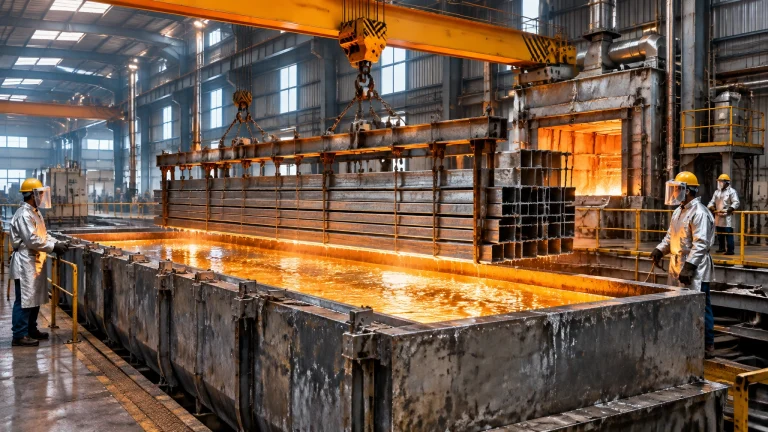
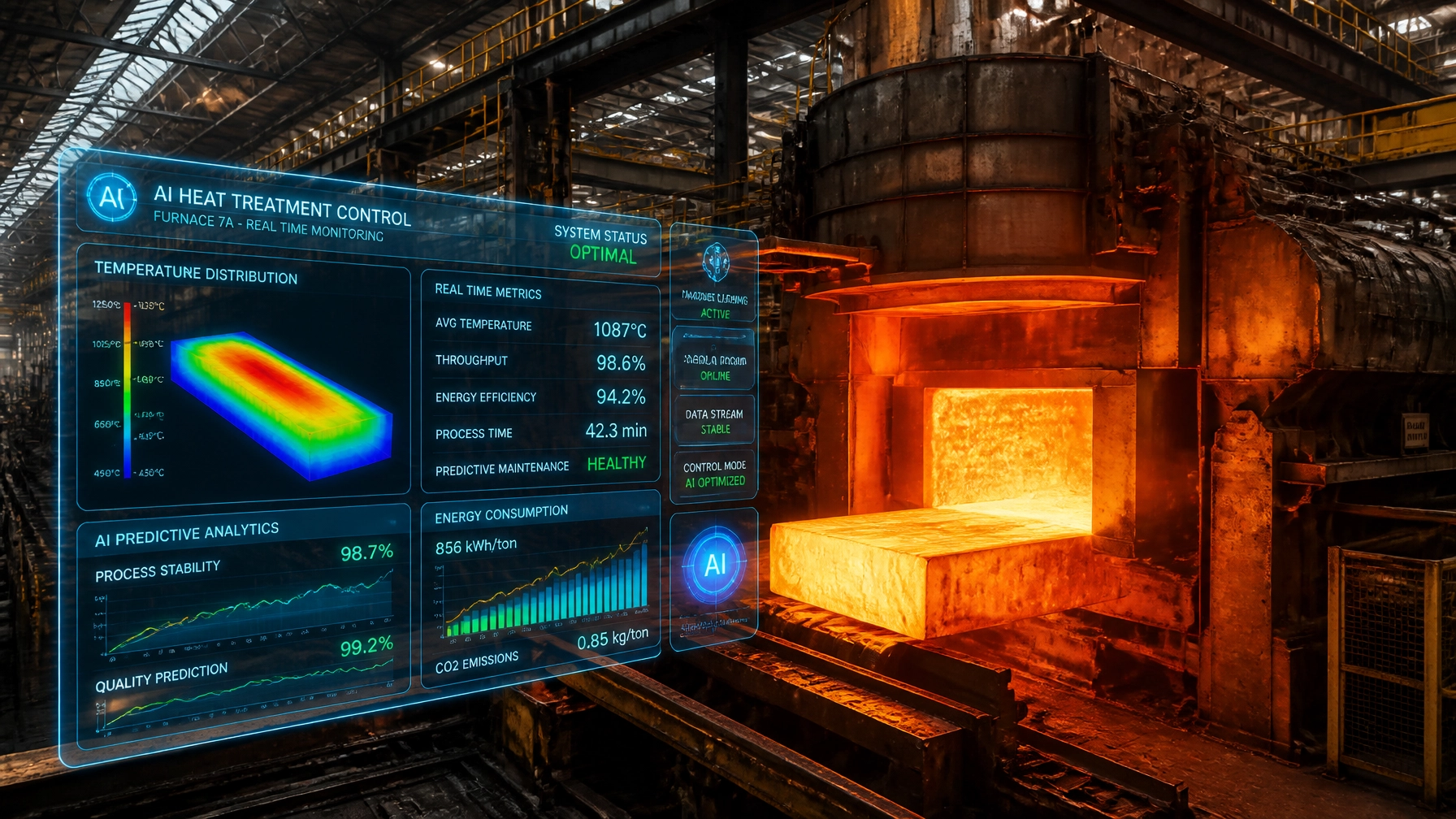
For over 35 years, the metal processing industry has relied on established thermal recipes and the seasoned intuition of furnace operators. However, as we move into the second half of this decade, the traditional paradigms of "set and forget" are no longer sufficient to maintain a competitive edge. The global manufacturing landscape is undergoing a seismic shift toward Industry 4.0, and at the center of this transformation is the integration of Artificial Intelligence (AI) into heat treatment furnaces.
At Continental Furnaces, we have observed that the transition to AI-driven systems is not merely a cosmetic upgrade; it is a fundamental reconfiguration of how energy, material, and time are utilized. For B2B clients in the steel rolling mill, automotive, and wire and cable industry, these advancements represent a quantum leap in operational efficiency and metallurgical precision.
The Technical Evolution: From Static Recipes to Dynamic Optimization
Traditional thermal processing equipment operates on static setpoints. While effective for basic consistency, these systems lack the agility to respond to real-time variables such as fluctuations in ambient temperature, variations in scrap metal composition, or minor deviations in fuel caloric value.
AI-driven industrial furnace systems replace these rigid frameworks with adaptive machine-learning models. By ingesting thousands of data points per second from advanced sensor arrays: tracking everything from zone-specific oxygen levels to the thermal profile of individual steel billets: the system continuously recalibrates heating parameters.
Key Performance Indicators of AI Integration
Empirical data from recent installations indicates that AI-optimized controllers deliver:
- 5–12% reduction in specific energy consumption (GJ/ton), directly impacting the bottom line.
- 15–30% reduction in scale loss in steel reheating applications, significantly increasing yield.
- 50–70% improvement in temperature uniformity at discharge, ensuring consistent microstructural properties.

Precision Metallurgy in the Steel Rolling Mill
In a high-throughput steel rolling mill, the stakes of thermal variance are immense. Inconsistencies in the reheat phase can lead to uneven rolling, increased wear on mill rolls, and ultimately, a higher rate of product rejection.
By employing AI, an industrial furnace manufacturer can provide a system that predicts the core temperature of metal loads with unprecedented accuracy. This eliminates the need for conservative "safety margins" in soak times: which traditionally lead to over-consumption of fuel: and instead allows for a precision-engineered thermal cycle. This level of control is essential for modern facilities utilizing Bogie Hearth Furnaces and Pit Type Annealing Furnaces where large batch sizes demand absolute uniformity.
Comparative Performance: Legacy vs. AI-Driven Systems
To understand the ROI of AI-driven technology, one must look at the objective metrics that separate the old guard from the new.
| Feature | Traditional Thermal Systems | AI-Driven Industrial Furnaces |
|---|---|---|
| Control Method | Static PID Setpoints / Operator Intuition | Real-time Machine Learning / Predictive Models |
| Fuel Efficiency | Baseline (Fixed Consumption) | 5–12% Improvement |
| Maintenance | Reactive or Time-Based (Scheduled) | Predictive Anomaly Detection |
| Metallurgical Yield | Higher Scale Loss (1.5% – 2.0%) | Reduced Scale Loss (0.8% – 1.2%) |
| Carbon Footprint | Static; High Emissions Intensity | Optimized; Up to 12% CO₂ Reduction |
| Throughput | Fixed by Design | 3–8% Increase via Cycle Optimization |
Predictive Maintenance: Eliminating Unplanned Downtime
One of the most significant advantages of an AI-driven approach is the transition from reactive to predictive maintenance. By monitoring the performance signatures of critical furnace spare parts: such as heating elements, blowers, and valves: the AI can identify subtle anomalies that precede a mechanical failure.
For instance, an AI system can detect a 2% drift in the efficiency of a burner's air-fuel ratio or a minor increase in the vibration frequency of a cooling fan. This allows maintenance teams to intervene during planned shutdowns, preventing the catastrophic costs of emergency service and lost production hours. In the wire and cable industry, where continuous Vertical Annealing Furnaces are often part of a non-stop production line, this reliability is non-negotiable.

The Roadmap to Implementation: A 3-Phase Strategy
Transitioning to AI-driven thermal processing is a strategic journey that requires professional guidance. At Continental Furnaces, we recommend a structured approach to ensure seamless integration.
Phase 1: Digital Assessment and Data Foundation
The first step involves auditing your current equipment: whether it is an aluminum melting furnace, a melting furnace for steel, or a Hot Dip Galvanizing Plant. We establish the necessary IIoT sensor network to begin collecting "dirty" data, which is then cleaned and prepared for the machine-learning model.
Phase 2: Model Training and Parallel Operation
During this phase, the AI model runs in "shadow mode," comparing its suggested adjustments against current operator actions. This allows for the refinement of the algorithm to match the specific metallurgical requirements of your industry, from the precision needs of a Nitriding Furnace to the high-heat demands of a metal recycling furnace.
Phase 3: Fully Autonomous Optimization
Once the model achieves a high confidence interval, the AI is granted direct control over furnace parameters. At this stage, the plant begins to see the full realization of fuel savings, throughput increases, and yield improvements, cementing a sustained competitive advantage.
Sustainability and the Circular Economy
In 2026, regulatory compliance and environmental stewardship are as critical as profitability. AI-driven systems are the primary drivers of sustainability in the metals industry. By optimizing combustion and supporting the integration of green hydrogen and electricity, our furnaces help clients meet stringent ESG (Environmental, Social, and Governance) targets.
Furthermore, in the context of a Metal Recycling Furnace, AI helps manage the variable chemistry of scrap inputs, ensuring that the final output meets high-grade specifications while consuming the absolute minimum amount of energy. This is a cornerstone of the Circular Economy, where resource efficiency is maximized at every turn.

The Path Forward with Continental Furnaces
The integration of AI into heat treatment furnaces is not a distant future: it is the current standard for industry leaders. Whether you are operating an Aluminum Melting Furnace or a complex hot dip galvanizing plant, the data is clear: AI-driven optimization is the most direct path to enhanced profitability and operational excellence.
As an industrial furnace manufacturer with decades of expertise, Continental Furnaces provides more than just hardware. We offer an enduring partnership, providing the technical wisdom and cutting-edge technology needed to navigate the complexities of Industry 4.0.
Are you ready to transform your thermal processing capabilities and secure your facility's future?
Contact Continental Furnaces today for a strategic consultation. Let us engineer a customized, AI-driven solution that elevates your production to new heights of efficiency and precision.