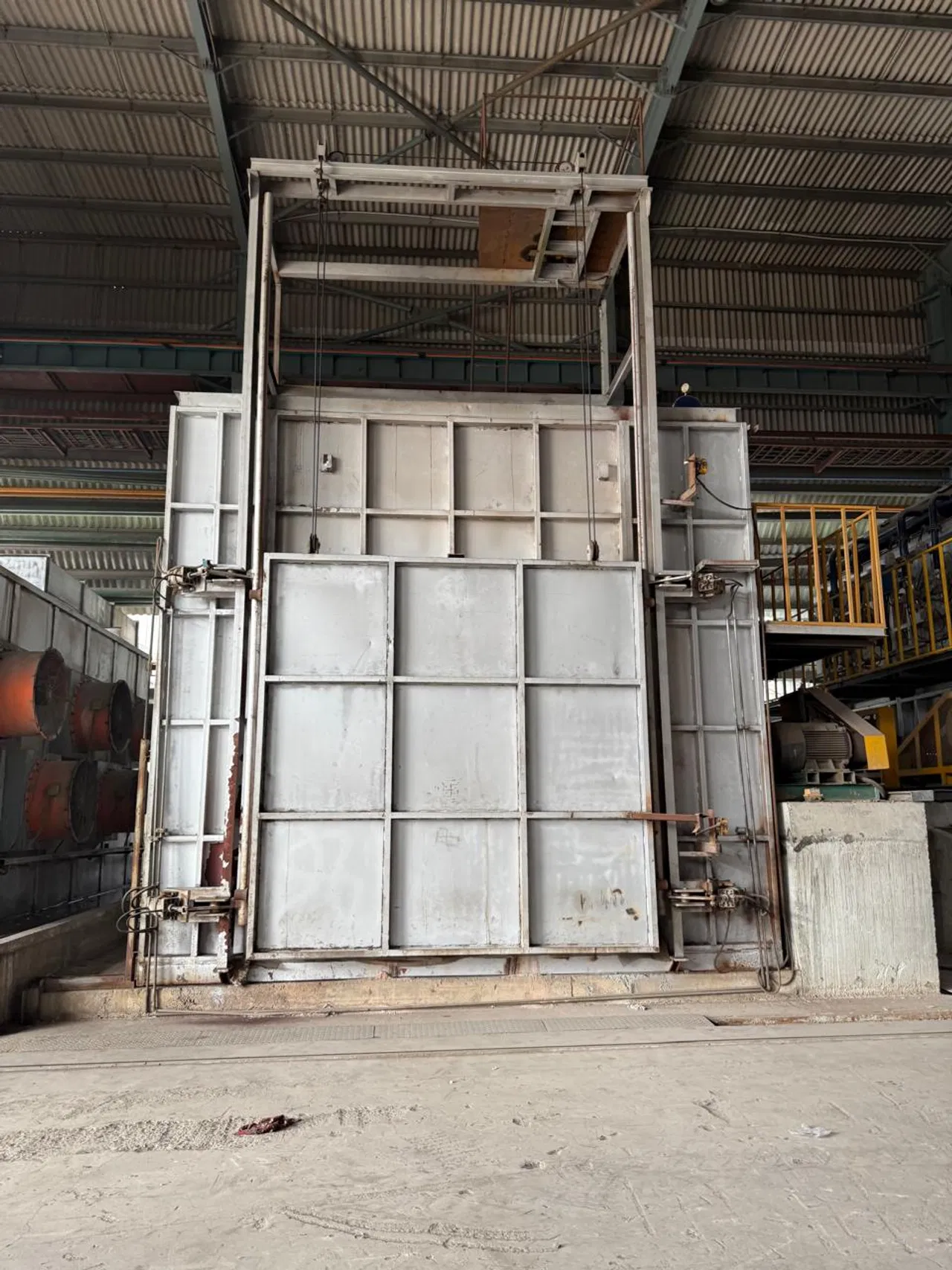
In the high-stakes arena of heavy industrial manufacturing, the margin between a high-yield production run and a costly metallurgical failure is often measured in degrees Celsius and milliseconds of exposure. As a premier industrial furnace manufacturer with over 35 years of engineering pedigree, Continental Furnaces has observed a recurring pattern: operational inefficiencies are rarely the result of a single catastrophic event. Instead, they are the cumulative effect of subtle, overlooked technical oversights in thermal processing equipment.
For facilities operating a steel rolling mill, an aluminum melting furnace, or complex hot dip galvanizing plants, maintaining peak performance is not merely a maintenance goal: it is a prerequisite for global competitiveness. In this technical briefing, we analyze the seven most critical mistakes currently hindering yield in 2026 industrial environments and provide the professional roadmap to rectify them.
1. Neglecting Periodic Thermal Uniformity Surveys (TUS)
One of the most prevalent errors in modern heat treatment furnaces is the reliance on "set-and-forget" temperature configurations. Over time, heating elements degrade, and airflow dynamics shift, leading to the development of localized "cold spots" or "hot zones."
The Risk: Operating without a rigorous TUS schedule results in inconsistent microstructures across a single batch. In the Wire and cable industry, this manifests as variable tensile strength, leading to premature wire breakage during drawing.
The Fix: Implement a mandatory TUS protocol aligned with AMS2750G or equivalent ISO standards. For industrial furnace systems, we recommend a quarterly uniformity check. Precise temperature control (within +/- 5°C) is the benchmark for ensuring that 100% of your load meets metallurgical specifications, effectively eliminating rework costs.
2. Inefficient Combustion and Atmospheric Imbalance
In a melting furnace for steel or a metal recycling furnace, the chemical composition of the furnace atmosphere is as critical as the temperature itself. Many operators fail to calibrate their air-fuel ratios, leading to excessive oxidation or unwanted decarburization.
- Oxidation: Results in significant scale loss, reducing the net weight of the finished product.
- Decarburization: Weakens the surface integrity of steel components, a critical failure point for automotive and aerospace clients.
The Fix: Transition to automated gas analysis systems. By maintaining an optimal stoichiometric ratio, facilities can realize an 8-12% reduction in fuel consumption while simultaneously protecting the surface quality of the metal. If your current system lacks this level of granularity, upgrading your furnace spare parts: specifically high-velocity burners and oxygen sensors: is a strategic necessity.

3. Suboptimal Loading Patterns and "Batch Overcrowding"
The drive for higher throughput often leads production managers to overcrowd furnace hearths. While this seems efficient on paper, it disrupts the laminar flow of heat, shielding parts in the center of the load from reaching the required soak temperature.
The Impact on Yield:
- Non-uniform hardness: Parts on the periphery over-heat while central parts remain "green."
- Increased cycle times: The furnace must run longer to compensate for the central "cold mass," wasting energy.
The Fix: Utilize engineered loading fixtures that prioritize airflow. For continuous-type furnaces used in steel rolling mills, ensuring consistent spacing between rods or bars is essential. A 20% reduction in load density can often result in a 15% increase in total throughput due to significantly shortened soak cycles.

4. Disregarding Insulation and Refractory Integrity
Refractory linings are the silent guardians of thermal efficiency. However, they are subject to intense thermal shock and chemical erosion. Small cracks or "hot spots" on the furnace shell are symptoms of internal insulation failure that lead to massive radiant heat loss.
The Technical Benchmark: A well-maintained furnace shell should maintain a temperature that indicates a thermal loss of no more than 150-200 kcal/m²/h. If your shell is uncomfortably hot to the touch, you are effectively subsidizing the local power grid with wasted energy.
The Fix: Schedule annual infrared thermographic inspections. Replacing compromised ceramic fiber modules or refractory bricks with high-alumina alternatives is not a cost; it is an investment in sustainability and profitability. Explore our thermal consulting services to evaluate your current lining performance.
5. Improper Quenching and Agitation Dynamics
The quenching phase is where the final mechanical properties are "locked in." A common mistake is neglecting the health of the quench medium: whether it be oil, water, or polymer: and the mechanical agitation required to break the vapor blanket.
The Solution:
- Monitor Medium Temperature: Oil that is too hot loses its cooling severity; oil that is too cold can cause cracking.
- Verify Agitation: Ensure that pump or propeller speeds are sufficient to provide uniform cooling across the entire geometry of the part.
- Filtration: Contaminated quenchants lead to "spotty" hardness and surface staining.
6. Reactive Maintenance of Mechanical Components
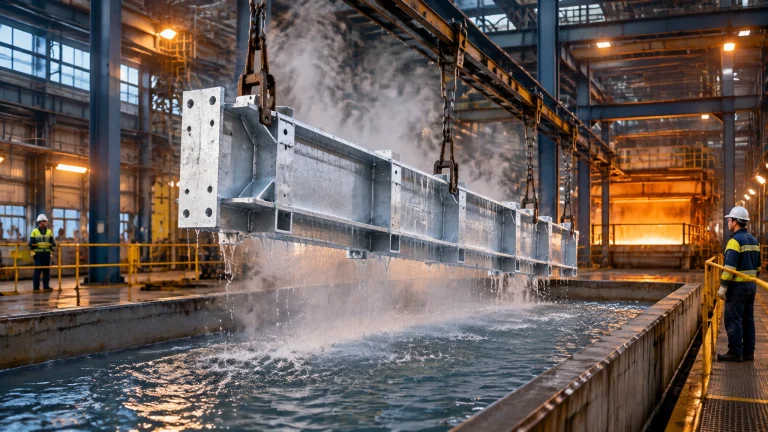
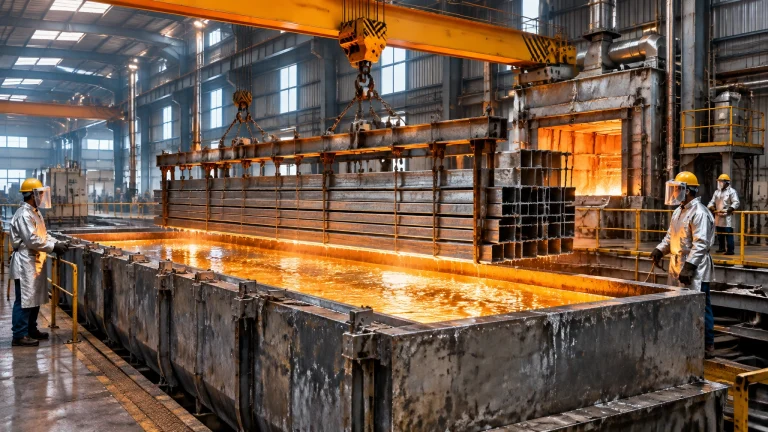
In high-volume environments like hot dip galvanizing plants or pickling plants, mechanical failure is the leading cause of unplanned downtime. Waiting for a roller to seize or a chain to snap is a catastrophic approach to asset management.
The Fix: Adopt a "Predictive Replacement" model for furnace spare parts. Components such as radiant tubes, hearth rollers, and thermocouple protection tubes have finite lifespans. By replacing these parts at 85% of their expected service life, you eliminate the "Quantum Leap" in costs associated with emergency shutdowns and damaged furnace interiors.
7. Failure to Integrate Industry 4.0 Analytics
In 2026, data is as vital as fuel. Operating industrial furnace systems without real-time data logging and predictive analytics is like flying a modern aircraft with analog gauges.
The Fix: Integrate IoT sensors to monitor burner health, vibration on fan motors, and precise energy consumption per ton of metal processed. Digital twins of your thermal process allow for "what-if" simulations, enabling you to optimize cycles for different alloys without risking real-world inventory.

Comparative Analysis: Legacy vs. Modern Thermal Systems
The following table contrasts traditional furnace operations with the advanced engineering standards provided by Continental Furnaces.
| Performance Metric | Legacy Thermal Systems | Continental 2026 Standards | Competitive Advantage |
|---|---|---|---|
| Fuel Efficiency | 35% – 45% | 65% – 78% | ~30% Fuel Savings |
| Temperature Uniformity | +/- 15°C | +/- 5°C (or better) | Higher Metallurgical Yield |
| Unplanned Downtime | 12 – 15 Days / Year | < 3 Days / Year | Increased Annual Capacity |
| Atmosphere Control | Manual / Visual | Fully Automated AI-Driven | Zero Surface Decarburization |
| ROI Period | 5 – 7 Years | 2 – 3 Years | Rapid Capital Recovery |
Roadmap to Sustained Competitive Advantage
Transforming your thermal processing facility into a center of excellence requires a phased, strategic approach:
- Phase 1: Comprehensive Audit: Conduct a full TUS and SAT (System Accuracy Test) to establish your baseline performance.
- Phase 2: Retrofit and Modernize: Replace outdated burners and insulation. Integrate precision control decks for enhanced industrial applications.
- Phase 3: Employee Calibration: Train operators on the nuances of loading patterns and atmospheric management to ensure technology is matched by human expertise.
- Phase 4: Lifecycle Partnership: Establish a recurring service contract with your industrial furnace manufacturer to ensure spare parts are always staged and systems are perpetually optimized.

Conclusion: Engineering Your Future
At Continental Furnaces, we do not merely sell equipment; we engineer the thermal foundations of your success. Avoiding these seven mistakes is the first step toward achieving the yields required by the demanding global markets of 2026.
Whether you are seeking a custom-built aluminum melting furnace or need to optimize a complex steel rolling mill line, our 35+ years of expertise are at your disposal. Frame your next move as a strategic leap toward technical dominance.
Contact our senior consulting team today to schedule a deep-dive audit of your thermal processing systems.