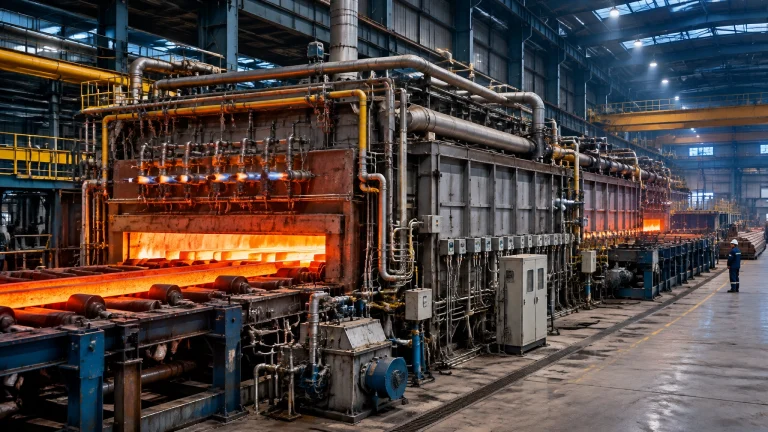
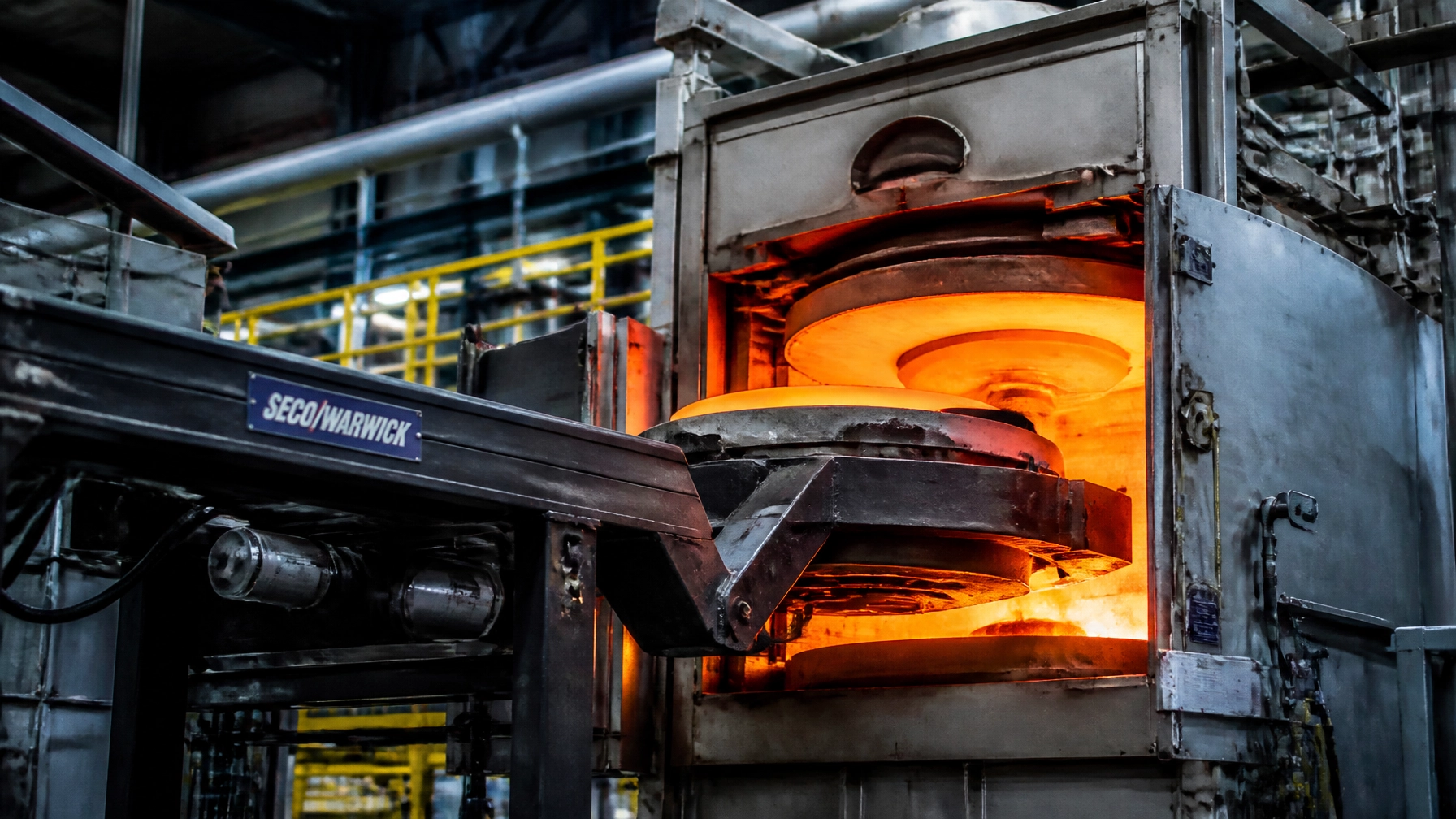
In the high-stakes world of thermal processing, the margin between operational excellence and catastrophic failure is often measured in millimeters and millivolts. After more than 35 years as a premier industrial furnace manufacturer, Continental Furnaces has observed a recurring pattern: even the most sophisticated facilities frequently succumb to avoidable technical oversights.
As we navigate the industrial landscape of 2026, the integration of Industry 4.0 and the demand for extreme energy efficiency have transformed heat treatment furnaces from static assets into dynamic, data-driven systems. Failure to adapt your maintenance and spare parts strategy doesn't just lead to downtime: it erodes your competitive advantage.
This guide identifies the seven most critical mistakes currently plaguing the steel rolling mill and wire and cable industry, providing a technical roadmap to rectify them using high-performance furnace spare parts.
1. The "Break-Fix" Fallacy: Neglecting Predictive Maintenance
Many plant managers still operate under the "break-fix" paradigm, waiting for a component to fail before intervening. In 2026, this approach is mathematically indefensible.
The Technical Reality:
Unscheduled downtime in a melting furnace for steel can cost upwards of $12,000 per hour in lost yield and energy waste. Relying on reactive repairs leads to "process drift," where the furnace gradually loses its ability to maintain precise metallurgical profiles.
The Fix:
Transition to a predictive maintenance model. By integrating IIoT-enabled vibration sensors on recirculation fans and monitoring real-time amperage draws on heating elements, you can identify failures before they manifest. Continental Furnaces recommends stocking critical furnace spares and accessories based on a 12-month MTBF (Mean Time Between Failure) analysis.
2. Thermal Inhomogeneity: Ignoring Temperature Uniformity Surveys (TUS)
Inconsistent hardness and poor mechanical properties in treated parts are rarely the fault of the raw material; they are almost always the result of thermal non-uniformity.
The Technical Reality:
A deviation of just ±5°C can be the difference between a high-performance automotive component and a batch of scrap. Over time, thermocouples drift and burners lose calibration, creating "cold spots" within the heating chamber.
The Fix:
Conduct quarterly Temperature Uniformity Surveys (TUS) in accordance with AMS2750 standards. Ensure you are utilizing high-purity, N-type or K-type thermocouples that are replaced every 6 months or 2,000 operational hours.

3. Combustion Inefficiency: Poor Air-to-Fuel Ratio Tuning
With energy costs accounting for nearly 35% of total operational expenditure in thermal processing equipment, a poorly tuned combustion system is a direct drain on profitability.
The Technical Reality:
Excessive air cools the furnace, while insufficient air causes incomplete combustion, leading to soot buildup and hazardous CO emissions. An imbalance of just 3% in your air-to-fuel ratio can decrease thermal efficiency by 8–12%.
The Fix:
Deploy automated combustion control systems. Regularly inspect and replace burner nozzles and air-gas mixers. For those operating an aluminum melting furnace or metal recycling furnace, ensuring the integrity of the combustion skid is paramount for maintaining the high-temperature throughput required for non-ferrous recovery.
4. Refractory Fatigue: Ignoring "Heat Leaks" and Seal Integrity
The refractory lining is the heart of your furnace's energy containment. Yet, minor cracks and worn door gaskets are often overlooked until they become structural liabilities.
The Technical Reality:
Damaged refractory and degraded door seals allow for massive convective heat loss. In a hot dip galvanizing plant, this can lead to uneven kettle heating and increased dross formation. We have recorded cases where replacing a 2-year-old door gasket reduced fuel consumption by a measurable 4.3% overnight.
The Fix:
Perform monthly visual inspections using infrared thermography to identify hot spots on the furnace shell. Utilize high-density ceramic fiber modules for repairs and ensure that pneumatic door seals are replaced annually to maintain a gas-tight atmosphere.

5. Atmosphere Instability: Failing to Control Carbon Potential
For industries like steel rolling mills and high-precision stamping, the atmosphere inside the furnace is just as critical as the temperature.
The Technical Reality:
Incorrect gas mixtures lead to oxidation and decarburization, ruining the surface integrity of the metal. Without high-accuracy oxygen probes and gas analyzers, you are effectively "flying blind."
The Fix:
Implement a dual-redundant atmosphere monitoring system. This involves using both an in-situ oxygen probe and an external three-gas analyzer (CO, CO2, CH4). Regularly service your gas flow meters and replace solenoid valves that show signs of sticking to ensure precise atmosphere composition.
6. Mechanical Neglect: Running Fans and Pumps to Failure
In continuous furnace operations, mechanical reliability is the backbone of the production line. A single bearing failure in a recirculation fan can halt an entire facility.
The Technical Reality:
High-temperature environments place extreme stress on lubricants and bearings. Standard industrial lubricants often oxidize at temperatures where heat treatment furnaces operate, leading to "varnishing" and subsequent mechanical seizure.
The Fix:
Utilize specialized high-temperature synthetic lubricants and establish a rigorous lubrication schedule. For pickling plants and cooling systems, ensure that pump impellers are inspected for cavitation every 3,000 hours. Keeping a spare recirculation fan assembly on-site is an essential strategy to minimize downtime from 72 hours to just 4 hours.
7. The "Cheap Parts" Trap: Utilizing Non-OEM Spares
The temptation to source generic furnace spare parts to save on initial capital is high. However, our data-driven analysis shows this is a false economy.
The Technical Reality:
Generic heating elements often have inconsistent resistance, leading to imbalanced electrical loads and premature failure of the thyristor power controllers. Similarly, non-spec refractory materials may contain impurities that outgas and contaminate your furnace atmosphere.
The Comparison: Generic vs. Continental High-Performance Spares
| Metric | Generic Spares | Continental OEM Spares |
|---|---|---|
| Average Lifespan | 4,000 – 6,000 Hours | 12,000 – 18,000 Hours |
| Material Integrity | Variable / Non-certified | ISO-certified / High-alloy |
| Efficiency Impact | Neutral to Negative | +5% Efficiency Gain |
| ROI Period | Short-term (months) | Long-term (lifecycle value) |
| Compatibility | Approximate Fit | Precision-Engineered |
Phase-Based Roadmap: Upgrading Your Maintenance Strategy
To transition from a legacy operation to an Industry 4.0 compliant facility, follow this three-phase strategic roadmap:
Phase 1: The Audit (Month 1)
- Perform a comprehensive "Health Check" on all industrial furnace systems.
- Identify all obsolete PLCs and sensors.
- Quantify current downtime costs and energy waste.
Phase 2: Implementation (Months 2-4)
- Install high-accuracy sensors for temperature, pressure, and gas flow.
- Replace all critical-path wear items (Burners, Seals, Thermocouples) with high-performance spares.
- Establish a digital maintenance log for transparency and traceability.
Phase 3: Optimization (Month 5 and Beyond)
- Utilize collected data to refine air-to-fuel ratios and cycle times.
- Implement a strategic "Critical Spares Inventory" to ensure 99% uptime.
- Schedule bi-annual consultations with your industrial furnace manufacturer to review performance metrics.

Conclusion: Securing Your Sustained Competitive Advantage
The complexities of modern thermal processing equipment demand more than just routine maintenance; they require a strategic partnership with experts who understand the granular technicalities of the process. At Continental Furnaces, we don't just sell machinery: we provide the engineering wisdom required to maximize your yield, profitability, and regulatory compliance.
Don't let avoidable mistakes compromise your production. Whether you are operating a steel rolling mill, a wire and cable industry facility, or a metal recycling furnace, the right expertise and the right spare parts are the foundation of your success.
Ready to optimize your thermal processing operations?
Contact Continental Furnaces today for a comprehensive technical audit and custom spare parts strategy. Let us help you shape tomorrow’s thermal solutions.