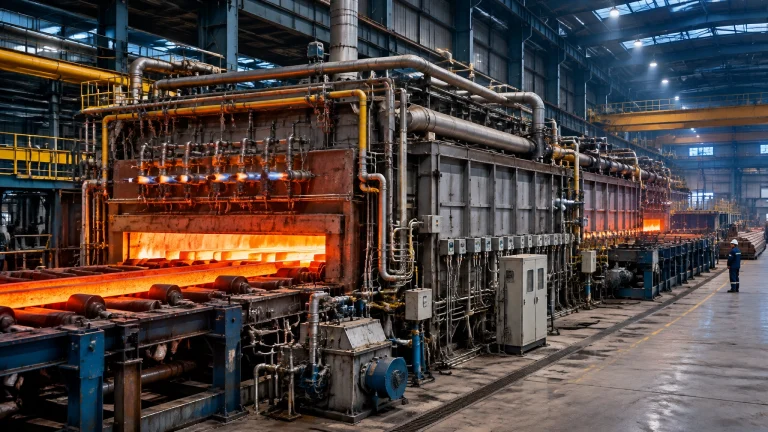
In the demanding landscape of high-output thermal processing, efficiency is not merely a metric of performance; it is the cornerstone of global competitiveness. For facilities operating a steel rolling mill or large-scale heat treatment furnaces, energy consumption often represents the single largest variable cost in the production cycle. At Continental Furnaces, with over 35 years of engineering tenure, we have observed that the difference between a high-yield operation and a struggling facility often lies in the granular technical details of combustion management.
While many operators believe that radical efficiency gains require complete overhauls or the replacement of an entire industrial furnace system, there is a far simpler, technical intervention that can be implemented immediately to secure quantum leaps in fuel economy and metallurgical consistency.
The Efficiency Imperative: The Hidden Costs of Thermal Lag
In traditional thermal processing, the most significant energy loss: excluding exhaust and wall losses: comes from "thermal hunting." This occurs when a furnace's control system lacks the precision to approach a setpoint without overshooting. When a furnace overshoots its target temperature, it doesn't just waste fuel; it initiates a cycle of cooling and reheating that stresses the furnace spare parts, reduces the lifespan of refractories, and risks the structural integrity of the material being processed.
For industries such as the Wire and cable industry or high-precision automotive stamping, even a 5°C variance can lead to scrapped batches or inconsistent tensile strength. Therefore, optimizing your control logic is the most cost-effective "trick" available to plant managers today.
The Technical Solution: Advanced PID Tuning and Ramp-Rate Optimization
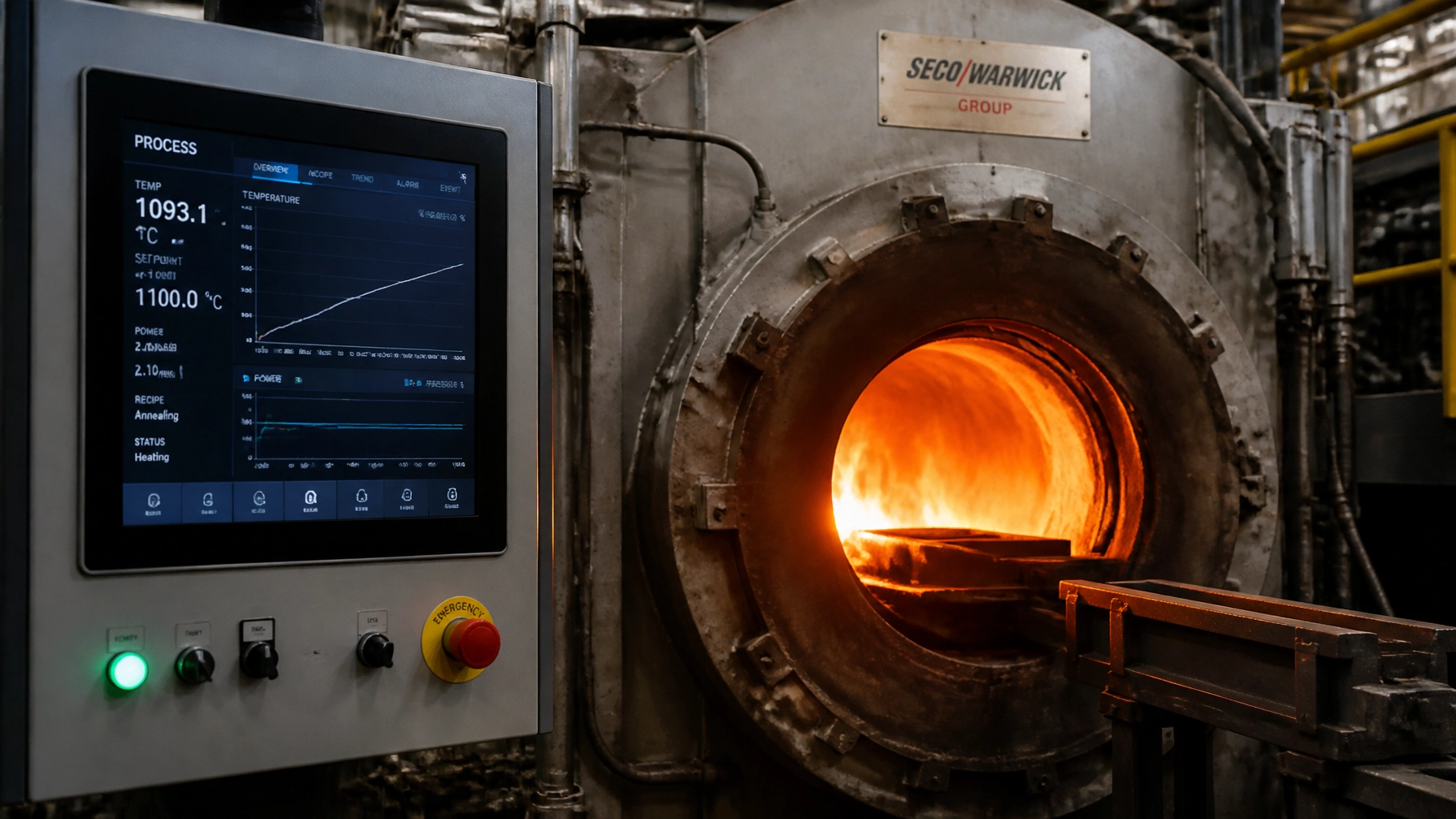
The "simple trick" that provides an immediate ROI is the implementation and rigorous tuning of Precision PID (Proportional-Integral-Derivative) Control with Ramp-Rate constraints.
Many facilities utilize basic "on-off" control or poorly tuned PID loops that treat the furnace like a household oven. In a professional industrial environment, particularly within a melting furnace for steel or a high-capacity aluminum melting furnace, the system must account for the massive thermal inertia of the load.
1. Eliminating the "Overshoot"
By configuring your controller with a specific ramp-rate limit, you ensure the furnace reaches its soak temperature as fast as physics allows without exceeding the setpoint. A controlled approach prevents the system from dumping excess fuel into the burners at the end of the heating cycle, which typically results in a 3-7% reduction in fuel consumption per cycle.
2. Implementing "Guaranteed Soak"
This is a logic-based function where the soak timer only begins when all thermocouple inputs: both furnace and load-sensing: have reached the specified window. This prevents the common error of "over-soaking," where an operator extends a cycle "just to be sure," wasting hours of energy and increasing the risk of grain growth in steel alloys.

Phase 1: The Diagnostic Roadmap
Before adjusting any digital parameters, a seasoned consultant must look at the mechanical foundation of the system. As a leading industrial furnace manufacturer, Continental Furnaces recommends a three-step diagnostic phase to prepare for optimization.
- Combustion Analysis: Verify the air-fuel ratio. An excess of air cools the flame and carries heat out of the stack, while insufficient air leads to incomplete combustion and hazardous carbon monoxide buildup.
- Pressure Management: Ensure the furnace pressure is slightly positive. Negative pressure draws in cold ambient air (infiltration), forcing the burners to work significantly harder to maintain equilibrium.
- Insulation Integrity: Check for "hot spots" on the furnace shell. Often, simple upgrades to furnace spare parts such as high-density ceramic fiber modules can reduce wall losses by up to 15%.
Comparative Performance Analysis
The following table contrasts the performance of legacy control systems against modern, PID-optimized thermal processing equipment.
| Performance Metric | Legacy Manual/On-Off Control | Optimized PID & Ramp Control | Improvement |
|---|---|---|---|
| Temperature Deviation | +/- 15°C | +/- 1.5°C | 90% Increase in Precision |
| Fuel Consumption | High (due to hunting/overshoot) | Optimized (Steady-state) | 5% – 12% Reduction |
| Cycle Time | Inconsistent | Repeatable & Minimal | 8% Average Throughput Increase |
| Refractory Wear | High (Thermal Shock) | Low (Gradual Gradients) | Extended Component Life |
| Labor Requirement | High (Manual Monitoring) | Low (Automated) | Redirected Personnel |
Integrating with the "Circular Economy" and Industry 4.0
True leadership in the industrial furnace systems sector requires looking beyond the burner. Today’s high-efficiency systems are designed to be "Industry 4.0 Ready." By integrating your PID controllers with a centralized SCADA (Supervisory Control and Data Acquisition) system, you can track energy usage in real-time, identifying exactly which shifts or product lines are consuming the most resources.
Furthermore, for facilities operating a metal recycling furnace or a hot dip galvanizing plant, energy recovery is paramount. Modern Continental Furnaces' designs often include recuperative burners that use hot exhaust gases to pre-heat incoming combustion air, a strategy that contributes significantly to Sustainability and regulatory compliance in increasingly green-focused global markets.

Phase 2: Hardware Optimization and Spare Part Logistics
Once the digital logic is perfected, the physical hardware must match that level of performance. We have found that many steel rolling mills operate with degraded burner nozzles or leaking gaskets, which undermines even the most advanced control algorithms.
Continental Furnaces provides a comprehensive suite of technical insights and product highlights to help plant managers select the correct components for their specific applications. Whether it is a continuous-type furnace for steel rods or a specialized pickling plant, maintaining a rigorous schedule of part replacement is essential for sustained competitive advantage.
Key Hardware Focus Areas:
- High-Velocity Burners: Ensure even heat distribution and better penetration of the load.
- Automated Damper Controls: To maintain precise furnace pressure.
- Advanced Sensors: Utilizing high-accuracy thermocouples that resist drift over time.

Strategic Advice: The Roadmap to Energy Neutrality
Optimizing your furnace efficiency is not a one-time event but a chronological progression toward excellence. We advise our partners to follow this phased approach:
- Phase 1: Assessment. Conduct a thermal audit to identify the 20% of issues causing 80% of the energy waste.
- Phase 2: Digital Transition. Upgrade to precision PID controllers and implement ramp/soak programming.
- Phase 3: Heat Recovery. Install recuperators or regenerative burners to capture waste heat.
- Phase 4: Predictive Maintenance. Use data analytics to replace furnace spare parts before they fail, ensuring minimal downtime.
Conclusion: An Enduring Partnership for Thermal Excellence
In the world of heavy industry, the difference between profit and loss is often measured in cubic meters of gas and degrees of temperature. Improving your heat treatment furnaces' efficiency right now doesn't always require a capital-heavy investment; it requires the seasoned authority and technical wisdom of a partner like Continental Furnaces.
Our 35+ years of expertise in the rolling mill industry, including both ferrous and non-ferrous applications, positions us as more than just a manufacturer. We are consultants dedicated to your long-term yield and profitability. From state-of-the-art melting furnaces to specialized hot dip galvanizing plants, our solutions are engineered for the future.
Are you ready to eliminate thermal waste and secure your competitive edge?
Contact Continental Furnaces today for a comprehensive thermal audit and discover how our customized solutions can transform your production facility into a model of energy-efficient excellence.