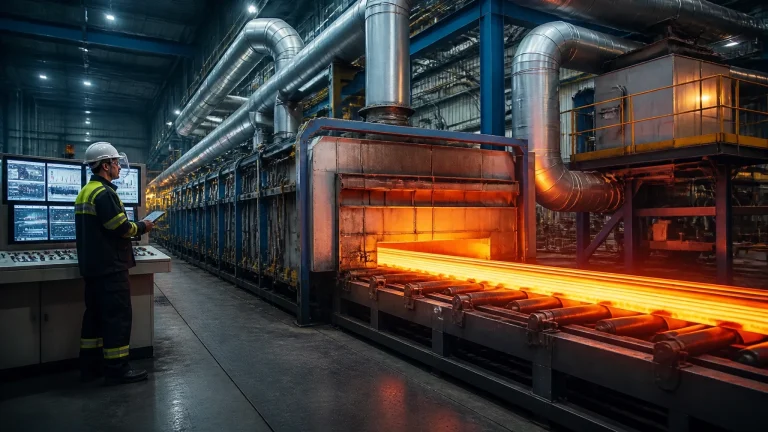
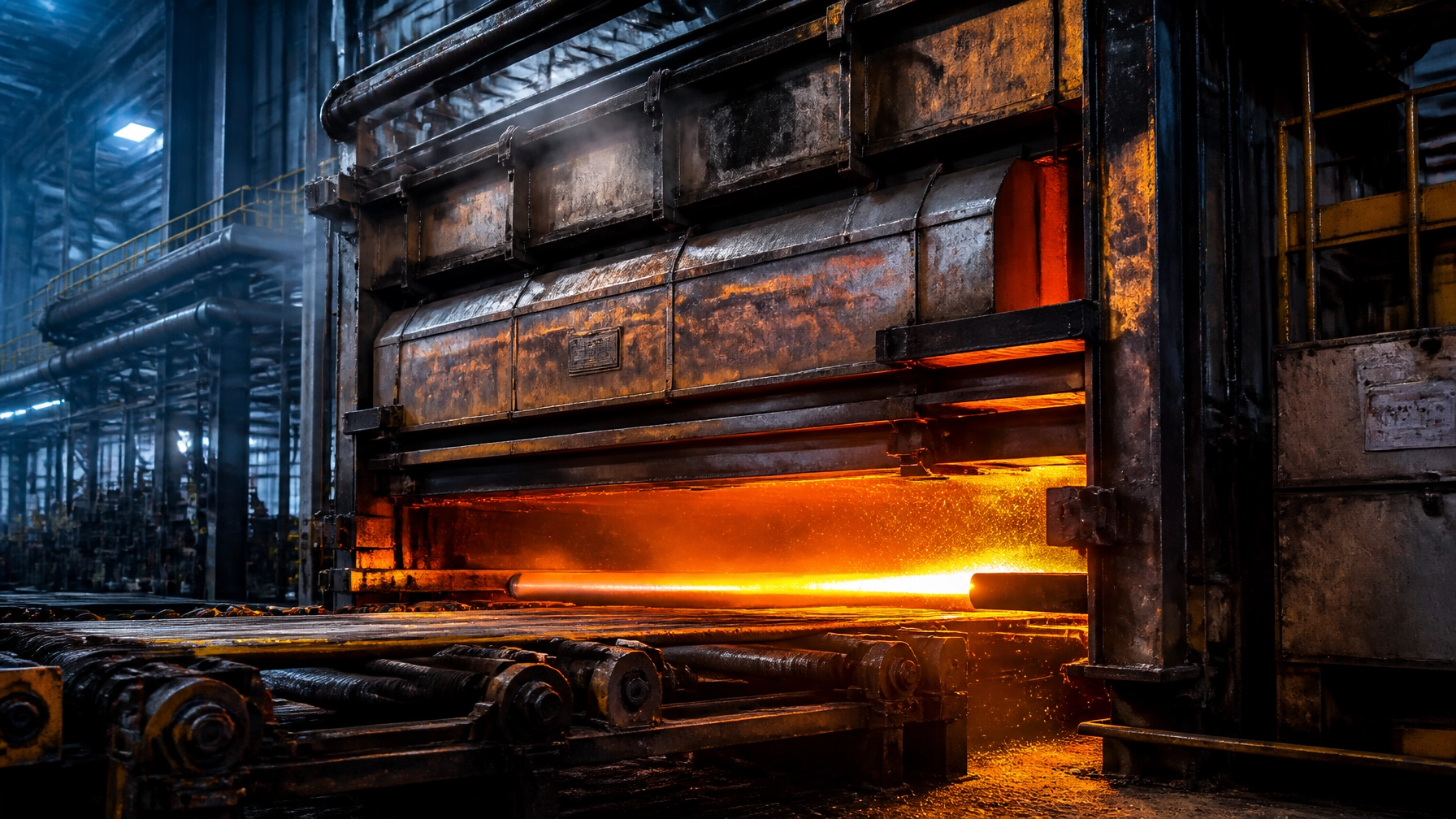
In the high-stakes world of heavy industrial manufacturing, the heat treatment furnace is not merely a piece of equipment; it is the heartbeat of your production line. Whether you are operating a steel rolling mill, managing a hot dip galvanizing plant, or overseeing a complex wire and cable industry facility, the precision of your thermal processing determines the ultimate integrity of your product.
However, after 35+ years as a leading industrial furnace manufacturer, Continental Furnaces has observed a recurring pattern: even the most sophisticated operations often fall prey to subtle, "invisible" inefficiencies. These errors do not just compromise metallurgical properties; they erode your bottom line through excessive fuel consumption, unplanned downtime, and reduced yield.
Below is a technical audit of the seven most common mistakes currently impacting industrial furnace systems and a strategic roadmap to rectify them.
1. Neglecting Temperature Uniformity Surveys (TUS)
The most frequent oversight in thermal processing is the assumption that the temperature displayed on the controller is the temperature of the workload. In reality, aging insulation, burner misalignment, or failing heating elements create localized "cold spots" and "hot spots."
The Mistake: Failing to conduct regular Temperature Uniformity Surveys (TUS) per AMS2750 or equivalent standards. This results in inconsistent hardness, residual stresses, and potential batch rejection.
The Fix: Implement a rigorous TUS schedule. Modern heat treatment furnaces should maintain a uniformity of ±5°C or better, depending on the application.
- Action: Calibrate all thermocouples and controllers quarterly.
- Investment: Transition to multi-zone control systems that can adjust individual burners to compensate for thermal variances.

2. Poor Combustion and Atmosphere Control
In gas-fired systems, particularly those used in melting furnaces for steel or aluminum melting furnaces, the air-to-fuel ratio is critical.
The Mistake: Operating with an "oxygen-rich" atmosphere to ensure complete combustion. While this seems safe, excess air acts as a heat sink, carrying valuable energy out through the stack and causing severe oxidation (scale) and decarburization on the steel surface.
The Fix: Utilize real-time combustion analyzers to maintain a precise stoichiometric ratio.
- The Benchmarks: Aim for an oxygen level of 1-2% in the flue gas.
- The Result: A reduction in scale loss can increase yield by 0.5% to 1.5%, which, in a high-volume steel rolling mill, translates to millions in annual savings.
3. Overlooking Air Infiltration and Sealing Integrity
A furnace is only as efficient as its seal. Infiltration of cold ambient air is a "silent killer" of furnace efficiency.
The Mistake: Ignoring worn door gaskets, cracked refractory bricks, or misaligned dampers. Even a 1/4-inch gap around a furnace door can increase fuel consumption by 5% to 10% as the system struggles to maintain setpoint temperatures.
The Fix: Conduct routine visual and thermal inspections.
- Audit: Use infrared thermography to identify "hot spots" on the furnace shell, indicating insulation failure.
- Maintenance: Replace compressed ceramic fiber seals and ensure all pneumatic door-clamping mechanisms are exerting uniform pressure. For high-performance pickling plants and galvanizing lines, seal integrity also prevents hazardous fume leakage.
4. Suboptimal Loading and Charge Density
How you arrange your parts inside the furnace is just as important as the temperature you set.
The Mistake: Overcrowding the furnace to "increase throughput." This paradoxically reduces efficiency by blocking the path of convection currents or radiant heat, leading to extended soak times and uneven heating.
The Fix: Standardize loading patterns based on CFD (Computational Fluid Dynamics) modeling or empirical testing.
- The Rule of Thumb: Ensure at least 25% open space between components to allow for adequate circulation of the furnace atmosphere.
- Equipment: Use high-alloy fixtures and baskets that offer a low mass-to-load ratio to ensure you are heating the product, not the furniture.

5. Reactive Maintenance of Furnace Spare Parts
Waiting for a component to fail before replacing it is the most expensive way to run a facility.
The Mistake: Keeping zero or minimal inventory of critical furnace spare parts. When a burner nozzle clogs or a radiant tube cracks during a peak production cycle, the cost of the "emergency" part is eclipsed by the cost of the idle labor and lost production time.
The Fix: Transition to a Predictive Maintenance (PdM) model.
- Stockpile Essentials: Maintain a "critical spares" kit including thermocouples, spark igniters, flame sensors, and specialized gaskets.
- Lifecycle Management: At Continental Furnaces, we provide comprehensive spare parts support designed to keep downtime at an absolute minimum.
| Feature | Reactive Maintenance | Proactive (Continental) Model |
|---|---|---|
| Downtime | Unpredictable & Long | Scheduled & Minimal |
| Fuel Efficiency | Decreases over time | Optimized via regular tuning |
| Part Cost | High (Expedited shipping) | Standard (Bulk/Planned) |
| Safety Risk | High (Sudden failures) | Low (Controlled replacement) |
6. Ignoring Waste Heat Recovery (WHR)
In the modern industrial landscape, sustainability is no longer optional: it is a competitive necessity.
The Mistake: Allowing high-temperature exhaust gases to exit the stack without capturing their energy. This is common in older metal recycling furnaces and secondary aluminum melting furnaces.
The Fix: Install Recuperative or Regenerative Burners.
- Efficiency Gains: These systems use exhaust heat to preheat incoming combustion air. Every 100°C increase in combustion air temperature typically results in a 5% fuel saving.
- Sustainability: Reducing fuel consumption directly lowers your carbon footprint, aligning your operation with global circular economy initiatives.

7. Failing to Upgrade to Industry 4.0 Standards
Manual logging and "gut-feeling" adjustments are the enemies of precision.
The Mistake: Operating thermal processing equipment as an isolated island of automation. Without data logging and remote monitoring, you cannot identify the subtle "process drift" that leads to declining quality.
The Fix: Integrate your furnace with an Industrial IoT (IIoT) platform.
- Phase 1: Assessment: Install digital flow meters and energy monitors.
- Phase 2: Integration: Link your furnace PLC to your plant-wide ERP system.
- The Benefit: Real-time dashboards allow managers to see the Energy Intensity per Ton of product, enabling data-driven decisions that improve both yield and profitability.

The Strategic Roadmap to Optimized Performance
Correcting these mistakes requires more than a simple repair; it requires a shift in operational philosophy. We recommend a three-phase optimization plan:
- Diagnostic Audit: Perform a full-site thermal audit, including TUS, combustion analysis, and insulation integrity checks.
- Technological Retrofit: Upgrade legacy industrial furnace systems with modern control logic, recuperative burners, and high-efficiency refractory linings.
- Continuous Partnership: Establish a recurring maintenance and calibration contract with an industrial furnace manufacturer that understands the nuances of your specific industry: be it rolling mills, wire manufacturing, or metal recycling.
Conclusion: Your Partner in Thermal Excellence
The difference between a profitable operation and one struggling with overhead is often found in the details of the furnace chamber. By addressing these seven mistakes, you are not just maintaining equipment; you are securing a sustained competitive advantage.
At Continental Furnaces, we specialize in transforming thermal challenges into engineering triumphs. From custom-engineered heat treatment furnaces to comprehensive metal recycling projects, our team of experts is ready to help you optimize your yields and minimize your costs.
Don't let inefficiency dictate your margins. Contact our technical consultants today for a comprehensive evaluation of your thermal processing systems and take the first step toward a high-performance, sustainable future.