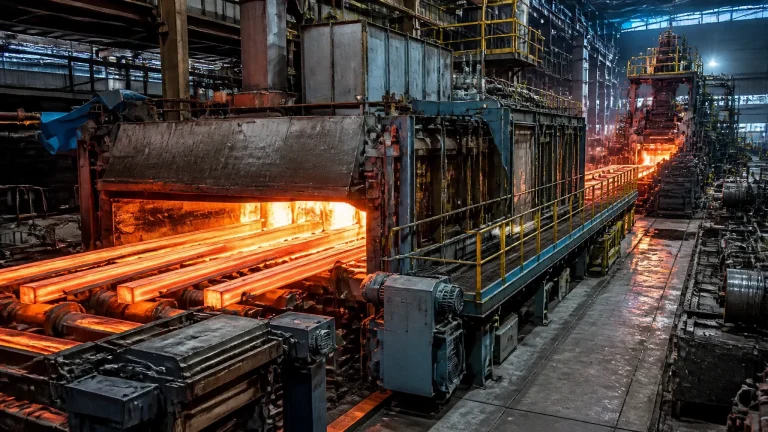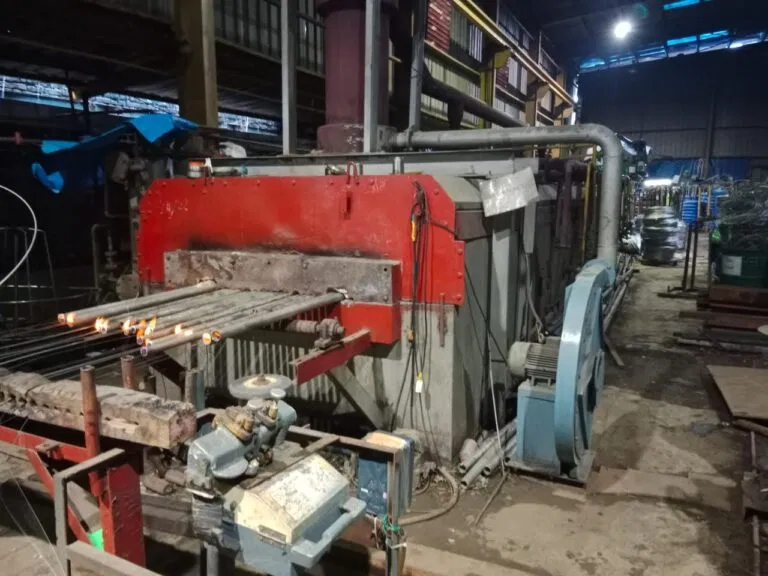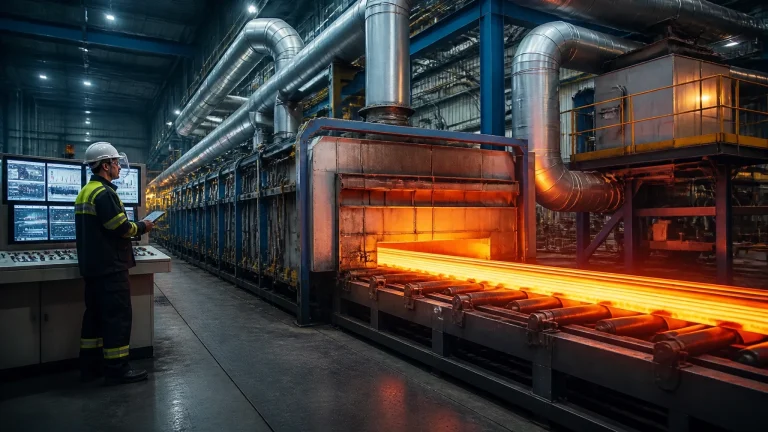
In the high-stakes environment of wire and cable manufacturing, the furnace is the beating heart of production. Whether you are running a steel rolling mill or a dedicated annealing line, the efficiency of your thermal processing equipment directly dictates your bottom line. As a leading industrial furnace manufacturer with over 35 years of engineering pedigree, Continental Furnaces has observed a consistent pattern: the most profitable plants aren't necessarily the ones with the newest equipment, but those that master the science of optimization.
Below is a comprehensive roadmap of 30 actionable furnace optimization ideas, categorized into strategic phases to help you transition from legacy operations to a high-yield, Industry 4.0-ready facility.
Phase 1: Thermal Integrity and Combustion Precision
The foundation of efficiency lies in containing heat and optimizing the chemical reaction of combustion.
- Near-Stoichiometric Tuning: Utilize portable flue-gas analyzers every morning to adjust your air-to-fuel ratio. Reducing excess air can cut fuel consumption by 5-12% almost instantly.
- Oxygen-Enriched Combustion: For high-temperature melting furnaces for steel, consider oxygen enrichment. This increases flame temperature and accelerates heat transfer, potentially increasing throughput by 20%.
- Zirconium-Based Refractory Upgrades: Swap standard bricks for high-emissivity ceramic fiber modules. These reflect heat back into the chamber rather than absorbing it.
- Positive Pressure Calibration: Maintain a slightly positive internal furnace pressure. This prevents the "chimney effect" where cold air is sucked in through door gaps, a common cause of uneven annealing in heat treatment furnaces.
- Automated Damper Control: Link your stack dampers to the furnace pressure sensors to maintain an optimal thermal envelope regardless of ambient weather conditions.
- Seal Integrity Audits: Inspect the seals on your hot dip galvanizing plant baths. Worn seals are "invisible leaks" that can account for up to 15% of radiant heat loss.
- High-Velocity Burners: Transition to high-velocity burners to improve convective heat transfer, ensuring that wire coils at the center of a batch receive the same thermal soak as those on the periphery.
- Recuperative Burner Integration: Install recuperators to capture waste heat from exhaust gases and use it to preheat incoming combustion air. For every 100°C increase in combustion air temperature, you gain approximately 5% in fuel efficiency.
- Flame Pattern Observation: Use high-temperature cameras to ensure flames are not "impinging" directly on the product or the refractory, which causes localized hot spots and premature failure.
- Refractory Patching Kits: Keep specialized furnace spare parts and patching compounds on hand. Small cracks lead to "hot spots" on the furnace shell; fixing them immediately prevents structural warping.

Phase 2: Hardware Evolution and Component Performance
Moving beyond the shell, these ideas focus on the mechanical and electrical systems that drive your industrial furnace systems.
- VFD Implementation on Fans: Install Variable Frequency Drives (VFDs) on all combustion and recirculation fans. Reducing fan speed by 20% can reduce energy consumption by nearly 50% due to the affinity laws of fluid dynamics.
- Induction Heating for Fiber Draw: For specialized cable applications, evaluate induction-based thermal processing equipment. These offer up to 50% lower energy consumption compared to traditional resistive heating.
- SCR Power Controllers: Replace old-fashioned contactors with Silicon Controlled Rectifiers (SCRs). SCRs provide infinitely variable power control, eliminating the "thermal shock" of on/off cycling.
- Precision PID Tuning: Re-tune your PID loops for your specific product gauges. A well-tuned controller prevents the "overshoot" that wastes energy and risks deforming fine-gauge wire.
- Lead-Free Galvanizing Transitions: If you run a hot dip galvanizing plant, optimize your bath chemistry to allow for lower operating temperatures, which extends the life of your furnace kettle and reduces fuel demand.
- Load Preheating Stations: Utilize a "pre-heat tunnel" powered by furnace exhaust. Feeding a 200°C wire into the main furnace chamber significantly reduces the "recovery time" of the burner system.
- Multi-Zone Temperature Control: Break your continuous furnace into independently controlled zones. This allows you to apply high heat at the entry (ramp-up) and lower "soak" heat toward the exit.
- High-Efficiency Agitation Pumps: In aluminum melting furnaces, use electromagnetic or mechanical stirrers to eliminate temperature stratification in the melt, ensuring a uniform alloy for wire drawing.
- Standardized Spare Part Inventory: Partner with an industrial furnace manufacturer to create a "critical spares" list. Downtime for a furnace is not just lost production; it's the massive energy cost of the subsequent reheat cycle.
- Upgraded Hearth Rollers: In steel rolling mills, ensure hearth rollers are made of high-nickel alloys to resist scaling, which can snag wire and cause costly line breaks.
Technology Comparison: Legacy vs. Optimized Furnace Systems
| Feature | Legacy System (Pre-2010) | Optimized Continental System |
|---|---|---|
| Control Method | Manual/On-Off | Automated PID with SCR |
| Heat Recovery | None (Direct Exhaust) | Integrated Recuperators (30% Recovery) |
| Insulation | Traditional Firebrick | High-Emissivity Ceramic Fiber |
| Combustion | Fixed Air-to-Fuel Ratio | Dynamic Flue-Gas Feedback |
| Energy Waste | 25-40% | <10% |
Phase 3: Operational Excellence and Industry 4.0
Efficiency is as much about how you run the machine as it is about the machine itself.
- Predictive Maintenance Sensors: Install vibration and temperature sensors on all motors. Detecting a bearing failure in a recirculation fan before it seizes avoids an emergency furnace shutdown.
- Dynamic Scheduling: Schedule your highest-temperature runs (like those for a metal recycling furnace) during off-peak electrical hours to take advantage of lower utility tariffs.
- Loading Density Optimization: Ensure your furnace is loaded to its designed capacity. Running a half-empty furnace is one of the most significant "stealth costs" in a wire plant.
- Real-Time Carbon Footprint Tracking: Implement software that converts gas and electric usage into CO2 equivalents. This data is increasingly essential for regulatory compliance and "Green Steel" certification.
- "Warm Standby" Protocols: Develop a rigorous protocol for weekend idles. Lowering the furnace to a "holding temperature" rather than shutting it down completely often saves more energy by avoiding the massive "reheat" surge on Monday morning.
- Automated Slag/Dross Removal: In a melting furnace for steel, use automated skimming tools. Dross acts as an insulator on top of the melt, forcing burners to work harder to push heat into the metal.
- Digital Twin Integration: Work with our engineering team at Continental Furnaces to create a digital twin of your process. This allows you to simulate new line speeds without risking actual product.
- Operator Training Workshops: The most advanced industrial furnace systems are only as good as the technician at the control desk. Conduct quarterly training on combustion basics and "energy-first" operation.
- Atmosphere Purity Monitoring: In annealing, use nitrogen or hydrogen purifiers to ensure a bright, scale-free finish. This reduces the need for downstream pickling plants, saving chemical and energy costs.
- ISO 50001 Certification: Align your plant operations with the ISO 50001 Energy Management Standard. This creates a culture of continuous improvement that outlasts any single equipment upgrade.

The Path Forward: Strategic Consultation
Optimizing a wire and cable plant is not a one-time event; it is an enduring partnership between engineering excellence and operational discipline. At Continental Furnaces, we specialize in transforming legacy thermal systems into high-performance assets that drive profitability and sustainability.
Whether you are looking for high-quality furnace spare parts or a turnkey steel rolling mill solution, our 35+ years of expertise ensure that your facility remains at the cutting edge of global manufacturing.
Phase 1: Assessment and Planning
Ready to unlock double-digit energy savings? Start by auditing your current thermal profile.
Take the first step toward a sustained competitive advantage. Contact our technical consultants today to schedule a comprehensive furnace efficiency audit.