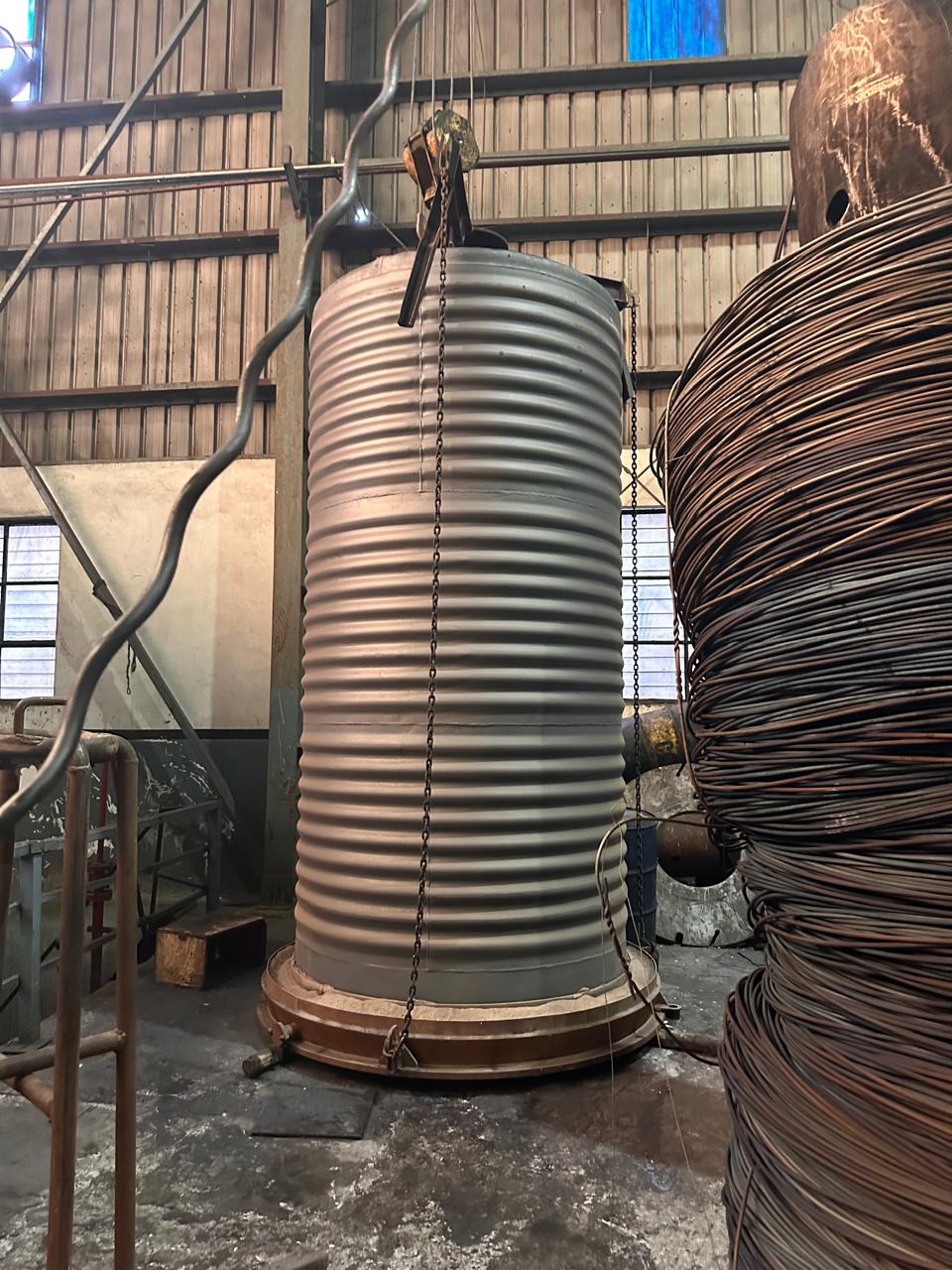
Why After-Sales Service Matters in Industrial Furnace Operations
When investing in an annealing furnace, most manufacturers focus heavily on initial capital costs, technical specifications, and production capacity. While these factors are undeniably important, there’s a critical element that often gets overlooked until it becomes a painful reality: after-sales service and support.
The truth is, purchasing an industrial furnace isn’t a one-time transaction; it’s the beginning of a long-term relationship that can make or break your operational efficiency, production schedules, and ultimately, your bottom line. In this comprehensive guide, we’ll explore why robust after-sales service is not just important, but absolutely essential for successful annealing furnace operations.
The Staggering Cost of Furnace Downtime
Let’s start with some sobering statistics that underscore why after-sales service should be a top priority:
Industry-Wide Impact:
-
Unplanned downtime costs industrial manufacturers an estimated $50 billion annually across all sectors
-
Over 80% of industrial businesses experienced unplanned downtime in the last three years
-
The average manufacturing facility loses approximately 49 hours of productivity every year due to equipment failures
-
Across all industries, downtime costs companies an average of $260,000 per hour
Furnace-Specific Consequences:
For specialized equipment like annealing furnaces, the impact is even more severe:
-
High-temperature industrial furnaces can cost companies up to $22,000 per minute in lost production
-
Heavy industry operations (including heat treatment) face extended restart times, with downtime costs estimated at £50-60 billion annually across the EU
-
Steel and metal processing facilities experience costs ranging from $36,000 to over $500,000 per hour depending on production scale
Why Furnace Downtime Is Particularly Costly:
Unlike standard manufacturing equipment that can be quickly swapped or bypassed, annealing furnaces present unique challenges:
-
Thermal Inertia: Furnaces can’t simply be turned off and on. Cooling down and reheating takes hours or even days, consuming enormous amounts of energy while producing nothing.
-
Batch Processing Disruption: A furnace failure doesn’t just affect current production; it creates a backlog that cascades through your entire production schedule.
-
Quality Concerns: Interrupted annealing cycles can result in entire batches of sub-standard material that must be scrapped or re-processed.
-
Energy Waste: Even during downtime, maintaining protective atmospheres and preventing thermal shock requires continuous energy input.
-
Contractual Penalties: Missed delivery deadlines due to furnace failures can trigger penalty clauses with customers, compounding financial losses.
The Hidden Costs Beyond Lost Production
When calculating the impact of furnace downtime, most companies focus on lost production hours. However, the true cost extends far beyond immediate revenue loss:
Labor Inefficiency:
-
Operators, maintenance technicians, and engineers remain on payroll while producing nothing
-
Skilled metallurgists and quality control personnel sit idle
-
Management time diverted to crisis management and customer communication
Material Waste:
-
Work-in-progress materials trapped in failed furnaces may be ruined
-
Protective atmospheres (nitrogen, hydrogen, etc.) continuously consumed without productive output
-
Flux, salts, and other consumables wasted
Customer Relationship Damage:
-
Late deliveries erode trust and can lead to lost contracts
-
Rush shipping costs to meet delayed commitments
-
Potential loss of preferred supplier status
-
Damage to reputation in competitive markets
Opportunity Costs:
-
Inability to accept new orders during downtime periods
-
Loss of market share to competitors with more reliable operations
-
Missed seasonal or cyclical demand opportunities
Energy Penalties:
-
Wasted fuel or electricity maintaining furnace temperature
-
Additional energy required for emergency restart procedures
-
Peak demand charges during recovery operations
According to industry research, when all factors are considered, the total cost of downtime can be 3-5 times the direct production loss value.
Why Specialized Equipment Requires Specialized Support
Annealing furnaces aren’t off-the-shelf commodity equipment. They’re highly specialized systems integrating:
-
Complex refractory systems with materials designed for specific temperature ranges
-
Precision temperature control requiring calibrated sensors and sophisticated controllers
-
Atmosphere management with gas mixing, flow control, and safety interlocks
-
Heating elements (electric resistance, gas burners, or radiant tubes) with specific maintenance requirements
-
Mechanical systems including conveyors, doors, fans, and cooling systems
-
Safety systems protecting personnel and preventing catastrophic failures
The Obsolescence Challenge:
One of the most frustrating aspects of furnace ownership is component obsolescence. Electronics, controllers, and automation systems evolve rapidly:
-
Control Systems: PLCs and HMI panels may become unsupported within 7-10 years
-
Electronic Components: Solid-state relays, SCR controllers, and power modules have limited production lifecycles
-
Sensors: Thermocouple types and transmitter technologies change
-
Software: Operating systems and control software become outdated
Without a manufacturer committed to long-term support, you may find yourself unable to source replacement parts for an otherwise functional furnace, forcing expensive retrofits or premature equipment replacement.
The Four Pillars of Effective After-Sales Service
Based on decades of experience supporting annealing furnace operations across diverse industries, we’ve identified four critical pillars that separate exceptional after-sales service from merely adequate support:
1. Spare Parts Availability
The Challenge: Annealing furnaces contain hundreds of components, from high-wear consumables to critical long-life parts. When a component fails, you need the replacement immediately – not in 4-6 weeks.
What Excellent Service Looks Like:
-
Comprehensive inventory of critical spare parts maintained by the manufacturer
-
Fast-track delivery systems ensuring 24-48 hour delivery across India
-
OEM (Original Equipment Manufacturer) parts guaranteeing compatibility and performance
-
Preventive maintenance kits pre-assembled for scheduled service
-
Emergency spare parts service with 24/7 availability for crisis situations
Real-World Impact: A leading automotive component manufacturer faced a thermocouple failure in their bell-type annealing furnace on a Friday evening. With Continental Furnaces’ emergency spare parts service, the replacement part was delivered Saturday morning via courier, and production resumed by Monday – avoiding ₹8-10 lakhs in weekend overtime costs and delayed shipments.
2. Technical Expertise
The Challenge: Annealing furnaces are complex systems where problems can stem from refractory degradation, control system malfunctions, atmosphere contamination, or operator error. Accurate diagnosis requires deep metallurgical and engineering knowledge.
What Excellent Service Looks Like:
-
Multi-channel support (phone, email, WhatsApp, video consultation) with real engineers, not call center operators
-
Remote diagnostics capabilities leveraging digital controls and sensor data
-
On-site technical support when hands-on assessment is required
-
Emergency breakdown services with guaranteed response times
-
Preventive maintenance programs based on actual furnace operating conditions
Real-World Impact: A steel processing facility experienced inconsistent annealing results – some batches perfect, others showing decarburization. Remote diagnostics identified atmosphere control valve malfunction. A technician arrived within 12 hours, replaced the valve, recalibrated the system, and trained operators on atmosphere monitoring – preventing weeks of trial-and-error troubleshooting and thousands of rupees in scrapped material.
3. Knowledge Transfer
The Challenge: The best equipment is only as good as the people operating it. Without proper training, even state-of-the-art furnaces underperform.
What Excellent Service Looks Like:
-
Comprehensive operator training covering normal operations, routine maintenance, and troubleshooting
-
Maintenance team training enabling in-house capability development
-
Advanced workshops for metallurgists on optimizing annealing cycles
-
Documentation (manuals, checklists, troubleshooting guides) in clear, accessible formats
-
Online resources including videos, technical bulletins, and FAQs
Real-World Impact: After implementing Continental Furnaces’ operator certification program, a wire manufacturing facility reduced unplanned downtime by 35% and extended refractory life by 20% – simply through better operating practices and early problem detection.
4. Long-Term Partnership
The Challenge: Industries evolve, production requirements change, and technology advances. Your furnace supplier should grow with you, not abandon you after installation.
What Excellent Service Looks Like:
-
Dedicated account managers providing single-point-of-contact continuity
-
Proactive communication about potential improvements, upgrades, or emerging issues
-
Flexible service contracts adapting to changing production volumes
-
Technology upgrades and modernization options for aging equipment
-
Transparent pricing and honest assessments (sometimes the best advice is “no service needed yet”)
Real-World Impact: A 15-year-old box-type annealing furnace was facing obsolescence due to outdated controls. Rather than recommending complete replacement (a ₹70+ lakh investment), Continental Furnaces engineered a control system upgrade for ₹12 lakhs, extending furnace life by 8-10 years while adding modern data logging and remote monitoring capabilities.
The Partnership vs. Transaction Mindset
Here’s a fundamental truth about industrial equipment: The purchase price is typically only 20-30% of the total cost of ownership over a furnace’s 15-20 year lifespan.
The remaining 70-80% comprises:
-
Energy costs (fuel or electricity)
-
Maintenance and spare parts
-
Downtime and lost production
-
Operator labor
-
Eventual refurbishment or replacement
A manufacturer that views the sale as a one-time transaction focuses exclusively on that initial 20-30%. But a manufacturer that embraces a partnership mindset recognizes that their success is tied to your success over decades.
Transaction-Focused Manufacturer:
-
Difficult to reach after sale
-
Long lead times for spare parts
-
Generic troubleshooting advice
-
Pushes expensive replacements over repairs
-
Limited documentation and training
Partnership-Focused Manufacturer:
-
Proactive communication and support
-
Maintains spare parts inventory for rapid delivery
-
Deploys experienced engineers who know your specific equipment
-
Recommends cost-effective solutions (even when it means less revenue)
-
Invests in training your team for long-term success
At Continental Furnaces, we’ve built our reputation on the partnership model. Our oldest client relationships span over 25 years – furnaces we installed in the early 2000s are still operating efficiently today because we’ve supported them every step of the way.
Building Resilience Through Preventive Service
The best after-sales service is the kind that prevents emergencies before they occur. Modern furnace operations have moved from reactive “break-fix” models to proactive preventive maintenance strategies.
The Economics of Prevention:
Research consistently shows that preventive maintenance delivers:
-
3-4x lower maintenance costs compared to reactive maintenance
-
25-40% reduction in downtime through early problem detection
-
20-30% longer equipment life by addressing wear before failure
-
10-15% energy savings through optimization and calibration
Components of Effective Preventive Maintenance:
-
Scheduled Inspections: Regular assessment of refractory condition, heating element integrity, control system accuracy, and mechanical components
-
Predictive Monitoring: Temperature trending, cycle time analysis, and energy consumption tracking to identify degradation patterns
-
Calibration Services: Ensuring temperature measurement accuracy (critical for metallurgical quality)
-
Consumables Management: Planned replacement of thermocouples, gaskets, burner tips, and other wear items before failure
-
Lubrication and Adjustment: Maintaining mechanical systems (fans, conveyors, door mechanisms) in optimal condition
-
Documentation: Maintaining detailed service history enabling data-driven decision making
The Technology Evolution Challenge
Industrial furnace technology is evolving rapidly, driven by:
-
Energy efficiency mandates (Bureau of Energy Efficiency standards in India)
-
Industry 4.0 integration (IoT sensors, remote monitoring, predictive analytics)
-
Environmental regulations (emissions control, atmosphere gas management)
-
Quality requirements (automotive IATF 16949, aerospace AS9100, etc.)
Your 10-year-old furnace may be mechanically sound but technologically obsolete. A forward-thinking manufacturer helps you navigate this evolution through:
Modernization Services:
-
Control system upgrades bringing legacy equipment into the digital age
-
Energy efficiency retrofits (improved insulation, heat recovery, burner upgrades)
-
Automation integration (automated loading, atmosphere control, data logging)
-
Safety system upgrades meeting current standards
Value Preservation:
These upgrades typically cost 15-25% of new equipment while extending service life by 5-10 years and delivering immediate operational improvements.
Questions to Ask Your Furnace Manufacturer
Before committing to an annealing furnace purchase, evaluate the manufacturer’s after-sales commitment:
About Spare Parts:
-
What critical spare parts do you stock in India?
-
What are typical lead times for common replacement parts?
-
Do you guarantee long-term parts availability (10+ years)?
-
Can you provide emergency spare parts outside business hours?
About Technical Support:
-
How do I reach technical support? (Phone, email, online portal?)
-
What are your response time guarantees?
-
Do you offer remote diagnostics?
-
What are the qualifications of your service engineers?
-
Do you provide on-site emergency support?
About Training:
-
What operator training is included with purchase?
-
Do you offer advanced maintenance training?
-
Are training materials provided in local languages?
-
Is refresher training available for new operators?
About Long-Term Partnership:
-
How many furnaces have you installed in the last 10 years?
-
Can you provide customer references with 10+ year relationships?
-
Do you offer preventive maintenance contracts?
-
What modernization/upgrade services do you provide?
-
How do you communicate about obsolescence and technology changes?
The Continental Furnaces Commitment
At Continental Furnaces (confur.net), we recognize that selling you an annealing furnace is just the beginning of our relationship. Our commitment to after-sales excellence is built on:
Comprehensive Spare Parts Network:
-
Strategic inventory of 500+ critical components across our product range
-
Pan-India logistics ensuring 24-48 hour delivery to major industrial centers
-
Emergency hotline (24/7/365) for crisis situations
-
OEM parts certification guaranteeing quality and compatibility
Engineering Excellence:
-
In-house team of metallurgical engineers, control systems specialists, and refractory experts
-
Average service engineer experience: 12+ years in industrial furnace applications
-
Remote diagnostics capabilities for 70% of common issues
-
Guaranteed on-site response within 24-48 hours for critical breakdowns
Knowledge Transfer:
-
Comprehensive 3-day operator training with every furnace installation
-
Annual maintenance workshops for existing customers
-
Extensive documentation library (operation manuals, maintenance guides, troubleshooting aids)
-
Video tutorial library covering common procedures and problem-solving
Partnership Approach:
-
Dedicated account managers for ongoing support
-
Annual equipment reviews assessing condition and optimization opportunities
-
Transparent communication about parts obsolescence and upgrade paths
-
Flexible service contracts from pay-per-service to comprehensive annual agreements
Our Promise: We don’t just build furnaces we build lasting partnerships that support your success for decades.
Conclusion: Service as a Strategic Advantage
In today’s competitive manufacturing environment, operational reliability isn’t just a nice-to-have; it’s a strategic necessity. Companies that maintain uptime above 95% consistently outperform competitors struggling with frequent equipment failures.
The difference often comes down to one factor: the quality of after-sales service from their equipment suppliers.
When evaluating annealing furnace manufacturers, look beyond the initial price tag and technical specifications. Ask yourself:
-
Will this manufacturer answer my call at 2 AM when a critical component fails?
-
Can they deliver the spare part I need tomorrow instead of next month?
-
Do they have the engineering expertise to solve complex metallurgical problems?
-
Will they support this equipment 10, 15, even 20 years from now?
At Continental Furnaces, the answer to all these questions is an unequivocal yes. Our decades of experience have taught us that our success is inseparable from yours – and we’re committed to being your trusted partner for the entire lifecycle of your annealing furnace investment.
Ready to experience the Continental Furnaces difference? Contact our service team today to discuss your annealing furnace needs and discover how our comprehensive after-sales support can give you