In the high-stakes environment of global manufacturing: spanning steel rolling mills, aluminum melting operations, and the wire and cable industry: the true cost of production is not measured merely in fuel or labor, but in the minutes lost to unplanned downtime. A single heating element failure or a compromised burner nozzle can cascade into thousands of dollars in lost yield and disrupted supply chains.
At Continental Furnaces, with over 35 years of engineering pedigree, we view spare parts not as commodities, but as the strategic insurance policy for your thermal processing infrastructure. This guide provides a technical roadmap for identifying, sourcing, and managing the essential components required to maintain a sustained competitive advantage.
The Hierarchy of Criticality: Categorizing Your Spare Parts
To achieve operational excellence, a facility must move beyond reactive procurement. We categorize spares into a three-tiered hierarchy based on their impact on safety, production continuity, and lead-time volatility.
1. Tier 1: System-Critical Components (Zero-Tolerance)
These are parts whose failure results in an immediate and total cessation of the thermal process.
- Combustion Assemblies: Burner tips, gas nozzles, and high-velocity igniters.
- Instrumentation: Thermocouples (Type K, S, R), flame sensors, and oxygen analyzers.
- Safety Interlocks: Solenoid shut-off valves and pressure switches.
2. Tier 2: Operational Wear Items (Predictable Replacement)
Components that degrade predictably over time and require planned replacement to maintain energy efficiency.
- Refractories: Ceramic fiber modules, refractory bricks, and specialized mortars.
- Heating Elements: Resistance alloys or SiC elements designed for specific temperature gradients.
- Mechanical Spares: High-temperature bearings, drive chains, and blower belts.
3. Tier 3: Ancillary Hardware (General Stock)
Standardized items that support the broader system but carry lower immediate risk.
- Gaskets, seals, hardware, and minor electrical fuses.

Technical Deep-Dive: Essential Components by System
Combustion and Burner Systems
The efficiency of a melting furnace for steel or an aluminum melting furnace is fundamentally tied to the precision of its combustion system.
- Igniters & Flame Sensors: These are the most frequent points of failure. Even a minor soot buildup on a flame rod can trigger a nuisance shutdown.
- Burner Quarls: Often overlooked, the refractory shape surrounding the burner ensures stable flame geometry. Cracks here can lead to uneven heating and local hot spots on the furnace shell.
Thermal Insulation and Refractories
Heat loss through compromised insulation can increase fuel consumption by 15% to 25%.
- Door Gaskets: High-frequency cycling in batch furnaces causes rapid compression set in gaskets. A 5mm gap in a door seal can result in a significant loss of thermal uniformity, impacting the final metallurgical properties of the metal.
- Patch Materials: Keeping high-grade refractory mortar on-site allows for "hot patching," extending the life of the lining until the next scheduled major shutdown.

Strategic Comparison: OEM vs. Generic Spares
Choosing between Original Equipment Manufacturer (OEM) parts and generic alternatives is a decision that impacts long-term ROI and equipment longevity.
| Metric | Continental Furnaces (OEM) | Generic/Aftermarket |
|---|---|---|
| Material Specification | High-nickel alloys / Certified ceramics | Variable / Unverified |
| Fit & Tolerance | Precision-engineered to original CAD | "Close-fit" approximations |
| Energy Efficiency | Optimized for specific flow rates | Potential for increased fuel consumption |
| Warranty Support | Full manufacturer backing | Limited or none |
| Typical ROI Period | < 6 months via efficiency gains | Delayed due to frequent replacements |
The Maintenance Roadmap: A Phase-by-Phase Approach
Minimizing downtime requires a shift toward Industry 4.0 predictive maintenance frameworks. Continental Furnaces recommends the following chronological strategy:
Phase 1: Assessment and Criticality Mapping
Conduct a full audit of your industrial furnace systems. Identify the "Single Points of Failure" and document the lead times for every component.
Phase 2: Strategic Inventory Stocking
Maintain an on-site "Emergency Kit" for every furnace. This kit should include, at minimum:
- Two sets of zone-specific thermocouples.
- One complete burner igniter and flame sensor assembly.
- One set of solid-state relays (SSRs) or contactors.
Phase 3: Condition-Based Monitoring
Utilize data-driven insights. If a heat treatment furnace shows a sudden 10% spike in energy consumption, it is an empirical signal to inspect the burner nozzles and door seals before a failure occurs.

Industry-Specific Spare Parts Focus
Steel Rolling Mills (CCR/CCM)
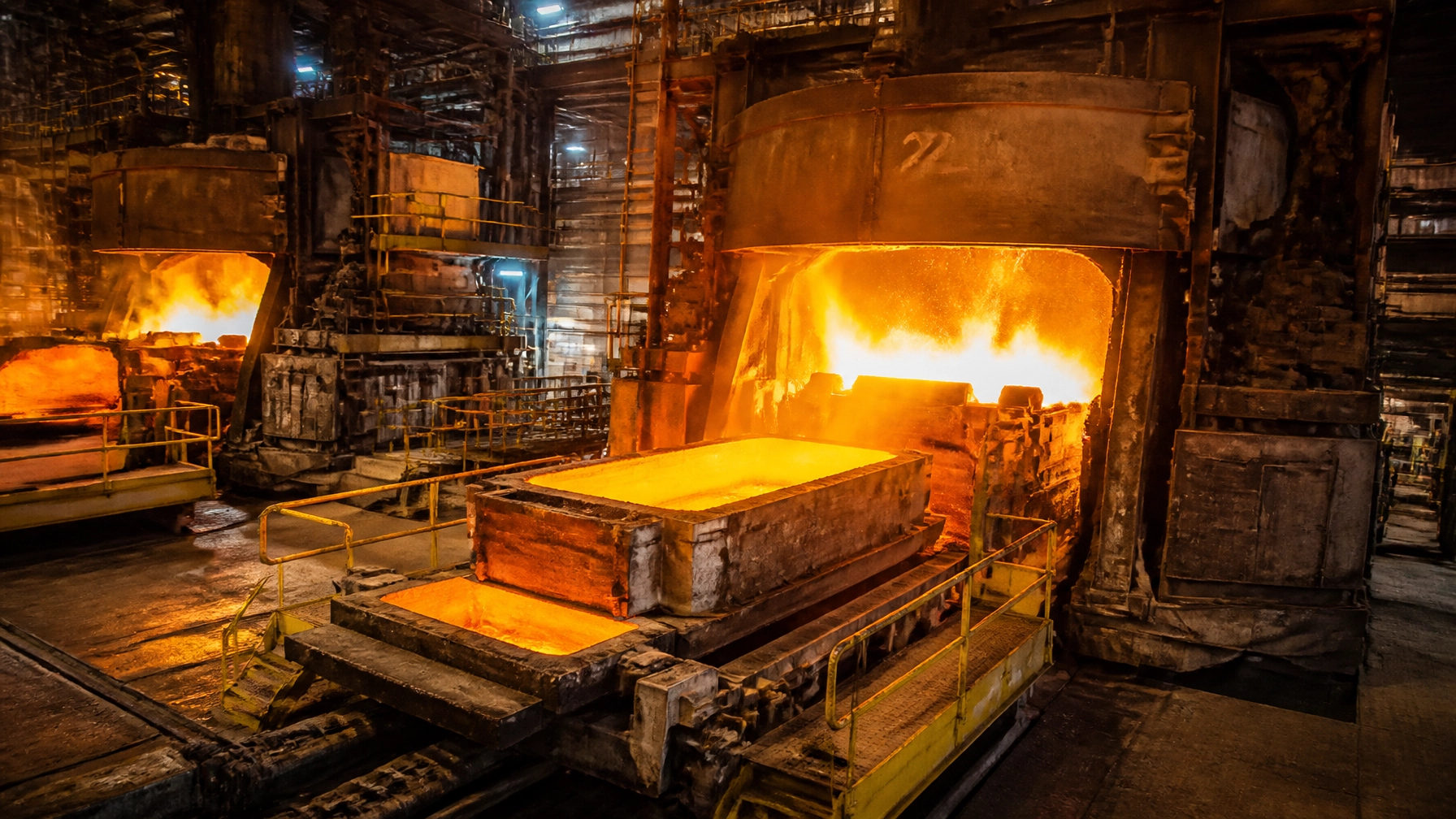
In a steel rolling mill, the reheating furnace is the heart of the operation. Key spares include:
- Water-cooled skid pipe supports.
- High-capacity recuperator tubes to reclaim exhaust heat.
- Automated feed rollers and high-temperature drive couplings.
Metal Recycling & Aluminum Melting
For a metal recycling furnace, chemical attack from fluxes is a major concern.
- Bath Thermocouples: Specialized protective sheaths are required to resist molten aluminum.
- Launder Linings: Modular refractory sections for molten metal transfer.

Conclusion: Toward Sustained Competitive Advantage
The procurement of furnace spare parts should never be a mere transaction. It is a strategic technical decision that dictates your plant's yield, profitability, and regulatory compliance. By investing in high-performance components and a rigorous maintenance roadmap, you ensure that your thermal processing assets remain a driver of value rather than a source of risk.
Continental Furnaces provides more than just hardware; we provide lifecycle partnership. Our ISO-certified engineering team is ready to conduct a comprehensive audit of your spare parts inventory to ensure your facility is prepared for the demands of 24/7 industrial production.
Take the first step toward zero-downtime operations.
Consult with our Senior Engineering Team Today