As we navigate the fiscal complexities of July 2026, the global metalworking sector faces a dual mandate: relentless decarbonization and aggressive cost containment. For the modern steel rolling mill, fuel consumption remains the primary lever of profitability. Traditional methodologies of "steady-state" furnace operation are no longer sufficient to remain competitive in a market defined by volatile energy pricing and stringent carbon taxation.
At Continental Furnaces, with over 35 years of tenure as a leading industrial furnace manufacturer, we have observed a paradigm shift. The integration of Digital Twin technology into thermal processing equipment is no longer a futuristic aspiration; it is a current operational necessity. This article reveals the strategic framework for deploying digital twins to achieve a documented 8–12% reduction in specific fuel consumption and up to 30% reduction in broader plant energy costs.
The Evolution of the Digital Twin in 2026
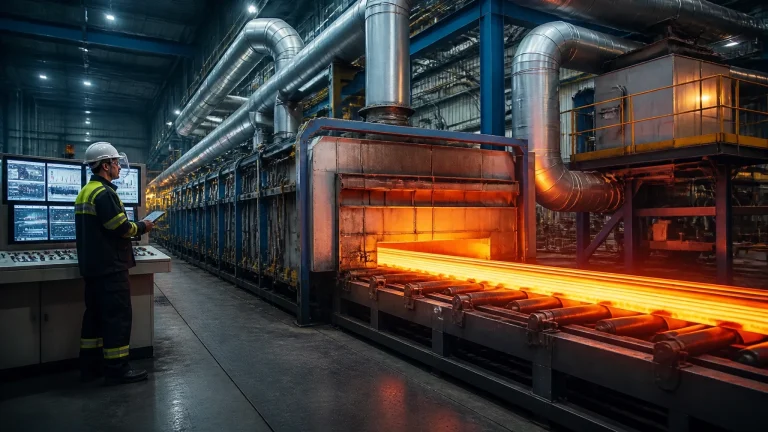
A Digital Twin is not merely a 3D visualization. It is a high-fidelity, physics-based simulation that mirrors the real-time thermal and mechanical state of your industrial furnace systems. By aggregating data from IoT sensors, fuel flow meters, and pyrometers, the twin allows operators to "test" process adjustments in a virtual environment before execution.

Key Performance Indicators (KPIs) of Digital Twin Deployment
- Specific Energy Consumption: 8% to 12% reduction through optimized burner firing patterns.
- Overall Equipment Effectiveness (OEE): Up to 28% improvement via bottleneck elimination.
- Unplanned Downtime: 22% reduction through predictive monitoring of furnace spare parts.
- Carbon Footprint: Proportional reduction in CO2 emissions per tonne of rolled steel.
Three Strategic Mechanisms for Fuel Reduction
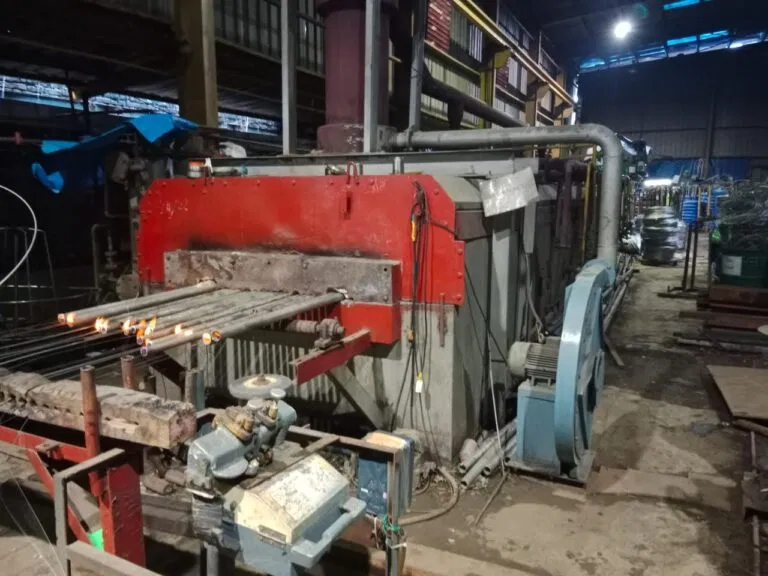
The synergy between a steel rolling mill and its reheating furnace is where the greatest efficiency gains are realized. Continental Furnaces specializes in optimizing this interface through advanced consulting services.
1. Dynamic Pass Schedule Optimization
The digital twin calculates the exact temperature required for the specific metallurgy of a billet or slab. By aligning the rolling mill’s pass schedule with the furnace’s thermal output, we eliminate "over-heating": a common practice where furnaces are kept at excessive temperatures to provide a "safety margin" for the mill. This precision alone can slash fuel usage by 5–7%.
2. Intelligent Reheating Integration
Whether you are operating heat treatment furnaces or a melting furnace for steel, the twin models the internal gas flows and radiant heat transfer. In 2026, our systems utilize AI-layered twins to adjust air-to-fuel ratios in real-time, compensating for variations in ambient air temperature and humidity.
3. Waste Heat Recovery Synchronization
Digital twins monitor the delta between exhaust temperatures and recuperator performance. By predicting when a recuperator requires cleaning or when furnace spare parts like gaskets and seals are failing, the system maintains peak thermal efficiency, preventing the 15–20% efficiency drop-off seen in unmonitored legacy systems.
Comparative Performance Analysis: Traditional vs. Digital-Twin-Optimized
| Metric | Traditional Rolling Mill (Legacy) | Digital Twin Optimized (2026 Standard) | Improvement Factor |
|---|---|---|---|
| Fuel Consumption (GJ/t) | 1.8 – 2.2 | 1.5 – 1.7 | ~12% Reduction |
| Scale Loss Percentage | 1.2% – 1.5% | 0.8% – 1.0% | 33% Improvement |
| Refractory Lifespan | 3-5 Years | 6-8 Years | Significant Capex Savings |
| Maintenance Strategy | Reactive/Time-based | Predictive (Condition-based) | 22% Lower OPEX |

Extending the Life of Industrial Furnace Systems
Efficiency is not solely a product of software; it requires the robust hardware for which Continental Furnaces is globally recognized. For the wire and cable industry, our wire plant setup integrates continuous annealing twins to ensure zero-defect production.
Reliability in a 2026 environment also depends on the availability of high-grade components. We maintain an extensive inventory of furnace spare parts, ranging from radiant tubes to high-velocity burners, designed for seamless integration with modern digital monitoring systems.
Specialized Furnace Applications
- Aluminum Melting Furnace: Utilizing digital twins to minimize dross formation and gas porosity.
- Hot Dip Galvanizing Plant: Precise zinc bath temperature control to reduce dross and energy waste.
- Metal Recycling Furnace: Optimizing oxygen enrichment and burner angles for heterogeneous scrap charges. Detailed recycling plant setup guides are available for our B2B partners.

The Roadmap to Digital Transformation
Transitioning a steel rolling mill to a digital-twin-enabled operation is a structured journey. As an ISO-certified industrial furnace manufacturer, we recommend the following three-phase roadmap:
Phase 1: The Digital Audit and Sensor Overlay
Before a twin can be built, a baseline of empirical data is required. We deploy ultrasonic flow meters and high-accuracy thermal imaging to identify "thermal leaks" in your current heat treatment furnaces or melting furnace for steel.
Phase 2: Virtual Model Calibration
Continental Furnaces engineers build a mathematical replica of your plant. This model is stressed against historical data to ensure its predictive accuracy is within a ±1.5% margin.
Phase 3: Closed-Loop Control Integration
In the final phase, the digital twin is granted the authority to make real-time adjustments to burner setpoints and conveyor speeds. This moves the mill from human-led "best guesses" to data-driven "quantum leaps" in efficiency.
Precision Engineering for Diverse Industries
Our expertise extends beyond steel. From hot dip galvanizing plants to specialized solutions for the defense and aerospace sectors, the goal remains consistent: sustained competitive advantage through thermal excellence. Every system we deliver is backed by our official certifications, ensuring compliance with global safety and efficiency standards.

Conclusion: Securing Your Strategic Advantage
In the high-stakes environment of 2026, a 12% reduction in fuel costs is the difference between market leadership and obsolescence. Digital twins provide the "eyes" to see through the furnace walls and the "brain" to optimize every joule of energy.
At Continental Furnaces, we do not merely sell equipment; we forge enduring partnerships. Our team of specialists is ready to help you navigate the complexities of modern thermal processing equipment.
Contact Continental Furnaces today for a comprehensive technical consultation. Let us engineer the roadmap that secures your production facility’s future.