Morning Edition | 24 August 2026
The 2026 steel market is not defined by unlimited volume growth. It is defined by margin discipline, energy exposure, flexible production, and measurable sustainability.
The World Steel Association forecasts global steel demand to grow by only 0.3% in 2026, reaching approximately 1,724 million tonnes. At the same time, India is expected to record stronger demand growth of 7.4%, while EU+UK demand is projected to grow by 1.3% and US demand by 1.7%.[^1]
For steel producers, rolling mills, foundries, and downstream processors, this creates a decisive operating question:
How can a plant produce more valuable, higher-quality material with lower energy intensity and less downtime?
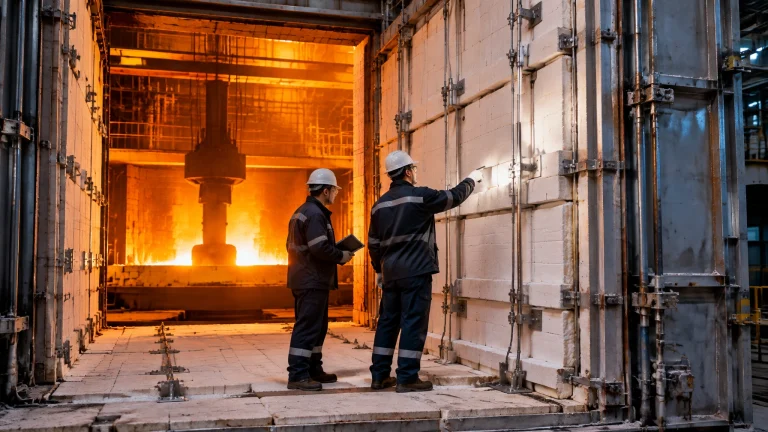
The answer begins with the furnace. Modern industrial furnace systems must do more than achieve temperature. They must support rapid grade changes, consistent metallurgy, efficient fuel use, lower emissions, traceable quality, and reliable integration with the wider production line.
The 2026 Steel Manufacturing Outlook: Growth Will Be Selective
The market outlook requires a shift from volume-based planning to value-based manufacturing.
Steel producers are facing:
- Modest global demand growth and persistent overcapacity
- Volatile natural gas, electricity, and raw-material prices
- Increasing pressure to reduce CO₂ emissions per tonne
- Greater demand for high-strength and specialty steel grades
- More frequent production changes and smaller customer batches
- Stricter customer requirements for quality traceability
- Rising expectations for predictive maintenance and uptime
India’s comparatively strong demand outlook is supported by infrastructure, automotive production, rail expansion, capital expenditure, and construction. However, growth alone does not guarantee profitability. Plants still need lower specific energy consumption, improved yield, and flexible assets that can respond to changing product requirements.
In this environment, a steel rolling mill with a rigid, inefficient reheating or heat-treatment process carries a structural disadvantage.
Industrial Furnace Efficiency Is a Profitability Strategy
Energy consumption should be tracked as a production KPI, not simply as a utility expense.
For a furnace, the most useful indicators include:
- Fuel consumption per tonne, expressed in GJ/t or Nm³/t
- Electricity consumption per tonne, expressed in kWh/t
- Furnace availability and utilization
- Discharge temperature consistency
- Temperature uniformity across the working zone
- Scale formation and oxidation losses
- Cycle time and holding time
- Refractory life
- Flue-gas temperature, oxygen, CO, and NOx
- Unplanned downtime hours
Depending on furnace design, material section, charge temperature, and operating profile, a well-engineered combustion upgrade can deliver 15–30% fuel-saving potential through improved burners, recuperation, insulation, sealing, and control. These figures are operating benchmarks rather than universal guarantees; the actual result must be established through a measured baseline.
The Highest-Value Efficiency Measures
A practical energy-efficiency programme should examine:
-
Combustion control
Correct air-to-fuel ratios, zone balancing, flame stability, and furnace-pressure control reduce excess-air losses and uneven heating. -
Waste-heat recovery
Recuperators and regenerative burners transfer exhaust heat to incoming combustion air. Recovered energy can also support billet or scrap preheating. -
Refractory and insulation performance
Damaged linings, shell hot spots, open gaps, and poorly sealed doors create continuous thermal losses. -
Charging discipline
Hot charging, optimized batch sequencing, and reduced idle time lower the energy required per tonne. -
Temperature measurement
Calibrated thermocouples and pyrometers prevent over-heating, under-heating, and unnecessary holding periods. -
Digital recipe control
Automated recipes maintain repeatability across grades, sizes, and production shifts.

Flexible Production: The New Benchmark for Furnace Design
A modern furnace must support production flexibility without imposing a major energy penalty.
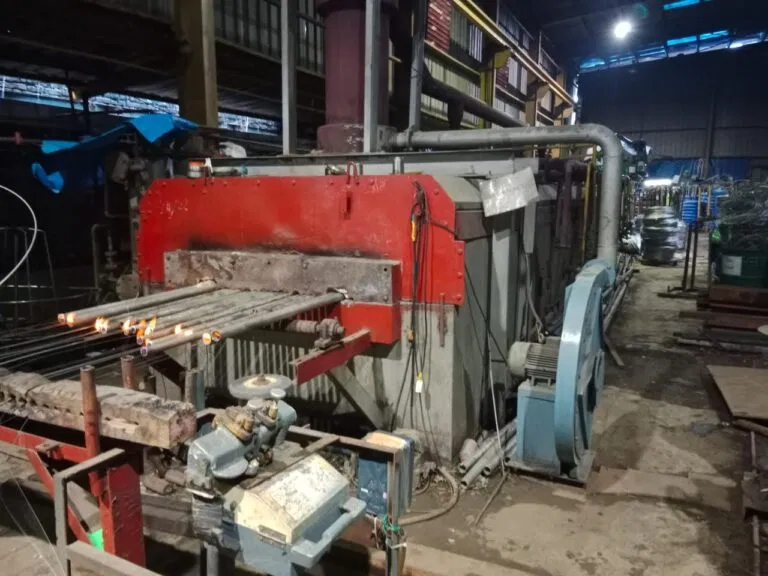
For a steel rolling mill, this means accommodating:
- Multiple billet or slab dimensions
- Different steel grades and heating curves
- Variable rolling speeds
- Shorter production campaigns
- Rapid changeovers
- Direct or semi-direct rolling opportunities
- Hot and cold charging conditions
- Integration with descaling and rolling automation
For heat treatment furnaces, flexibility requires accurate control across processes such as annealing, normalizing, stress relieving, hardening, tempering, and solution treatment. Typical process temperatures can range from approximately 550°C to 1,100°C, depending on the alloy and treatment cycle. Temperature uniformity targets commonly fall within ±3°C to ±10°C, depending on the application and applicable quality standard.
For the wire and cable industry, continuous annealing and controlled cooling must maintain stable mechanical properties across long production runs. Small deviations in temperature, line speed, or atmosphere can produce inconsistent tensile strength, elongation, conductivity, or surface quality.
Flexible Furnace Features That Deliver Business Value
- Multi-zone temperature control
- Programmable heating and soaking recipes
- Variable-speed conveyors and rollers
- Automated loading and unloading
- Fast, repeatable changeover sequences
- Recipe access controls and batch traceability
- Remote diagnostics and alarm history
- Modular burner, control, and refractory design
- Integration with MES, SCADA, and plant energy systems
Flexibility is not an automation feature alone. It is a complete design philosophy linking furnace geometry, controls, material handling, production planning, and maintenance.
Furnace Technology Across Steel and Non-Ferrous Operations
Different materials require different thermal strategies.
| Application | Typical operating focus | Key performance priorities | Modern efficiency opportunity |
|---|---|---|---|
| Steel reheating furnace | Approximately 1,050–1,250°C, depending on grade and process | Uniform billet temperature, low scale, high throughput | Regenerative burners, optimized zones, hot charging |
| Steel melting furnace | Approximately 1,500–1,650°C molten-steel range | Melt chemistry, power or fuel intensity, refractory life | Charge optimization, off-gas control, efficient power management |
| Heat treatment furnaces | Approximately 550–1,100°C, depending on treatment | Metallurgical consistency and atmosphere control | Recipe automation, insulation, predictive maintenance |
| Aluminum melting furnace | Approximately 660–750°C, depending on alloy and holding practice | Metal recovery, dross reduction, melt quality | Efficient burners, reduced holding time, controlled charging |
| Hot dip galvanizing plant | Zinc bath commonly near 450–460°C | Coating thickness, bath stability, surface quality | Bath-temperature control, heat recovery, process automation |
| Metal recycling furnace | Material-dependent | Recovery rate, contamination control, emissions | Scrap preheating, charge preparation, filtration, data tracking |
A modern melting furnace for steel must be evaluated alongside scrap quality, charge mix, electrical infrastructure, refractory consumption, tapping practice, and downstream casting requirements. Likewise, an aluminum operation should select an aluminum melting furnace based on alloy mix, scrap form, contamination, throughput, metal recovery, and holding requirements: not furnace capacity alone.
Continental Furnaces also supports recycling projects where a metal recycling furnace becomes the centre of a circular-economy production loop. Effective systems convert internal returns, machining scrap, defective castings, and purchased scrap into controlled secondary feedstock.
Industry 4.0 Turns Furnace Data into Operating Decisions
Digitalization must produce measurable outcomes. A dashboard that only displays temperature is not an Industry 4.0 strategy.
Useful furnace data should support:
- Real-time energy intensity monitoring
- Furnace-performance benchmarking by product grade
- Automatic deviation alerts
- Predictive burner and fan maintenance
- Refractory condition tracking
- Cycle-time optimization
- Quality traceability by batch
- Emissions reporting
- Production scheduling and changeover planning
A digital twin can combine furnace geometry, historical recipes, sensor signals, production schedules, and heat-transfer models to simulate process changes before they are introduced on the live line.
The practical objective is clear:
- Reduce over-heating
- Detect equipment deterioration earlier
- Improve temperature uniformity
- Shorten unnecessary holding time
- Protect product quality
- Increase asset availability
This approach complements the broader digital furnace and maintenance strategy.
The Four-Phase Furnace Efficiency Roadmap
Phase 1: Assessment and Planning
Establish a verified baseline before specifying equipment or upgrades.
Record:
- Energy consumption per tonne or batch
- Current throughput and utilization
- Temperature profiles
- Flue-gas oxygen and temperature
- Product rejection and rework
- Downtime causes and duration
- Refractory condition
- Burner and control-system performance
- Availability of critical furnace spare parts
Phase 2: Engineering and Technology Selection
Select the furnace architecture according to the material, production pattern, and future energy strategy.
Evaluate:
- Gas, electric, induction, or hybrid heating
- Batch versus continuous operation
- Recuperative or regenerative combustion
- Atmosphere-control requirements
- Automation and data connectivity
- Emissions-control systems
- Future fuel flexibility
- Maintenance access and serviceability
Phase 3: Implementation and Commissioning
Commissioning should validate both equipment performance and production outcomes.
The acceptance programme should include:
- Empty-furnace temperature uniformity
- Loaded-furnace temperature trials
- Energy-consumption verification
- Burner and safety-interlock testing
- Material residence-time validation
- Product-quality testing
- Operator and maintenance training
- Spare-parts and preventive-maintenance planning
Phase 4: Optimization and Lifecycle Support
The project is not complete when the furnace reaches its first production cycle.
Ongoing activities should include:
- Monthly energy and yield reviews
- Periodic combustion tuning
- Sensor calibration
- Refractory inspections
- Predictive-maintenance reviews
- Software and controls upgrades
- Operator refresher training
- Critical-spares audits
- Capacity and product-mix planning
Why the Industrial Furnace Manufacturer Matters
The right industrial furnace manufacturer contributes more than a fabricated vessel, burner package, or control panel. The supplier must understand the entire thermal process and its commercial consequences.
Continental Furnaces brings more than 35 years of experience in industrial thermal processing. Our customized and ISO-certified solutions are designed for:
- Steel reheating and rolling mill applications
- Heat treatment and annealing
- Ferrous and non-ferrous melting
- Aluminum recycling and melting
- Hot dip galvanizing plants
- Pickling plants
- Furnace spare parts and accessories
- Continuous processing for the wire and cable industry
Explore our consulting services, review our aluminum melting furnace applications, or learn how metal recycling projects support circular manufacturing.
Conclusion: Make Thermal Performance Your Competitive Advantage
The 2026 steel market rewards manufacturers that protect margins through energy efficiency, flexible production, reliable quality, and high equipment availability.
Industrial furnace modernization should therefore be evaluated through the complete business case:
- Lower energy consumption
- Higher material yield
- Reduced emissions
- Shorter changeovers
- Better metallurgical consistency
- Fewer unplanned stoppages
- Faster access to critical spare parts
- Improved lifecycle value
Continental Furnaces provides the engineering expertise, customized design, ISO-certified quality, and prompt service required to turn thermal processing into a sustained operating advantage.
Contact Continental Furnaces to assess your furnace performance, define a phased modernization roadmap, and build an enduring partnership for sustained competitive advantage.
[^1]: World Steel Association, Short Range Outlook April 2026