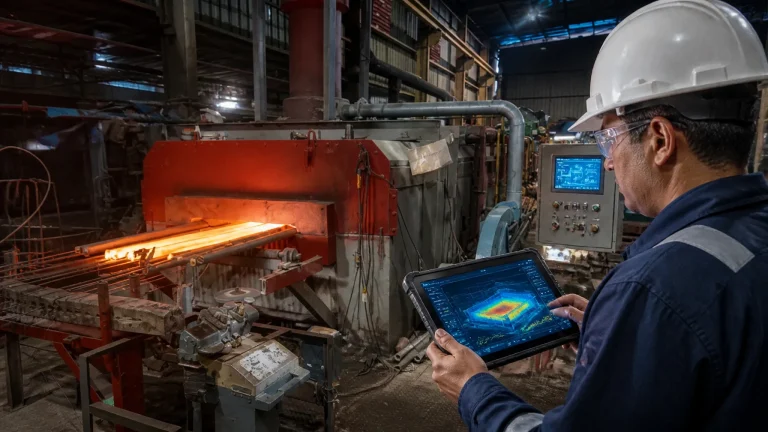
Steel manufacturing is entering an era in which energy intensity, yield, emissions, and uptime are managed as one integrated business equation. For plant directors, operations leaders, engineering managers, and procurement teams, furnace performance is no longer a narrow maintenance concern. It directly influences production capacity, cost per tonne, regulatory compliance, and long-term competitiveness.
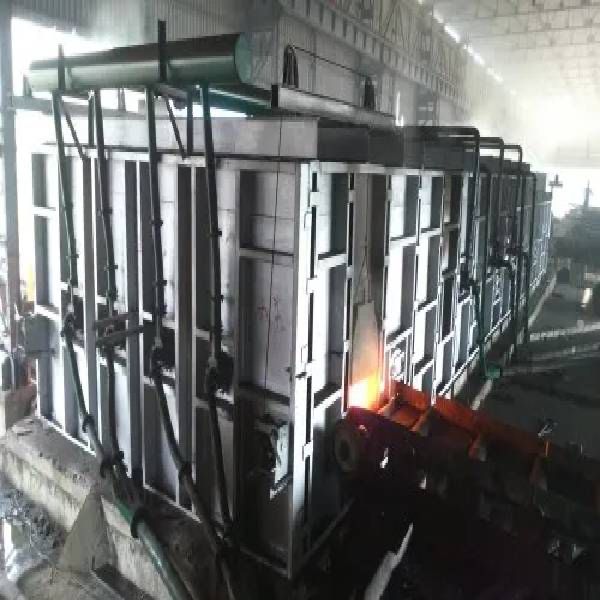
In a modern steel rolling mill, reheating and thermal processing can represent a substantial share of total plant energy demand. Continental Furnaces’ published engineering benchmarks identify billet reheating capacities of 10–120 TPH, with typical operating ranges of approximately 700–1320°C, depending on material grade, furnace configuration, and production requirements.
The next generation of industrial furnace systems will combine electrification, heat recovery, automation, hot charging, emissions management, and resilient lifecycle support.
Why Furnace Efficiency Is Now a Strategic Priority
A furnace that consumes excessive fuel or electricity creates losses far beyond the utility invoice. Inefficient operation can cause:
- Excessive scale formation and reduced yield
- Variable billet discharge temperatures
- Rolling defects and process instability
- Higher refractory and burner wear
- Increased emissions and reporting obligations
- Unplanned downtime across connected production lines
- Higher working capital requirements for emergency spares
The correct performance indicators should be reviewed at asset and production-line level:
- Specific energy consumption: GJ/t, kWh/t, or fuel volume per tonne
- Temperature uniformity: typically targeted within approximately ±10°C where product and process conditions allow
- Throughput: tonnes per hour at defined discharge temperature
- Yield loss: scale, melt loss, crop loss, and rejected material
- Availability: planned versus unplanned downtime
- Emissions intensity: CO₂, NOₓ, particulate matter, and process-specific pollutants
These are benchmarks and management tools, not universal guarantees. Actual performance depends on furnace design, fuel, billet dimensions, steel grade, throughput, charge temperature, operating discipline, and the measurement boundary.
The Six Engineering Levers Defining Modern Furnace Performance
1. Electrification Must Be Application-Led
Electrification is accelerating across steelmaking, melting, and heat treatment. Electric arc furnaces, induction furnaces, resistance heating, and hybrid systems can reduce direct combustion emissions and improve controllability when supported by suitable grid infrastructure.
However, electrification is not automatically the most efficient solution for every plant. Engineering decisions must consider:
- Electricity availability, tariff structure, and grid stability
- Scrap chemistry and availability
- Required melt rate and tapping temperature
- Product mix and batch size
- Renewable electricity access
- Demand charges and peak-load exposure
- Cooling-water and power-quality requirements
For a melting furnace for steel, induction technology can deliver precise power control and rapid alloy changes, while EAF systems are generally suited to larger ferrous melting routes and high scrap utilization. The optimum choice is always determined through a site-specific techno-economic assessment.
Historical U.S. Department of Energy EAF development work identified potential savings of approximately 75 kWh per tonne of steel through intelligent process control and improved operating practices. This is a project benchmark, not a guaranteed result for every furnace. The lesson remains essential: electrification delivers its greatest value when paired with process intelligence, optimized charge design, foamy-slag practice, and disciplined maintenance.
2. Waste-Heat Recovery Converts Losses into Process Value
High-temperature exhaust gas is an energy asset. Recuperators and regenerative burners transfer heat from flue gases to combustion air, reducing the fuel required to reach process temperature.
A well-engineered recovery system can incorporate:
- Recuperative or regenerative burners
- Combustion-air preheating
- Flue-gas temperature monitoring
- Automatic air-to-fuel ratio control
- Furnace-pressure management
- Low-NOₓ burner technology
- Variable-speed combustion and exhaust fans
In suitable applications, combustion-air preheating may produce 15–30% fuel savings, depending on exhaust temperature, operating hours, baseline efficiency, fouling, and heat-exchanger effectiveness.
Waste heat can also be used for:
- Charge or scrap preheating
- Ladle and tooling preheating
- Hot-water generation
- Building or process heating
- Drying and auxiliary thermal duties
- Organic Rankine Cycle evaluation where temperature and operating hours justify investment
Heat recovery must be designed around actual gas composition. Dust, corrosive compounds, moisture, and fluctuating flow can cause fouling and premature failure. Thermal design and maintainability must be specified together.

3. Hot Charging Preserves Valuable Enthalpy
Hot charging is one of the most direct ways to reduce reheating demand. Billets transferred from continuous casting to the furnace retain thermal energy that would otherwise be lost during storage and handling.
Where plant layout and production scheduling permit, charging billets at approximately 450–550°C can reduce specific furnace heat demand by a typical 25–40% compared with cold charging. The actual benefit depends on charge temperature, billet size, transfer distance, furnace loading, and production continuity.
A successful hot-charging programme requires coordination among:
- CCM or caster scheduling
- Billet transfer and handling
- Furnace charging logic
- Rolling-mill demand
- Product sequencing
- Buffer management
- Real-time billet temperature measurement
Hot charging is therefore a plant-integration project, not simply a furnace modification. Its value increases when reheating, casting, and rolling are controlled as one thermal chain.
4. Industry 4.0 Turns Furnace Data into Operating Decisions
The modern furnace is a connected production asset. Sensors, PLCs, SCADA systems, historians, and manufacturing-execution platforms create the data foundation for advanced control.
A digitally enabled furnace should monitor:
- Zone temperature and billet temperature
- Fuel or electricity per tonne
- Furnace pressure and oxygen level
- Flue-gas temperature
- Burner status and valve position
- Door-opening frequency
- Residence time and throughput
- Alarm history and downtime causes
- Refractory and shell-temperature trends

Advanced analytics can establish energy-drift thresholds and automatically trigger inspection or maintenance work orders. For example, a rise in GJ/t, kWh/t, cycle time, or flue-gas temperature may indicate air leakage, refractory deterioration, burner imbalance, or incorrect loading.
The commercial result is measurable:
- Lower energy cost per tonne
- More consistent metallurgy
- Reduced scale and rework
- Improved production planning
- Better operator decision-making
- Earlier intervention before failure
Emissions Management and Circular Steelmaking
Energy efficiency is the first layer of emissions management. Plants must also improve material quality, process control, gas treatment, and reporting discipline.
Circular steelmaking focuses on maximizing the value of material already in circulation. A modern strategy includes:
- Higher scrap utilization where chemistry permits
- Clean, correctly sorted charge materials
- Scrap preheating
- Lower melt loss and dross generation
- Slag recovery and beneficial reuse
- Off-gas heat recovery
- Traceable carbon and energy accounting
- Integration of renewable electricity where feasible
A metal recycling furnace must be designed around the charge. Scrap density, moisture, coatings, contamination, alloy chemistry, charging pattern, and melt-loss control all influence energy consumption and product yield.
The same principle applies to non-ferrous operations. An aluminum melting furnace should minimize oxidation, door-opening losses, holding time, and dross formation while maintaining stable melt chemistry. Continental Furnaces also supports melting and recycling projects for ferrous and non-ferrous metals.

Modern Furnace Technology Compared with Legacy Operation
| Performance area | Legacy operation | Modern integrated approach |
|---|---|---|
| Combustion | Ambient air and high excess air | Recuperative or regenerative air preheating |
| Control | Manual set points | Automated zone, pressure, oxygen, and throughput control |
| Charging | Cold billets or unprepared scrap | Hot charging, optimized charge density, and thermal transfer |
| Insulation | Conventional lining with high shell loss | Engineered refractory and insulating fibre systems |
| Maintenance | Reactive repair | Condition-based maintenance and planned shutdowns |
| Energy visibility | Periodic utility accounting | Real-time GJ/t, kWh/t, and production dashboards |
| Business outcome | Variable quality and high operating cost | Improved yield, uptime, compliance, and profitability |
A Phased Roadmap for Furnace Modernization
Phase 1: Assessment and Baseline
Create a defensible technical and financial baseline:
- Measure fuel and electricity per tonne.
- Record charge, discharge, and zone temperatures.
- Audit oxygen, pressure, and excess-air levels.
- Quantify scale, dross, rejects, and downtime.
- Inspect refractory, burners, seals, fans, and controls.
- Review emissions-monitoring and reporting requirements.
Phase 2: Quick-Win Optimization
Prioritize improvements with limited capital exposure:
- Calibrate thermocouples, pyrometers, flow meters, and gas analysers.
- Repair damaged refractory and leaking doors.
- Correct air-to-fuel ratios.
- Reduce unnecessary idling and holding time.
- Improve furnace loading and production sequencing.
- Establish operator energy-performance routines.
Phase 3: Technology Upgrade
Evaluate the business case for:
- Electrified or hybrid heating
- Recuperators and regenerative burners
- Multi-zone automatic control
- Hot-charging integration
- Waste-heat recovery
- Improved refractory systems
- Predictive maintenance platforms
- Energy and emissions dashboards
Phase 4: Lifecycle Resilience
Modernization delivers lasting value only when supported throughout the equipment lifecycle:
- Maintain critical furnace spare parts on a risk-based inventory.
- Schedule burner tuning and refractory surveys.
- Use CMMS records to connect failures with energy drift.
- Train operators on energy, safety, and quality indicators.
- Maintain prompt technical support for critical interventions.
- Review performance against the original design basis after commissioning.
Continental Furnaces: An Enduring Engineering Partnership
Established in 1987, Continental Furnaces brings more than 35 years of expertise to the design, manufacture, and support of customized thermal processing solutions.
As an experienced industrial furnace manufacturer, Continental Furnaces supports:
- Steel rolling mills and billet reheating
- Copper CCR and CCM lines
- Heat treatment furnaces
- Ferrous and non-ferrous melting
- Metal recycling projects
- Hot dip galvanizing plant installations
- Pickling plants
- Annealing and wire-processing lines
- The wire and cable industry
- Furnace spares and accessories
The company is certified to ISO 9001:2015 and ISO 14001:2015, aligning quality management with environmental responsibility. Its approach combines application-specific engineering, energy-efficient technology, customized design, commissioning support, and prompt service intended to minimize downtime.
Explore Continental Furnaces’ industrial furnace solutions, company expertise, automotive heat treatment furnace capabilities, and related energy-efficient thermal processing insights.
The next era of steel manufacturing will belong to plants that treat thermal performance as a strategic advantage. Contact Continental Furnaces for a furnace assessment, modernization roadmap, or customized thermal processing solution: and convert energy efficiency into sustained competitive advantage.