Afternoon Edition | 20 August 2026
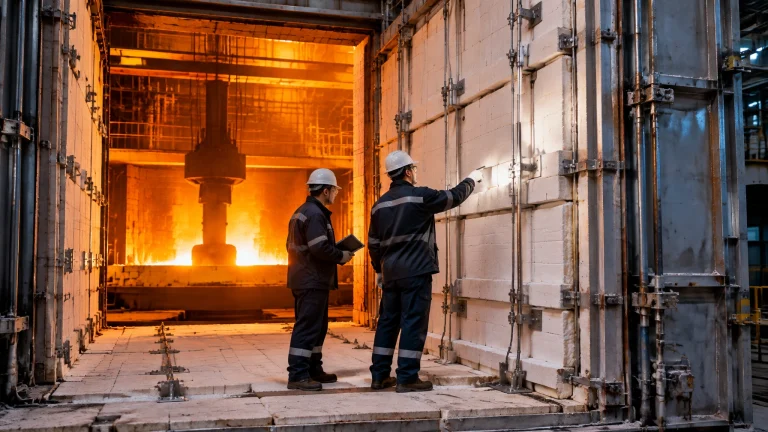
Industrial furnaces are entering a decisive technology cycle. The competitive benchmark is no longer defined only by furnace capacity, operating temperature, or burner count. In 2026, plant leaders are evaluating how intelligently a furnace operates, how efficiently it uses energy, and how reliably it remains available throughout its lifecycle.
For a modern steel rolling mill, heat-treatment facility, foundry, recycling plant, or operation in the wire and cable industry, three priorities now determine thermal performance:
- Digital twin intelligence for process visibility and AI-driven optimization
- Combustion modernization through waste-heat recovery and fuel-flexible burner systems
- Reliability-led maintenance supported by predictive diagnostics and critical furnace spare parts
This is the new maintenance mandate: treat the furnace as a connected production asset, not an isolated heat source.
1. Digital Twin Intelligence Moves from Pilot to Production
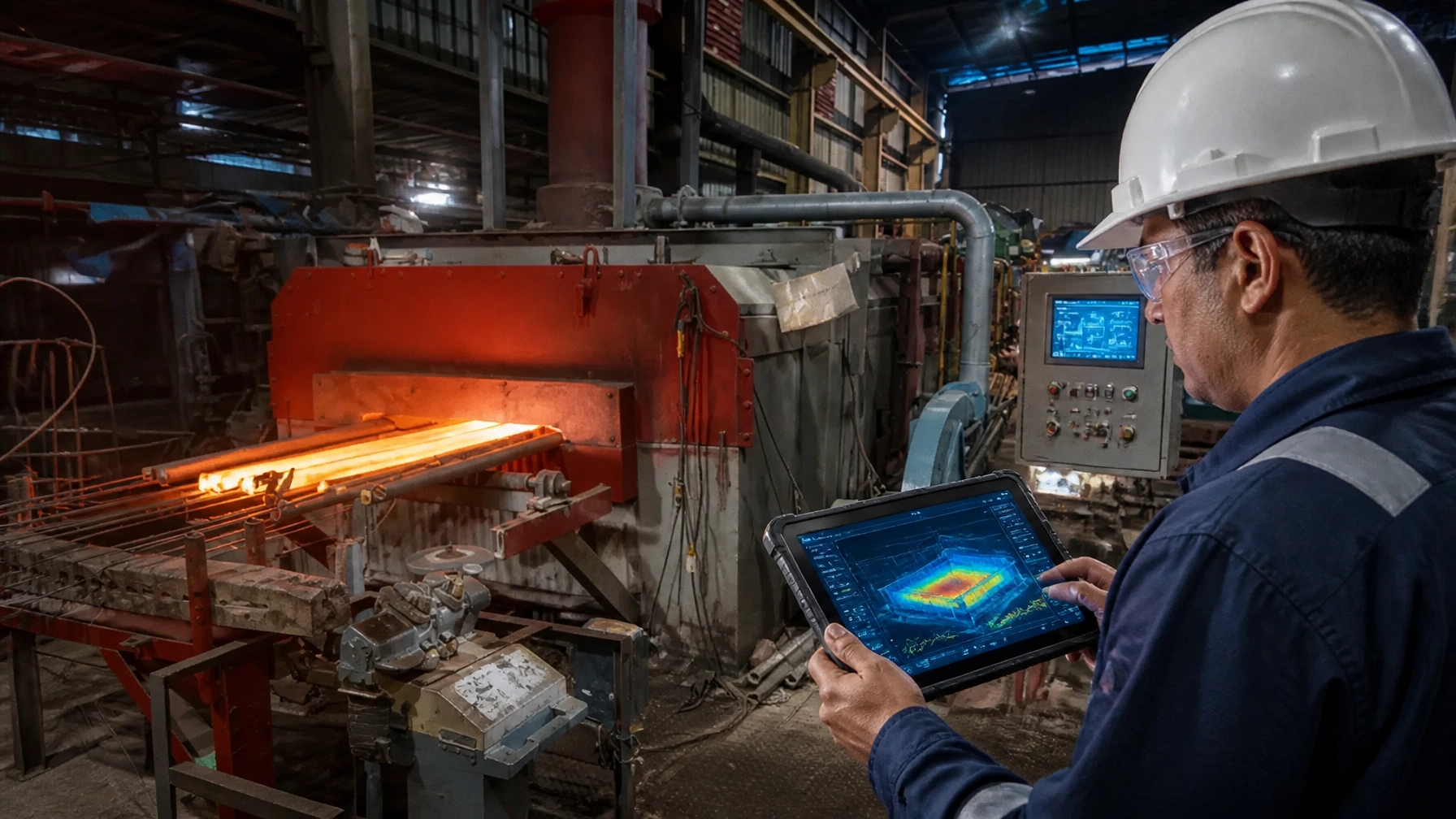
A digital twin is a continuously updated virtual representation of a physical furnace. It combines:
- Furnace geometry and refractory data
- Temperature, pressure, flow, and flue-gas measurements
- Material recipes and production schedules
- Physics-based heat-transfer and combustion models
- Machine-learning algorithms trained on historical operating data
- Maintenance and failure records
The objective is practical. A digital twin should help the operating team predict furnace behaviour before changing the live process.
For example, a twin supporting a billet reheating furnace can model:
- Slab or billet temperature at discharge
- Zone-by-zone heat distribution
- Residence time and production speed
- Fuel consumption per tonne
- Excess-air conditions
- Refractory hot spots
- Burner and fan performance
- Likely process deviations
Fraunhofer’s digital furnace twin research separates two essential requirements: speed for real-time control and precision for virtual furnace development. For control applications, the model must generate a useful response within seconds. For new furnace design, prediction accuracy and validation take priority.
This distinction is important for plant managers. A visually impressive dashboard is not a digital twin unless it supports a validated engineering model, reliable data exchange, and actionable operating decisions.

AI-Driven Optimization for Thermal Processing Equipment
The next generation of thermal processing equipment uses AI to identify operating combinations that reduce energy input while protecting metallurgy and throughput.
Typical optimization targets include:
- Fuel intensity: GJ per tonne, batch, or cycle
- Temperature uniformity: commonly targeted within ±3°C to ±10°C, depending on process duty
- Cycle duration: reduction through optimized ramps and soak periods
- Scale and oxidation: minimized through accurate atmosphere and temperature control
- Throughput: increased without exceeding burner, refractory, or handling limits
- Emissions: controlled through excess-air, oxygen, and firing optimization
In a heat-treatment application, the twin can compare multiple heating curves before the recipe is released to production. In a rolling mill, it can account for billet grade, section size, charging temperature, production speed, and rolling demand.
The result is a quantum leap from retrospective reporting to prescriptive control. The plant no longer asks only what happened. It determines what should happen next.
2. Combustion Optimization: Recover Heat Before Buying More Fuel
Combustion remains the largest controllable energy lever in many gas-fired industrial furnace systems. Inefficient burners, excessive air, poor furnace pressure, damaged recuperators, and unbalanced zones create direct losses and inconsistent product quality.
A robust combustion optimization programme should examine:
- Air-to-fuel ratio
- Oxygen concentration in flue gas
- Furnace pressure and infiltration
- Burner turndown range
- Flame geometry and coverage
- Exhaust temperature
- Recuperator or regenerator performance
- Fan speed and pressure stability
- NOx and CO formation
- Start-up, idle, and holding losses
Waste-Heat Recovery
Recuperators and regenerative burners transfer heat from exhaust gases into incoming combustion air. Suitable installations can deliver 15–30% fuel-saving potential, depending on the baseline furnace, exhaust temperature, operating load, and maintenance condition.
The engineering objective is not simply to install a heat exchanger. It is to balance:
- Heat recovery against pressure drop
- Fuel savings against corrosion risk
- Air-preheat temperature against burner stability
- Efficiency against access for inspection and cleaning
- Emissions performance against process uniformity
For a metal recycling furnace, recovered heat can also support scrap preheating, combustion-air preheating, or other plant utilities. In an aluminum melting furnace, the financial impact extends beyond fuel consumption because improved control reduces melt loss, dross formation, and unnecessary holding time.
Fuel-Flexible and Hydrogen-Ready Burners
Fuel strategy must now account for future energy availability. Hydrogen-ready burner technology allows plants to prepare for changing fuel mixes without committing immediately to a complete combustion-system replacement.
Tenova’s hydrogen-ready technology portfolio describes burners designed for variable natural-gas and hydrogen mixtures, including operation up to 100% hydrogen in specified configurations. Its regenerative burner technology also emphasizes high combustion-air preheat, heat uniformity, and low-emission operation.
For any hydrogen-ready project, the specification must address:
- Hydrogen concentration range
- Gas train and valve compatibility
- Flame detection and control logic
- Burner capacity and Wobbe-index variation
- NOx formation under hydrogen firing
- Piping, ventilation, and safety zoning
- Emergency shutdown and purge sequences
- Verification at each planned blend ratio
Hydrogen readiness is a design discipline, not a marketing label. The burner, controls, safety system, furnace pressure, refractory, and gas infrastructure must be engineered as one integrated solution.
3. The 2026 Maintenance Mandate: Predictive Diagnostics Plus Critical Spares
Reactive maintenance is incompatible with high-value continuous production. A failed thermocouple may be inexpensive, but the resulting furnace stoppage can interrupt a complete rolling, galvanizing, casting, or wire-drawing operation.
The maintenance mandate for 2026 is built on two connected capabilities:
- Predictive diagnostics that identify deterioration early
- Strategic furnace spare parts that enable rapid intervention
Predictive diagnostics should track condition indicators such as:
- Burner ignition time and flame stability
- Valve response and actuator travel
- Fan vibration and motor current
- Recuperator temperature differential
- Furnace-pressure deviations
- Thermocouple drift
- Pyrometer disagreement
- Refractory hot spots
- Door-seal leakage
- Hydraulic and pneumatic cycle performance
- Alarm frequency and repeat faults
A digital twin can compare live signals against expected behaviour and estimate remaining useful life. It can also generate a maintenance work order in a CMMS or ERP system when a threshold is reached.
Essential Furnace Spare Parts Inventory
A site-specific critical-spares register should typically include:
- Burner nozzles, ignition electrodes, flame scanners, and control valves
- Thermocouples, pyrometers, transmitters, and signal conditioners
- Recuperator or regenerator components
- Refractory modules, castables, anchors, and seals
- Water-cooled skid and cooling-circuit components
- Fans, dampers, bearings, and variable-frequency-drive components
- Hydraulic cylinders, pneumatic actuators, and solenoid valves
- PLC modules, HMI components, communication cards, and safety relays
The inventory must be ranked by failure criticality, lead time, interchangeability, and production impact. Stocking every component is inefficient. Stocking the right component is essential.

Legacy Operation Compared with the 2026 Furnace Model
| Performance area | Legacy operating model | Digital and reliability-led model |
|---|---|---|
| Process control | Fixed set points and manual adjustment | AI-assisted, model-based zone optimization |
| Energy visibility | Monthly fuel totals | Real-time GJ/t, kWh/t, and cycle analytics |
| Combustion | High excess air and periodic tuning | Continuous oxygen, pressure, and flow monitoring |
| Heat recovery | Limited or absent | Recuperative or regenerative integration |
| Fuel strategy | Single-fuel dependency | Fuel-flexible, hydrogen-ready architecture |
| Maintenance | Run-to-failure | Predictive diagnostics and planned intervention |
| Spares | Unstructured inventory | Criticality-ranked furnace spare parts |
| Data integration | Isolated PLC or SCADA | OPC UA-connected MES, CMMS, and energy systems |
| Business outcome | Variable quality and downtime exposure | Higher yield, uptime, compliance, and profitability |
A Four-Phase Roadmap for Furnace Modernization
Phase 1: Assessment and Planning
Create a verified baseline across the furnace and its production interface.
Measure:
- Fuel or electricity consumption per tonne
- Throughput and utilization
- Zone temperature and material temperature
- Flue-gas oxygen and temperature
- Cycle time and holding time
- Refractory and shell condition
- Failure history and downtime cost
- Existing controls and data architecture
Phase 2: Digital Foundation
Instrument the asset before deploying advanced AI.
Priorities include:
- Calibrated temperature, pressure, flow, and emissions sensors
- Historian-quality data storage
- Edge connectivity for low-latency signals
- Secure remote access
- OPC UA communication where appropriate
- Standardized tag names and equipment states
- Integration with MES, CMMS, and energy-management platforms
OPC UA is published as IEC 62541 and is designed for secure, vendor-neutral industrial interoperability. It provides a strong foundation for connecting furnace controls with plant-wide systems.
Phase 3: Combustion and Reliability Upgrade
Implement the physical improvements that produce measurable operating gains:
- Burner balancing and ratio-control correction
- Recuperator or regenerative burner installation
- Waste-heat recovery
- Improved insulation and sealing
- Hydrogen-ready gas-train engineering
- Refractory repair or redesign
- Predictive monitoring for burners, fans, valves, and lining
- Critical-spares stocking and service procedures
Phase 4: Closed-Loop Optimization and Lifecycle Partnership
Once data quality and equipment reliability are established, use the digital twin to support:
- Recipe optimization
- Production scheduling
- Energy-price response
- Emissions reduction
- Refractory-life planning
- Operator training
- Remote diagnostics
- Continuous performance audits
This lifecycle model applies across a steel rolling mill, heat treatment furnaces, a hot dip galvanizing plant, a melting furnace for steel, or a recycling line serving non-ferrous production.
Why Continental Furnaces Is the Right Engineering Partner
As an experienced industrial furnace manufacturer, Continental Furnaces combines more than 35 years of thermal-processing expertise with customized design, energy-efficient technology, ISO-certified quality, and responsive lifecycle service.
Our capabilities support:
- Steel rolling and billet reheating
- Heat treatment and annealing
- Aluminum melting and recycling
- Ferrous melting and recycling projects
- Hot dip galvanizing plants
- Pickling plants
- Furnace spares and accessories
- Continuous thermal processing for the wire and cable industry
Review our billet reheating furnace solutions, explore melting and recycling projects, or learn more about hot dip galvanizing plant capabilities. For wider context, read our earlier analysis of energy-efficient thermal processing.
External Technical References
- FNA 2026 Furnace Technology Track : MTI / Heat Treat
- Hydrogen-Ready Burners : Tenova
- Digital Furnace Twin : Fraunhofer Center HTL
- OPC UA Interoperability in Process and Discrete Manufacturing : OPC Foundation
Conclusion: Make Reliability and Intelligence Your Competitive Advantage
The 2026 furnace is a connected, fuel-aware, diagnostically visible production asset. Digital twins reduce decision latency. Optimized combustion and waste-heat recovery reduce energy intensity. Predictive maintenance and properly managed furnace spare parts protect availability.
The next step is a plant-specific assessment of your thermal load, data maturity, combustion system, maintenance exposure, and modernization priorities.
Contact Continental Furnaces to define your digital-twin and reliability roadmap. Build an enduring engineering partnership and convert thermal performance into sustained competitive advantage.