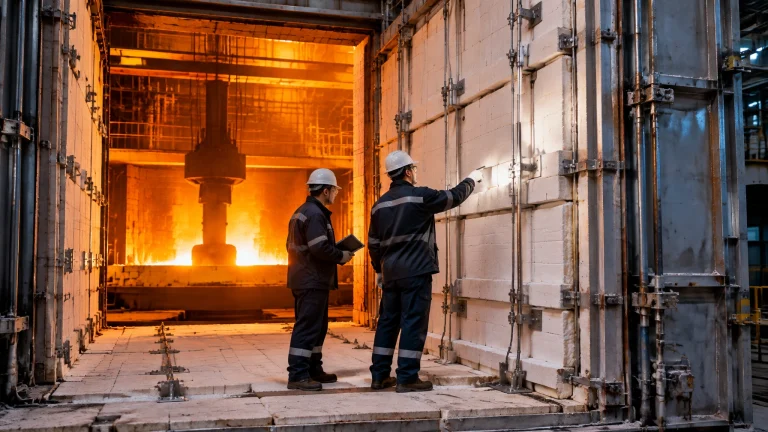

For industrial decision-makers, energy efficiency is no longer a maintenance objective: it is a core profitability, compliance, and competitiveness metric. Across the steel, non-ferrous metals, wire, automotive, and recycling sectors, furnace performance directly influences yield, product quality, production continuity, and carbon intensity.
The modern plant is moving toward integrated industrial furnace systems that combine precise combustion, advanced insulation, heat recovery, automation, and predictive maintenance. As a result, well-engineered systems are delivering typical energy savings of 15–30%, while selected heat-recovery applications can achieve substantially higher reductions depending on operating conditions and process duty.
For more than 35 years, Continental Furnaces has helped industrial customers align thermal performance with production strategy. The future belongs to facilities that treat thermal processing as an integrated business system: not as isolated equipment.
Why Energy Efficiency Now Defines Industrial Competitiveness
Energy-intensive manufacturing faces several simultaneous pressures:
- Volatile gas and electricity costs
- Increasing carbon-accounting and emissions requirements
- Shorter delivery windows and higher customer expectations
- Skilled-labor shortages
- Greater demand for recycled and low-carbon materials
- Pressure to improve output without expanding plant footprints
A furnace that consumes excessive fuel does more than raise the utility bill. It can also create:
- Inconsistent billet or component temperatures
- Higher oxidation and material losses
- Increased refractory degradation
- Longer cycle times
- Higher maintenance frequency
- Unplanned downtime and missed deliveries
The energy balance is straightforward:
Furnace efficiency = useful heat delivered to the load ÷ total energy input
The most effective improvement programs therefore address every major loss point: flue gas, wall radiation, openings, cooling systems, excess air, incomplete combustion, and idle operation.
Steel Rolling: Reheating Precision Creates Downstream Yield
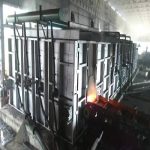
In a modern steel rolling mill, the reheating furnace is the thermal foundation of the entire production line. Billets, blooms, or slabs must reach the correct temperature uniformly before rolling. Poor thermal control produces surface defects, dimensional variation, increased roll wear, and mill cobbles.
Continental Furnaces’ billet reheating solutions are designed for capacities from 10 to 120 tonnes per hour, with operating ranges typically extending from 700°C to 1,320°C, depending on the material and process requirement.
Key efficiency measures include:
- Recuperators that preheat combustion air using flue-gas energy
- High-alumina refractories and low-thermal-mass insulation
- Zoned heating and soaking controls
- Automated material tracking
- PLC-based temperature regulation
- Optimized charging and discharge sequences
- Dual-fuel and hydrogen-ready burner architecture
Well-designed recuperation and insulation can reduce specific fuel consumption by approximately 15–20% compared with traditional configurations. More importantly, uniform heating can reduce scrap and rework, producing a compound improvement in profitability.

Heat Treatment Furnaces: Precision, Repeatability, and Lower Cycle Losses
Modern heat treatment furnaces serve applications ranging from automotive components and aerospace parts to wire rods, fasteners, tools, and specialty steels. Annealing, normalizing, hardening, tempering, and stress relieving each require distinct thermal profiles and controlled cooling conditions.
Efficiency in these processes depends on control accuracy as much as burner or heating-element performance.
A practical optimization program should monitor:
- Temperature uniformity across the working zone
- Heating rate and soak duration
- Atmosphere composition
- Door and gasket infiltration
- Refractory shell temperature
- Fan and circulation performance
- Energy consumed per batch or tonne
- Start-up and shutdown losses
A furnace operating with excessive air infiltration can lose 5–8% of thermal efficiency when excess air rises by approximately 10%. Refractory damage, meanwhile, increases shell losses and extends heat-up times.
Modern systems target temperature uniformity of approximately ±3°C to ±5°C in suitable applications, compared with ±15°C or more in poorly controlled legacy equipment. Validated thermal uniformity surveys and system accuracy tests allow operators to reduce unnecessary soak time: often by 15% or more: without compromising metallurgical results.
This is particularly important for the wire and cable industry, where continuous annealing performance affects ductility, conductivity, surface quality, and line speed.
Metal Recycling and Melting: Yield Is the First Energy Saving
In recycling operations, the most valuable energy is the energy that does not need to be spent remelting lost metal. Oxidation, dross formation, poor charge preparation, and excessive holding time all reduce the economic value of a melt.
A modern metal recycling furnace addresses these losses through:
- Automated charging and controlled material distribution
- Preheating of scrap using recovered heat
- Optimized burner geometry
- Controlled furnace atmosphere
- Reduced door-opening frequency
- Automated skimming and transfer
- Real-time melt-temperature measurement
- Predictive monitoring of critical components
For aluminum recyclers, an aluminum melting furnace can support recovery rates exceeding 99% when charge quality, process control, and furnace design are properly aligned. Recycled aluminum requires only about 5% of the energy associated with primary aluminum production, making efficient remelting a central element of the circular economy.
For ferrous operations, a melting furnace for steel: including induction or electric arc configurations: must be evaluated through the complete energy and yield equation. Typical electric arc furnace consumption is often reported in the range of 400–500 kWh per tonne of liquid steel, although actual performance depends on scrap quality, tap-to-tap time, auxiliary systems, and operating practice.

Modern Technology Compared with Legacy Furnace Operation
| Performance area | Traditional furnace operation | Modern energy-efficient system |
|---|---|---|
| Temperature control | Manual or analogue adjustment | PLC, SCADA, and closed-loop control |
| Temperature uniformity | Approximately ±15°C or wider | Approximately ±3°C to ±5°C in suitable applications |
| Energy management | Total fuel or power consumption only | Energy per tonne, batch, or cycle |
| Heat recovery | Limited or absent | Recuperators, regenerators, and process integration |
| Maintenance model | Reactive breakdown repair | Predictive monitoring and planned intervention |
| Startup time | Approximately 4–6 hours in many legacy systems | Approximately 1.5–2 hours, subject to furnace design |
| Labour requirement | Operator-intensive | Automated loading, recipes, and alarms |
| Typical business impact | Higher scrap and OPEX | Improved yield, uptime, and regulatory readiness |
The correct comparison is not simply purchase price versus purchase price. Industrial buyers should evaluate total cost of ownership over a 15–20-year equipment life, including energy, maintenance, spare parts, downtime, labor, and modernization.
Industry 4.0 Makes Thermal Performance Measurable
The next generation of thermal processing equipment treats the furnace as a connected production asset. Sensors, PLCs, SCADA platforms, and secure remote monitoring provide visibility into:
- Gas and electricity consumption
- Temperature gradients
- Burner performance
- Furnace pressure
- Fan vibration and motor torque
- Cycle-time variation
- Refractory degradation
- Component health
This data supports predictive maintenance and enables managers to compare performance between shifts, recipes, and production campaigns. Industry reports identify potential operational improvements of up to 30% in smart furnace applications, although actual gains depend on baseline conditions and the quality of implementation.
For plant leaders, the objective is clear: move from energy estimates and paper logs to verified production KPIs.
The Four-Phase Furnace Efficiency Roadmap
Phase 1: Assessment and Planning
Establish a reliable baseline before selecting equipment or approving capital expenditure.
Measure:
- Energy consumed per tonne
- Throughput and utilization
- Heat-up and soak times
- Scrap and rework rates
- Flue-gas temperature
- Shell temperatures
- Downtime by failure mode
Phase 2: Engineering and Integration
Select the appropriate furnace architecture for the material, throughput, site, and future energy strategy.
This may include:
- A new reheating furnace for a steel rolling mill
- Continuous or batch heat treatment furnaces
- An induction or rotary aluminum melting furnace
- A melting furnace for steel
- A hot dip galvanizing plant with integrated thermal zones
- Upgraded automation and emissions-control systems
Phase 3: Commissioning and Workforce Training
A furnace achieves its specification only when it is correctly installed, commissioned, and operated. Operator training should cover recipes, loading patterns, burner settings, atmosphere control, safety interlocks, and first-line fault diagnosis.
Phase 4: Lifecycle Optimization
The enduring value of an industrial furnace manufacturer is demonstrated after startup. Planned service, calibration, refractory inspections, control upgrades, and inventory planning protect performance over the full equipment lifecycle.
Maintaining essential furnace spare parts: including thermocouples, burner components, seals, radiant tubes, heating elements, filters, and control modules: can prevent a low-cost component from creating a high-value production stoppage.
The Continental Furnaces Partnership Advantage
Continental Furnaces engineers customized solutions for ferrous and non-ferrous applications, including steel rolling, heat treatment, melting, recycling, galvanizing, pickling, and wire processing.
Our approach combines:
- More than 35 years of thermal engineering experience
- Energy-efficient furnace design
- ISO-certified quality systems
- Customized capacity and layout engineering
- Automation and Industry 4.0 integration
- Lifecycle service and technical assistance
- Responsive support to minimize downtime
Explore our modern steel rolling mill insights, review practical heat treatment furnace efficiency improvements, or learn how smarter aluminum melting furnace systems support automotive and recycling operations.
Conclusion: Make Thermal Efficiency a Strategic Decision
The future of steel manufacturing and metal recycling will be defined by lower energy intensity, higher yield, connected controls, circular material flows, and resilient equipment support.
Whether your priority is a new steel rolling mill, upgraded heat treatment furnaces, an aluminum melting furnace, a metal recycling furnace, or a complete hot dip galvanizing plant, the essential first step is a plant-specific thermal and economic assessment.
Contact Continental Furnaces to discuss your production targets, energy baseline, and modernization roadmap. Build an enduring engineering partnership today and convert furnace efficiency into sustained competitive advantage.