Energy costs are rising and carbon mandates are tightening. For plant directors and production heads, the 2026 priority is clear: modernize the thermal route to cut fuel consumption, protect yield, improve compliance, and shorten payback.
A well-engineered steel rolling mill can target reheating fuel consumption in the range of 280–380 MJ per tonne, compared with approximately 450–650 MJ per tonne for many legacy installations. Actual performance depends on billet temperature, furnace design, product mix, operating discipline, and maintenance condition: but the opportunity is substantial.
As a provider of advanced thermal processing equipment, Continental Furnaces recommends a practical seven-lever strategy built around measurable energy performance rather than isolated equipment upgrades.
The 2026 Energy Baseline: Where the Opportunity Exists
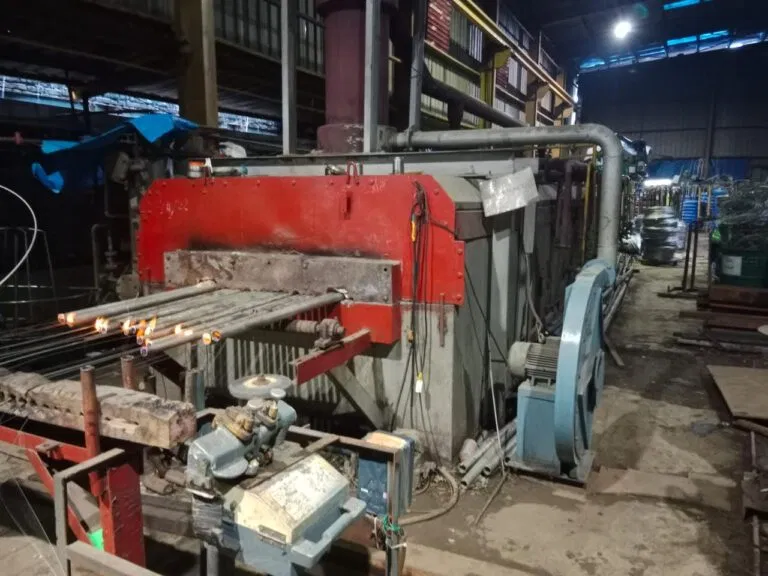
Reheating furnaces commonly represent 40–60% of rolling-mill energy consumption. They also influence scale formation, dimensional accuracy, rolling stability, and final yield.
Modernization should therefore be evaluated against a plant-wide dashboard covering:
- Specific fuel consumption in MJ/t
- Electricity consumption in kWh/t
- Furnace thermal efficiency
- Billet entry and discharge temperatures
- Scale loss and rejection rate
- Furnace availability and unplanned downtime
- Scope 1 emissions per tonne
- Maintenance cost per operating hour
The IEA overview of iron and steel and worldsteel’s energy-use resources both reinforce the strategic importance of efficiency, electrification, process integration, and carbon-aware production.
Seven Energy-Efficiency Levers for 2026
1. Enable Hot Charging and Schedule-Aware Production
Hot charging is one of the highest-impact levers because it reduces the temperature lift required inside the furnace. Billets charged at approximately 450–550°C can reduce reheating demand by 25–40% compared with cold charging, when casting, storage, and rolling schedules are properly synchronized.
The operating model should connect:
- Continuous casting output
- Billet identification and quality status
- Furnace loading sequence
- Rolling schedule
- Delay and holding-time alerts
- Product-grade temperature requirements
A delay-aware system should automatically lower firing rates during extended rolling interruptions. Holding a billet at excessive temperature is a direct fuel and scale penalty.
Management priority: Treat the furnace and rolling line as one integrated production system, not as separate departments.
2. Upgrade Combustion and Recover Flue-Gas Heat
Combustion modernization delivers a rapid reduction in fuel consumption. Recuperative or regenerative burners preheat combustion air using exhaust energy, improving flame stability and reducing the fuel required to reach the target temperature.
Well-designed upgrades can deliver:
- 15–30% lower fuel consumption, depending on baseline conditions
- Waste-heat recovery efficiency of approximately 60–70%
- More stable furnace pressure
- Lower exhaust temperature
- Reduced CO and NOx formation
- Improved temperature uniformity across the working zone
The most effective projects combine burners, recuperators, oxygen monitoring, furnace-pressure control, and automated air-to-fuel ratio management. Installing a high-efficiency burner without correcting air leakage, flue restrictions, or control logic leaves savings unrealized.
3. Control Temperature Uniformity, Not Merely Setpoints
A furnace can display the correct setpoint while producing uneven billet temperatures. Hot spots increase scale and oxidation; cold zones create rolling instability and metallurgical variation.
Modern heat treatment furnaces and reheating systems should use:
- Multi-zone PID temperature control
- Calibrated thermocouples and pyrometers
- Product-temperature feedback
- Automatic zone balancing
- Recipe-based heating profiles
- Alarm limits for temperature deviation
- Trend analysis for recurring hot spots
A realistic modernization target is to move from approximately ±15°C uniformity in a poorly controlled legacy furnace to around ±3–5°C in a properly engineered and maintained system.
The result is not only lower fuel use. Better uniformity improves yield, reduces rework, and gives production teams greater confidence when processing higher-value grades.

4. Reduce Refractory, Door, and Shell Heat Loss
Insulation degradation is often treated as a maintenance issue rather than an energy issue. That is a costly mistake. Damaged refractory, open inspection ports, worn door seals, and shell hot spots continuously transfer heat to the plant environment.
A thermal audit should identify:
- Furnace-shell hot spots through infrared thermography
- Door and charging-end leakage
- Damaged hearth or skid insulation
- Refractory spalling
- Unsealed burner blocks
- Excessive furnace pressure
- Cooling-water losses and abnormal heat transfer
Legacy furnace thermal efficiency may remain between 45% and 55%, while modern systems with upgraded insulation and heat recovery can achieve approximately 75–88%, depending on process configuration.
Repairing leakage and refractory damage is frequently a low-capital action with a short payback. It also protects the furnace structure and reduces the risk of unplanned shutdowns.
5. Integrate Digital Energy Management and Predictive Control
In 2026, Industry 4.0 is moving beyond dashboards. The objective is closed-loop energy optimization: the system must detect deviation, identify the cause, and adjust operation before energy and quality losses accumulate.
A connected furnace platform can monitor:
- Fuel flow by zone
- Combustion-air flow and oxygen level
- Flue-gas temperature
- Billet residence time
- Product temperature
- Furnace pressure
- Burner status
- Scale loss
- Motor and fan load
- Production delays
AI-assisted combustion control has the potential to reduce reheating fuel by approximately 8–15% in suitable applications. Digital scheduling can produce additional savings by avoiding unnecessary reheating, peak-demand operation, and extended idle periods.
The business case becomes stronger when the data is connected to maintenance, quality, and production planning. A plant-wide energy baseline creates accountability and supports continuous improvement under an ISO 50001-style management framework.
6. Improve Yield Through Scale and Process Control
Every tonne of scale represents lost saleable metal, additional cleaning or descaling effort, and avoidable energy consumption. Fuel reduction must therefore be measured together with yield improvement.
Key actions include:
- Avoiding excessive billet discharge temperatures
- Controlling furnace atmosphere and pressure
- Optimizing residence time
- Matching heating curves to steel grade and section size
- Reducing unnecessary holding
- Monitoring scale formation by product family
- Linking quality data to furnace recipes
A melting furnace for steel must also be evaluated by metal recovery, slag generation, tapping temperature, and power or fuel per tonne: not simply by nominal capacity. The same principle applies to a metal recycling furnace, where recovery percentage and contaminant control directly determine profitability.
For non-ferrous operations, an aluminum melting furnace should be assessed on melt loss, dross generation, temperature stability, and heat recovery. These metrics convert thermal engineering into a clear financial result.
7. Build a Lifecycle Maintenance and Spares Strategy
Energy performance deteriorates when burners, recuperators, thermocouples, fans, seals, and refractory components operate beyond their reliable service limits. Condition-based maintenance protects both efficiency and uptime.
A robust program should include:
- Critical-component ranking
- Minimum stock levels for high-risk items
- Planned burner inspection
- Thermocouple calibration
- Recuperator cleaning
- Refractory condition scoring
- Fan and damper performance checks
- Maintenance work-order history
- OEM-approved furnace spare parts
- Post-maintenance energy verification
This approach turns maintenance from reactive firefighting into a controlled production asset. It is particularly important for facilities serving the wire and cable industry, automotive supply chains, construction, and other sectors where delivery reliability is commercially decisive.
Legacy vs. 2026 Furnace Performance
| Performance metric | Legacy arrangement | 2026 modernization target | Commercial effect |
|---|---|---|---|
| Reheating fuel consumption | 450–650 MJ/t | 280–380 MJ/t | Lower fuel cost per tonne |
| Thermal efficiency | 45–55% | 75–88% | Reduced exhaust and shell losses |
| Temperature uniformity | Approximately ±15°C | Approximately ±3–5°C | Better metallurgy and lower rejection |
| Combustion control | Manual dampers and fixed settings | Automated ratio and oxygen control | Stable operation across product grades |
| Waste-heat recovery | Limited or absent | Recuperative/regenerative systems | Lower fuel demand |
| Maintenance model | Reactive replacement | Condition-based planning | Higher availability and lower emergency cost |
| Data visibility | Periodic manual readings | Real-time SCADA and energy dashboards | Faster corrective action |
| Typical upgrade payback | Not applicable | Often 12–36 months, subject to site conditions | Faster capital recovery |
These figures are planning benchmarks, not guarantees. A detailed thermal audit is essential before finalizing savings, equipment selection, or payback.
A Phased Roadmap for Plant Directors
Phase 1: Assessment and Planning : 0 to 90 Days
- Establish baseline fuel and electricity consumption per tonne.
- Measure flue-gas temperature, oxygen, pressure, and flow.
- Complete infrared thermography of the furnace shell.
- Quantify scale loss, rejection, and holding time.
- Identify the three largest energy losses.
- Define target metrics and financial hurdle rates.
Phase 2: Quick Wins and Reliability : 3 to 9 Months
- Seal doors, openings, and burner blocks.
- Repair refractory and insulation defects.
- Tune burners and correct air-to-fuel ratios.
- Calibrate temperature instruments.
- Introduce low-fire or standby logic during delays.
- Establish critical spares and preventive-maintenance routines.
Phase 3: Capital Modernization : 9 to 24 Months
- Install recuperative or regenerative combustion.
- Upgrade multi-zone control and instrumentation.
- Integrate hot charging where upstream logistics permit.
- Add SCADA, energy metering, and production connectivity.
- Evaluate furnace replacement when structural degradation makes retrofit uneconomic.
Phase 4: Continuous Optimization : 24 Months and Beyond
- Review monthly energy intensity by grade and product.
- Use predictive analytics to identify performance drift.
- Recalculate carbon intensity and compliance exposure.
- Expand waste-heat recovery across the plant.
- Link energy savings to yield, maintenance, and profitability KPIs.
Continental Furnaces applies this lifecycle approach across integrated industrial furnace systems, melting projects, galvanizing lines, annealing applications, and specialized production environments. Our heat-treatment furnace solutions are engineered around process requirements, material characteristics, available fuels, plant layout, and long-term operating economics.
The Strategic Advantage
Energy efficiency is no longer a narrow utility initiative. It is a combined program for profitability, yield, reliability, sustainability, and regulatory compliance. The strongest plants will not rely on one dramatic technology shift. They will combine hot charging, combustion control, heat recovery, precise temperature management, digital monitoring, yield protection, and disciplined maintenance.
Continental Furnaces brings more than 35 years of engineering experience, ISO-certified quality practices, customized design capability, and responsive lifecycle support. Our enduring partnership model is designed to keep downtime minimal while helping customers build measurable, sustained competitive advantage.
Start with an energy and thermal-performance assessment. Contact Continental Furnaces to identify the highest-value modernization levers for your plant:
- Phone: +91 98113 04306
- Email: info@confur.net
- Website: www.confur.net
- Consultation: Request a quote
Take the strategic step now: from rising fuel exposure to controlled energy performance, stronger yield, and sustained competitive advantage.