Steel and metals manufacturers are entering 2026 with a clear mandate: produce more consistent material with less energy, lower yield loss, stronger regulatory performance, and fewer unplanned interruptions. Furnace performance is now a board-level issue because thermal inefficiency directly affects production cost, carbon intensity, metallurgical quality, and customer acceptance.
For every steel rolling mill, foundry, recycling plant, galvanizing line, and wire-processing facility, the priority is no longer simply installing a furnace that reaches temperature. The essential objective is to engineer an integrated thermal process: from charge preparation and reheating to heat treatment, coating, cooling, maintenance, and data analysis.
Continental Furnaces brings more than 35 years of industrial experience to this performance agenda, delivering customized industrial furnace systems for ferrous and non-ferrous applications.
The 2026 benchmark: energy efficiency must move from ambition to operating discipline
The latest data from the World Steel Association’s energy-use analysis shows that global steelmaking energy intensity declined from approximately 50 GJ per tonne in the 1960s to 20.95 GJ per tonne in 2024: a reduction of 58%.
However, the route-level gap remains significant:
| Production route | 2024 energy intensity | 2024 CO₂ intensity | Strategic implication |
|---|---|---|---|
| BF-BOF | 23.88 GJ/t crude steel | 2.34 t CO₂/t | Prioritise gas recovery, waste-heat recovery, combustion optimisation, and process integration |
| Scrap-EAF | 9.84 GJ/t crude steel | 0.69 t CO₂/t | Maximise scrap quality, electrical efficiency, furnace availability, and renewable-power access |
| DRI-EAF | 23.30 GJ/t crude steel | 1.47 t CO₂/t | Improve reduction efficiency, hydrogen-readiness, and downstream thermal control |
| Global average | 20.95 GJ/t crude steel | 1.92 t CO₂/t | Use as a high-level reference, not a substitute for line-level benchmarking |
These figures, published in the World Steel Association Sustainability Indicators report, establish the context for 2026 investment decisions. A plant cannot improve what it does not measure. Key furnace KPIs should include:
- Specific energy consumption in GJ/t or MJ/t
- Fuel consumption by production grade and furnace zone
- Billet discharge temperature and uniformity
- Scale formation and material yield
- Furnace availability and mean time between failures
- Burner efficiency and excess oxygen
- Refractory life and repair frequency
- CO, NOx, SOx, and particulate emissions
- Product rejection rate after thermal processing
For hot rolling operations, a practical improvement programme should work toward the best available performance range for the individual furnace. Industry benchmarking references commonly place efficient hot-rolling reheating near 1.6–2.0 GJ/t, while cold-rolling annealing and related thermal operations may target approximately 0.5–0.7 GJ/t depending on product mix, line speed, and furnace configuration.
Heat treatment precision is the foundation of product value
A furnace’s purpose is not merely to heat metal. It must create a repeatable metallurgical condition.
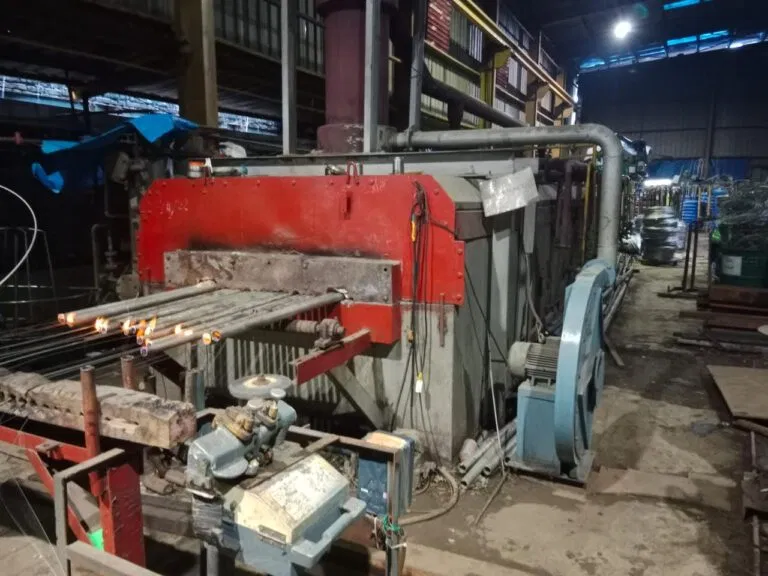
In a billet reheating application, steel billets commonly require heating to approximately 1,200–1,250°C before rolling. The critical requirement is controlled heat penetration across the full cross-section: not excessive surface temperature. Poor control produces:
- Uneven deformation resistance
- Surface cracking and dimensional variation
- Excessive oxidation scale
- Grain growth
- Rolling-mill cobbles
- Inconsistent mechanical properties
Modern billet reheating furnace solutions use multi-zone heating, controlled combustion, automated material handling, and calibrated temperature measurement. A robust operating target is lengthwise and cross-sectional uniformity within approximately ±10°C, subject to grade, section size, and process specification.

For heat treatment furnaces, precision must extend across the complete thermal cycle:
- Heating: controlled ramp rates prevent thermal shock and distortion.
- Soaking: the load reaches uniform core temperature.
- Holding: the specified metallurgical transformation is maintained.
- Cooling: quenching, controlled cooling, or furnace cooling is matched to the alloy and final properties.
- Verification: temperature records and batch data support traceability and compliance.
This approach is vital in automotive, aerospace, defence, toolmaking, structural steel, and the wire and cable industry, where mechanical performance and dimensional consistency are non-negotiable.
Thermal integration across the plant creates the next efficiency gain
The highest-value furnace projects do not treat each unit as an isolated asset. They connect the thermal chain.
A steel rolling mill, for example, should evaluate the relationship between:
- Billet yard storage and furnace charging
- Hot charging opportunities
- Reheating-zone setpoints
- Rolling-mill speed and furnace residence time
- Combustion-air preheating
- Flue-gas heat recovery
- Cooling-water systems
- Scale handling and recovery
- Production scheduling
- Maintenance and spare-part availability
Continental Furnaces’ furnace engineering approach supports this broader integration model. Recuperative or regenerative systems can recover exhaust energy to preheat combustion air, with potential fuel savings of 15–25%, depending on operating conditions and baseline equipment. The value is amplified when the recovered heat is coordinated with billet charging, combustion control, or nearby process requirements.
Traditional operation versus integrated 2026 operation
| Performance area | Traditional furnace operation | Integrated 2026 approach |
|---|---|---|
| Temperature control | Fixed setpoints and manual adjustment | Multi-zone control with recipe-based setpoints and feedback |
| Energy management | Furnace fuel monitored periodically | Specific consumption tracked by tonne, grade, and shift |
| Waste heat | Exhaust discharged with limited recovery | Recuperation, regeneration, or plant-level heat recovery |
| Production scheduling | Furnace and rolling mill planned separately | Furnace discharge synchronised with mill demand |
| Maintenance | Reactive replacement after failure | Condition-based inspection and planned intervention |
| Quality control | Periodic sampling | Continuous logging, traceability, and thermal profiling |
| Business outcome | Higher variation and hidden energy loss | Improved yield, uptime, compliance, and profitability |
The strongest return on investment generally comes from combining several moderate improvements rather than depending on one major technology. Burner upgrades, insulation improvement, oxygen-trim control, heat recovery, automation, and maintenance discipline can produce a more durable result than a single equipment replacement.
One thermal strategy must support multiple metal streams
Steelmakers are not the only operations facing higher thermal-performance expectations. Non-ferrous producers, recyclers, galvanizers, and wire processors require equally disciplined solutions.
Aluminum melting and holding
A modern aluminum melting and holding furnace must limit oxidation, maintain stable metal temperature, and support continuous casting or die-casting demand. Continental Furnaces’ documented configuration includes:
- Capacities from 300 kg to 30 tonnes
- Multi-fuel capability, including natural gas and producer gas
- Advanced low-speed luminous-flame burners
- Electric heating in the holding chamber
- Fuel consumption reference of 75–90 litres per tonne of furnace oil
- Integrated melting and holding chambers
This design separates high-output melting from precise temperature holding, improving metal quality and reducing unnecessary reheating.
Steel melting and recycling
A melting furnace for steel must be selected around charge chemistry, scrap density, batch size, refractory requirements, tapping practice, and downstream casting capacity. A properly designed metal recycling furnace can convert internal returns, machining scrap, defective castings, and purchased scrap into productive feedstock.
This supports the circular economy by:
- Reducing dependence on virgin raw materials
- Lowering material-disposal costs
- Improving supply-chain resilience
- Increasing internal scrap recovery
- Supporting measurable sustainability reporting
The Continental Furnaces metal recycling framework emphasises material-stream analysis, capacity matching, automation, emission control, and phased commissioning.
Galvanizing and wire processing
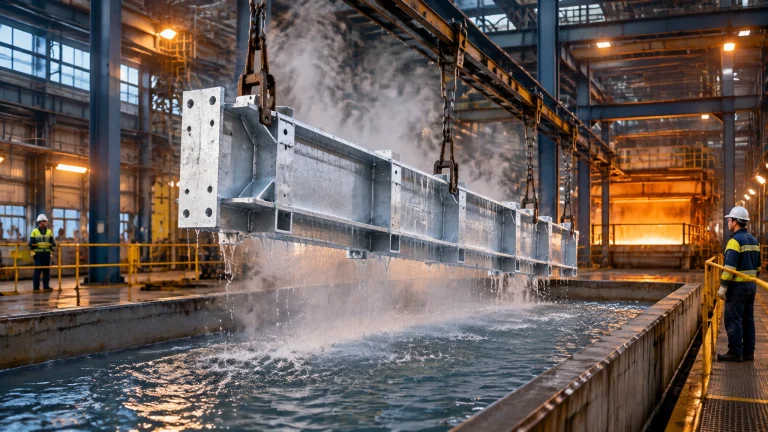
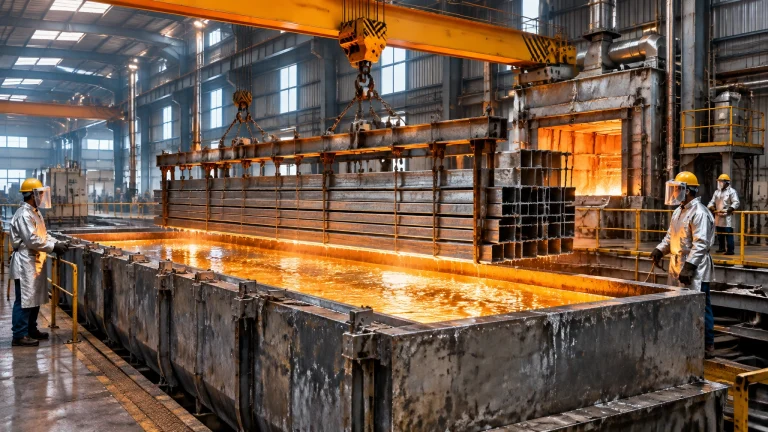
A hot dip galvanizing plant requires precise thermal coordination between pre-treatment, drying, zinc-bath control, coating, and finishing. Uniform heating and process timing are essential for coating adhesion, corrosion resistance, and product appearance.
In the wire and cable industry, vertical annealing furnaces and continuous thermal lines must maintain tension, line speed, atmosphere, and temperature simultaneously. Small deviations can affect conductivity, elongation, tensile strength, and surface quality.

The 2026 performance roadmap
Phase 1: Assessment and planning
Begin with a plant-level thermal audit covering:
- Furnace age, design, and rated capacity
- Actual throughput versus installed capacity
- Fuel and electricity consumption
- Temperature uniformity and cycle data
- Flue-gas temperature and oxygen levels
- Product rejection, scale loss, and downtime
- Refractory and burner condition
- Existing automation and data availability
Phase 2: Engineering and integration
Develop a performance specification that connects furnace design to commercial outcomes:
- Define target SEC in MJ/t or GJ/t
- Select burner, refractory, and heat-recovery technology
- Plan material flow and charging logic
- Integrate PLC, SCADA, sensors, and production records
- Establish emission-control requirements
- Define critical furnace spare parts and maintenance access
Phase 3: Commissioning and validation
Commissioning must verify more than flame operation. It should confirm:
- Thermal profiles across all zones
- Discharge-temperature uniformity
- Fuel-to-air ratio and combustion stability
- Mechanical handling performance
- Safety interlocks and emergency systems
- Product quality against metallurgical specifications
- Actual energy consumption at defined throughput
Phase 4: Continuous optimisation
The operating team should review performance weekly and compare actual results against the approved baseline. Furnace spare parts and accessories should be managed through a criticality-based inventory covering heating elements, burners, refractories, sensors, seals, mechanical wear items, and control components.
This is where an enduring service partnership becomes decisive. Prompt technical support and planned parts availability protect uptime, shorten recovery time, and preserve the original efficiency of the furnace system.
Continental Furnaces: engineering thermal advantage for the long term
The 2026 agenda is clear: precision, integration, energy productivity, circularity, and lifecycle support must operate as one strategy.
Continental Furnaces combines more than 35 years of experience with customized engineering for steel, aluminum, foundry, galvanizing, recycling, rolling mill, and wire-processing applications. Our role as an industrial furnace manufacturer extends from feasibility and design to manufacturing, commissioning, operator training, maintenance, and performance improvement.
The next step is to benchmark your current thermal process against its true potential. Contact Continental Furnaces to review your furnace data, identify the highest-value improvement opportunities, and build a practical roadmap toward sustained competitive advantage.