For plant managers and maintenance leaders, uptime is no longer protected by emergency intervention alone. In 2026, the highest-performing facilities treat asset reliability, energy efficiency, and spare-parts readiness as one integrated operating discipline.
This shift is especially important for a steel rolling mill, metal recycling facility, galvanizing line, or operation serving the wire and cable industry. A failed burner, drifting thermocouple, damaged refractory section, or unavailable control module can stop production far beyond the furnace itself. The result is lost throughput, unstable metallurgy, higher fuel consumption, delayed dispatches, and avoidable maintenance cost.
The modern agenda is clear: establish a disciplined furnace spare parts strategy, deploy predictive condition monitoring, and connect maintenance decisions to energy and production KPIs.
Why Furnace Reliability Is an Energy Strategy
A furnace that is deteriorating rarely fails without warning. It usually becomes inefficient first.
Typical early indicators include:
- Increasing flue-gas temperature
- Rising oxygen or carbon monoxide levels
- Longer heat-up and soak cycles
- Burner ignition delays
- Unstable furnace pressure
- Fan vibration or abnormal motor current
- Shell hot spots caused by refractory or insulation damage
- Door-seal leakage and air infiltration
- Increasing temperature variation between zones
- Repeated PLC, sensor, or safety-loop alarms
These conditions force the system to consume more energy to deliver the same thermal result. In a heat-treatment application, this can create non-uniform metallurgy. In a melting furnace for steel, it can extend melting time and increase oxidation. In a hot dip galvanizing plant, thermal instability can affect coating consistency and line availability.
The U.S. Department of Energy identifies air-to-fuel control, furnace pressure, insulation, heat-transfer surfaces, and waste-heat recovery as central process-heating improvement areas. Its guidance indicates that air-to-fuel optimization can deliver approximately 5–25% fuel savings, while combustion-air preheating may provide an additional 15–30% savings potential, depending on baseline conditions and system design.
These figures are planning benchmarks: not universal guarantees. Actual performance depends on furnace geometry, fuel, load profile, operating temperature, maintenance condition, and production schedule.
The Critical Furnace Spare Parts Register
A spare-parts room is not automatically a reliability programme. The objective is not to store every possible component. The objective is to ensure that the parts most likely to stop production are available at the right time, in the right specification, and with verified interchangeability.
A critical-spares register for industrial furnace systems should classify every part according to:
- Production criticality: What is the output impact if it fails?
- Safety criticality: Can failure compromise combustion or personnel safety?
- Lead time: Can the part be sourced within the planned outage window?
- Failure frequency: How often has this component required replacement?
- Interchangeability: Is an approved equivalent available?
- Storage requirements: Does the part require controlled conditions?
- Supplier capability: Can the manufacturer provide technical validation and prompt service?
Typical High-Criticality Furnace Spare Parts
- Burner nozzles and burner assemblies
- Ignition electrodes and flame scanners
- Solenoid valves, control valves, and actuators
- Thermocouples, pyrometers, transmitters, and signal conditioners
- PLC modules, communication cards, HMIs, and safety relays
- Fans, bearings, dampers, and variable-frequency-drive components
- Hydraulic cylinders and pneumatic actuators
- Recuperator or regenerator components
- Refractory modules, castables, anchors, and seals
- Cooling-water circuit components and water-cooled skid parts

For a metal recycling furnace or aluminum melting furnace, the register should also include crucibles or rotary-furnace wear components, burner consumables, charging-system parts, refractory repair materials, and instruments exposed to molten-metal conditions.
Continental Furnaces’ guide to furnace spare parts and downtime reduction provides a useful reference for building this register around asset criticality rather than storage volume.
Predictive Maintenance: From Alarms to Early-Warning Decisions
Predictive maintenance uses operating data to determine when a component is moving away from healthy performance. It is more precise than calendar-based replacement and more controlled than run-to-failure maintenance.
For a furnace, the condition-monitoring architecture should combine:
| Monitoring area | Key signals | Typical maintenance decision |
|---|---|---|
| Combustion | Fuel flow, air flow, O₂, CO, flame stability | Tune burner, inspect nozzle, check leakage |
| Thermal profile | Zone temperature, material temperature, ramp rate | Calibrate sensor, correct control loop, inspect refractory |
| Mechanical systems | Vibration, bearing temperature, motor current | Inspect fan, drive, bearing, or alignment |
| Furnace structure | Shell temperature, hot spots, pressure | Repair insulation, seal, refractory, or casing |
| Controls and safety | PLC faults, actuator travel, alarm frequency | Replace module, valve, scanner, or relay |
| Cooling circuits | Flow, pressure, inlet/outlet temperature | Investigate blockage, leakage, or pump degradation |
NIST describes predictive maintenance as a condition-based strategy supported by observed data, reliability measures, and failure predictions. Its NISTIR 8012 report on prognostics and health management maps relevant standards and practices for manufacturing condition monitoring.
The business value comes from converting signals into work orders. If vibration on a combustion-air fan rises progressively, the maintenance team should receive:
- Equipment identification
- Anomaly description
- Severity level
- Probable failure mode
- Recommended inspection
- Required furnace spare parts
- Planned intervention window
- Production and safety implications
This is where predictive maintenance and inventory management become one system. A CMMS or ERP platform should link condition alerts to the equipment bill of materials, inventory status, approved suppliers, and purchase lead times.
Traditional Maintenance Compared with the 2026 Uptime Model
| Performance area | Traditional approach | Reliability-led 2026 approach |
|---|---|---|
| Maintenance trigger | Calendar interval or failure | Condition trend and risk threshold |
| Spare-parts policy | Large, unclassified inventory | Criticality-ranked, BOM-linked stock |
| Labour requirement | Emergency response and troubleshooting | Planned inspection and targeted intervention |
| Fuel consumption | Corrected after efficiency loss appears | Tracked continuously through GJ/t or kWh/t |
| Downtime exposure | High during unexpected failure | Reduced through early warning and outage planning |
| Refractory management | Reactive patching | Condition assessment and planned replacement |
| Controls | Isolated PLC or SCADA data | Connected data through historian, MES, or CMMS |
| ROI expectation | Difficult to quantify | Business case based on downtime avoided, energy saved, and labour optimized |
A mature programme should target measurable improvement in:
- Planned maintenance percentage
- Mean time between failures
- Mean time to repair
- Unplanned downtime hours
- Specific energy consumption
- Emergency repair cost
- Maintenance cost per tonne
- Critical-spares stockout frequency
- First-time fix rate
A Four-Phase 2026 Uptime Roadmap
Phase 1: Assessment and Criticality Planning
Begin with a complete asset hierarchy covering the furnace, burners, fans, controls, cooling circuits, refractory, material-handling systems, and exhaust equipment.
Establish a 12–24-month baseline for:
- Energy consumption per tonne or batch
- Production throughput
- Failure history
- Downtime cost
- Maintenance labour
- Spare-parts consumption
- Temperature uniformity
- Flue-gas and combustion performance
Then rank assets and parts by production, safety, environmental, and financial impact.
Phase 2: Instrumentation and Data Quality
Predictive analytics cannot compensate for unreliable measurements. Install or validate:
- Temperature sensors and pyrometers
- Pressure and flow transmitters
- Flue-gas O₂ and CO measurement
- Vibration sensors on fans and drives
- Motor-current monitoring
- Shell-temperature or thermal-imaging inspections
- Valve-position and actuator-cycle feedback
Standardize equipment tags and connect data to the historian, MES, CMMS, or energy-management platform. For interoperability, plants can evaluate vendor-neutral architectures such as OPC UA alongside their existing control systems.
Phase 3: Reliability and Energy Intervention
Use the collected data to execute physical improvements:
- Correct burner air-to-fuel ratios
- Repair door seals and furnace openings
- Restore damaged refractory and insulation
- Clean heat-transfer and recovery surfaces
- Balance combustion-air fans
- Calibrate thermocouples and control loops
- Replace chronic-failure components
- Install recuperative or regenerative heat recovery where economically justified
- Establish minimum and maximum stock levels for critical furnace spare parts
The DOE’s process-heating systems guidance emphasizes a logical sequence: first reduce avoidable furnace losses, then recover useful waste heat.
Phase 4: Continuous Optimization and Lifecycle Support
Once the foundation is stable, introduce advanced analytics and digital-twin functionality to optimize:
- Product recipes
- Heat-up and soak profiles
- Furnace loading
- Production sequencing
- Energy intensity
- Refractory replacement timing
- Maintenance windows
- Emissions performance
- Spare-parts demand forecasting
This approach applies to heat treatment furnaces, billet reheating systems, a melting furnace for steel, an aluminum melting furnace, and specialized thermal processing equipment for continuous wire production.

Reliability Priorities Across Different Metal Processes
Steel Rolling Mill
Focus on burner balance, zone uniformity, material discharge temperature, furnace pressure, skid condition, and refractory hot spots. A stable reheating profile protects yield and reduces scale formation.
Aluminum Melting and Recycling
Prioritize burner performance, melt temperature, holding time, crucible or refractory condition, charging mechanisms, and dross control. Predictive monitoring can protect both energy consumption and metal recovery.
Wire and Cable Industry
Continuous annealing lines require reliable temperature measurement, tension coordination, burner or electrical-heating controls, cooling systems, and line-speed synchronization. A minor sensor or actuator failure can affect a long production length and increase scrap.

Hot Dip Galvanizing Plant
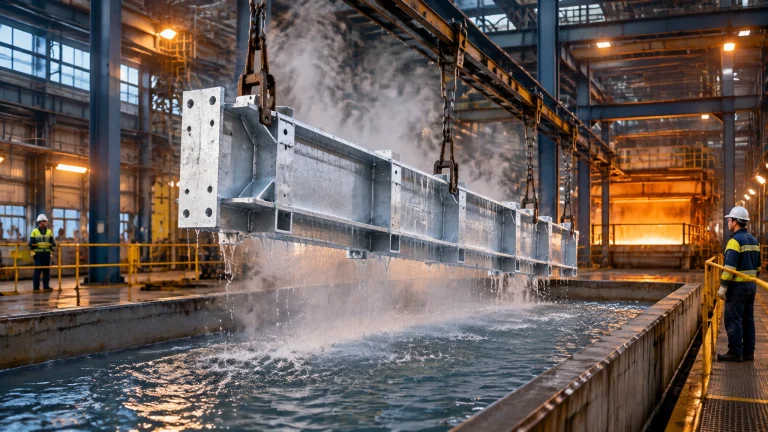
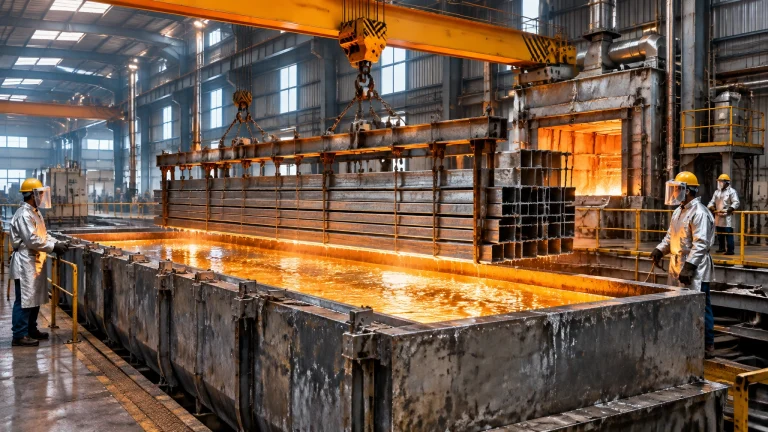
Monitor furnace temperature uniformity, bath-heating systems, combustion equipment, exhaust systems, and material-handling drives. Planned replacement of critical control and burner components protects coating quality and line availability.
Continental Furnaces: An Enduring Reliability Partnership
Continental Furnaces brings more than 35 years of industrial furnace expertise to the design, modernization, maintenance, and support of thermal processing assets. As an experienced industrial furnace manufacturer, the company delivers customized, energy-efficient solutions for steel, non-ferrous metals, recycling, galvanizing, heat treatment, and the wire and cable industry.
Explore Continental Furnaces’ billet reheating furnace solutions, aluminum melting furnace applications, and annealing furnace service and spare-parts support.
Conclusion: Make Uptime a Designed Outcome
Reliable furnace performance is not created by emergency stock, isolated inspections, or a dashboard without action. It is created by connecting condition monitoring, disciplined furnace spare parts management, energy measurement, engineering intervention, and lifecycle service.
In 2026, the competitive advantage belongs to plants that know which component is deteriorating, which part is required, how much production is at risk, and when the intervention should occur.
Contact Continental Furnaces for a plant-specific assessment of your furnace reliability, energy performance, spare-parts exposure, and digital-maintenance roadmap. Build an enduring engineering partnership and convert asset reliability into sustained competitive advantage.