The 2026 Furnace Agenda: Reliability, Efficiency, and Digital Control
Industrial thermal processing is entering a decisive phase. Energy costs, stricter environmental expectations, rising quality requirements, and pressure to reduce unplanned downtime are changing how manufacturers evaluate furnace assets.
For a steel rolling mill, a heat treatment line, a recycling facility, or the wire and cable industry, furnace performance now affects far more than temperature control. It directly influences:
- Production throughput and yield
- Fuel or electricity consumption per tonne
- Metallurgical consistency
- Refractory and component life
- Emissions and regulatory compliance
- Maintenance cost and equipment availability
The modern plant therefore requires more than an isolated furnace. It requires connected, maintainable, and energy-efficient industrial furnace systems supported throughout their lifecycle.
Since 1987, Continental Furnaces has combined more than 35 years of thermal engineering expertise with customized design, ISO-certified quality, energy-efficient technology, and prompt service. Our role as an industrial furnace manufacturer is to create an enduring partnership: from process assessment and engineering to commissioning, maintenance, upgrades, and dependable supply of furnace spare parts.
2026 Technology Updates Industrial Operators Should Prioritize
1. High-efficiency heating and heat recovery
Thermal efficiency begins with furnace architecture. Insulation quality, door sealing, burner configuration, heating-zone control, and exhaust management determine how much supplied energy reaches the charge rather than escaping through the shell or stack.
Technical literature on industrial furnaces identifies several established opportunities:
- Modern insulation structures can reduce wall-related energy losses by approximately 20–30% compared with older designs.
- Recuperative and regenerative burner systems can achieve practical efficiencies of approximately 75–85%, depending on operating conditions.
- Waste-heat recovery can reduce fuel demand by 15–30% when the recovered energy is correctly matched to combustion air, charge preheating, water heating, or another process demand.
- High-speed convection can shorten the heated length of some continuous furnaces by as much as 70%, improving throughput where short holding times are required.
These values are design and application dependent. The correct benchmark must be established through a site energy audit measuring kWh per batch, fuel per tonne, furnace utilization, cycle time, and exhaust temperature.
2. Electrification and hydrogen-ready combustion
Electrification is expanding across precision heat treatment, non-ferrous melting, and selected reheating applications. Electric resistance and induction systems offer direct energy delivery, reduced flue-gas losses, and highly controllable heating zones.
Hydrogen-ready combustion is also progressing, particularly in steel reheating. Industry developments presented at INFUB 2026 highlight burner systems designed for flexible fuel mixtures and future operation with high hydrogen content.
The correct 2026 strategy is not to replace every existing furnace immediately. It is to evaluate:
- Available electrical capacity and tariff structure
- Fuel availability and future supply security
- Required operating temperature
- Heat-transfer characteristics of the product
- Emissions limits and permitting requirements
- Return on investment over the equipment lifecycle
A hybrid or hydrogen-ready design can provide a practical transition path while preserving production continuity.
Maintenance Strategy: Move From Reactive Repair to Condition-Based Reliability
A furnace breakdown rarely begins when the alarm activates. It begins earlier through gradual refractory degradation, burner imbalance, thermocouple drift, fan vibration, seal leakage, electrical deterioration, or reduced cooling performance.
A robust maintenance program must combine operator inspections, scheduled preventive work, condition monitoring, and strategic parts planning.
Critical maintenance checkpoints
Daily and shift-based checks
Operators should record:
- Actual versus set-point temperature by zone
- Flame stability and burner response
- Pressure, airflow, and fuel readings
- Door and seal condition
- Abnormal noise, vibration, or smoke
- Conveyor, roller, pusher, or charging-system movement
- Cooling-water flow and temperature
- Alarm history and control-system deviations
Weekly and monthly inspections
Maintenance teams should review:
- Thermocouple and pyrometer accuracy
- Burner nozzle condition and air-fuel ratio
- Fan bearings, belts, couplings, and vibration levels
- Refractory cracks, hot spots, and spalling
- Electrical panels, terminals, contactors, and cable insulation
- Hydraulic and pneumatic systems
- Exhaust ducts, dampers, recuperators, and filters
- Safety interlocks and emergency shutdown functions
Planned shutdown inspections
During an annual or major planned shutdown, assess:
- Furnace shell distortion
- Lining thickness and anchoring
- Heating elements or radiant tubes
- Burner blocks and combustion chambers
- Conveyor alignment and load-support structures
- Control-panel health and obsolete components
- Gas trains, valves, regulators, and leak integrity
- Calibration records and process uniformity
The objective is measurable reliability. Plants should track mean time between failures, mean time to repair, planned versus unplanned downtime, and maintenance cost per tonne.
The role of furnace spare parts
A furnace spare-parts strategy is a production strategy. Critical components should be classified according to failure impact, lead time, and replacement complexity.
Maintain controlled stock of items such as:
- Thermocouples and temperature sensors
- Burners, nozzles, and ignition components
- Relays, contactors, fuses, and control modules
- Heating elements and electrical terminals
- Door seals, refractory modules, and insulation materials
- Bearings, belts, chains, rollers, and drive components
- Solenoid valves, regulators, and pneumatic parts
- Safety switches and interlock devices
Continental Furnaces provides furnace spares and accessories to support reliable operation across multiple furnace types. Genuine or correctly specified replacement parts protect process stability, reduce repeat failures, and minimize emergency procurement risk.
Technology Comparison: Legacy Operation Versus 2026-Ready Systems
| Performance area | Traditional furnace operation | 2026-ready furnace system |
|---|---|---|
| Energy monitoring | Periodic meter readings | Real-time kWh, fuel-per-tonne, and batch dashboards |
| Maintenance model | Reactive breakdown repair | Preventive and predictive maintenance |
| Temperature control | Limited zones and manual adjustment | PLC-based multi-zone control with recipe management |
| Heat utilization | Stack losses and uncontrolled leakage | Recuperation, regeneration, insulation, and waste-heat integration |
| Data access | Local panels and paper records | Historian, remote diagnostics, and Industry 4.0 connectivity |
| Spare-parts planning | Emergency purchasing | Criticality-based inventory and lifecycle planning |
| Compliance evidence | Manual records | Digital alarm, calibration, emissions, and production history |
| Business outcome | Variable quality and downtime exposure | Higher yield, predictable output, and improved asset utilization |
Digitalization is valuable only when it improves decisions. A connected furnace should help the maintenance manager identify deterioration, the production manager protect throughput, and the finance team verify energy savings.
Application Priorities Across Furnace Operations
Steel rolling mill and billet reheating
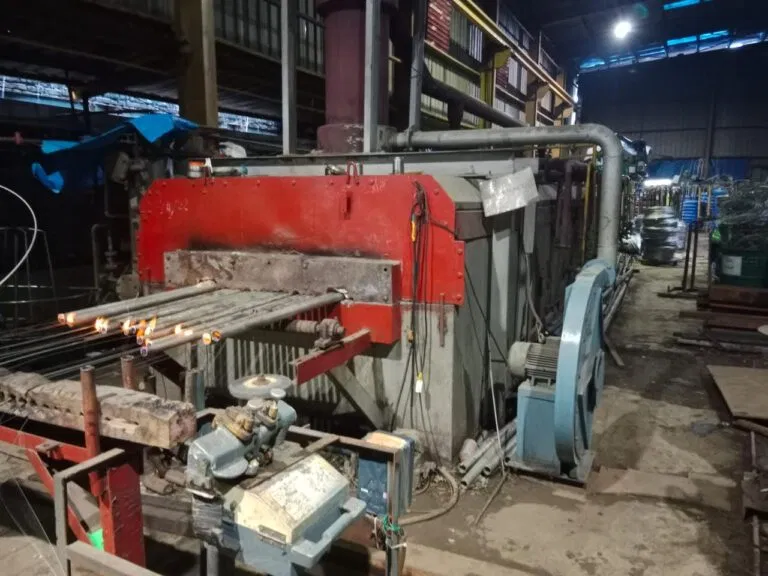
Billet reheating requires stable furnace temperature, controlled atmosphere, uniform heating, and reliable material handling. Continental Furnaces designs billet reheating furnaces with capacities from 10 to 120 TPH, supporting the demanding throughput requirements of ferrous rolling operations.
Priority controls include:
- Zone-by-zone temperature regulation
- Burner balancing and combustion optimization
- Descaling and discharge coordination
- Roller-table and charging-system reliability
- Hot charging or process integration where feasible
- Energy measurement per tonne of billet
Heat treatment furnaces up to 1400°C
Heat treatment quality depends on temperature uniformity, recipe control, atmosphere management, and repeatability. Continental Furnaces supplies heat treatment capability up to 1400°C for applications across steel, automotive, aerospace, stamping, defense, and metallurgy.
Key maintenance indicators include furnace uniformity surveys, calibration drift, fan performance, refractory condition, and atmosphere-control stability.

For the wire and cable industry, continuous annealing and controlled thermal cycles are essential for achieving the required ductility, conductivity, tensile performance, and surface quality.
Aluminum melting and metal recycling
An aluminum melting furnace must limit oxidation, dross generation, and melt loss while delivering repeatable temperature and chemistry control. Charge preparation, furnace loading, stirring, burner adjustment, and holding-time discipline directly influence metal yield.
For ferrous applications, a melting furnace for steel must be evaluated against charge mix, melt rate, refractory duty, tapping practice, power or fuel availability, and downstream casting requirements.
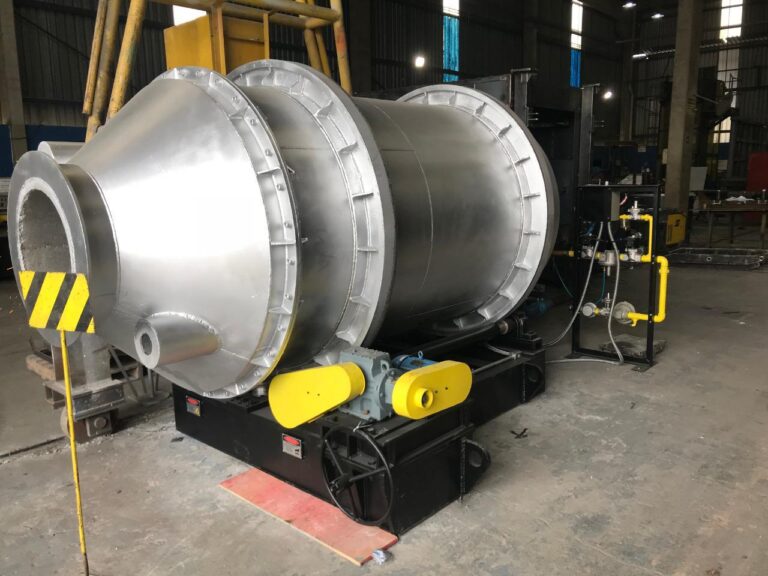
Continental Furnaces also engineers recycling solutions, including rotary furnaces for lead recycling with capacities up to 10 tonnes. These systems support the circular economy by converting secondary metal into usable production feedstock while controlling energy use and process emissions.
Hot-dip galvanizing and surface treatment
A modern hot dip galvanizing plant must coordinate pretreatment, fluxing, drying, zinc-bath temperature, material handling, fume control, and coating consistency. Furnace and plant maintenance must therefore extend beyond the heating chamber to include:
- Pickling and rinsing systems
- Flux tanks and heating circuits
- Zinc kettle heating and temperature control
- Fume extraction and filtration
- Cranes, hoists, and material-transfer equipment
- Bath chemistry and coating-thickness monitoring
See Continental Furnaces’ hot dip galvanizing plant gallery for examples of plant-level solutions.
A Practical 2026 Upgrade Roadmap
Phase 1: Assessment and planning
Establish the baseline:
- Energy consumption per batch or tonne
- Current capacity and bottleneck conditions
- Downtime and failure history
- Product quality deviations
- Emissions and compliance gaps
- Availability of critical spares
Phase 2: Engineering and prioritization
Rank improvements by payback, production risk, and implementation complexity. Typical priorities include sealing, insulation repair, burner tuning, control upgrades, heat recovery, sensor replacement, and obsolete-component modernization.
Phase 3: Digital and maintenance integration
Introduce PLC data collection, alarm history, energy dashboards, calibration discipline, and condition-based inspection. Connect maintenance actions to measurable production outcomes.
Phase 4: Execution and validation
Complete the upgrade during a controlled shutdown. Verify temperature uniformity, cycle time, energy consumption, safety interlocks, emissions performance, and product quality before final acceptance.
Phase 5: Lifecycle partnership
Review performance at 30, 90, and 180 days. Update preventive-maintenance schedules, spare-parts inventory, operator training, and future modernization plans.
Build the Next Decade of Thermal Performance
The 2026 industrial furnace is not simply hotter, faster, or more automated. It is more measurable, more maintainable, and more closely integrated with the economics of production.
Continental Furnaces brings more than three decades of experience, ISO 9001:2015 and ISO 14001:2015 certification, customized engineering, energy-efficient technology, and prompt service to every project. Our capabilities span heat treatment, billet reheating, melting, recycling, galvanizing, annealing, and supporting thermal processing equipment for diverse industries.
Explore our industrial furnace solutions, review our industry applications, or contact Continental Furnaces to assess your next upgrade. A technical consultation today is a strategic move toward higher yield, lower energy intensity, stronger regulatory compliance, and sustained competitive advantage.
Further technical reading