As global industrial markets navigate the midpoint of 2026, the metallurgical and thermal processing sectors face an unprecedented convergence of strict decarbonization mandates, aggressive cost pressures, and rapid digital transformation. For plant managers, metallurgical engineers, and procurement directors, operating legacy thermal equipment is no longer economically or environmentally viable. Modern manufacturing demands adaptive, high-efficiency systems capable of delivering uncompromising metallurgical integrity while slashing energy consumption.
With over 35 years of engineering excellence, Continental Furnaces remains at the forefront of this industrial evolution. In this afternoon edition of our industrial insights, we examine the critical technological leaps defining 2026 capital projects: ranging from artificial intelligence in rolling mill reheating to breakthroughs in wire annealing, hot dip galvanizing, and non-ferrous metal recycling.
1. AI-Driven Combustion Optimization & Real-Time Furnace Tuning for Rolling Mills
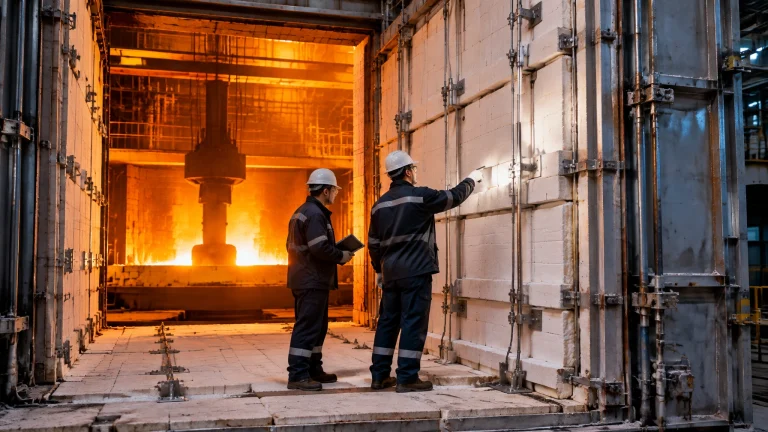
The integration of artificial intelligence and machine learning into heavy industrial heating has moved past experimental pilots into core operational deployment. In the rolling mill industry: particularly across CCR, CCM, and automated steel rolling lines: reheating furnaces account for a dominant share of total primary energy consumption.
The Principle of Terminal Concentrated Heating & Neural Networks
Traditional reheating relied on static zone setpoints and operator intuition. Today, advanced installations utilize hybrid physical-neural digital twins (mirroring high-profile deployments such as those at EVRAZ). By combining fundamental heat-transfer laws with neural networks trained on tens of thousands of historical operational records, modern control systems achieve remarkable performance milestones:
- 6% to 15% Reduction in Fuel Consumption: Automated air-fuel ratio tuning and oxygen trim minimize stack losses.
- Tightened Discharge Temperature Uniformity: Slab and billet temperature variance is compressed to within ±10°C, directly improving rolling stability and reducing off-gauge product rates.
- 15% to 30% Scale Loss Reduction: Minimizing time-at-temperature prevents excessive oxidation, preserving high-value metal yield.
Furthermore, reinforcement learning frameworks are increasingly applied to induction furnace energy optimization, dynamically adjusting power inputs based on real-time alloy composition and throughput pacing.

2. Upcoming 2026/2027 Regulatory Compliance Standards & Carbon Mandates
Environmental regulatory frameworks entering force across international jurisdictions in late 2026 and 2027 are fundamentally reshaping industrial furnace design specifications. Environmental protection agencies and international standard bodies are enforcing rigorous limits on nitrogen oxides (NOx), carbon monoxide (CO), and direct carbon intensity per ton of finished metal.
Key Compliance Benchmarks for 2027 Capital Projects
- Ultra-Low NOx Burner Technology: New installations must incorporate flue gas recirculation (FGR) and staged combustion principles to maintain NOx emissions below stringent regional thresholds without sacrificing flame stability.
- Carbon Tracking & Real-Time Emissions Reporting: Industrial furnaces now require embedded telemetry capable of auditing specific energy consumption (SEC in GJ/t) and carbon output per production cycle.
- Mandatory Waste Heat Recovery Integration: Direct discharge of high-temperature exhaust is rapidly becoming obsolete. Modern systems integrate high-efficiency recuperators and regenerative burners to preheat combustion air by up to 800°C, driving thermal efficiencies above 85%.
3. Next-Gen Wire & Cable Annealing: Protective Atmospheres & Conductivity Optimization
The wire and cable manufacturing sector demands flawless metallurgical properties, particularly when producing high-conductivity oxygen-free copper and high-carbon spring steel wires. Surface oxidation and decarburization during annealing represent critical failure points that degrade electrical conductivity and mechanical fatigue life.
Advanced Bell-Type and Pit-Type Annealing Systems
Continental Furnaces specializes in cutting-edge thermal equipment engineered specifically for wire and cable applications. Modern bell-type annealing furnaces and pit-type units leverage high-purity protective atmospheres (such as dissociated ammonia or nitrogen-hydrogen blends) maintained under strict positive pressure.
- Dew Point Control: Automated moisture monitoring ensures dew points remain below -40°C, guaranteeing oxide-free, bright metallic finishes.
- Electrical Conductivity Preservation: Precise soak-time management prevents grain boundary contamination, ensuring copper wire achieves >101% IACS (International Annealed Copper Standard) conductivity.
- Uniform Microstructure: Forced convection cooling fans accelerate cooling rates while maintaining absolute temperature uniformity across dense wire coils.

4. Hot Dip Galvanizing Plant Innovations: From BIM Scanning to LIBS Chemistry Control
Corrosion protection remains paramount across infrastructure, automotive, and construction sectors. Modern hot dip galvanizing plants have undergone a technological renaissance, incorporating digital engineering and advanced metallurgical monitoring.
Key Innovations in Modern Galvanizing Lines
- BIM & 3D Laser Scanning: Complete plant engineering utilizes Building Information Modeling (BIM) and laser point clouds to optimize spatial layout, material handling ergonomics, and exhaust ducting routing prior to fabrication, cutting onsite installation timelines by 30%.
- Laser-Induced Breakdown Spectroscopy (LIBS): Real-time zinc bath chemistry control via automated LIBS sensors continuously monitors trace elements (aluminum, nickel, lead, bismuth), eliminating manual sampling delays and preventing coating defects.
- Direct-Fired Tilting Furnaces: Offering superior thermal efficiency and rapid alloy melting, these units support dual-process lines transitioning seamlessly between traditional galvanizing and advanced alloyed coatings.
5. Metal Recycling Furnace Advances: Non-Ferrous Recovery & TBRC Technology
As the circular economy transitions from corporate aspiration to regulatory obligation, metal recycling facilities require ultra-high recovery yields from complex secondary feeds, electronic waste, and industrial scrap.
DC Arc Furnaces & Slag Fuming
- Up to 99.8% Precious Metal Recovery: Direct Current (DC) electric arc furnaces equipped with specialized bottom electrodes provide stable bath stirring, superior thermal transfer, and exceptional recovery rates for non-ferrous and precious metal scrap.
- Top-Blow Rotary Converter (TBRC) Technology: Offering peerless mixing and oxidation control for complex smelting and refining of copper, nickel, and precious metal concentrates.
- Advanced Slag Fuming: Volatile metal recovery units capture zinc, lead, and cadmium from steelmaking electric arc furnace (EAF) dust, converting hazardous waste streams into high-purity commercial oxides while meeting zero-waste mandates.
6. Selecting an Industrial Furnace Manufacturer for 2027 Capital Projects
Procuring thermal processing equipment for a major industrial expansion requires rigorous vendor evaluation. Plant engineers and procurement committees should look beyond initial capital expenditure and assess total lifecycle value, engineering customization, and post-commissioning support.
| Performance Metric | Traditional Thermal Systems | Next-Gen Continental Furnaces Systems | Advantage / ROI Impact |
|---|---|---|---|
| Thermal Efficiency | 50% – 60% | 75% – 85%+ | 25% lower fuel consumption & reduced operating costs |
| Control Architecture | Hardwired PID / Manual dials | AI-assisted digital twins & closed-loop SCADA | Elimination of human error & ±10°C temperature accuracy |
| Emissions Profile | High NOx / Unmonitored CO | Ultra-low NOx burners & continuous CEMS integration | Full compliance with 2027 carbon mandates |
| Maintenance Downtime | Periodic reactive overhauls | Predictive telemetry & modular furnace spares | >98% operational availability & minimal downtime |
The Strategic Roadmap: Partnering for Sustained Competitiveness
Navigating the complexities of thermal processing modernization requires more than a transactional equipment purchase: it demands an enduring partnership built on deep technical wisdom and collaborative engineering.
To secure your operational advantage ahead of 2027 regulatory milestones, follow our proven engagement framework:
- Comprehensive Thermal Audit: Evaluate your current energy consumption, refractory condition, and combustion efficiency.
- Customized Engineering Design: Partner with Continental Furnaces to tailor high-efficiency melting furnaces & recycling projects or heat treatment lines to your exact metallurgical specifications.
- Seamless Integration & Commissioning: Deploy ISO-certified hardware backed by real-time digital monitoring and prompt local service support.
Ready to future-proof your industrial operations? Contact our senior metallurgical engineering consultants today to schedule your comprehensive thermal audit and take a decisive step toward sustained market leadership.