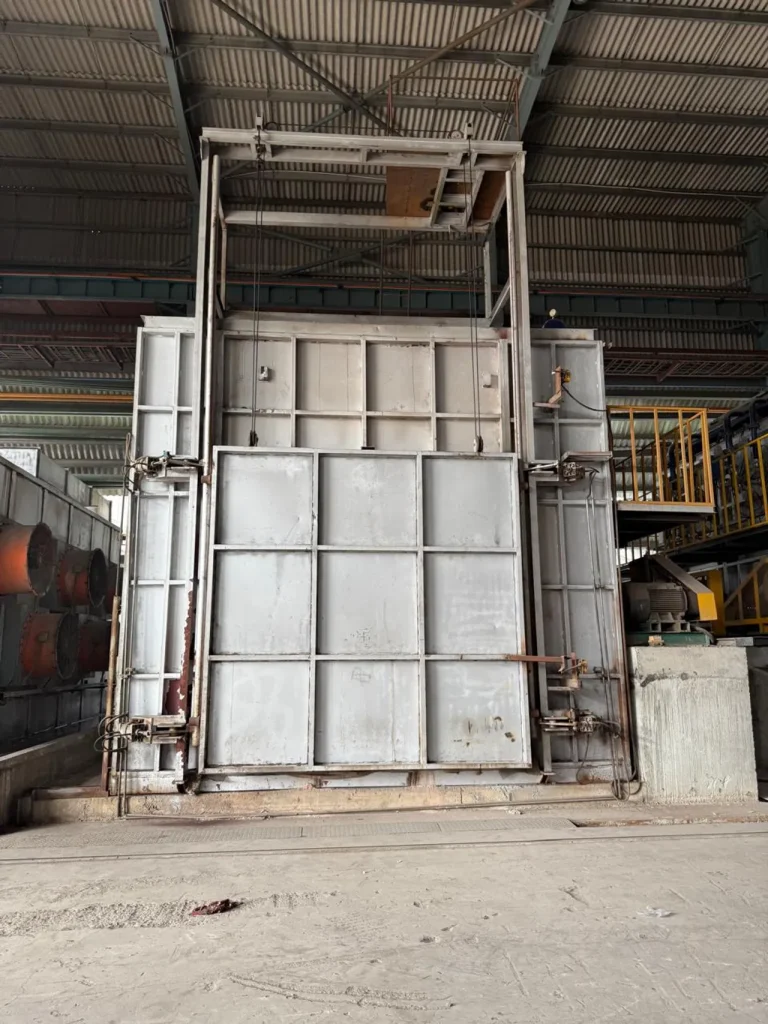
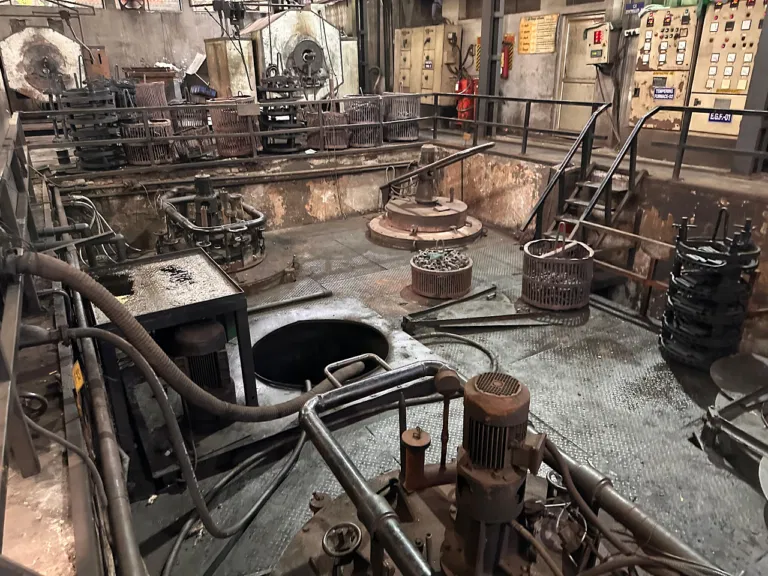
For industrial furnace operators, 2026 marks a decisive shift from isolated temperature control to connected, data-driven thermal processing. In a modern steel rolling mill, heat treatment plant, foundry or wire production facility, the furnace is no longer a standalone asset. It is a connected production system that exchanges information with PLCs, SCADA, MES, historians, maintenance platforms and downstream rolling or continuous casting equipment.
The commercial objective is clear: lower energy per tonne, tighter temperature uniformity, higher yield, fewer unplanned stoppages and stronger regulatory compliance.
For plant heads, maintenance managers and procurement leaders, furnace automation is now an operational strategy, not simply an instrumentation upgrade.
What Industry 4.0 Means for Industrial Furnace Systems
A practical Industry 4.0 architecture for an industrial furnace combines five layers:
-
Field instrumentation
Thermocouples, pyrometers, oxygen, carbon monoxide, pressure, flow, vibration and motor-current sensors. -
PLC and safety control
Burner management, fuel-air ratio control, interlocks, furnace pressure, emergency shutdown and sequencing. -
SCADA and historian systems
Live trends, alarm management, batch records, recipe control and operator dashboards. -
Advanced process control
O2 trim, model predictive control, adaptive temperature profiles, virtual billet-temperature sensors and thermal modelling. -
IIoT and enterprise integration
Edge gateways, OPC-UA connectivity, energy dashboards, CMMS integration, predictive maintenance and digital twins.
The result is a closed-loop process. Instead of firing burners against a fixed setpoint, the control system responds to actual oxygen levels, production rate, billet geometry, furnace pressure, discharge temperature and downstream demand.
For a steel reheating furnace, this means aligning the furnace schedule with the rolling mill. For a CCM or CCR line, it means coordinating thermal output with casting speed and material temperature. For a wire and cable industry application, it means maintaining repeatable annealing conditions as line speed and wire diameter change.
Closed-Loop Combustion Control: The First Efficiency Priority
Manual air-fuel adjustment creates excess oxygen, unstable flame conditions and avoidable heat loss through the stack. A modern combustion-control package measures flue-gas oxygen and, where appropriate, CO and moisture, then adjusts fuel and combustion air in real time.
In suitable installations, O2 trim can deliver:
- 5–10% fuel reduction compared with poorly tuned combustion systems.
- Improved flame stability across turndown conditions.
- Lower furnace-atmosphere variation.
- Reduced scale formation and oxidation.
- More consistent discharge temperatures.
- Lower operator dependency during product changeovers.
These results depend on furnace design, burner condition, fuel quality, leakage, recuperator performance and operating discipline. The correct benchmark is therefore a production-normalized comparison in GJ/t, Nm³/t or kWh/t, not a headline percentage applied universally.
Published furnace-modernisation references include a reduction from approximately 1.8 GJ/t to 1.4929 GJ/t, equivalent to roughly 17.1% lower specific energy consumption, alongside slab-temperature homogeneity within approximately ±20 K. These figures provide a credible project target, but each plant requires a calibrated baseline.

Adaptive Profiles and Digital Twins Improve Metallurgical Yield
A fixed recipe cannot account for every production variable. Charge temperature, billet size, steel grade, line speed, furnace loading and refractory condition all influence the required heat input.
Adaptive control uses live production data to adjust:
- Preheating, heating and soaking-zone setpoints.
- Burner firing rates.
- Furnace pressure.
- Conveyor or pusher speed.
- Soak time and discharge timing.
- Temperature targets based on downstream rolling requirements.
A digital twin adds a higher level of decision support. It models heat transfer, residence time and material temperature, allowing engineers to test a new rolling schedule or product mix before applying it to production.
For induction and billet-heating applications, recent research has reported digital-twin temperature prediction with outlet-temperature RMSE below 5°C and correlation above 0.95. Simulation-based optimisation has predicted energy reductions of 24–27% in selected operating scenarios. These are not automatic plant guarantees; they demonstrate the value of combining physics-based models with live operating data.
Legacy Manual Operation vs Automated, IIoT-Enabled Operation
The following comparison is an indicative planning framework for a properly engineered retrofit or new installation. Actual values must be validated through site measurement, production-normalised trials and an agreed measurement-and-verification protocol.
| Operating metric | Legacy manual furnace operation | Automated and IIoT-enabled operation |
|---|---|---|
| Specific energy consumption | 1.8 GJ/t reference case | 1.49–1.65 GJ/t potential target |
| Temperature uniformity | Approximately ±30–50 K | Approximately ±15–25 K with calibrated control |
| Unplanned downtime | 80–150 hours/year | 30–80 hours/year with predictive maintenance |
| Scrap, scale and rework loss | 1.5–2.0% in variable conditions | 0.8–1.2% potential operating range |
| Operator intervention | 2–3 operators per shift | 1–2 operators per shift, with supervision |
| Data availability | Periodic manual readings | Continuous historian and energy dashboard |
| Typical project payback | Not applicable | Approximately 12–30 months, subject to site economics |
| Maintenance approach | Corrective or calendar-based | Condition-based and risk-prioritised |
The most important value is not one isolated percentage. It is the combined improvement in fuel consumption, yield, availability, maintenance response and production planning.
Predictive Maintenance for Burners, Refractory and Blowers
A furnace can have excellent controls and still lose profitability through mechanical degradation. IIoT condition monitoring identifies deterioration before it becomes a production event.
Priority assets include:
- Burners, valves and ignition transformers.
- Combustion-air blowers and exhaust fans.
- Recuperators and heat exchangers.
- Furnace rolls, skids, chains and pusher mechanisms.
- Refractory walls, hearths and roofs.
- Cooling-water circuits.
- Induction coils and power electronics.
- EAF hydraulics, electrodes and oxygen systems.
- Rolling-mill bearings, gearboxes and drives.
A predictive-maintenance system correlates vibration, temperature, motor current, pressure, flow, flame status and PLC alarms with work-order history. For example, rising blower vibration combined with reduced airflow and increased burner demand indicates a different failure pattern from a simple thermocouple drift.
This approach changes maintenance from “repair after failure” to planned intervention during a controlled maintenance window. The business impact includes reduced emergency labour, fewer thermal excursions, lower refractory damage and improved mean time between failures.

Applications Across Steel, Aluminum, Galvanizing and Recycling
The same control philosophy applies across different thermal processes, with process-specific instrumentation and models.
Steel rolling and continuous casting
A reheating furnace should exchange billet identity, grade, residence time and discharge temperature with the rolling mill. Integration with CCM and CCR production data enables:
- Schedule-aware firing.
- Reduced waiting and reheat cycles.
- More stable rolling temperatures.
- Lower scale formation.
- Better slab and billet yield.
Heat treatment furnaces
Annealing, normalising, hardening, tempering and stress-relieving operations require precise control of temperature, time and atmosphere. Batch records and recipe enforcement support traceability and quality audits.
Aluminum melting furnace
Aluminum operations require careful control of melt temperature, holding time, charge composition and oxidation. Energy dashboards should report kWh/t or gas per tonne melted, while alarms should identify burner imbalance, refractory deterioration and excessive holding time.
Melting furnace for steel and metal recycling furnace
Scrap variability makes mass and energy balance essential. Charge weight, chemistry, melt temperature, oxygen flow, power consumption and tap-to-tap time should be recorded for every heat. Data-driven optimisation improves yield while supporting the circular economy through more efficient use of recycled metal.
Hot dip galvanizing plant and wire processing
In a hot dip galvanizing plant, bath temperature, strip or wire speed, atmosphere and coating conditions must remain synchronised. Furnace automation also supports continuous annealing and galvanizing lines serving the wire and cable industry.
A Practical Automation Roadmap
Phase 1: Assessment and baseline
Record at least 30–60 days of:
- Fuel or electricity consumption.
- Tonnes processed.
- Temperature profiles.
- Furnace pressure and O2.
- Discharge temperature.
- Scrap, scale and rework.
- Downtime, MTBF and MTTR.
- Maintenance and spare-parts costs.
Phase 2: Instrumentation and connectivity
Install calibrated sensors, upgrade PLC and SCADA systems, and connect the historian through secure industrial networking. Include redundant safety-critical measurements and clear operator override functions.
Phase 3: Visibility before optimisation
Deploy dashboards for energy per tonne, temperature deviation, controller service factor, alarm frequency and furnace availability. Operators must trust the data before automatic control is expanded.
Phase 4: Closed-loop control
Introduce O2 trim, adaptive profiles, model predictive control and production-schedule integration under hard safety interlocks.
Phase 5: Predictive maintenance and digital twin
Use equipment-health models, thermal simulations and CMMS workflows to prioritise interventions and validate what-if production scenarios.
Why the Furnace Partner Matters
Automation must be engineered around the furnace, product, fuel, throughput and downstream process. A generic software layer cannot compensate for poor refractory design, undersized blowers, inaccurate thermocouples or obsolete burner hardware.
Continental Furnaces has more than 35 years of industrial thermal-processing experience, delivering customised, energy-efficient and ISO-certified solutions. Our capabilities span industrial furnace applications, furnace conversion and modernisation, annealing systems, melting equipment, galvanizing solutions, thermal processing equipment and furnace spare parts.
The objective is an enduring lifecycle partnership: assessment, engineering, commissioning, operator training, prompt service, upgrades and long-term performance support.
Take the Next Step Toward Sustained Competitive Advantage
The most profitable furnace upgrade begins with a measured baseline and a disciplined roadmap. Contact Continental Furnaces for a consultation to evaluate your combustion system, controls, IIoT readiness, energy-per-tonne performance and maintenance risks.
Modernise the furnace, connect the process and convert thermal data into sustained competitive advantage.

Research references
- Eurotherm: Industry 4.0 and IIoT for smart industrial ovens and furnaces
- Tenova: Intelligent EAF technologies aligned with Industry 4.0
- MPC-based energy efficiency improvement in a pusher-type billet reheating furnace
- Scientific Reports: Energy-consumption prediction for steel rolling reheating furnaces
- Journal of Intelligent Manufacturing: Digital-twin optimisation of induction-furnace energy consumption