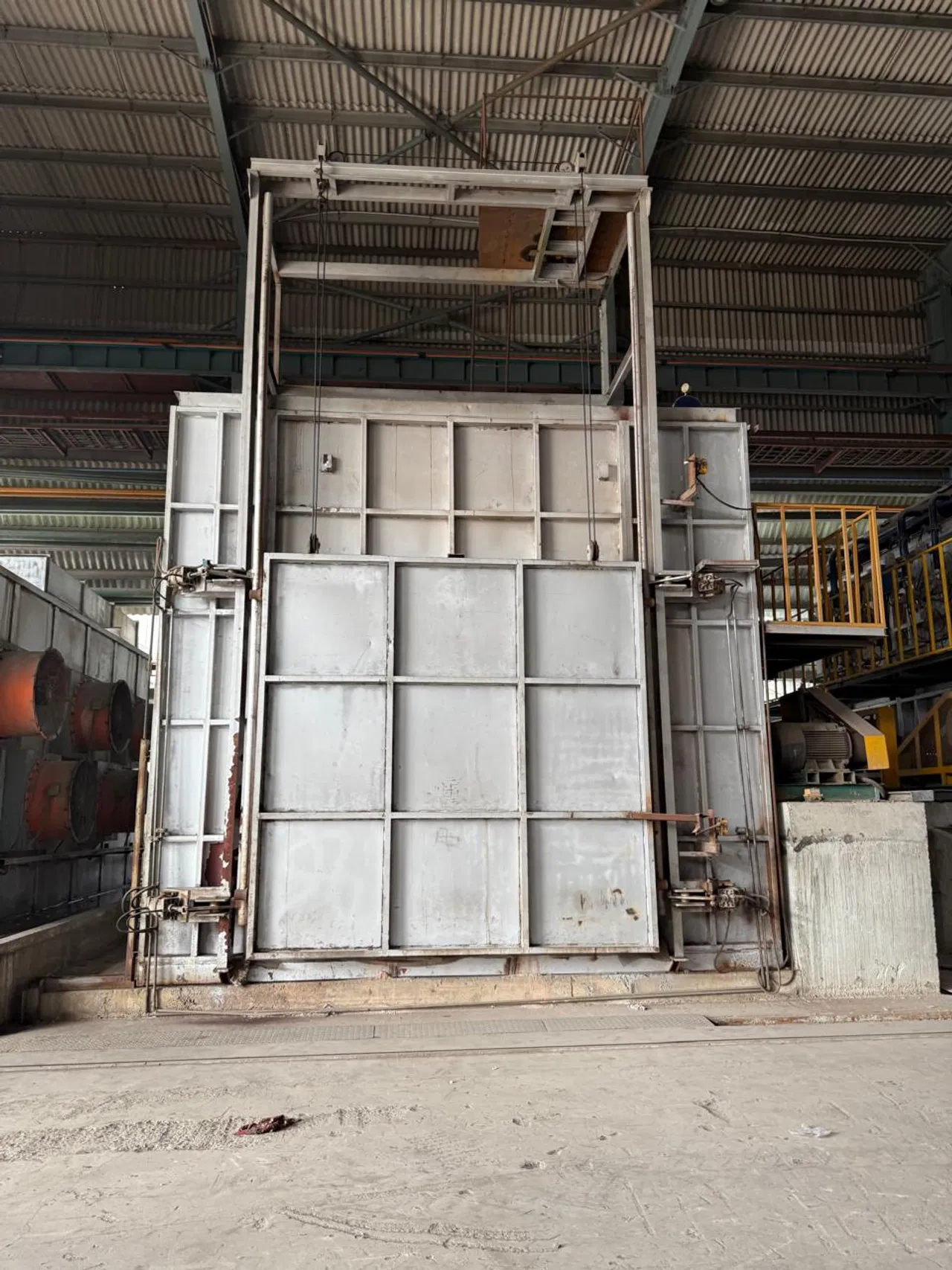
The 2026 Case for Modernizing Existing Furnace Assets
Industrial furnace modernization is no longer a cosmetic maintenance exercise. It is a structured engineering strategy for extending asset life, improving yield, reducing energy intensity and maintaining regulatory readiness without committing immediately to a complete replacement.
A correctly designed retrofit can preserve:
- Existing furnace shells, foundations and material-handling systems
- Established production layouts and utility connections
- Valuable operating knowledge within the plant team
- Production continuity through phased shutdown execution
- Capital for higher-priority equipment and decarbonization projects
For many plants, the highest-return intervention is not a new furnace. It is the systematic upgrade of the combustion system, thermal envelope, controls, instrumentation, electrical infrastructure and maintenance architecture around the furnace already in operation.
Continental Furnaces approaches modernization as an enduring engineering partnership. With more than 35 years of industrial experience, ISO-certified quality systems and responsive service support, the objective is to create a measurable improvement in cost per tonne, product quality, uptime and lifecycle value.
The following benchmarks are planning ranges. Final savings depend on furnace design, production duty, fuel, charge temperature, operating schedule, maintenance condition and local energy prices.
Begin with an Engineering Audit, Not a Retrofit Quotation
A retrofit investment should follow a measured diagnosis. Replacing burners or adding insulation before understanding the furnace duty can shift the bottleneck rather than solve it.
1. Establish the operating baseline
Collect at least 2–4 weeks of representative production data, including:
- Fuel or electricity consumption per batch and per tonne
- Actual throughput versus rated furnace capacity
- Furnace operating hours, idle hours and loading ratio
- Set-point temperature, actual temperature and cycle time
- Product rejection, oxidation, scale loss and rework
- Flue-gas temperature, oxygen and carbon monoxide
- Door-open time, pressure excursions and alarm frequency
- Maintenance hours, emergency interventions and spare-part consumption
For electric and induction equipment, include:
- kWh per tonne melted
- Peak demand and load factor
- Power factor and harmonic distortion
- Cooling-water flow, temperature and pressure
- Coil, busbar, thyristor or IGBT condition
- Transformer and switchgear loading
2. Complete a heat balance
A heat balance identifies where energy enters and where it leaves. The principal loss categories are:
- Exhaust gases
- Wall, roof and floor conduction
- Open doors and charging apertures
- Excess combustion air
- Cooling systems and water-cooled components
- Fixtures, trays, skids and conveyors
- Incomplete combustion
- Heat retained in refractory mass
The U.S. Department of Energy identifies air-fuel control, reduction of exhaust losses and waste-heat recovery as central process-heating opportunities. Its guidance indicates that air-fuel ratio control can deliver approximately 5–25% fuel savings, while combustion-air preheating can provide approximately 15–30% savings, subject to furnace conditions.
3. Compare capacity with actual duty
A furnace rated for 10 tonnes per batch may routinely process only 5–6 tonnes. That difference changes the economics of every proposed upgrade.
The audit must determine:
- Whether the furnace is genuinely capacity-constrained
- Whether bottlenecks exist in loading, quenching, rolling, charging or discharge
- Whether idle operation is consuming energy without adding production
- Whether a smaller operating envelope would improve efficiency
- Whether hot charging or production synchronization can reduce reheating
The most credible retrofit business case connects energy consumption to actual good production, not merely to burner input.
4. Benchmark energy and yield
Useful energy performance indicators include:
- GJ per tonne of product
- kWh per tonne melted
- Fuel per batch
- Good tonnes per furnace hour
- Scale loss percentage
- Temperature uniformity
- Unplanned downtime hours per month
- Maintenance cost per operating hour
This structure aligns naturally with an ISO 50001 energy-management approach, which emphasizes energy review, significant energy uses, measurable performance indicators, corrective action and continual improvement. See the ISO 50001 energy management overview.

Highest-Return Retrofit Modules
Combustion-system modernization
Legacy burners frequently operate with fixed air settings, manual dampers, inconsistent flame patterns and excessive excess air. These conditions increase fuel consumption while reducing temperature stability.
A modern combustion retrofit may include:
- High-efficiency burners matched to the actual furnace zone duty
- Automatic air-fuel ratio control
- Variable-speed combustion-air fans
- Oxygen and carbon monoxide trim
- Flame supervision and burner-management systems
- Furnace pressure transmitters and automatic damper control
- Recuperators or regenerative burners
- Flue-gas temperature and flow measurement
- Interlocked purge, ignition and emergency-shutdown sequences
The objective is not simply to increase flame output. It is to maintain the required heat-release profile with the lowest safe excess-air level, stable furnace pressure and repeatable heat transfer.
Oxygen trim should be commissioned against verified combustion measurements. An O₂ sensor that is poorly located, contaminated or uncalibrated can cause the control system to increase fuel unnecessarily. CO monitoring is equally important because reducing oxygen without confirming complete combustion creates safety, emissions and quality risks.
A properly sized recuperator can preheat combustion air using exhaust-gas energy. In many fuel-fired applications, recuperative systems deliver 10–20% fuel reduction compared with an equivalent furnace without heat recovery. The final result depends on exhaust temperature, fouling, available space, corrosion risk and operating hours.
PLC, SCADA and automation upgrades
A furnace can have modern hardware but remain operationally obsolete if its controls cannot store recipes, trend data or identify degradation.
Controls modernization should address:
- Obsolete PLCs, HMIs and communication modules
- Temperature-controller replacement and calibration
- Zone-by-zone control logic
- Recipe management by material grade and product size
- Automatic ramp, soak and cooling sequences
- Batch identification and traceability
- Alarm prioritization and event logging
- Fuel, power and throughput data acquisition
- Secure connection to plant-wide SCADA or MES systems
- Spare-part compatibility and long-term obsolescence planning
For heat treatment, the target is typically a reduction in load-to-load variation and improved temperature uniformity. Depending on furnace type and process, modernization can move uniformity from approximately ±15–25°C toward ±5–10°C when the thermal design, sensor placement and loading practice are also corrected.
A digital twin should be treated as an engineering model, not merely a visual dashboard. It combines furnace geometry, thermal response, recipes, throughput and historical performance to compare expected and actual behavior. It becomes useful for:
- Predicting heat-up and soak duration
- Identifying abnormal fuel or power consumption
- Evaluating production changes before implementation
- Supporting operator training
- Detecting gradual refractory, burner or sensor degradation
Predictive maintenance readiness begins with reliable tags, time-synchronized historian data and disciplined failure coding. A dashboard cannot compensate for poor instrumentation.
Refractory, insulation and sealing upgrades
Thermal losses often remain invisible because the furnace continues to reach temperature. However, longer heat-up time, higher fuel consumption and hot external surfaces indicate deterioration of the thermal envelope.
Retrofit options include:
- Ceramic fibre modules and blankets
- Low-cement castables
- Microporous insulation in selected low-load locations
- Hot-spot repair and joint reconstruction
- Improved hearth and roof insulation
- Refractory anchors and expansion-joint correction
- Door sealing and automatic clamping
- Reduced-clearance charging doors
- Tube, skid and conveyor seals
- Inspection ports with improved covers
Ceramic fibre and low-thermal-mass systems can reduce stored heat and speed furnace response. In suitable applications, insulation improvements deliver approximately 2–5% reduction in wall and roof losses, while broader thermal-envelope projects may achieve 10–20% energy reduction when combined with door, seal and operating corrections.
Material selection must match atmosphere, temperature, abrasion, molten-metal splash, chemical exposure and mechanical impact. Installing a low-density lining in an aggressive aluminium melting environment without adequate protection is not modernization; it is a premature failure mechanism.
Electrical and Induction Upgrades for Melting Operations
Electrical modernization is essential for an aluminum melting furnace, a melting furnace for steel or a metal recycling furnace operating under high production demand.
A practical upgrade review should include:
- Transformer capacity and spare loading margin
- Power factor correction
- Harmonic measurement and mitigation
- VFD replacement for pumps, fans and charging equipment
- SCR, thyristor or IGBT condition
- Busbar heating and connection integrity
- Induction coil insulation and mechanical support
- Cooling-water flow, pressure and leak detection
- Earth-fault and interlock systems
- Charge-mix and melt-temperature data
- Power consumption per tonne
For steel melting, the metal temperature typically approaches 1,550–1,650°C, depending on grade and process. The reliability of the coil, cooling circuit and power-conversion system is therefore as important as furnace capacity.
For aluminum, melting commonly occurs around 650–760°C, but melt quality depends heavily on charge cleanliness, turbulence, oxidation control, holding time and skim management. A modernized aluminum system should reduce unnecessary holding and support charge preheating where safe and economically justified.

Equipment-Specific Modernization Guidance
Heat treatment furnaces
For batch and continuous heat treatment furnaces, prioritize:
- Temperature uniformity surveys
- Thermocouple replacement and calibration
- Recipe-controlled ramp and soak cycles
- Burner balancing by zone
- Door and hearth sealing
- Atmosphere, oxygen and carbon-potential monitoring where applicable
- Fixture redesign to improve load circulation
- Quench transfer-time verification
Many steel and alloy heat-treatment processes operate between approximately 650°C and 1,100°C, depending on annealing, normalizing, hardening, tempering or stress-relief duty. A modernization project should protect metallurgical results before pursuing maximum firing rate.
Steel rolling mill reheat furnaces
A steel rolling mill reheat furnace must be assessed as part of the complete production system. The key variables are:
- Slab, billet or bloom charging temperature
- Furnace residence time
- Zone temperature profile, often within approximately 1,050–1,250°C
- Scale formation and yield loss
- Discharge temperature
- Rolling-mill synchronization
- Skid and walking-beam condition
- Burner flame impingement
- Hot charging potential
Upgrades to combustion zoning, pressure control, recuperation and furnace scheduling can reduce specific fuel consumption by 10–25% in suitable legacy installations. The greatest gains often arise when furnace operation is synchronized with the rolling schedule to eliminate avoidable holding.
Aluminum melting furnace and metal recycling furnace
For aluminum and non-ferrous recycling, retrofit engineering should focus on:
- Charge-density improvement
- Moisture and contamination control
- Burner placement and flame coverage
- Door-opening discipline
- Dross and oxidation reduction
- Exhaust and fume capture
- Melt-temperature stability
- Furnace pressure and infiltration
- Safe charge preheating
For a metal recycling furnace, yield is as important as fuel consumption. A small energy saving can be outweighed by metal loss, excessive dross or off-specification chemistry.
Melting furnace for steel
Steel melting operations require a reliability-centered approach covering:
- Induction power system
- Refractory lining life
- Cooling-water safety
- Charging equipment
- Temperature measurement
- Tap-out consistency
- Transformer and switchgear condition
- Emergency backup and containment systems
Condition-based triggers should be established for cooling-water pressure, coil temperature, insulation resistance, harmonic distortion, refractory wear and abnormal melt time.
Hot dip galvanizing plant and pickling lines
A hot dip galvanizing plant should be modernized as an integrated line rather than as an isolated zinc kettle.
Relevant upgrade areas include:
- Pre-treatment and pickling pump reliability
- Acid concentration and temperature monitoring
- Rinse-water control
- Flux chemistry and drying
- Annealing or preheating furnace combustion
- Zinc-bath temperature stability
- Air-knife control
- Fume extraction and pressure balance
- Strip speed and tension control
- Kettle heating and refractory condition
Typical zinc-bath operation is approximately 445–465°C, while pickling sections may operate around 70–90°C, with line speeds commonly ranging from 60–200 m/min depending on strip condition and design. The related pickling-to-galvanizing guidance explains why surface preparation, furnace control and coating performance must be engineered together.
Wire and cable industry
In the wire and cable industry, continuous annealing and heat-treatment systems demand precise control of:
- Line speed
- Wire tension
- Atmosphere quality
- Temperature profile
- Cooling rate
- Coil and guide alignment
- Electrical continuity
- Spool and take-up synchronization
A modern continuous furnace retrofit should improve stability without interrupting the production rhythm. Vertical annealing systems, in particular, require careful alignment, hoist inspection and reliable temperature measurement.
Legacy versus Modernized Furnace Configuration
The following comparison represents typical engineering targets rather than guaranteed outcomes.
| Metric | Legacy configuration | Modernized configuration |
|---|---|---|
| Specific fuel consumption | 1.20–1.45 GJ/t | 0.95–1.20 GJ/t |
| Temperature uniformity | Approximately ±15–25°C | Approximately ±5–10°C |
| Fuel or power cost | Baseline | 15–30% lower, subject to duty |
| Maintenance labour | Reactive intervention and emergency callouts | 20–35% fewer unplanned maintenance hours |
| Emissions compliance | Periodic manual checks; variable O₂/CO | Continuous monitoring, alarms and recorded trends |
| Recipe repeatability | Operator-dependent | PLC/SCADA recipe control |
| Data availability | Paper logs or isolated indicators | Historian, dashboards and production-linked KPIs |
| Typical payback | Difficult to verify | 18–36 months for integrated high-return packages |
Maintenance and Reliability Must Lead the Program
Rank asset criticality
Classify furnace assets as A, B or C according to:
- Safety consequence
- Production loss
- Quality impact
- Environmental risk
- Repair lead time
- Availability of bypass or redundancy
- Cost of failure
A burner-management system, induction cooling circuit or galvanizing kettle may be an A-critical asset. A non-essential local indicator may be C-critical. The maintenance budget should follow this ranking.
Define condition-based triggers
Examples include:
- Thermography: abnormal shell or busbar temperature
- Vibration: fan, pump, motor or gearbox deterioration
- Combustion: rising O₂, CO or flue-gas temperature
- Thermal performance: longer heat-up time or higher fuel per tonne
- Refractory: hot spots, cracking or shell distortion
- Instrumentation: sensor drift or repeated calibration failure
- Controls: increasing PLC faults, communication loss or nuisance trips
- Galvanizing: bath instability, kettle-wall temperature trend or fume-extraction pressure change
Plan shutdowns as controlled projects
A reliable shutdown plan includes:
- Scope freeze and drawing review
- Long-lead spare identification
- Pre-fabrication and panel testing
- Isolation and safety documentation
- Mechanical, refractory, electrical and controls work packs
- Inspection hold points
- Cold commissioning
- Hot commissioning
- Performance testing against the baseline
- Operator and maintenance training
Genuine furnace spare parts and accessories are a modernization enabler. Correct burners, thermocouples, heating elements, refractory components, seals, sensors and control modules protect compatibility and reduce commissioning risk. Lowest purchase price is not the same as lowest total cost of ownership.
The 2026 Furnace Modernization Roadmap
Phase 1: Assessment and Planning
- Complete the energy and reliability audit
- Establish baseline KPIs
- Perform heat and mass balance
- Review capacity versus actual duty
- Rank assets by criticality
- Identify compliance gaps
- Develop a phased capital plan
- Confirm shutdown windows and production constraints
Phase 2: Efficiency and Reliability Module
- Repair doors, seals and refractory hot spots
- Upgrade burners and air-fuel control
- Install O₂/CO trim where justified
- Correct furnace-pressure instability
- Add recuperators or waste-heat recovery
- Modernize fans, dampers and drives
- Upgrade cooling systems and critical electrical components
- Secure genuine spares and update the bill of materials
Phase 3: Digital and Decarbonization Module
- Replace obsolete PLC, HMI and SCADA systems
- Implement recipe management and data historians
- Add energy, emissions and throughput dashboards
- Prepare data architecture for predictive maintenance
- Evaluate induction, resistance or hybrid heating
- Assess hydrogen-ready combustion where infrastructure supports it
- Integrate hot charging and production scheduling
- Verify savings through sustained measurement
This sequence prevents premature electrification or fuel switching before the plant has corrected basic heat loss, combustion instability and maintenance weaknesses. Efficiency first, digital control second and decarbonization through a verified engineering pathway is the financially disciplined route.
Build Sustained Competitive Advantage Through Modernization
A legacy furnace is not automatically an obsolete furnace. With the correct audit, retrofit package, controls architecture, refractory design and maintenance discipline, an existing asset can deliver a quantum leap in energy performance, yield, reliability and compliance readiness.
Continental Furnaces supports customers across heat treatment, steel rolling mill reheat, aluminum melting, steel melting, recycling, galvanizing, pickling and wire-processing applications. Our approach combines customized thermal processing equipment, ISO-certified quality, genuine spares and prompt technical service to minimize downtime across the furnace lifecycle.
Do not approve a major retrofit from a nameplate rating or a single fuel bill. Begin with a measured technical assessment. Contact Continental Furnaces to map your furnace’s energy losses, reliability risks and highest-return modernization opportunities, and take the next strategic step toward sustained competitive advantage.