Afternoon Edition | 11 October 2026
In metal melting, a small change in yield can outweigh a large change in fuel or power cost. Every percentage point of aluminum lost to oxidation, metal trapped in dross, or avoidable remelting reduces saleable output while consuming energy twice. The same principle applies in steelmaking: the lowest-cost charge is not necessarily the lowest-cost heat once chemistry corrections, yield, power and cycle time are included.
For 2026, effective furnace improvement combines proven melt discipline with better measurement: traceable charge data, reliable temperature and energy readings, and maintenance that keeps the furnace operating to its design intent. The benchmarks below are planning references, not guarantees. Furnace type, alloy, scrap condition, throughput and measurement boundaries all affect results.
Aluminum melt loss: measure metal yield, not just energy
Aluminum oxidizes readily when exposed to air at melting temperatures. Turbulence, excessive superheat, long charge exposure and dirty feedstock can increase oxidation and dross formation. But dross weight is not the same as metal loss: dross contains oxides and may also contain recoverable aluminum.
A useful operating baseline records:
- Charge mass and alloy family, by heat or batch.
- Tapped metal mass and saleable metal mass.
- Total dross skimmed, in kg per tonne charged.
- Metallic aluminum content in representative dross samples.
- Flux type and consumption, in kg per tonne charged.
- Specific energy, recorded separately for melting, holding and auxiliaries.
The U.S. Department of Energy’s metalcasting best-practice review reports aluminum melt-loss ranges of about 2–5% for wet reverberatory furnaces and around 1–1.25% for coreless induction melting. Its furnace comparisons also show substantially lower losses for stack-melter practice than for conventional reverberatory examples. These are historical technical benchmarks and not directly interchangeable across equipment or accounting boundaries. They do, however, show why charge handling and furnace design deserve the same scrutiny as the energy meter.
A practical plant objective is to investigate promptly when clean, well-sorted charge regularly exceeds 1.5% melt loss. Establish the number against your own alloy mix and mass-balance method; do not treat it as a universal guarantee.
Operating controls that reduce dross
- Charge dry, clean material only. Moisture is a serious safety hazard as well as a process risk. Segregate wet or contaminated loads for controlled inspection and preparation.
- Sort by alloy and condition. Painted, oily, oxidized or high-surface-area scrap needs a defined preparation and charging route.
- Minimize exposure to air. Rapidly immerse light or thin scrap into a molten heel where the furnace design allows it.
- Avoid unnecessary superheat and holding. Set temperature to the alloy and downstream process requirement, then manage time at temperature.
- Use flux deliberately. Set flux practice through qualified trials and metal-quality requirements, not by increasing dosage whenever dross rises.
- Skim consistently. Remove oxide without taking excessive metal-rich material with it; train operators to follow a repeatable procedure.
- Recover dross appropriately. Assess whether a dedicated dross-processing route is commercially and operationally viable.
Typical pure aluminum melts at approximately 660°C. Actual alloy liquidus and required tapping temperatures vary; foundry practice often involves metal temperatures in the broad region of 680–760°C, depending on alloy and casting requirements. The control principle is firm: use the lowest temperature that reliably meets quality and transfer requirements.
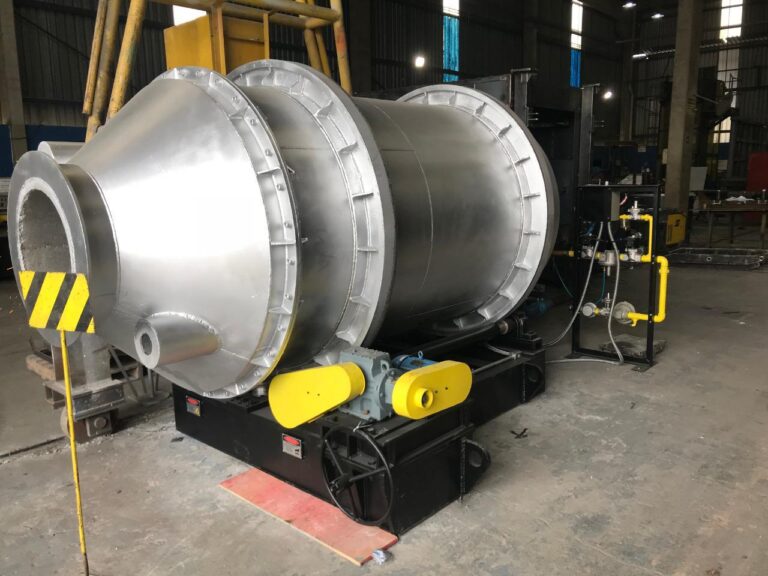
Continental Furnaces’ aluminum melting furnace solutions include rotary furnace technology for metal melting and recycling applications.
Modern vs. traditional aluminum melt practice
The table compares reported furnace benchmarks and shop-floor controls. Energy values are approximate thermal-equivalent input per metric tonne melted; gas and electricity figures are not interchangeable without considering site energy costs and system boundaries. The underlying DOE data are useful reference points, not a 2026 performance warranty.
| Operating measure | Traditional wet reverberatory practice | Optimized practice / stack-melter reference |
|---|---|---|
| Reported aluminum melt loss | 2–5%; DOE reference average about 3.5% | Approximately 0.9–1.25% in reported stack-melter examples |
| Specific energy consumption | About 775–970 kWh-equivalent/t from reported 1,200–1,500 Btu/lb | About 454–646 kWh-equivalent/t from reported 703–1,000 Btu/lb |
| Dross generation | Weigh and report kg/t charged; total skim is not metal loss | Same measurement; also assay metallic aluminum in dross |
| Flux consumption | Record kg/t by alloy and treatment method | Optimize through trials; no universal dosage applies |
| Cycle time | Measure charge-start to tap for comparable batches | Reduce avoidable open-door, hold and charge delays; validate by matched production data |
| Simple ROI | Establish from verified baseline | Calculate from recovered metal, energy, throughput and maintenance savings |
A simple payback example illustrates the method, not a market benchmark: if a project costs $100,000 and delivers $50,000 in verified annual net savings, simple payback is 2.0 years. Use actual scrap value, energy tariffs, recovery credits, capital cost and production constraints for an investment decision.
DOE references: U.S. DOE metalcasting energy best-practice review and study on reducing oxidative melt loss in aluminum.
Furnace maintenance: protect the process window
A well-designed metal recycling furnace cannot sustain good yield if seals leak, temperature readings drift or charging equipment causes long exposure. A maintenance plan should link condition findings to operating performance.
Routine inspection priorities
- Check door, lid and charge-well seals for damage and air ingress.
- Inspect refractory condition, hot-face wear and evidence of metal penetration.
- Verify thermocouple condition and compare indicated temperature with a calibrated reference.
- For fuel-fired equipment, maintain burners, combustion controls and exhaust measurement devices.
- For induction systems, inspect coil-water flow, cooling alarms, electrical connections and insulation monitoring.
- Keep charging, tilting, extraction and dross-handling equipment aligned and operational.
- Review recurring downtime and maintain critical furnace spare parts to reduce repair lead time.
In 2026, the practical technology shift is toward connected measurements rather than a single “smart furnace” feature. Trend energy per tonne, temperature, cycle time, holding hours, downtime and dross yield together. A useful control-room view flags changes from an agreed baseline; it should not replace operator judgement, calibrated instruments or safe work procedures.
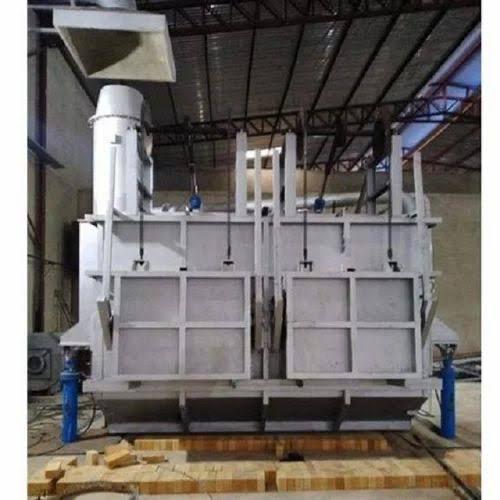
Dross processing should be evaluated as a metal-recovery step, with recovered metal and residual waste weighed and reported separately.
Phase 1 / Phase 2 / Phase 3: an efficiency roadmap
Phase 1: Assess and establish the baseline
Collect at least four weeks of representative production data, including more than one alloy and shift where applicable. Confirm weighing procedures and meter boundaries before comparing furnace performance.
- Record charge composition, moisture-preparation checks and mass balance.
- Separate melting energy from holding energy and plant auxiliaries.
- Sample dross to estimate its metallic content.
- Identify idle time, extended holds, repeat remelts and unplanned stoppages.
Phase 2: Stabilize practice and maintenance
Prioritize changes that protect safety, yield and process consistency before committing to major capital upgrades.
- Standardize scrap sorting, charging sequence and skimming.
- Correct temperature measurement and control issues.
- Repair seals and refractory defects; establish inspection intervals.
- Review flux use by alloy and treatment purpose.
- Train operators to record exceptions and explain deviations.
Phase 3: Engineer, upgrade and verify
Compare equipment options against throughput, metal quality, fuel or electricity cost, labour, emissions requirements and lifecycle maintenance. A retrofit or new industrial furnace system should be sized to the production pattern, not only the peak-hour requirement. Verify savings after commissioning using the same definitions and measurement boundaries as the baseline.
Continental Furnaces also supports other connected thermal operations, including heat treatment furnaces and a hot dip galvanizing plant. Integrating operating data across melting and downstream thermal processes can help plants understand total energy and scheduling impacts.
Steel melting: charge-mix economics for induction and electric furnaces
For a melting furnace for steel, optimizing the charge means minimizing total cost per tonne of compliant tapped steel, not maximizing scrap share in isolation.
Steel induction melting energy depends on charge density, furnace capacity and power, lining condition, temperature, holding time and utilization. DOE studies report measured steel induction-furnace consumption spanning roughly 450–800 kWh/t in foundry settings. The theoretical energy requirement is lower; the gap is where process and equipment losses accumulate. These figures are furnace-specific, not a whole-plant or rolling-mill energy benchmark.
Build the heat recipe around:
- Chemistry: carbon, phosphorus, sulfur, copper, tin, chromium, nickel and other residual limits.
- Yield: expected oxidation, slag and metallic recovery by charge material.
- Energy and time: density, size and cleanliness affect melting rate and power consumption.
- Cost of correction: alloy additions and chemistry adjustments may offset a cheaper charge.
- Route and output: induction and EAF operations have different operating requirements.
Model the charge cost as material cost plus power, fluxes, alloy corrections, yield losses and disposal costs. worldsteel’s energy-use guidance likewise notes that steelmaking energy performance varies with production route, scrap quality, product mix and process control. A charge optimizer is valuable when its recommendations remain constrained by specification and verified against actual yields.
Melt-shop decisions also travel downstream. In a steel rolling mill, residual chemistry, inclusion content and charge cleanliness set the yield and surface quality achieved in reheat and rolling: a heat that is marginally cheaper to melt but harder to roll is rarely cheaper overall. Where melting and rolling share a plant, track cost per compliant tonne of finished product rather than melt-shop cost alone, and align melting schedules with rolling campaigns so that holding time and reheat energy are not consumed twice.
Application note: wire and cable feedstock quality
In the wire and cable industry, furnace performance ultimately affects rod-feed consistency. For fire-refined copper and aluminum rod, align incoming feedstock controls with the customer’s conductivity, chemistry, cleanliness and surface-quality requirements. Track alloy or grade identity, contamination, inclusions and, where relevant, gas or oxygen-related quality indicators. Keep copper and aluminum routes segregated, prevent moisture and oil entering charge, and confirm downstream drawing performance. For wire operations, repeatable feedstock quality is a production KPI, not merely a purchasing specification.
A partnership built around verified results
Melt-loss control is an enduring operating discipline: measure accurately, maintain the equipment, train for repeatable practice and validate every upgrade against saleable output. As an industrial furnace manufacturer with more than 35 years of experience, Continental Furnaces develops customized thermal processing equipment and supports customers across furnace selection, maintenance and lifecycle service.
Arrange a technical consultation with Continental Furnaces to review your charge mix, melt-loss baseline, energy data and maintenance priorities. Make the next furnace decision a measurable step toward higher yield and sustained competitive advantage.