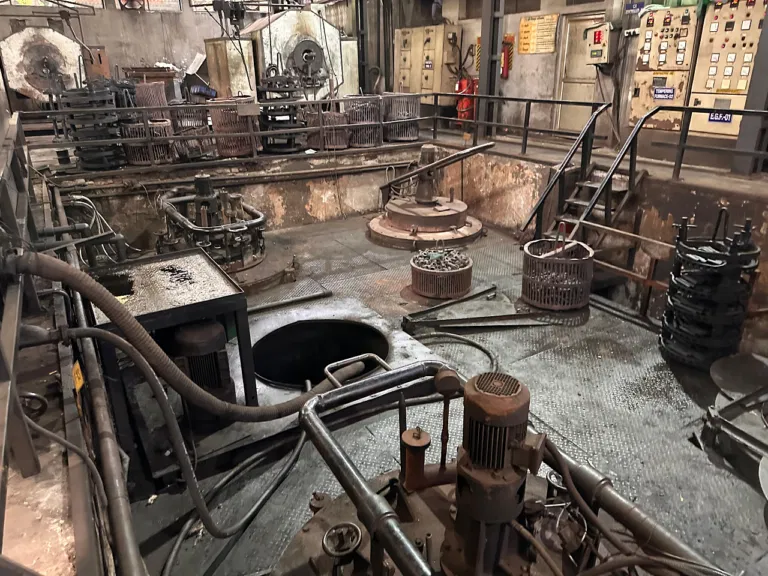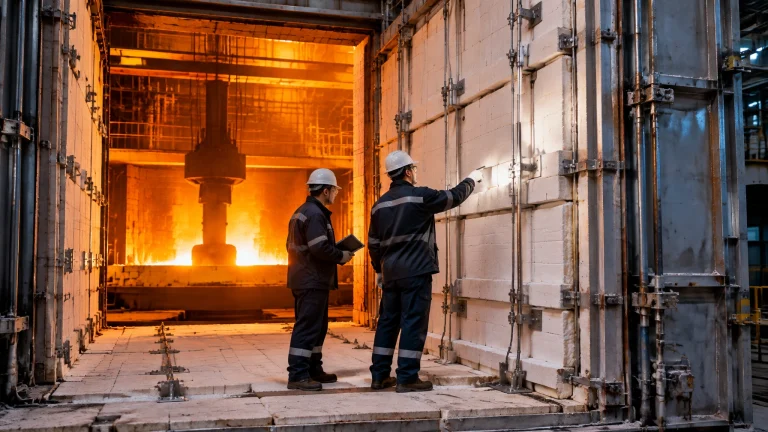
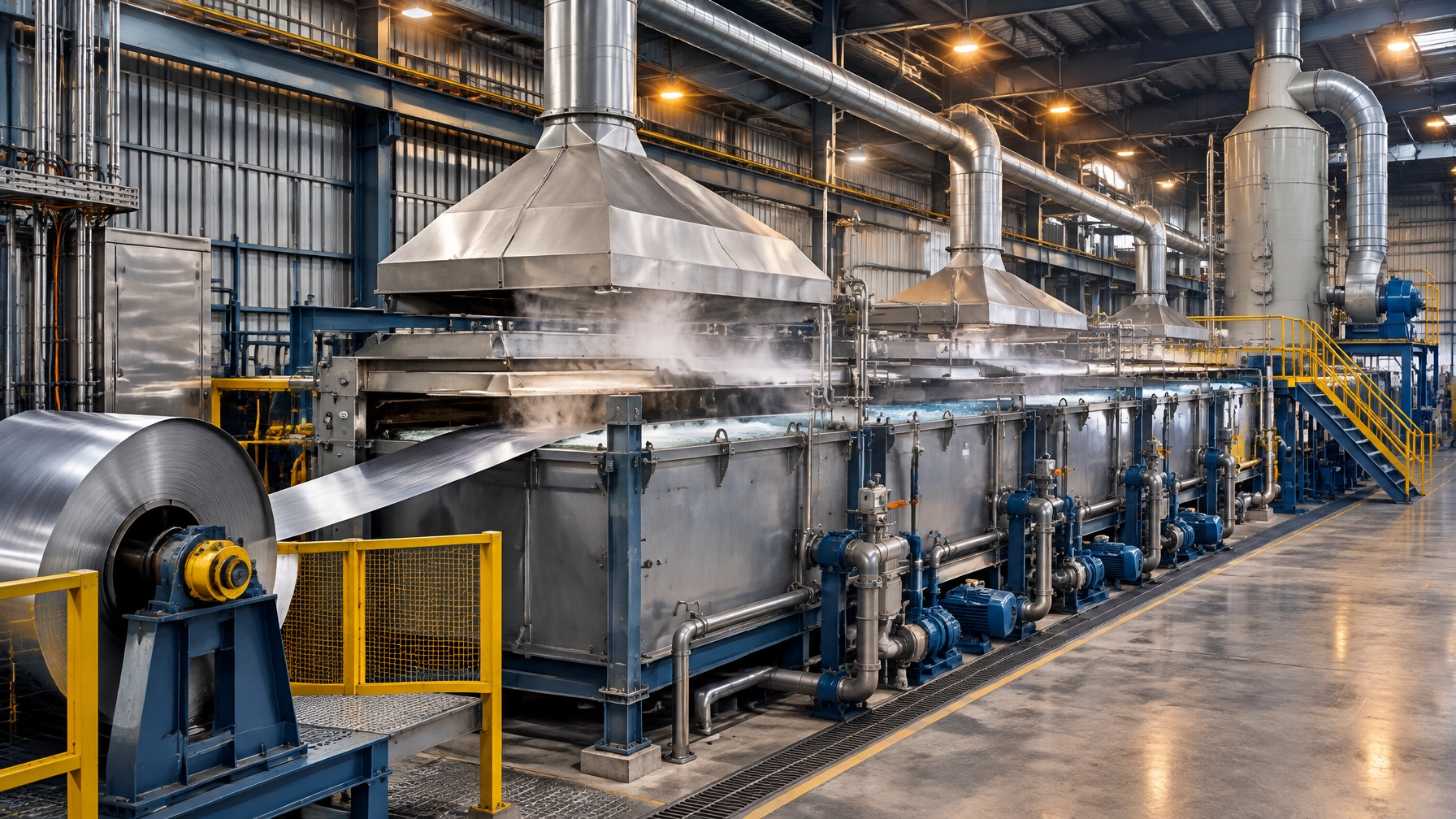
In this Industrial Insights (Afternoon Edition) for Saturday, 10 October 2026, we examine pickling as an upstream quality gate, not simply an acid bath. Surface condition leaving the line directly affects coating adhesion, wire-drawing performance, yield and downstream rework. For a steel rolling mill, wire and cable industry operation or hot dip galvanizing plant, consistent descaling depends on controlling chemistry, temperature, exposure time, rinsing and maintenance as one integrated process.
The benchmarks below are engineering reference points, not universal recipes. Steel grade, scale condition, line arrangement, customer specification and local permit determine the operating window.
Key takeaways
- Control free acid, dissolved iron, temperature and exposure time together; a single acid-concentration setpoint does not ensure consistent pickling.
- Counter-current rinsing, drag-out control and acid recovery can reduce water, acid make-up and effluent loads.
- Protect high-carbon and spring wire from over-pickling and hydrogen uptake through grade-specific trials and validated contact time.
- Measure whole-plant performance in kg acid/t, m³ water/t, surface quality, metal loss and unplanned downtime.
Pickling performance begins with process control
Hydrochloric-acid systems for carbon steel use a broad operating envelope. Published process examples span roughly 20–160 g/L free HCl, with bath temperatures dependent on line design and product; hot-strip studies and operating examples report approximately 80–95°C. These figures are reference ranges, not instructions to use the hottest or strongest bath. Increasing temperature may accelerate descaling while also increasing acid mist and attack on exposed steel.
Dissolved iron, principally Fe²⁺ in working baths, builds as scale dissolves. As the bath ages, free acid and iron concentration change together, affecting pickling rate and acid use. A robust control plan should track, by tank:
- Free HCl (g/L), total iron and, where practical, Fe²⁺/Fe³⁺
- Bath temperature (°C), strip or rod speed, and effective immersion time
- Scale condition, inhibitor dosage, bath circulation and carry-over
- Make-up acid (kg/t), spent-acid flow and surface-quality results
In staged systems, tanks can be operated at different strengths rather than repeatedly discarding a bath when the chemistry drifts. The correct control strategy is grade- and process-specific.
Line speed must follow validated dwell time
For continuous lines, determine speed from effective acid-zone length ÷ validated contact time. A published wire-pickling apparatus describes contact times of approximately 5–20 seconds, with 10–15 seconds as a preferred reference in that specific process. At a 20 m effective acid path, 10–15 seconds corresponds to a calculated 80–120 m/min. This is a sizing example, not a production guarantee: scale loading, rod diameter, acid condition and metallurgy can change the required exposure.
Chemical pickling and mechanical descaling: choose for the surface and the next process
Mechanical pre-descaling can crack or remove heavy scale before acid treatment, lowering the chemical burden. It does not always replace chemical pickling, especially when a uniform, clean surface is required across complex geometries or for subsequent drawing and coating.
| Consideration | Mechanical descaling | Chemical pickling |
|---|---|---|
| Main action | Bending, brushing, sanding or shot blasting loosens/removes scale | Acid dissolves scale and oxides |
| Surface access | Depends on tool contact and part geometry | Can reach exposed surfaces where solution flows |
| Process risks | Embedded abrasive, uneven treatment, dust and media handling | Over-pickling, acid carry-over, fumes and hydrogen uptake |
| Downstream fit | Useful pre-treatment for heavy scale; finish may require follow-up | Can support a clean, consistent substrate when properly controlled |
| Waste streams | Spent media and separated scale; recyclable media may be used | Spent acid, rinse water and scrubber streams require recovery or treatment |
The EU Ferrous Metals Processing BAT conclusions specifically identify mechanical pre-descaling as a technique to reduce the need for pickling, alongside optimisation of bath chemistry and exposure time. For a steel rolling mill, combining methods can be more efficient than asking acid to remove every scale condition on its own.
Rinse-water reduction, acid recovery and heat integration
Cascade rinsing and water balance
In reverse-cascade rinsing, steel moves from the most contaminated rinse to the cleanest, while water flows in the opposite direction. Squeeze rolls, sufficient drain time and controlled spray flow limit acid drag-out. Conductivity monitoring at the final rinse can help identify when fresh-water addition is needed.
The EU BAT-associated water-consumption ranges are 0.5–5 m³/t (500–5,000 L/t) for hot rolling, wire drawing and hot-dip coating, and 0.5–10 m³/t for cold rolling. These are sector-level annual plant benchmarks, not rinse-only allowances. Meter the pickling line separately before setting water-reduction targets. Reuse rinse water where chemistry and product quality permit; it may also support acid recovery.
Acid recovery and heat recovery
Available recovery routes depend on acid chemistry, iron loading, scale and plant economics:
- Hydrochloric acid: spray roasting or fluidised-bed regeneration recovers acid and produces iron oxide.
- Sulphuric acid: crystallisation can recover acid through ferric-sulphate processing.
- Mixed acids: evaporation, ion exchange or diffusion dialysis may be suitable, subject to feed quality and recovery performance.
The EU BAT conclusions call for spent-acid recovery; they do not treat simple neutralisation as BAT for the covered processes. Supplier-published spray-roasting data report approximately 99.5% HCl recycling efficiency in some systems. Treat that as a supplier benchmark, not a guaranteed plant-wide result; include availability, losses, energy, scrubber performance and by-product quality in the business case.
Heat integration can include recovered heat for acid heating, rinse-water preheating or other compatible plant loads. The EU BAT conclusions specify indirect acid heating with corrosion-resistant heat exchangers or submerged combustion, and advise against direct steam injection. Fume-scrubber heat recovery must be engineered around corrosion, contamination, temperature limits and a reliable heat sink.
Surface quality, galvanizing and wire drawing
A clean and adequately rinsed surface is an essential input to reliable coating. Residual scale or acid carry-over can contribute to inconsistent surface preparation, while excess iron carried into later stages can burden flux chemistry and increase residue formation. Requirements vary by product and line; confirm the relevant specification for the actual coating route. For fabricated articles, consult ISO 1461:2022 and, where specified by contract, ASTM A123/A123M-24. Their scope is not identical, and neither should be applied automatically to continuously galvanized sheet or wire.
For high-carbon and spring-steel wire, the process window is especially important. Once scale is removed, acid can attack the steel and generate hydrogen; excessive exposure can increase metal loss, surface roughness and hydrogen-embrittlement risk. Qualify each grade and scale condition with trials. Measure residual scale, mass loss, surface finish and relevant mechanical or hydrogen indicators. As a project-set trial guardrail, not a universal standard, a plant might investigate a mass-loss limit such as ≤0.1% per pass, then validate whether that threshold suits the product specification and measurement method. Do not transfer low-carbon-strip recipes directly to spring wire.
Maintenance, fume control and effluent compliance
Maintenance protects both process capability and production continuity. Include these checks in planned work:
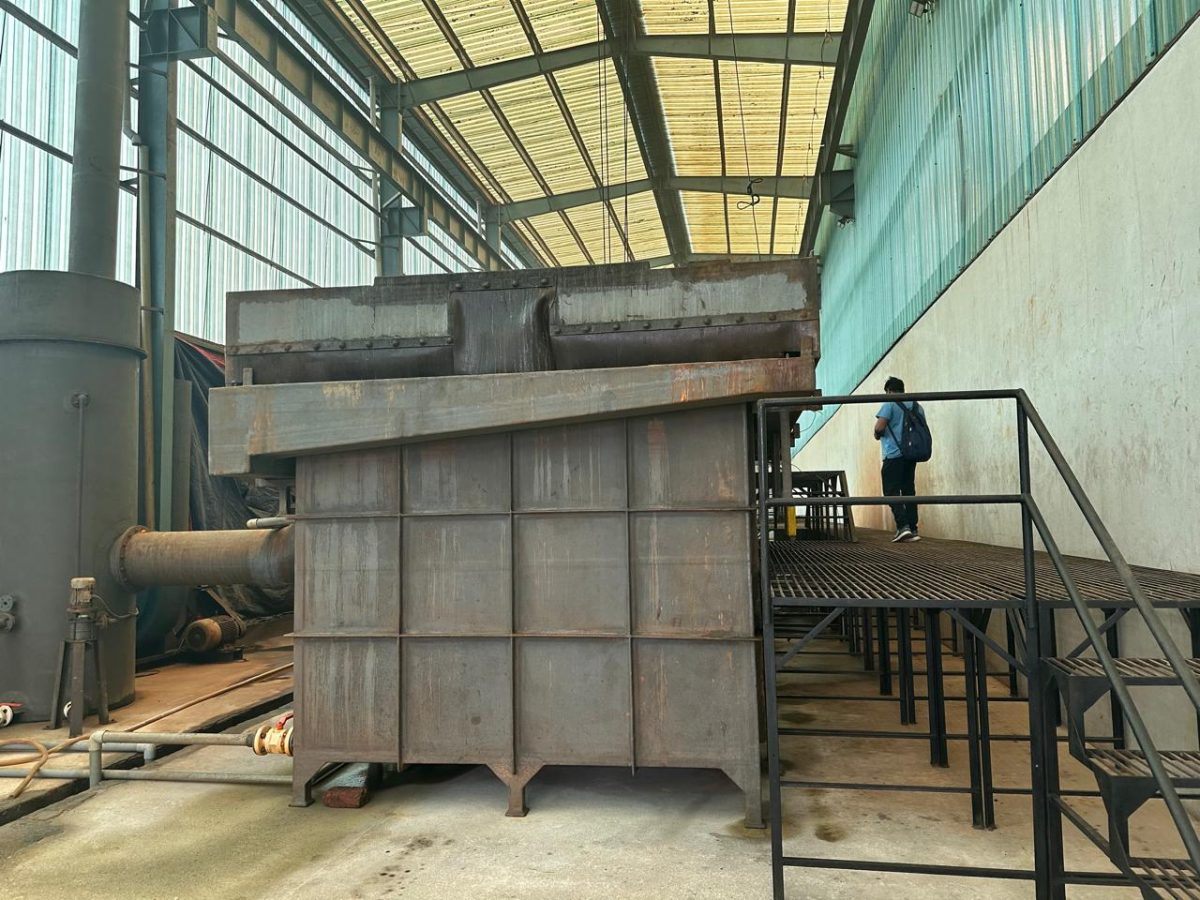
- Inspect acid-proof rubber linings, joints and tank interfaces for blistering, cracks, debonding and leaks.
- Trend heat-exchanger approach temperature and inspect for fouling, corrosion, leaks and declining duty.
- Check pump seals, valves, spray headers, squeeze rolls, fans, ducts, scrubber packing and demisters.
- Verify extraction balance and keep lids, enclosures and capture points functional.
- Maintain calibrated sensors for acid concentration, temperature, conductivity and line speed.
The EU BAT framework identifies closed tanks or hooded batch tanks, fume extraction, wet scrubbing and demisting as techniques for reducing pickling emissions. Its HCl air BAT-AEL for relevant continuous pickling operations is <2–10 mg/Nm³; the precise permit condition and measurement basis must be checked for the site. This is an air-emission value, not a wastewater limit. For direct discharge, the same EU decision gives BAT-AEL ranges including 5–30 mg/L TSS and 1–5 mg/L iron where applicable. Local permits and discharge routes govern actual requirements.
Modernisation comparison: a screening view
| Metric | Traditional batch / non-regenerative arrangement | Modern continuous / recovery-focused design |
|---|---|---|
| Acid use | Frequent fresh-acid additions; consumption depends on steel, scale and bath practice | Controlled replenishment and recovery can reduce net make-up; supplier guidance for low-carbon strip reports 0.5–1 kg HCl/t with regeneration versus 18–30 kg/t without |
| Labour | More manual sampling, handling and bath interventions | Automation can standardise monitoring and alarms; staffing depends on plant design |
| Water use | Often higher where rinsing is single-stage or poorly controlled | Counter-current rinsing and reuse reduce demand; establish a measured site baseline |
| Effluent load | Greater spent acid and rinse-water burden where streams are not segregated | Recovery and segregation reduce waste volumes, but treatment and residuals remain |
| ROI | Depends on operating hours, acid and water costs, disposal and product losses | Calculate from measured site data; no payback period is universal |
The acid figures are published supplier guideline values for a specific low-carbon-strip context, not an independently assured comparison for every plant. The project financial model should include energy, labour, uptime, consumables, emissions control, residue value and compliance risk.
Four-phase implementation roadmap
- Phase 1: Assessment. Establish a baseline by grade and product: acid and iron analyses, temperature, speed, exposure, rinse-water flow, surface rejects, metal loss and effluent loads.
- Phase 2: Design. Define process windows, tank staging, cascade-rinse capacity, recovery route, fume extraction, heat integration, materials of construction, automation and permit basis.
- Phase 3: Commissioning. Validate instrumentation, safety interlocks, chemistry control, rinse quality and emissions systems. Trial representative steel grades and record line-speed, surface and loss results.
- Phase 4: Optimization and lifecycle. Trend KPIs monthly, inspect linings and exchangers on condition, review acid and water balances, and update maintenance plans based on failures and performance data.
Build a surface-preparation system around the entire line
Pickling performs best when it is engineered alongside the downstream process, not isolated from galvanizing, drawing, heat treatment or the wider plant. Continental Furnaces has more than 35 years of experience as an industrial furnace manufacturer, providing customized thermal processing equipment and industrial furnace systems. Explore our pickling plants, hot dip galvanizing plants and heat treatment furnaces. Our broader portfolio includes furnace spare parts, a metal recycling furnace and an aluminum melting furnace as well as a melting furnace for steel.
Consult Continental Furnaces engineers to assess your line, define measurable improvement targets and develop a lifecycle-focused surface-preparation solution. Start a project discussion through our request-for-a-quote page and take the next step toward sustained competitive advantage.