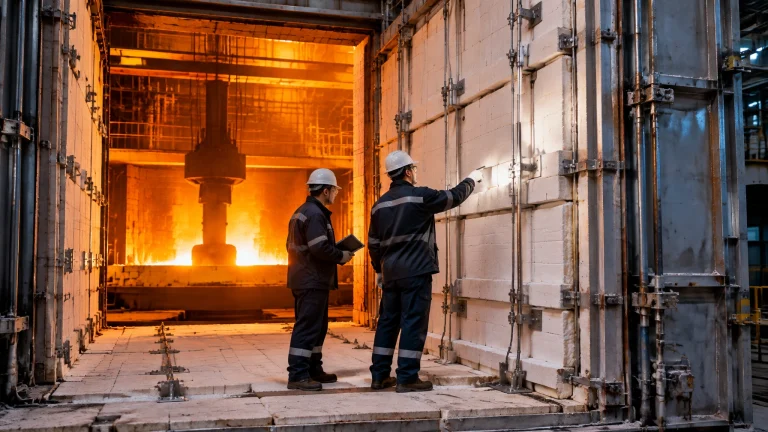

Welcome to the Continental Furnaces Industrial Insights (Morning Edition)
As global industrial manufacturing enters a pivotal phase of digital transformation and stringent decarbonization mandates, decision-makers across heavy industry face unprecedented strategic choices. In 2026, the intersection of energy economics, environmental compliance, and technological innovation has placed thermal processing equipment under the corporate microscope. For leaders in steelmaking, rolling mills, automotive components, and wire manufacturing, operational profitability is no longer determined solely by raw output volume: it hinges on absolute thermal efficiency, precise metallurgical control, and lifecycle sustainability.
As a leading industrial furnace manufacturer with over 35 years of engineering excellence, Continental Furnaces examines the macro trends shaping the global steel and thermal processing sectors, detailing how advanced engineering empowers industrial plants to slash energy consumption, minimize downtime, and secure enduring competitive advantage.
1. The 2026 Macro Landscape: Steel Manufacturing and Thermal Processing
The global steel industry in 2026 is navigating a complex dual reality. While traditional Blast Furnace–Basic Oxygen Furnace (BF-BOF) routes still account for approximately 66% of global capacity, the relentless push toward lower-carbon operations has accelerated investments in Electric Arc Furnaces (EAFs), direct reduced iron (DRI) integration, and advanced furnace retrofits.
Key macroeconomic and technological benchmarks defining the sector this year include:
- EAF Expansion: Global EAF capacity has climbed to roughly 34% of operating capacity, representing over 71% of newly initiated greenfield steel projects [1, 7].
- Thermal Efficiency Imperatives: Rising energy tariffs and carbon pricing mechanisms make energy optimization paramount. Modern upgrades can cut thermal energy intensity by up to 20% in standard processing loops.
- Digitalization and AI Integration: Over 85% of major steel producers now incorporate predictive analytics and AI-driven thermal profiling to govern furnace cycles, eliminate hot spots, and stabilize metallurgy.

2. Optimizing the Steel Rolling Mill and Heat Treatment Ecosystem
For facilities operating a steel rolling mill, thermal uniformity is the bedrock of product quality. Whether processing carbon steels, alloy steels, or specialized wire rods, inconsistencies in heating lead to microstructural defects, scale formation, and unacceptable yield losses.
The Role of Advanced Continuous and Batch Systems
Modern manufacturing facilities increasingly rely on continuous and batch heat treatment furnaces equipped with high-efficiency burners, regenerative heat recovery systems, and precise multi-zone temperature control.
- Optimized Soaking Times: Precise thermal profiling ensures uniform grain structure throughout heavy cross-sections.
- Advanced Atmospheres: Gas carburizing and nitriding systems create superior surface hardness without compromising core ductility.
- Continuous Feeding Mechanisms: Automated roller hearths and continuous furnace lines eliminate bottlenecks, driving throughput higher while minimizing thermal shock.
Key Takeaway: Upgrading legacy thermal processing lines with modern automated combustion controls and high-emissivity refractory linings typically yields fuel savings between 15% and 28%, delivering a rapid return on investment.

3. Comparative Performance: Modern vs. Legacy Industrial Furnace Systems
To understand the financial and operational impact of upgrading thermal infrastructure, plant directors must evaluate performance metrics across traditional setups versus state-of-the-art engineering solutions.
| Performance Metric | Legacy Industrial Furnaces (Pre-2015) | Modern High-Efficiency Furnace Systems (2026 Standard) | Strategic Advantage |
|---|---|---|---|
| Thermal Efficiency | 45% – 55% | 75% – 88% via waste heat recovery | Significant reduction in fuel consumption and operating expenditure. |
| Temperature Uniformity | ±15°C across working zone | ±3°C via multi-zone PID & AI control | Eliminates metallurgical defects and scrap rates. |
| Emissions Profile | High NOx and CO₂ intensity | Low NOx burners + optional hydrogen/NG readiness | Full compliance with stringent environmental regulations. |
| Downtime & Maintenance | Frequent refractory spalling & burner failure | Modular refractory blocks + predictive IoT monitoring | Maximizes asset availability and operational uptime. |
| Automation Level | Manual dampers & basic relay panels | Fully integrated SCADA, PLC, and telemetry | Reduced labor requirements and human error. |
4. Expanding Horizons: Melting, Recycling, and Specialized Plant Engineering
Beyond primary steelmaking and rolling mills, diverse industrial sectors depend on specialized thermal solutions to process ferrous, non-ferrous, and coated metals.
Ferrous and Non-Ferrous Melting
Efficient scrap recycling is vital for sustainable manufacturing. Deploying a high-performance melting furnace for steel or a dedicated metal recycling furnace enables foundries to transform low-cost scrap into premium-grade molten metal with minimal slag loss. For non-ferrous operations, advanced aluminum melting furnace designs incorporate tilt mechanisms and dual-chamber configurations to prevent dross formation and maximize metal recovery rates.
Surface Treatment and Wire Processing
Corrosion protection and surface finishing remain critical across construction, automotive, and infrastructure sectors.
- Hot Dip Galvanizing Plants: Advanced hot dip galvanizing plant installations utilize cascade rinsing, precise zinc bath temperature regulation, and fume extraction hoods to deliver uniform zinc coatings with exceptional adhesion.
- Wire and Cable Industry: Specialized vertical and bell-type annealing furnaces ensure that copper and steel wire strands achieve optimal elongation and tensile strength required by the demanding wire and cable industry.

5. Strategic Roadmap for Industrial Decision-Makers in 2026
Implementing a successful thermal upgrade requires a structured, multi-phase project management approach. Continental Furnaces recommends the following strategic roadmap:
Phase 1: Comprehensive Thermal Audit and Energy Assessment
- Conduct a full infrared thermography audit on existing furnaces to identify shell heat loss, refractory degradation, and flue gas waste heat.
- Benchmark current fuel consumption per ton of finished product against industry best practices.
Phase 2: Engineering Customization and Technology Selection
- Partner with an experienced industrial furnace manufacturer to design custom thermal processing equipment tailored to your specific feedstock, footprint, and metallurgy.
- Specify high-grade insulation materials and waste heat recovery recuperators to capture exhaust thermal energy for preheating combustion air.
Phase 3: Seamless Integration and Lifecycle Support
- Schedule installation during planned maintenance windows to eliminate unplanned downtime.
- Establish a proactive maintenance protocol utilizing OEM-certified furnace spare parts (such as heating elements, radiant tubes, and thermocouples) to ensure long-term operational reliability.

6. Securing Sustained Competitive Advantage
As global markets demand higher product quality, stricter regulatory compliance, and lower carbon footprints, outdated thermal equipment represents an unsustainable drain on profitability. Modernizing your industrial furnace systems is not merely a capital expense: it is a strategic investment in operational resilience and market leadership.
At Continental Furnaces, we combine 35+ years of engineering mastery with cutting-edge, energy-efficient technology to deliver bespoke thermal processing solutions for global manufacturers. From high-capacity steel rolling mill installations to precision heat treatment furnaces and advanced recycling projects, our enduring partnership model ensures your plant operates at peak performance.
Ready to future-proof your thermal processing operations? Contact Continental Furnaces today to schedule a comprehensive energy audit and discover how our custom-engineered solutions can elevate your yield, reduce your operating costs, and secure your competitive edge in 2026 and beyond.