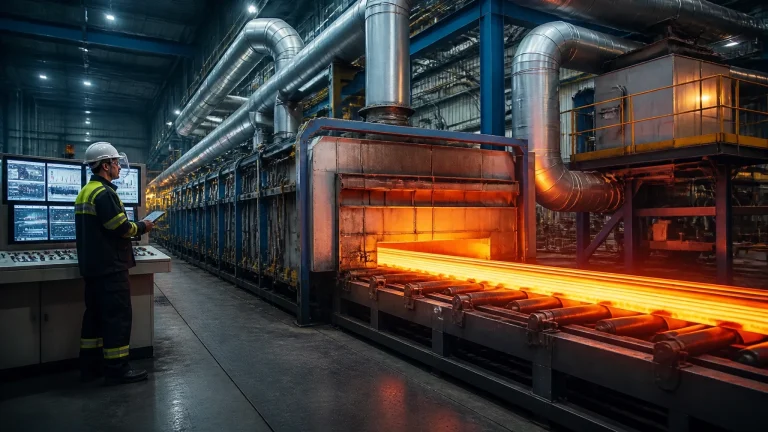
In the high-stakes world of non-ferrous metallurgy, thermal efficiency is no longer a luxury: it is the bedrock of competitive survival. For over 35 years, Continental Furnaces has stood at the intersection of engineering excellence and industrial pragmatism, helping global manufacturers transition from legacy hardware to high-performance industrial furnace systems.
Aluminum melting is an energy-intensive process where even a 5% deviation in efficiency can translate into six-figure losses annually. This guide serves as a technical roadmap for plant managers and executive leadership to optimize their melting operations, reduce specific energy consumption (SEC), and leverage modern thermal processing equipment for sustained market leadership.
The Economics of Thermal Performance
The manufacturing sector recognizes that process heating accounts for approximately 61% of on-site energy use. Within this, the aluminum melting furnace is often the largest consumer. Modern benchmarks for best-in-class performance are now reaching specific energy consumption rates as low as 0.20–0.25 kWh/lb for advanced fuel-fired systems.
To achieve these metrics, a holistic approach to furnace design and operation is required. At Continental Furnaces, we view the furnace not as a standalone unit, but as a critical node in your production ecosystem, impacting everything from your steel rolling mill throughput to the quality of your finished wire and cable products.
Phase 1: Technological Foundations of Efficiency
The hardware configuration of your furnace dictates its theoretical efficiency ceiling. Upgrading these core components is the first step in a professional modernization roadmap.
1. High-Velocity & Regenerative Burners
Traditional burners often result in uneven heat distribution and excessive flue gas waste. Modern heat treatment furnaces and melting units now utilize regenerative burners. These systems recover heat from the exhaust to preheat combustion air, often reaching thermal efficiencies of 80% or higher: a quantum leap over the 30-40% seen in legacy equipment.
2. Advanced Refractory and Insulation
The "thermal envelope" is your primary defense against radiant heat loss. Continental Furnaces employs ISO-certified, high-density refractory linings that minimize wall and roof losses.
- Key Benchmark: Reducing external shell temperatures by just 10°C can improve overall fuel economy by up to 2%.
- Actionable Advice: Audit your furnace for "hot spots" using infrared thermography to identify insulation failures.

Phase 2: Comparing Modern vs. Traditional Systems
Objectivity is the hallmark of a seasoned consultant. When evaluating your next capital expenditure for a melting furnace for steel or aluminum, consider the following empirical data.
| Feature | Traditional Reverberatory Furnace | Modern High-Efficiency Furnace | Competitive Advantage |
|---|---|---|---|
| Thermal Efficiency | 25% – 35% | 75% – 85% | 100%+ improvement |
| Specific Energy Consumption | 1,800 – 2,200 Btu/lb | 1,100 – 1,300 Btu/lb | 40% lower fuel cost |
| Melt Loss (Oxidation) | 3% – 5% | < 1% | Increased metal yield |
| Maintenance Cycle | Frequent patch repairs | Scheduled modular maintenance | 98% uptime |
| ROI Period | N/A | 14 – 22 Months | Rapid capital recovery |
Phase 3: The Operational Roadmap to Optimization
Even the most advanced industrial aluminum melting furnace requires precise operational protocols to maintain its performance envelope.
Step 1: Combustion Tuning and O2 Control
Maintaining the optimal air-fuel ratio is critical. Excess air carries heat out of the stack, while insufficient air leads to incomplete combustion and hazardous emissions. Utilizing centralized control decks with real-time flue-gas monitoring allows for auto-tuning of burners, ensuring peak efficiency across varying load conditions.

Step 2: Strategic Charge Preparation
Charging cold or wet scrap into a melt significantly increases the energy required for phase change. Implementing a metal recycling furnace strategy that includes scrap pre-heating using waste flue gases can reduce melting times by 15-20%.
Step 3: Minimizing Aperture Losses
Every second a furnace door is open, you are losing energy. Modern automated charging systems and tight-sealing vertical doors are essential for maintaining internal pressure and temperature stability. This is particularly vital in high-precision environments like a hot dip galvanizing plant.
Phase 4: Maintenance and Lifecycle Value
An industrial furnace is a 20-year investment. At Continental Furnaces, we emphasize the importance of using genuine furnace spare parts to ensure the integrity of the original engineering.
Proactive Maintenance Schedule:
- Daily: Visual inspection of burners and seals.
- Weekly: Calibration of temperature sensors and O2 trim.
- Monthly: Integrity check of refractory linings and hydraulic systems.
- Annually: Full thermal audit and combustion system overhaul.
Maintaining a stock of critical accessories: such as crucibles, nozzles, and gaskets: is essential to minimize downtime and ensure your facility remains a high-reliability operation.

The Future: Industry 4.0 and Sustainability
The transition toward Industry 4.0 is integrating IoT sensors directly into the furnace architecture. Predictive analytics can now forecast refractory failure or burner inefficiency weeks before they occur. Furthermore, as global regulations tighten around carbon emissions, high-efficiency furnaces become the primary tool for achieving Regulatory Compliance and sustainability targets.
Whether you are operating a steel rolling mill or a specialized wire manufacturing facility, the move toward sustainable thermal solutions is an essential strategic pivot.

Conclusion: Securing Your Competitive Advantage
Efficiency in aluminum melting is not merely a technical metric; it is a direct driver of profitability and yield. By integrating advanced combustion technology, superior insulation, and data-driven operational practices, manufacturers can achieve a quantum leap in performance.
At Continental Furnaces, we don't just manufacture equipment; we forge enduring partnerships. Our decades of technical wisdom and commitment to customer-centric engineering ensure that your facility is equipped for the challenges of tomorrow.
Take the first step toward optimized thermal processing. Contact our engineering team today for a comprehensive assessment of your furnace efficiency and a customized roadmap for modernization.