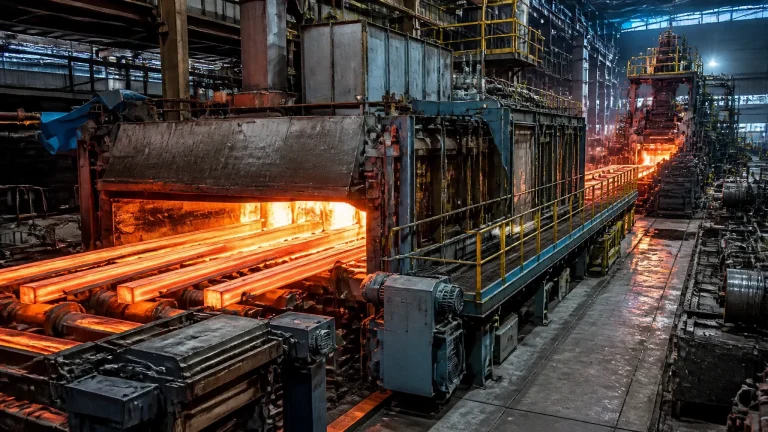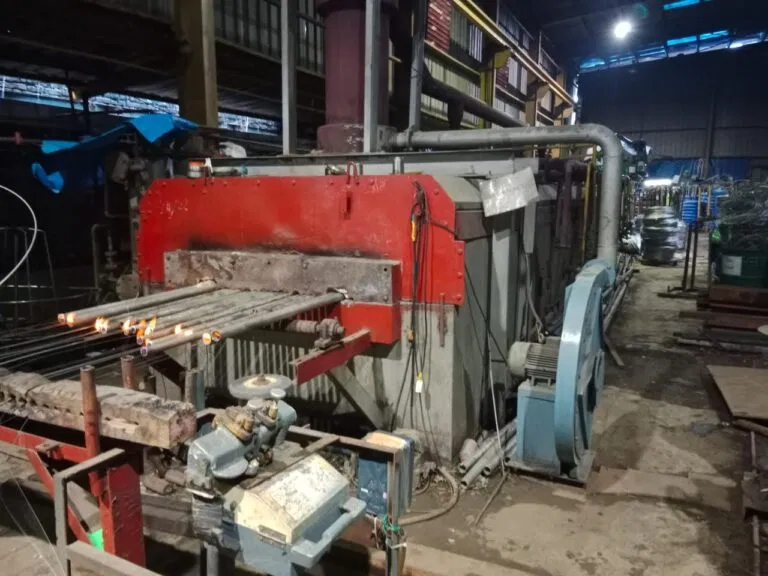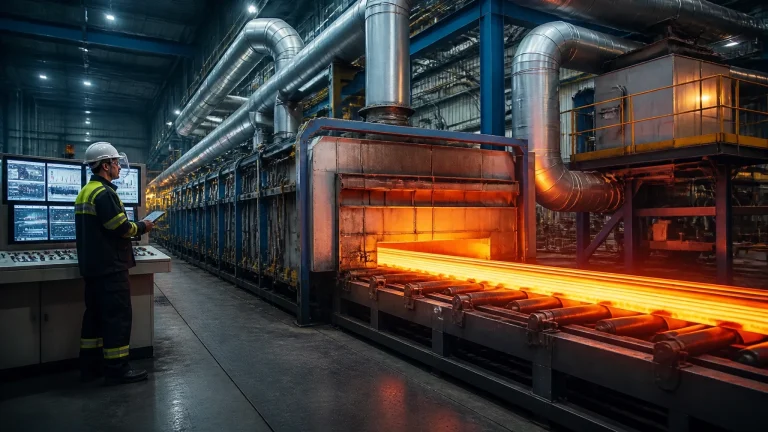
In the high-stakes world of thermal processing, the margin between a high-yield production run and a costly batch of scrap is razor-thin. For over 35 years, Continental Furnaces has served as a strategic consultant and industrial furnace manufacturer, observing a recurring pattern: even the most sophisticated facilities often fall prey to subtle operational oversights.
Whether you are managing a steel rolling mill, an aluminum melting furnace, or a complex hot dip galvanizing plant, your furnace is not merely a box of heat: it is a precision instrument. Failure to treat it as such leads to inconsistent metallurgical properties, excessive energy consumption, and diminished profitability.
Below, we outline the seven most critical mistakes currently impacting your yield and provide the technical roadmaps to resolve them.
1. Neglecting Temperature Uniformity Surveys (TUS)
Many operators assume that if the control panel reads 900°C, every square inch of the furnace interior is at 900°C. This is a dangerous fallacy. Over time, burner misalignment, sagging heating elements, or degraded insulation create "cold spots" that result in non-uniform hardness and metallurgical rejects.
The Fix: Rigorous Calibration
To maintain a sustained competitive advantage, you must implement a quarterly Temperature Uniformity Survey (TUS) as per AMS2750 or equivalent standards.
- Action: Utilize a multi-point thermocouple grid to map the "work zone."
- Benchmark: Modern industrial furnace systems should maintain a uniformity of ±5°C for precision heat treatment. If your variance exceeds this, it is time for a professional audit of your airflow and burner tuning.
2. Atmospheric Anarchy: Ignoring Carbon Potential
In the wire and cable industry and steel manufacturing, the atmosphere inside your furnace is as critical as the temperature. Poor atmosphere control leads to decarburization: a "soft skin" on your steel: or excessive oxidation, which destroys surface integrity.
The Fix: Real-Time Monitoring
Do not rely on "set and forget" gas flow rates.
- Action: Integrate advanced oxygen probes and infrared gas analyzers for real-time carbon potential monitoring.
- Yield Benefit: Precise control eliminates the need for post-process grinding or chemical cleaning, directly increasing your usable output.

3. The "Efficiency Trap" of Load Density
In an effort to maximize throughput, many facilities overload their heat treatment furnaces. While this appears efficient on a spreadsheet, it prevents proper heat penetration to the core of the parts, leading to "mixed batches" where the outer parts are over-soaked and the inner parts are under-treated.
The Fix: Qualified Loading Patterns
- Strategic Advice: Develop and document "qualified load patterns" that ensure a minimum of 25% open space for convective airflow.
- The Math: It is more profitable to run two batches at 98% yield than one "maximized" batch at 85% yield.
4. Inadequate Quench System Maintenance
A furnace is only half of the heat treatment equation; the quench is where the metallurgy is "frozen" into place. Using a single quench oil for all alloys or neglecting the agitation systems leads to distortion, cracking, and soft spots.
The Fix: Quench Parameter Control
- Phase 1: Medium Analysis: Regularly test your quench medium for viscosity shifts and water contamination.
- Phase 2: Agitation Optimization: Ensure that pumps and agitators are functioning at peak capacity. For melting furnaces for steel, the transition time from furnace to quench must be minimized to prevent premature cooling.
5. Utilizing Sub-Standard Furnace Spare Parts
When a component fails, the temptation is to source the cheapest available replacement. However, using generic furnace spare parts can compromise the integrity of your entire thermal processing equipment. Sub-par refractories or alloys with lower heat resistance will fail prematurely, causing unplanned downtime and potential safety hazards.
The Fix: OEM-Quality Components
- Requirement: Always source high-grade alloys (such as 310 or 800H) for internal components.
- Partnership: As a leading industrial furnace manufacturer, Continental Furnaces provides precision-engineered spares that are ISO-certified, ensuring your equipment operates at its designed efficiency.

6. Ignoring Refractory and Insulation Health
Heat loss is the silent killer of profitability. Cracked bricks, thinning ceramic fibers, and worn door seals force your burners to work harder, driving up fuel consumption and creating temperature gradients.
The Fix: Thermal Imaging Audits
- Phase 1: Inspection: Conduct a thermographic scan of the furnace shell during a high-heat cycle.
- Phase 2: Intervention: Replace degraded insulation with modern, high-density ceramic fiber modules.
- ROI: Improving insulation can reduce fuel consumption by 15-20%, often paying for the repair within six months.
7. Lack of Standardized Operational Procedures (SOPs)
Process drift occurs when different operators "tweak" the furnace settings based on intuition rather than data. This inconsistency is the primary driver of batch-to-batch variability.
The Fix: Digital Recipe Management
- Action: Transition from manual logs to a digital control system that locks in specific recipes for each material grade.
- Guidance: View your furnace operation as a repeatable scientific process. Documentation is not a bureaucratic hurdle; it is your best defense against quality failures.
Comparative Analysis: Modern vs. Traditional Thermal Processing
| Metric | Traditional Furnace (Legacy) | Continental Furnaces (Industry 4.0) | Competitive Advantage |
|---|---|---|---|
| Fuel Efficiency | High (Baseline) | 25% Reduction via Recuperation | Lower OpEx |
| Temp. Uniformity | ±15°C | ±5°C (TUS Certified) | Higher Yield |
| Automation | Manual Control | PLC-Integrated Smart Recipes | Reduced Human Error |
| Maintenance | Reactive (Run-to-Failure) | Predictive (Sensor-Driven) | 40% Less Downtime |
| Compliance | Minimal | ISO/AMS2750 Standard | Global Market Access |
The Roadmap to Optimization
For facilities looking to transition from "surviving" to "thriving," we recommend a three-phase optimization strategy:
Phase 1: The Thermal Audit
Conduct a comprehensive assessment of your current equipment, including a TUS and a thermal imaging scan. Identify the "leaks": both in heat and in process logic.
Phase 2: System Retrofitting
Upgrade critical furnace spare parts and control systems. This often involves installing high-efficiency burners and automated atmosphere controls. This is particularly vital for metal recycling furnaces and zinc melting furnaces where material loss can be significant.
Phase 3: Continuous Monitoring
Implement a data-logging system that tracks every cycle. Use this data to identify trends and predict maintenance needs before a failure occurs.

Conclusion: A Strategic Partnership for Progress
Achieving a quantum leap in furnace yield requires more than just better hardware; it requires a shift in operational philosophy. At Continental Furnaces, we don't just sell machinery: we provide the technical wisdom and engineering support to ensure your facility remains a leader in the global market.
From steel rolling mills to specialized pickling plants, our goal is to eliminate the variables that lead to waste. By addressing these seven common mistakes, you can significantly improve your yield, reduce your carbon footprint, and secure a sustained competitive advantage.
Are you ready to audit your thermal efficiency? Contact our engineering team today for a professional consultation and discover how our state-of-the-art industrial furnace systems can transform your production floor.