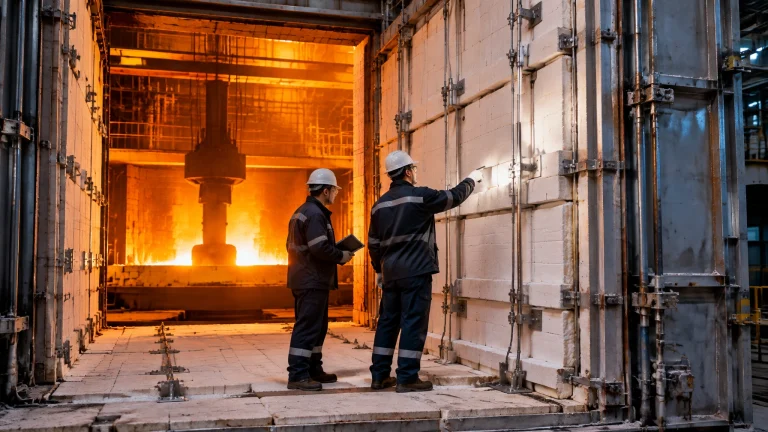
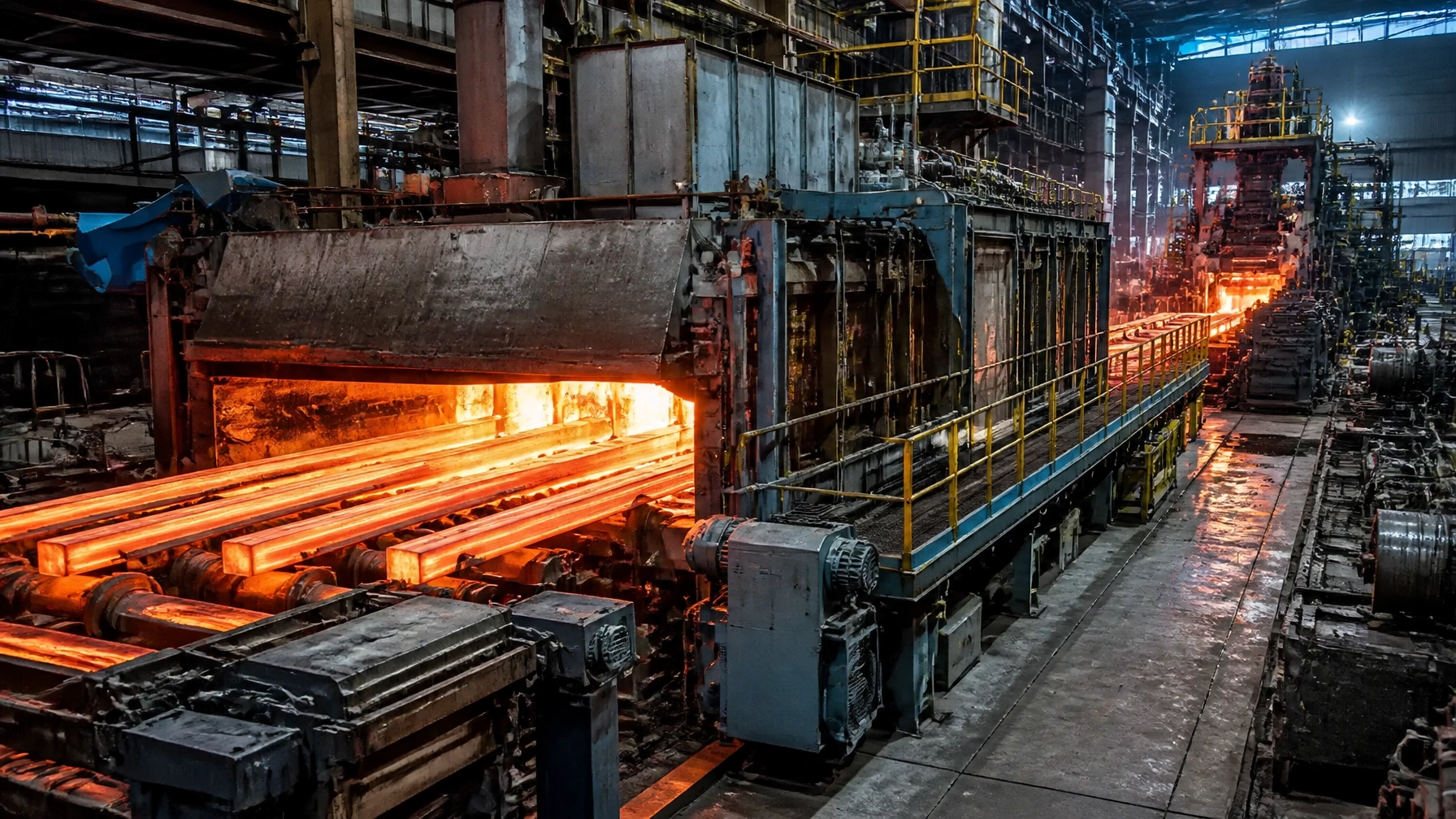
The 2026 imperative: reduce GJ/t without compromising yield
For every modern steel rolling mill, energy intensity is now a board-level performance indicator. Fuel consumption affects conversion cost, carbon exposure, product yield, regulatory compliance, and long-term competitiveness.
The global steel industry has reduced energy consumption from approximately 50 GJ/t in the 1960s to 20.95 GJ/t in 2024, according to worldsteel. The next gains will come from process integration rather than isolated equipment upgrades.
In the rolling department, a practical 2026 planning range is:
- Typical hot rolling energy intensity: 1.8–2.5 GJ/t
- Competitive modern target: 1.6–1.8 GJ/t
- World-class integrated performance: approximately 1.3–1.6 GJ/t
- Reheating furnace contribution: commonly 1.0–2.0 GJ/t
The largest opportunity is straightforward: do not cool steel that must later be reheated.
Hot charging and direct rolling: recover the value of sensible heat
What hot charging achieves
Hot charging transfers slabs, blooms, or billets from the caster to the reheating furnace while they remain at elevated temperature. Instead of raising steel from ambient conditions, the furnace supplies only the additional heat required to reach the rolling temperature.
Depending on steel grade, section size, transfer distance, and production scheduling, hot-charged material may enter the furnace at approximately 600–1,000°C. The reheating system then brings the material to a controlled discharge range commonly between 1,100 and 1,250°C, subject to metallurgical requirements.
The energy benefit is significant:
- Every 100°C increase in charging temperature reduces the furnace duty.
- A well-integrated hot-charging programme can reduce reheating fuel demand by approximately 15–30%.
- Avoiding unnecessary cooling can save approximately 0.3–1.0 GJ/t across the furnace and rolling route.
- Scale formation and reheating-related oxidation can also be reduced, improving saleable yield.
What direct rolling adds
Direct rolling goes further. The continuously cast product is transferred to the rolling mill with minimal intermediate storage and, in some configurations, without conventional reheating. A short equalization furnace, tunnel furnace, or induction unit may be used to correct temperature variation rather than reheating the entire product from cold.
This is a systems decision involving:
- Continuous caster and rolling mill proximity
- Caster speed and mill throughput
- Steel grade sequencing
- Billet or slab dimensions
- Transfer insulation and conveying time
- Temperature uniformity at the first rolling stand
- Contingency planning for interruptions
The U.S. EPA steel-sector technology review identifies hot charging, process control, recuperative burners, combustion-air control, and near-net-shape casting among the principal energy-efficiency measures available to steel producers.
Direct rolling is not simply a furnace modification. It is a production architecture.
Reheating efficiency: the essential supporting platform
Hot charging cannot eliminate every reheating duty. Product mix changes, caster interruptions, quality requirements, and mill availability demand a flexible furnace system. The objective is to ensure that every unit of fuel produces useful metallurgical heat.
A modern reheating furnace should be engineered around:
- Optimized zone temperature profiles
- Automated air-to-fuel ratio control
- Oxygen and furnace-pressure monitoring
- High-performance refractory and insulation systems
- Low-infiltration doors and seals
- Walking-beam or optimized hearth design
- Billet and slab temperature measurement
- Recipe-based operation for different grades and sizes
- Variable-speed drives for combustion-air fans
- Flue-gas monitoring and heat recovery
Older furnaces may lose 30–40% of input energy through exhaust gases, wall losses, skid systems, radiation, and uncontrolled air infiltration. Combustion optimization and heat recovery can reduce furnace fuel consumption by approximately 15–30% in suitable applications. Recuperative or regenerative burners alone commonly deliver 10–20% fuel savings, with higher reductions possible where the baseline furnace is poorly controlled.

Comparative view: conventional reheating versus integrated thermal processing
| Performance metric | Conventional rolling route | Hot charging/direct rolling route |
|---|---|---|
| Material charging temperature | Approximately 20–40°C | Approximately 600–1,000°C, depending on transfer |
| Reheating duty | Often 1.0–2.0 GJ/t | Reduced substantially; equalization may remain |
| Total hot-rolling intensity | Approximately 1.8–2.5 GJ/t | Target range of approximately 1.3–1.6 GJ/t |
| Fuel-saving potential | Baseline | Approximately 15–40%, depending on integration |
| Scale exposure | Higher due to longer furnace residence | Lower when residence time is reduced |
| Scheduling flexibility | Higher buffer between caster and mill | Requires tight caster–mill synchronization |
| Typical retrofit complexity | Low to medium | Medium to high |
| Indicative payback | 1–3 years for controls and burners | Often 3–6 years; highly site-specific |
These figures are engineering benchmarks, not guarantees. Actual performance depends on furnace condition, throughput, fuel price, operating hours, product mix, and the existing automation architecture.
The wider 2026 thermal-processing agenda
1. Waste heat recovery
Flue gas leaving a reheating furnace may be several hundred degrees Celsius. Recuperators and regenerative burners can preheat combustion air, while larger heat-recovery systems can support:
- Billet or scrap preheating
- Combustion-air heating
- Boiler feedwater preheating
- Process hot water
- Steam generation
- Thermal storage
A recovery project should begin with measured exhaust temperature, flow, oxygen content, pressure drop, and operating hours. Projects combining heat recovery, sealing, insulation, and controls can achieve 0.3–0.5 GJ/t savings in appropriate installations. Payback periods commonly range from 18 months to 4 years, depending on energy tariffs and utilization.
2. Combustion optimization
Excess air carries heat out of the stack. Insufficient air creates incomplete combustion, carbon monoxide, unstable flames, and quality risks. Closed-loop oxygen control, fuel-flow measurement, burner balancing, and furnace-pressure control are therefore essential.
The target is not maximum flame temperature. The target is uniform heat transfer at the lowest safe fuel input, with emissions remaining within permit limits.
3. Hydrogen-ready burners
Hydrogen-ready industrial furnace systems provide a pathway toward lower-carbon combustion, but readiness requires more than a burner replacement.
The design must address:
- Variable hydrogen blending, potentially from 0–100%
- Higher flame speed and ignition characteristics
- Gas-train sizing and pressure control
- Flame detection and safety interlocks
- Ventilation and purge logic
- NOx formation and mitigation
- Burner turndown and heat-flux distribution
Hydrogen can preserve useful heat delivery on a GJ basis, but the total decarbonization benefit depends on hydrogen supply, production method, and plant infrastructure.
4. Furnace digitalization and predictive maintenance
A connected furnace measures energy and process behaviour continuously. The most valuable data points include:
- GJ/t and kWh/t by product and shift
- Furnace-zone temperatures
- Billet discharge temperature
- Fuel flow and oxygen concentration
- Furnace pressure
- Burner status
- Fan vibration and motor current
- Refractory hot spots
- Door leakage
- Scale formation
- Unplanned stops and restart energy
A digital twin can then test “what-if” scenarios for scheduling, burner settings, charging temperature, and discharge requirements. Predictive maintenance prevents a small component failure from becoming a full reheating cycle, production stoppage, or quality rejection.
Critical furnace spare parts should include flame scanners, ignition electrodes, thermocouples, control valves, burner nozzles, PLC modules, refractory components, seals, bearings, VFD parts, and safety relays. Correct inventory planning protects uptime and reduces emergency procurement.
A phased roadmap for the modern steel rolling mill
Phase 1: Assessment and planning : 0 to 4 weeks
Establish a reliable baseline before approving capital expenditure.
Measure:
- Current GJ/t and kWh/t
- Charging and discharge temperatures
- Furnace residence time
- Fuel and electricity consumption
- Exhaust temperature and oxygen level
- Product yield and scale loss
- Downtime and restart frequency
- Existing control-system capability
Phase 2: Operational optimization : 1 to 3 months
Implement low-capital measures first:
- Correct furnace recipes
- Eliminate unnecessary holding
- Balance burners
- Reduce excess air
- Repair doors and seals
- Calibrate sensors
- Prevent furnace overloading
- Synchronize caster and rolling schedules
Energy monitoring systems can deliver payback in approximately 6–18 months when they expose avoidable operating losses.
Phase 3: Thermal retrofit : 3 to 12 months
Evaluate:
- Recuperative or regenerative burners
- Combustion-air fan VSDs
- Refractory and insulation upgrades
- Billet or slab temperature measurement
- Exhaust heat recovery
- Transfer insulation
- Hydrogen-ready gas trains
A burner and combustion-control retrofit may deliver 10–30% fuel reduction with an indicative payback of 1.5–3 years, subject to site conditions.
Phase 4: Integration and direct rolling : 12 to 36 months
For suitable facilities, integrate:
- Continuous casting
- Hot transfer conveyors
- Covered or insulated transfer routes
- Automated sequencing
- Equalization or tunnel heating
- Caster–mill MES coordination
- Digital temperature models
This phase creates the largest energy-intensity reduction but requires rigorous production, quality, and contingency engineering.

Continental Furnaces: engineering the lifecycle, not just the installation
The energy-intensity agenda extends beyond the steel rolling mill. The same engineering principles apply to heat treatment furnaces, a melting furnace for steel, an aluminum melting furnace, a metal recycling furnace, and continuous systems serving the wire and cable industry.
Continental Furnaces brings more than 35 years of experience in customized thermal processing equipment, energy-efficient combustion, ISO-certified quality, furnace modernization, and responsive technical support. Our capabilities also include the thermal systems supporting a hot dip galvanizing plant, pickling operations, recycling projects, and specialized metallurgical production.
Review our guidance on energy efficiency and smart manufacturing in steel, explore metal recycling furnace projects, or consult our annealing furnace service and spare-parts guidance.
Conclusion: make lower GJ/t a strategic operating standard
Hot charging reduces the reheating burden. Direct rolling removes unnecessary thermal cycles. Waste heat recovery converts exhaust losses into usable process energy. Combustion optimization protects fuel efficiency and emissions performance. Digitalization and predictive maintenance lock in the gains.
The winning sequence is clear:
- Measure the baseline
- Synchronize caster and mill
- Maximize hot charging
- Upgrade reheating efficiency
- Recover usable waste heat
- Prepare combustion systems for lower-carbon fuels
- Protect uptime with predictive maintenance and critical furnace spare parts
Do not treat these measures as disconnected projects. Build an enduring partnership with an experienced industrial furnace manufacturer capable of engineering the complete thermal, mechanical, controls, and service ecosystem.
Contact Continental Furnaces for a plant-specific assessment of your furnace performance, hot-charging potential, direct-rolling readiness, and 2026 energy roadmap. Take decisive action now to secure sustained competitive advantage.