As global heavy industry navigates stricter environmental mandates and aggressive margin pressures, the operational paradigm of thermal processing has shifted decisively. In 2026, operational excellence is no longer measured solely by maximum operating temperature or raw throughput; it is defined by energy efficiency, digital integration, and lifecycle reliability. For over three decades, Continental Furnaces has engineered state-of-the-art industrial furnace systems that empower manufacturers to stay ahead of regulatory curves while maximizing bottom-line yield.
In this Afternoon Edition of our Industrial Insights series, we examine the defining technological shifts of 2026: ranging from industrial electrification and smart combustion to predictive maintenance: and outline actionable maintenance frameworks that safeguard capital assets against unplanned downtime.
1. 2026 Technology Trends: The Evolution of Industrial Thermal Processing
The industrial furnace sector is undergoing a profound structural transformation driven by decarbonization policies, ESG compliance, and the maturation of Industry 4.0 automation. As a premier industrial furnace manufacturer, we see our clients demanding unprecedented levels of process visibility and energy agility.
Electrification and Hybrid Fuel Transitions
Electration and alternative-energy heating technologies are rapidly gaining ground. Electric, induction, and vacuum systems are projected to capture approximately 46% of global heating technology share in 2026, spurred by stringent regional emissions regulations. However, gas-fired infrastructure remains critical for heavy-duty, high-temperature operations, retaining roughly 39.8% of demand.
- Regulatory Pressures: Designated industrial zones across Europe and Asia mandate zero-emission or high-efficiency thresholds, pushing facilities to adopt hydrogen-ready burners and advanced oxy-fuel combustion technologies.
- Grid-Responsive Operations: Modern thermal systems must integrate seamlessly with plant power grids to harness renewable energy peaks and execute real-time load shifting without compromising metallurgical integrity.
IIoT and Smart Combustion Control
Hardware commoditization has given way to software-defined thermal processing. Today’s advanced thermal processing equipment incorporates sensor-rich architectures and IIoT-native connectivity:
- Model-Predictive Control (MPC): Real-time data analytics and machine learning algorithms continuously optimize air-fuel ratios and electrical inputs, cutting fuel consumption by up to 12% to 18%.
- Digital Twins: Virtual operational models simulate internal furnace environments, enabling engineers to test recipe changes and predict thermal stress vectors before physical execution.

2. Maintenance Strategies: From Reactive Repairs to Predictive Precision
Unplanned downtime in a continuous production line can cost tens of thousands of dollars per hour. Traditional maintenance models: relying on periodic visual checks or run-to-failure policies: are obsolete in high-yield manufacturing environments.
The Sensor-Driven Predictive Framework
By deploying continuous telemetry across critical nodes, plant managers can transition from reactive firefighting to precision forecasting:
- Thermocouple Integrity: Thermal drift in thermocouples can skew metallurgical outcomes by over 30°C, leading to compromised component batches. Automated calibration routines and redundant sensor arrays prevent silent calibration decay.
- Blower and Motor Telemetry: Vibration analysis and thermal imaging on exhaust blowers and drive motors detect bearing wear and stator degradation weeks before catastrophic failure occurs.
- Insulation and Refractory Audits: Utilizing infrared thermography allows operators to identify refractory hot spots and micro-cracks in real time, preventing massive heat loss and structural warping.
3. Comprehensive Product Ecosystem & Industry Applications
Different metallurgical sectors demand specialized engineering. Backed by our ISO certifications and 35+ years of domain expertise, Continental Furnaces delivers robust solutions tailored to diverse industrial verticals.
Steel Rolling Mills and Heavy Metallurgy
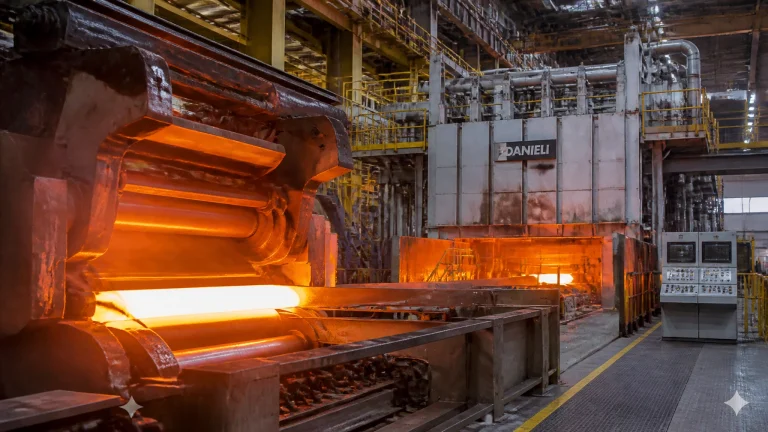
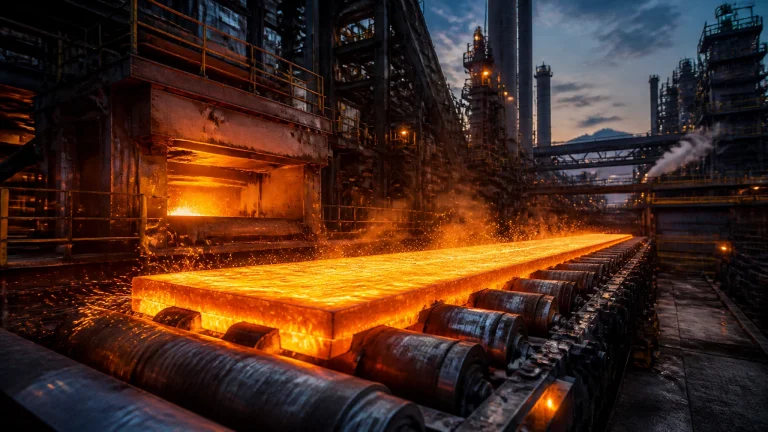
For ferrous processing, temperature uniformity and throughput speed are paramount. Our advanced heat treatment furnaces and continuous lines ensure precise grain refinement for rods, bars, and strip steel.
- Steel Rolling Mill Integration: Designed specifically for seamless integration into automatic rolling lines, our furnaces maintain strict thermal curves to eliminate scaling and surface defects.
- Melting Furnace for Steel & Metal Recycling: Built for maximum thermal efficiency, our robust metal recycling furnace units handle heavy ferrous scrap with minimal melt loss, supporting sustainable circular economy objectives.

Non-Ferrous Processing: Aluminum and Wire & Cable
Non-ferrous applications require delicate thermal management to prevent oxidation and porosity:
- Aluminum Melting Furnace: Engineered with precise burner placement and stirring mechanisms to ensure uniform alloy composition and high recovery rates.
- Wire and Cable Industry Solutions: Our specialized annealing systems, including vertical configurations, deliver bright, uniform wire properties essential for high-conductivity electrical applications. Explore our dedicated wire plant setup capabilities for turnkey project execution.
- Surface Protection & Finishing: Beyond thermal units, we engineer state-of-the-art hot dip galvanizing plant installations and pickling facilities that provide superior corrosion resistance and immaculate surface preparation.

4. Strategic Implementation Roadmap: Upgrading Your Thermal Infrastructure
Modernizing an industrial facility requires a disciplined, multi-phase project management approach. We recommend following a structured four-phase roadmap:
- Phase 1: Comprehensive Energy & Thermal Audit
Evaluate existing heat loss profiles, refractory integrity, and fuel-to-air ratios across all legacy industrial furnace systems. Establish baseline Key Performance Indicators (KPIs) for energy consumption per ton of output. - Phase 2: Digital Integration & Control Retrofitting
Upgrade legacy analog control panels to IIoT-enabled digital interfaces. Install smart actuators, multi-point thermocouple arrays, and cloud-connected combustion management software. - Phase 3: Hardware Optimization & Refractory Overhaul
Replace degraded ceramic fiber insulation, upgrade burners to hydrogen-ready or high-efficiency configurations, and stock critical furnace spare parts locally to eliminate logistics lag. - Phase 4: Continuous Monitoring & Lifecycle Partnership
Implement predictive maintenance dashboards and leverage our expert engineering support for ongoing calibration, remote diagnostics, and operator training.
5. Comparative Analysis: Traditional vs. Modern IIoT-Enabled Thermal Processing
| Performance Metric | Traditional Thermal Systems | Modern IIoT-Enabled Systems (Continental Furnaces) |
|---|---|---|
| Fuel / Energy Efficiency | Baseline (Standard combustion / manual tuning) | 12% – 18% reduction via automated smart combustion control |
| Maintenance Paradigm | Reactive / Calendar-based repairs | Predictive telemetry & sensor-driven alerts |
| Temperature Uniformity | ± 15°C variance across batch zones | ± 3°C precision via multi-zone digital PID loops |
| Emissions Profile | Standard carbon output | Optimized for low NOx and hydrogen-blend readiness |
| Unplanned Downtime | High risk due to undetected component wear | Near-zero unplanned downtime through continuous health monitoring |

Conclusion: Securing Sustained Competitive Advantage
In today's fast-evolving manufacturing landscape, your thermal processing equipment should be a strategic asset, not a maintenance bottleneck. By embracing IIoT integration, predictive maintenance protocols, and energy-optimized furnace design, industrial leaders can achieve unprecedented operational resilience.
At Continental Furnaces, we view every client relationship as an enduring partnership. Whether you are modernizing a steel rolling mill, expanding your wire and cable industry footprint, or commissioning a new metal recycling furnace, our engineering team delivers customized, ISO-certified solutions engineered for maximum ROI.
Ready to future-proof your thermal processing operations? Contact our engineering consultants today to schedule a comprehensive facility audit and discover how our advanced solutions can drive your sustained competitive advantage.