The Energy Challenge in Industrial Heat Treatment Operations
In the landscape of modern manufacturing, few challenges loom as large as the escalating cost of energy. For heat treatment facilities operating bogie hearth furnaces across India – from automotive component manufacturers in Pune to aerospace suppliers in Bangalore to heavy engineering workshops in Coimbatore – energy consumption has evolved from a manageable overhead to a critical factor determining competitive survival.
The numbers tell a sobering story: industrial heat treatment processes consume approximately 40% of total energy used in manufacturing industries, representing billions of rupees in annual operating costs across India’s industrial sector. For individual facilities, energy expenses frequently constitute 40-50% of total heat treatment operational costs, creating intense pressure on profitability margins already squeezed by raw material prices and global competition.
The Scale of Energy Consumption in Heat Treatment
To understand the magnitude of this challenge, consider the typical energy requirements for common heat treatment processes performed in bogie hearth furnaces:
Energy Intensity by Process:
-
Direct hardening: Approximately 1.0 kWh per kilogram of treated material
-
Annealing and normalizing: 0.8-1.2 kWh/kg depending on steel grade and temperature requirements
-
Stress relieving: 0.6-0.9 kWh/kg for typical cycles
-
Carburizing (deep case): Up to 2.5 kWh/kg for case hardening depths exceeding 1.5mm
-
Solution annealing (stainless steel): 1.2-1.8 kWh/kg at elevated temperatures
For a medium-sized heat treatment facility processing 50 tons of components monthly, energy consumption for the furnace alone can easily exceed 50,000-70,000 kWh per month. At current Indian industrial electricity rates averaging ₹7-9 per kWh (varying by state and load factor), this translates to monthly energy bills of ₹3.5-6.3 lakhs or ₹42-75 lakhs annually for a single bogie hearth furnace operation.
Multiply this across India’s thousands of heat treatment facilities, and the cumulative energy consumption represents a staggering economic and environmental burden.
The Perfect Storm: Rising Costs and Regulatory Pressure
Indian manufacturers face a convergence of factors making energy efficiency not just desirable, but absolutely essential:
1. Escalating Energy Prices
Industrial electricity tariffs in India have increased by 30-45% over the past five years in major manufacturing states. Natural gas prices the fuel of choice for many gas-fired bogie hearth furnaces have shown similar volatility, with imported LNG costs subject to global market fluctuations. One automotive component manufacturer in Maharashtra reported that their annual energy bill increased from ₹1.2 crores to ₹1.8 crores over three years despite relatively stable production volumes.
2. Interest Rate Burden
Unlike manufacturers in China (3-4% interest rates) or developed markets, Indian manufacturers face borrowing costs of 9-11%, making capital investment in energy-efficient equipment more challenging to justify despite clear long-term savings. This creates a paradox: the very efficiency investments that would reduce operating costs face higher financial hurdles.
3. Environmental Regulations
The Bureau of Energy Efficiency (BEE) has introduced increasingly stringent standards for industrial equipment. Heat treatment facilities must now demonstrate compliance with energy consumption norms, with non-compliance potentially resulting in penalties or restrictions. Additionally, carbon emission tracking and reporting requirements are expanding, placing the environmental impact of energy consumption under greater scrutiny.
4. Customer Pressure
Automotive OEMs, aerospace manufacturers, and export-oriented customers increasingly demand that suppliers demonstrate sustainability credentials. Heat treaters serving Tier-1 automotive suppliers, for example, must often provide detailed energy consumption and carbon footprint data as part of supplier qualification making energy efficiency a market access issue, not merely a cost concern.
The Hidden Costs Beyond the Energy Bill
While monthly electricity or fuel bills represent the most visible energy cost, heat treatment facilities face numerous hidden expenses related to inefficient energy use:
Equipment Degradation:
Furnaces operating inefficiently typically run hotter externally, accelerating refractory degradation, structural stress, and component wear. A facility operating a conventional bogie hearth furnace with inadequate insulation reported refractory campaign life of only 18 months, compared to 30+ months achievable with properly designed systems effectively doubling refractory maintenance costs over the furnace’s operational life.
Production Constraints:
Energy-inefficient furnaces often suffer from poor temperature uniformity, requiring extended soaking times to achieve metallurgical specifications. This reduces throughput, limiting revenue potential. In competitive markets where rapid turnaround is a differentiator, cycle time penalties from inefficient heating directly impact business opportunity.
Cooling Infrastructure:
Poorly insulated furnaces radiate substantial heat into the workspace, requiring enhanced ventilation and cooling systems to maintain tolerable working conditions. One heavy engineering facility calculated that their HVAC costs increased by ₹8-12 lakhs annually due to heat contribution from an older furnace design an often-overlooked energy penalty.
Quality Costs:
Temperature non-uniformity resulting from inefficient heating patterns leads to inconsistent heat treatment results. This manifests as higher rejection rates, rework costs, and customer complaints. For precision components in aerospace or automotive safety applications, even small increases in rejection rates translate to significant financial impact.
Carbon Tax Exposure:
As carbon pricing mechanisms emerge globally and domestically, energy-intensive operations face potential future costs for CO₂ emissions. Forward-thinking manufacturers recognize that today’s energy efficiency investments provide hedge value against tomorrow’s carbon costs.
The Competitive Disadvantage
Perhaps most critically, energy inefficiency creates direct competitive disadvantage in commodity heat treatment markets. Consider two job-shop heat treaters bidding on the same contract:
Facility A (Conventional Furnace):
-
Energy consumption: 1.5 kWh/kg
-
Energy cost at ₹8/kWh: ₹12 per kg
-
Additional costs to cover: labor, overhead, margin
Facility B (Energy-Efficient Furnace):
-
Energy consumption: 0.9 kWh/kg (40% reduction)
-
Energy cost at ₹8/kWh: ₹7.2 per kg
-
Savings: ₹4.8 per kg
For a 10-ton heat treatment lot, Facility B enjoys a ₹48,000 cost advantage allowing them to underbid competitors while maintaining margins, or match pricing and earn superior profitability. Over hundreds of jobs annually, this advantage compounds into millions of rupees.
The Technology Gap
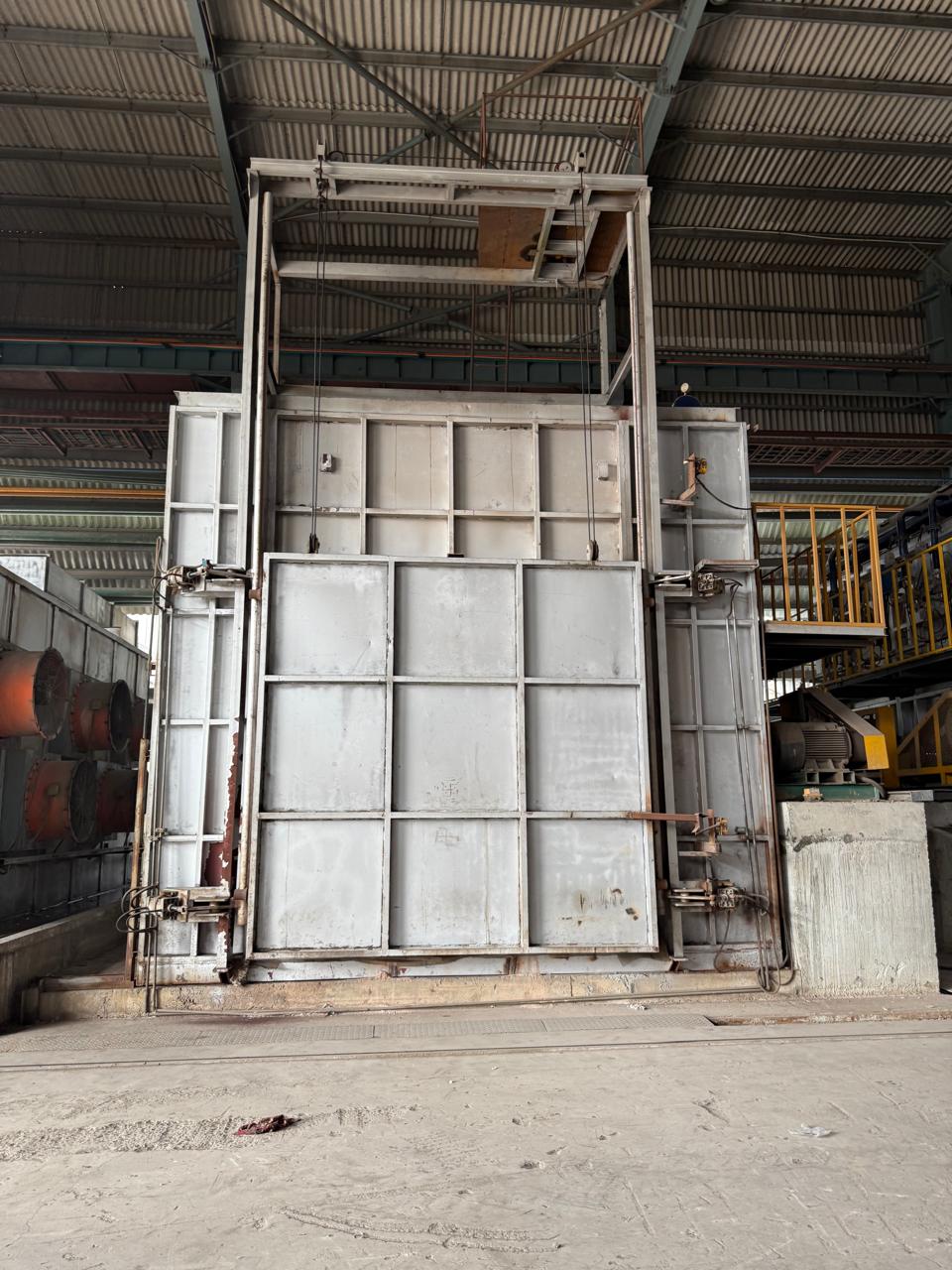
A significant portion of India’s installed base of bogie hearth furnaces comprises designs from the 1990s and early 2000s, predating modern energy efficiency technologies. These legacy systems typically feature:
-
Single-layer refractory systems with inadequate insulation
-
Older burner technology operating with 15-25% excess air
-
No heat recovery systems, exhausting combustion gases at 800-1000°C
-
Basic on-off temperature control rather than modulating systems
-
Conventional refractory materials with high thermal mass and conductivity
The performance gap between these systems and modern energy-efficient designs is dramatic. Recent studies indicate that retrofitting or replacing older furnace systems can reduce energy consumption by 30-40% while simultaneously improving temperature uniformity and reducing cycle times.
The Indian Manufacturing Context
India’s heat treatment market, valued at USD 4.70 billion in 2023 and projected to reach USD 7.04 billion by 2030, presents both opportunity and challenge. The growth, driven by expanding automotive, defense, railway, and heavy engineering sectors, means thousands of facilities face the energy challenge simultaneously.
Unique aspects of the Indian context include:
Diverse Load Profiles: Unlike specialized heat treaters in developed markets, Indian facilities often handle extremely varied work from small batches of precision components to large structural parts requiring operational flexibility that generic energy solutions don’t address.
Cost Sensitivity: With heat treatment pricing under constant pressure, capital investment in efficiency must demonstrate rapid payback. Indian manufacturers typically require ROI periods under 2-3 years, compared to 5-7 years acceptable in developed markets.
Technical Capability Variation: While leading facilities employ metallurgists and process engineers, many smaller operations lack the technical depth to optimize energy consumption through operational improvements alone making equipment-level efficiency critical.
Infrastructure Challenges: Power quality issues (voltage fluctuations, frequency variation) and fuel supply reliability in certain regions complicate the adoption of advanced control systems that depend on stable utility infrastructure.
The Path Forward: Why Energy Efficiency Is No Longer Optional
The convergence of rising costs, regulatory requirements, customer demands, and competitive pressure has fundamentally changed the economics of heat treatment. Energy efficiency has transitioned from a “nice-to-have” feature to an operational imperative.
Forward-thinking manufacturers recognize that investing in energy-efficient bogie hearth furnaces delivers multiple strategic benefits:
Immediate Financial Return: Operating cost reductions of ₹20-40 lakhs annually for typical installations, with payback periods of 18-30 months
Competitive Positioning: Cost advantages enabling superior pricing or margins in competitive bid situations
Regulatory Compliance: Meeting current BEE standards and positioning for anticipated future tightening
Customer Access: Satisfying sustainability requirements of quality-conscious OEM customers
Future-Proofing: Protection against continued energy price escalation and potential carbon pricing
Operational Improvement: Better temperature uniformity, reduced cycle times, and improved metallurgical consistency
At Continental Furnaces, we’ve dedicated our engineering resources to addressing this energy challenge head-on. Our energy-efficient bogie hearth furnace designs incorporate decades of thermal engineering expertise, advanced materials technology, and sophisticated control systems to deliver 30-45% energy reduction compared to conventional systems transforming the economics of heat treatment operations across India.
In the sections that follow, we’ll explore the specific technologies, design features, and operational strategies that make Continental Furnaces’ bogie hearth systems the most energy-efficient choice for Indian manufacturers facing today’s energy challenge.
The energy challenge in industrial heat treatment is real, urgent, and growing. But it’s also solvable with the right equipment, engineering expertise, and commitment to operational excellence. Continental Furnaces stands ready to partner with you in transforming this challenge into competitive advantage.

