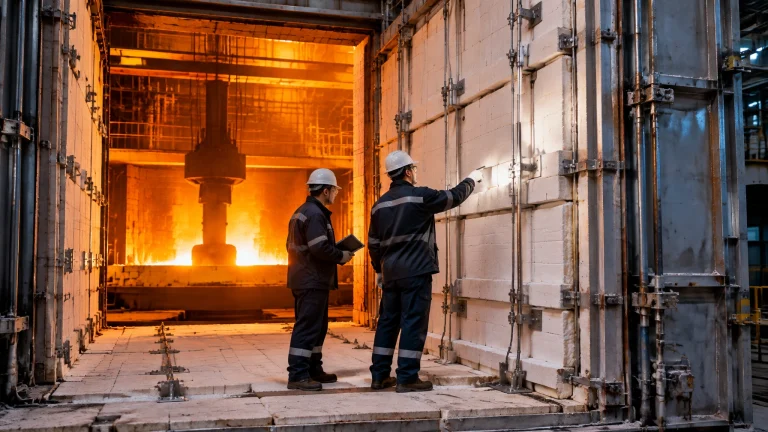
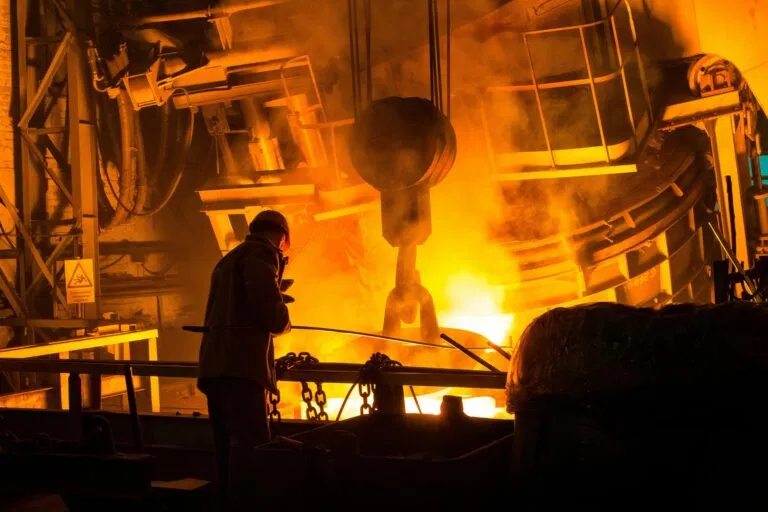
Morning Brief: The Competitive Agenda Has Shifted from Output to Yield
In 2026, industrial thermal processing is no longer evaluated only by tonnes produced per hour. Plant directors and operations leaders are measuring a broader performance equation:
- Energy consumed per tonne
- Metal recovered from each charge
- Temperature uniformity and metallurgical quality
- Unplanned downtime
- Carbon intensity and regulatory exposure
- Availability of critical furnace spare parts
- Flexibility across feedstocks, grades, and production schedules
This shift is creating a new operating model: the integrated thermal value chain. A modern steel rolling mill, melting shop, heat treatment line, galvanizing plant, and recycling operation must function as connected parts of one resource-efficient system.
Circular steelmaking is central to this agenda. Scrap is not merely a lower-cost input; it is a strategic energy resource. Recent industry assessments place scrap-based electric arc furnace production at approximately 2–5 GJ per tonne of crude steel, compared with roughly 21–23 GJ/t for the blast furnace–basic oxygen furnace route. The result is a major reduction in both energy demand and emissions when scrap quality, furnace control, and electricity sourcing are properly managed.
Circular Steelmaking Begins with Charge Quality and Thermal Yield
The circular economy is often discussed in terms of recycling volumes. In practice, its profitability depends on how efficiently a plant converts recovered material into saleable product.
A high-performing metal recycling furnace must control the full charge-to-product pathway:
-
Scrap preparation
Sorting, sizing, drying, and removal of contaminants improve charge density and reduce unwanted reactions. -
Charge formulation
The correct balance of scrap grades, returns, alloys, and fluxes protects chemistry and minimizes corrective additions. -
Preheating and heat recovery
Scrap preheating can reduce electrical demand. In advanced operations, off-gas temperatures of approximately 1,300–1,500°C represent a substantial heat-recovery opportunity. -
Controlled melting
Stable combustion, arc control, furnace pressure, and oxygen management reduce over-heating and melt losses. -
Refining and tapping
Accurate endpoint control reduces re-melts, excessive refining time, and temperature corrections. -
Casting, rolling, and finishing
Preserving thermal energy between processes is essential to reducing total energy per finished tonne.
This is why furnace selection cannot be separated from material handling, downstream production, and quality assurance. A technically efficient furnace that creates bottlenecks elsewhere in the plant does not deliver efficient manufacturing.

2026 Benchmarks for Energy-Resilient Thermal Operations
The following figures provide practical reference points for capital planning and operational reviews. Actual performance depends on furnace design, throughput, charge temperature, material chemistry, fuel type, product dimensions, and measurement boundaries.
- Scrap-based EAF energy use: approximately 250–350 kWh/t in modern operations.
- Best-practice EAF performance: approximately 250–270 kWh/t where advanced controls, scrap preheating, and waste-heat utilization are implemented.
- Typical EAF tap-to-tap cycle: approximately 30 minutes in high-throughput installations.
- Potential electricity reduction from scrap preheating and off-gas recovery: approximately 10–15%, depending on baseline conditions.
- Billet reheating temperature range: commonly 700–1,320°C, with discharge temperatures often around 1,200–1,250°C for hot rolling.
- Potential fuel reduction from combustion-air preheating: commonly 15–30% in suitable high-temperature applications.
- Hot-charging benefit: approximately 25–40% lower specific heat consumption compared with cold charging when logistics support direct transfer.
- Temperature uniformity target: approximately ±10°C across the product load in well-controlled heat treatment operations.
These benchmarks should be translated into commercial metrics: reduced energy cost per tonne, increased first-pass yield, shorter cycle times, lower maintenance exposure, and improved asset utilization.
The Integrated Thermal Value Chain
1. Melting and Recycling
A melting furnace for steel must withstand demanding thermal cycles, abrasive charge materials, and high mechanical loading. Its design must also support safe tapping, reliable refractory performance, and efficient heat transfer.
For non-ferrous operations, an aluminum melting furnace requires a different thermal strategy. Aluminum’s lower melting temperature does not eliminate energy losses; it makes oxidation, dross formation, furnace opening time, and charge handling even more important. Burner configuration, furnace atmosphere, insulation, and controlled loading directly influence metal recovery.
The same principles apply across ferrous and non-ferrous recycling:
- Minimize open-door time.
- Improve charge density.
- Control furnace pressure and excess air.
- Recover useful exhaust heat.
- Measure melt loss and dross generation.
- Match furnace capacity to actual production demand.
2. Heat Treatment
Heat treatment furnaces determine whether the recycled or newly melted material achieves the required mechanical properties. Inconsistent heating creates downstream rejects, rework, and customer claims: costs that can outweigh the original energy savings.
A precision thermal cycle requires:
- Correct heating and soaking temperatures
- Uniform airflow and heat distribution
- Controlled atmosphere where required
- Repeatable residence time
- Reliable instrumentation and calibration
- Automated recipes for different grades and geometries
For operations serving automotive, aerospace, defense, fasteners, and the wire and cable industry, process repeatability is a commercial requirement, not simply a technical preference.
3. Rolling, Galvanizing, and Surface Protection
In a steel rolling mill, reheating and heat treatment should be designed around the rolling schedule. Hot charging, optimized furnace zones, and coordinated billet transfer preserve valuable enthalpy already present in the material.
Downstream, a hot dip galvanizing plant adds another thermal and metallurgical control point. Bath temperature, strip or wire speed, pre-treatment, and coating consistency must be coordinated to deliver corrosion protection without excessive zinc consumption or production interruptions.
Pickling plants, annealing systems, coating lines, and rolling equipment therefore belong in the same energy and yield review. The objective is not to optimize one furnace in isolation. It is to reduce the total energy and material intensity of the finished product.
Legacy Operation Compared with Integrated Thermal Strategy
| Performance area | Conventional, disconnected operation | Integrated 2026 strategy |
|---|---|---|
| Charge preparation | Variable scrap quality and inconsistent loading | Graded charge, improved density, and controlled formulation |
| Heat recovery | Exhaust heat released without productive use | Off-gas recovery for preheating, combustion air, or process heat |
| Furnace control | Fixed settings and manual intervention | Recipe-based, zone-level, sensor-driven control |
| Production flow | Cold storage between casting, reheating, and rolling | Hot charging and coordinated material transfer |
| Quality management | End-of-line correction and rework | In-process temperature, chemistry, and endpoint control |
| Maintenance model | Reactive repair after failure | Condition-based maintenance with planned spares |
| Labour requirement | High dependence on manual observation | Automation supported by skilled operators and analytics |
| Commercial result | Higher fuel use, variable yield, and downtime risk | Lower specific energy, stronger yield, and improved resilience |
A Phased Roadmap for Circular and Energy-Resilient Manufacturing
Phase 1: Map the Thermal Value Chain
Begin with a plant-wide assessment rather than a furnace-only inspection.
Measure and document:
- Energy per tonne at each thermal stage
- Scrap-to-product yield
- Melt loss, scale, dross, and rejection rates
- Furnace loading and utilization
- Flue-gas temperature and oxygen levels
- Door-opening and holding time
- Temperature variation across loads
- Downtime caused by refractory, burners, controls, or material handling
This baseline establishes where capital will create the fastest return.
Phase 2: Secure Quick Operational Gains
Before major equipment replacement, address avoidable losses:
- Seal doors, openings, and damaged expansion joints.
- Calibrate thermocouples, pyrometers, flow meters, and oxygen sensors.
- Correct air-to-fuel ratios.
- Reduce furnace idling and unnecessary holding.
- Improve scrap sorting and charge sequencing.
- Review burner balance and furnace pressure.
- Establish minimum stocks of critical furnace spare parts.
These measures often deliver immediate savings while preparing the plant for deeper modernization.
Phase 3: Deploy Integrated Industrial Furnace Systems
The next investment layer may include:
- Recuperative or regenerative burners
- Multi-zone automatic temperature control
- Advanced refractory and insulation packages
- Scrap preheating and waste-heat recovery
- Hot-charging interfaces
- Automated charging and tapping
- Digital production and energy dashboards
- Predictive maintenance systems
- Emissions monitoring and reporting infrastructure
The correct configuration depends on the product mix, plant layout, fuel availability, electricity quality, and future capacity plan.
Phase 4: Build the Lifecycle Partnership
Equipment performance must remain stable after commissioning. A dependable lifecycle programme includes:
- Operator and maintenance-team training
- Scheduled performance audits
- Burner and refractory inspections
- Instrument calibration
- Control-system upgrades
- Critical spare-parts planning
- Remote technical support
- Documented energy and yield reviews
This is where the experience of an established industrial furnace manufacturer becomes decisive. Engineering quality, commissioning discipline, and responsive service directly influence the return on capital invested.

Continental Furnaces: Engineering the Complete Thermal Partnership
Continental Furnaces has operated in industrial thermal processing since 1987, supporting ferrous and non-ferrous wire producers, heat treatment facilities, rolling mills, foundries, recyclers, and surface-treatment operations.
Our portfolio covers:
- Industrial annealing and heat treatment furnaces
- Melting furnaces and recycling projects
- Aluminum melting systems
- Hot dip galvanizing plants
- Pickling plants
- Wire coating and thermal processing lines
- Furnace spare parts and accessories
- Customized industrial furnace systems
With more than 35 years of expertise, ISO-certified quality systems, energy-efficient technology, and prompt after-sales support, Continental Furnaces approaches every project as an enduring partnership. Our engineering team works from the client’s production requirements, material flow, energy profile, compliance obligations, and long-term growth plan.
Explore our applications, consulting support, melting and recycling projects, and hot dip galvanizing plant capabilities.
The 2026 Decision
Circular steelmaking is a quantum leap in resource productivity, but its benefits are realized only when furnace technology, charge quality, process control, maintenance, and plant logistics work as one system.
The essential next step is a thermal baseline and integrated engineering review. Contact Continental Furnaces to assess your furnace efficiency, scrap yield, heat-recovery potential, and modernization priorities. Turn recovered material into higher-value output, reduce energy exposure, and make your next thermal investment a direct move toward sustained competitive advantage.