Zinc-bearing residues are not all the same, and neither are the recovery opportunities they contain. For hot-dip galvanizing plants, the economic case for reclaiming zinc depends on accurate residue identification, representative assays, suitable process technology and a realistic assessment of what recovered metal can be returned to the kettle.
In 2026, this is a practical resource-efficiency question as much as a recycling one. The right in-house reclaim system can reduce purchased zinc and external treatment costs, while good furnace design, fume capture and process control protect product quality and regulatory compliance. The objective is not to chase a headline recovery percentage. It is to maximise saleable zinc returned per tonne of residue, safely and consistently.

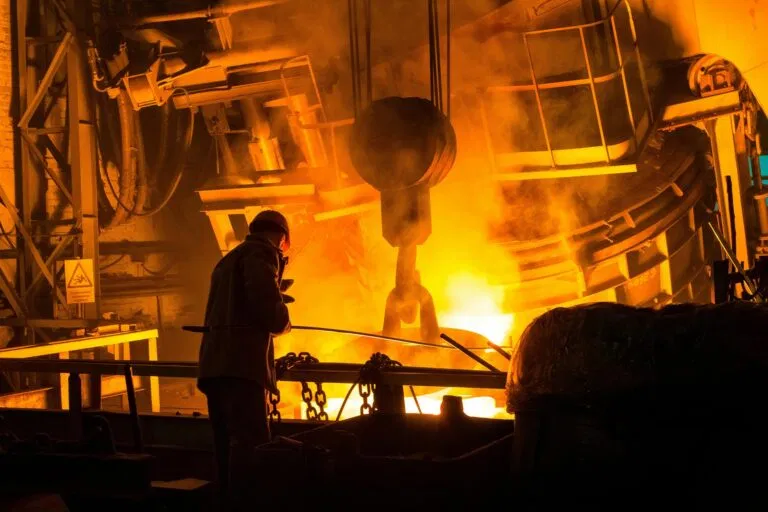
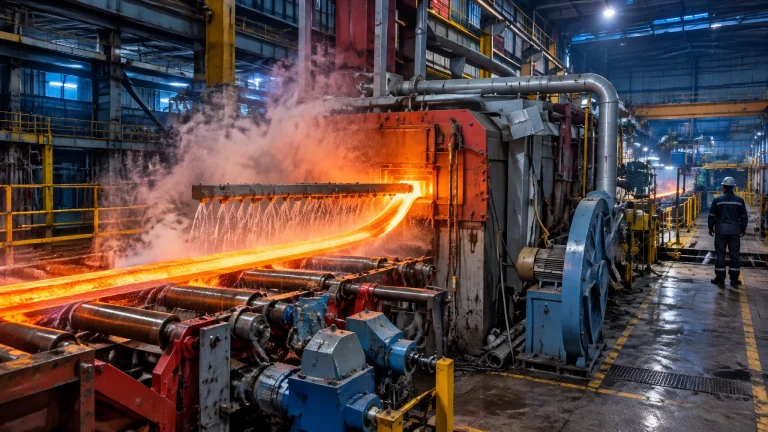
Skimming practice at the kettle decides how much liquid zinc leaves the bath in the ash — the first lever of residue economics.

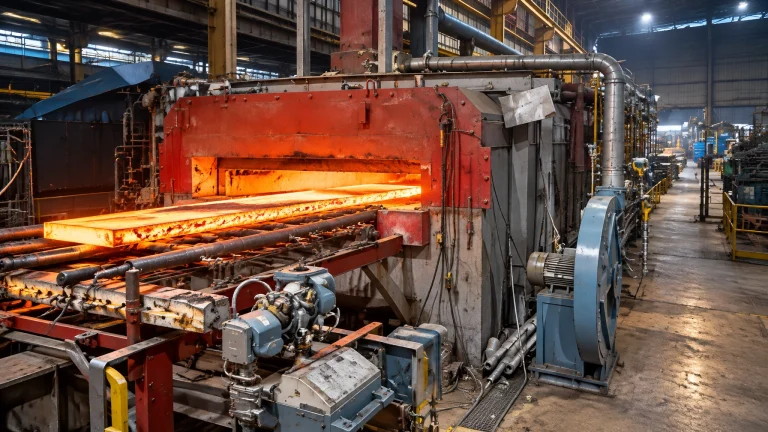
Hot-dip galvanizing equipment: residue recovery should be engineered around the plant’s actual kettle, material flows and operating practices.
First, separate zinc ash from hard dross
Surface ash and bottom dross arise in different parts of the galvanizing process. Ash is skimmed from the molten bath surface and can contain zinc metal droplets alongside oxides, flux residues and other contaminants. Hard zinc, also known as bottom dross, is an iron–zinc intermetallic material that settles in the kettle, often with mechanically entrained liquid zinc.
That distinction matters because a route suited to separating liquid zinc from hard dross may not perform equally well on oxide-rich ash. Feed preparation, temperature, residence time, particle size and contamination all affect yield.
Research from RWTH Aachen reports that, in its sample and process context, zinc ash represented 12.8% and hard zinc 11.5% of zinc input. Laboratory liquid-metal centrifugation recovered 96% of the zinc from hard zinc in the reported trials. The authors estimated that implementing the approach could reduce a plant’s net zinc input by about 9%, subject to process performance and operating conditions. These figures are not universal guarantees; notably, the paper identifies industrial-scale integration, ash upscaling and economic validation as further work.
For coarse-grained ash, a separate centrifugal pyrometallurgical study reported an optimum at 500°C for 30 minutes, recovering 88% of the smelted zinc under its test conditions. That result should not be confused with recovery from all zinc in the incoming residue: the remaining ash still contained substantial zinc.
Indicative published benchmarks, not a plant guarantee
| Route or benchmark | Published result | What it means for a plant |
|---|---|---|
| Liquid-metal centrifugation of hard zinc | 96% zinc recovery in laboratory trials | A promising separation benchmark; not a guaranteed plant-wide saving |
| Proposed hard-zinc recycling impact | About 9% reduction in net zinc input estimated by the study | Depends on residue mix, operating performance and kettle-return acceptance |
| Centrifugal treatment of coarse zinc ash | 88% recovery of smelted zinc at 500°C for 30 minutes | Feed-specific study result; not directly comparable with hard-dross trials |
| Zinc evaporation from bottom dross | Tests at 700°C and 800°C produced zinc purity above 99% | A potential route for suitable feed; energy and equipment costs require evaluation |
| Manual hard-zinc removal | RWTH paper describes roughly half a day and 2–4 workers | A reported operating context, not a universal labour baseline |
Caveat: All numerical benchmarks in this article are indicative figures drawn from published surveys, research and plant or supplier references. Results vary by plant, alloy, line type, feed composition, throughput, sampling method and definition of “recovery.” A recovery percentage from a laboratory feed is not equivalent to a percentage reduction in total plant zinc purchases.
Choosing recovery technology: match the process to the residue
The process route should begin with residue analysis, not equipment selection. Measure the ash and hard dross separately, then determine total zinc, metallic zinc, iron, aluminium, chloride and relevant contaminants. Keep metallic-zinc recovery distinct from total-zinc recovery in every supplier proposal and internal calculation.
| Process option | Typical role | Key engineering and economic considerations |
|---|---|---|
| Kettle-side reworking and improved drainage | Reduce liquid zinc carried out with skimmings | Low equipment complexity; results depend on operating discipline, safe handling and effective fume control |
| Hot centrifugation / solid–liquid separation | Separate liquid zinc from suitable dross or ash fractions | Attractive where metal can be returned to the kettle; needs controlled feed, temperature, rotor design and residue management |
| Dedicated ash-melting furnace | Melt suitable ash to recover metallic zinc | Requires feed characterization, controlled heating, safe charging and extraction; validate zinc yield on site |
| Evaporation or distillation | Recover zinc from suitable dross through vaporisation and condensation | Can produce high-purity zinc, but higher temperatures and associated energy, gas handling and equipment can change the economics |
| External recovery or disposal | Send residues to a specialist processor | Avoids in-house capital and operating duties; compare settlement terms, transport and retained value |
The MDPI bottom-dross evaporation study examined zinc evaporation at 700°C and 800°C under argon. Its findings are relevant to a specific bottom-dross recovery pathway, not evidence that evaporation is the lowest-cost option for every residue. Likewise, the EPA secondary-zinc process reference describes broader sweating, melting and refining routes, including zinc sweating around 364°C and high-temperature distillation. These are process references, not current plant quotations or turnkey energy forecasts.

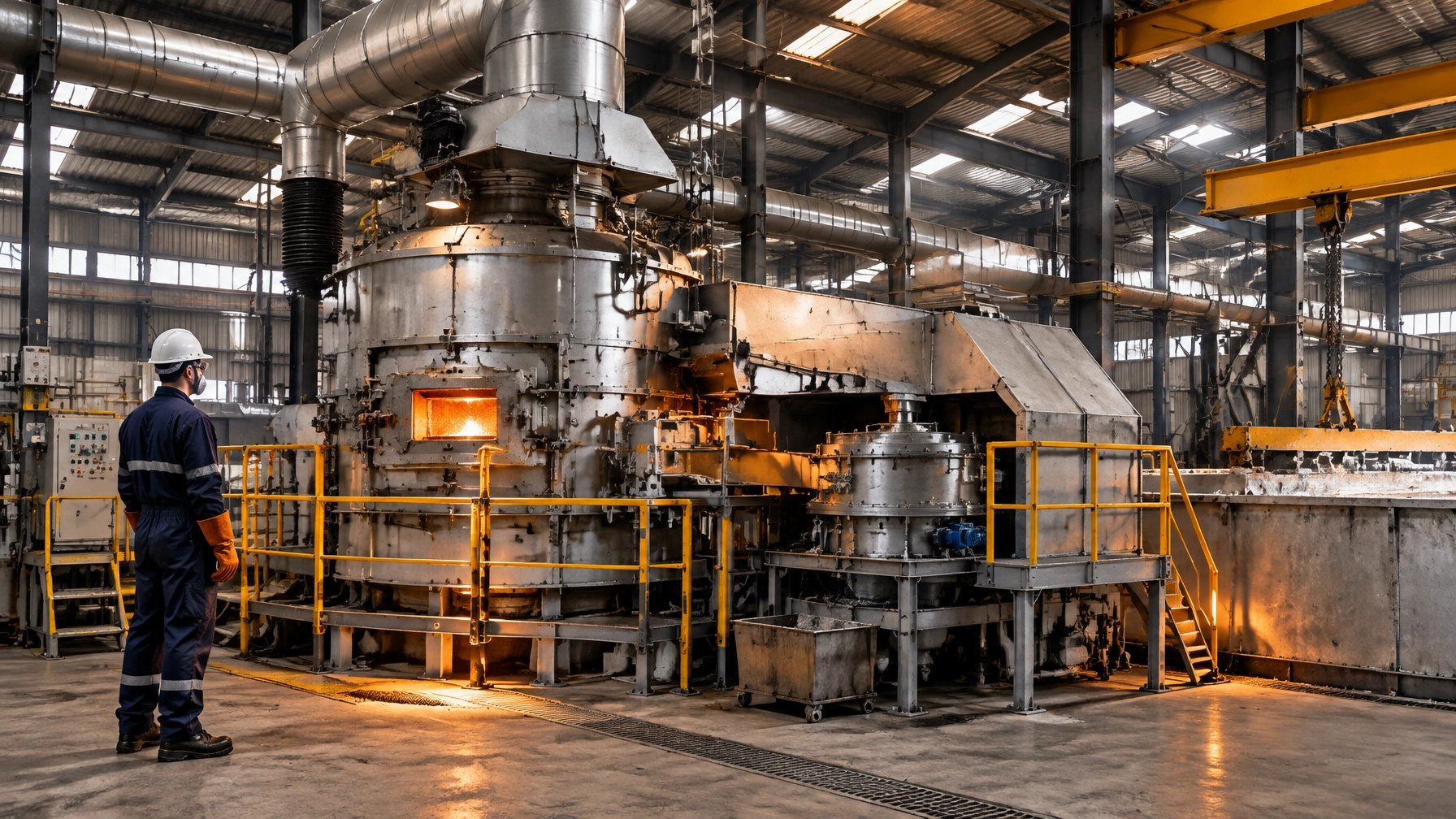
The recovery furnace, charging practice, temperature control and fume system must be considered as one integrated process.
The economics: calculate recovered value, not theoretical content
A sound business case converts residue measurements into net operating value:
Saleable zinc returned = residue mass × zinc assay × process recovery × product-acceptance factor
The acceptance factor matters. Recovered zinc may require further treatment, quality adjustment or blending before it can be reused. Subtract energy, labour, maintenance, consumables, dust collection, residue disposal and any quality-control costs. Add avoided external treatment charges only where they are confirmed.
The American Galvanizers Association’s 2019 process survey reported that 65% of respondents used a zinc recovery system for skimmings, compared with 38% in 2007. It also reported wide variation in skimmings composition. The survey demonstrates established industry interest in recovery; it does not establish a universal payback period.
| Decision factor | Conventional off-site recovery | In-house reclaim system |
|---|---|---|
| Capital requirement | Generally lower for the galvanizer | Higher; depends on furnace, handling and emission-control scope |
| Operating labour | Handling, weighing and dispatch | Trained operators for charging, monitoring, cleaning and maintenance |
| Zinc value | Depends on processor terms and assay settlement | Potentially retains more value if recovered metal meets reuse requirements |
| Process control | Less direct control over recovery route | Direct control of temperature, cycle and material segregation |
| Payback | Driven by freight, settlement terms and waste charges | Must be modelled from measured throughput, recoverable zinc and total installed cost |
| Emissions and safety | Processor manages treatment at its site | Plant must engineer capture, filtration, safe storage and operating procedures |
No independent plant-scale dataset reviewed here establishes a standard CAPEX, energy intensity or payback period for in-house centrifugation. Do not promise a fixed ROI. Build the investment case from a weighed campaign and vendor guarantees tied to clearly defined feed and product specifications.
Furnace engineering and environmental controls
A reliable reclaim unit requires more than a heated vessel. Its design basis should address:
- Feed and charging: segregate ash and hard dross, control moisture, and define safe loading methods.
- Thermal control: measure material and chamber temperatures; avoid unnecessary holding time and overheating.
- Separation and tapping: provide access for skimming, tapping and residue removal without disrupting the galvanizing line.
- Fume capture: design extraction around charging, melting, skimming and residue transfer, not just the furnace opening.
- Controls and maintainability: specify interlocks, alarms, inspection access and critical furnace spare parts.
The UK hot-dip galvanizing process guidance notes that ash reworking can produce substantial fume and calls for appropriate extraction and arrestment. Requirements depend on the site and jurisdiction; confirm applicable permits and emission limits before commissioning.

An integrated installation considers furnace access, material handling, extraction and maintainability alongside thermal performance.
Four-phase roadmap to an informed investment
Phase 1: Assessment and planning
Record residue quantities by stream and shift. Weigh ash and hard dross separately, collect representative samples, and review current zinc purchases, external settlement terms, labour and handling costs.
Phase 2: Process selection and validation
Compare reworking, centrifugation, dedicated melting and external recovery against feed assays and kettle-return requirements. Run a controlled trial where possible. Define recovery, throughput and product-quality acceptance in measurable terms.
Phase 3: Engineering and implementation
Develop the furnace, charging, extraction, controls, layout and safety requirements as one system. Include planned maintenance, operator training and essential spare availability. Where the wider facility requires it, coordinate with the hot dip galvanizing plant and other thermal processing equipment.
Phase 4: Performance verification and optimisation
Track kilograms of saleable zinc returned per tonne of residue, energy per tonne processed, labour hours, residue remaining, downtime and emissions-control performance. Use these data to tune operating windows and calculate actual payback.
2026 technology and market updates
The practical trend in 2026 is a shift from broad “recycling” claims to tighter measurement: segregated residues, assay-based settlements, documented recovery definitions and greater attention to fume capture. A technical dross-control module published in July 2026 also highlights the value of stabilising process conditions and improving drainage before treatment; prevention and recovery work best as connected measures, not competing strategies. See Steelonthenet’s dross-control reference.
For galvanizers, especially the wire and cable industry and continuous galvanized-wire lines, recovery equipment must fit actual throughput and production schedules. The aim is a circular-economy loop that protects coating quality while returning usable zinc to production. The same lifecycle approach applies across the wider steel rolling mill supply chain — where coated wire, strip and sections are produced on mill lines fed by modern industrial furnace systems — and across metal recycling operations, from galvanizing equipment to heat treatment furnaces and even an aluminum melting furnace or melting furnace for steel in other recycling applications. Thermal processing equipment engineered for one residue stream is rarely one-size-fits-all for another; that is where a furnace spare parts and service backbone built by an experienced industrial furnace manufacturer keeps the reclaim unit as reliable as the kettle beside it.
Build your recovery case on measured performance
Zinc ash and dross recovery can strengthen profitability and resource efficiency, but the right outcome depends on material chemistry, process design and disciplined operating data. Continental Furnaces brings 35+ years of industrial furnace manufacturing expertise to customized thermal processing and recycling projects, with engineering and service support focused on lifecycle value and minimal downtime.
Start with a residue and process review, then assess a system designed for your plant, not a generic recovery percentage. Request a consultation to discuss an enduring partnership and a practical route toward sustained competitive advantage.