Energy is now a controllable production input
For a steel rolling mill, foundry, die caster, recycling facility or galvanizing line, furnace profitability is no longer determined only by thermal efficiency. The timing, quality and source of energy can materially change cost per tonne.
Industrial electricity contracts increasingly combine:
- Energy charges in $/kWh, €/kWh or ₹/kWh
- Time-of-use pricing with peak, normal and off-peak windows
- Maximum-demand charges based on the highest 15- or 30-minute kW or kVA interval
- Power-factor penalties or incentives
- Grid-quality requirements for harmonic distortion, flicker and voltage variation
The commercial implication is direct: two plants using the same melting furnace for steel and processing the same tonnage can produce substantially different energy bills because their operating schedules, load profiles and procurement strategies differ.
The objective for 2026 is not simply to consume less energy. It is to consume the right energy at the right hour, with the right power quality, while protecting metallurgical yield and production continuity.
The furnace energy profile: kWh per tonne is only half the equation
Specific energy consumption remains the essential baseline KPI:
- Scrap-based electric arc furnace steelmaking commonly falls in the range of 400–500 kWh per tonne, with best-performing installations reaching approximately 300–350 kWh per tonne under suitable conditions.
- Coreless induction melting for ferrous materials commonly operates around 600–750 kWh per tonne in a well-managed plant, while older or poorly scheduled operations can exceed 800–1,000 kWh per tonne.
- Induction reheating for billets and slabs is often benchmarked at approximately 350–500 kWh per tonne.
- Heat treatment varies widely according to temperature, soak duration, batch mass and atmosphere. A practical plant baseline must therefore be calculated per recipe and product family, not copied from a generic catalogue.
The IEA’s industrial efficiency benchmarking guidance reinforces the value of process-level monitoring, controls and digitalisation. For a plant manager, the calculation should be:
Energy cost per tonne = SEC × time-specific energy price + demand allocation + power-quality and infrastructure costs
A 600 kWh/t induction cycle scheduled in a low-cost window may be more profitable than a 560 kWh/t cycle operated during a demand peak. Conversely, excessive holding to avoid a tariff window can increase oxidation, temperature loss and total kWh/t. Tariff optimisation must remain subordinate to metallurgical control.
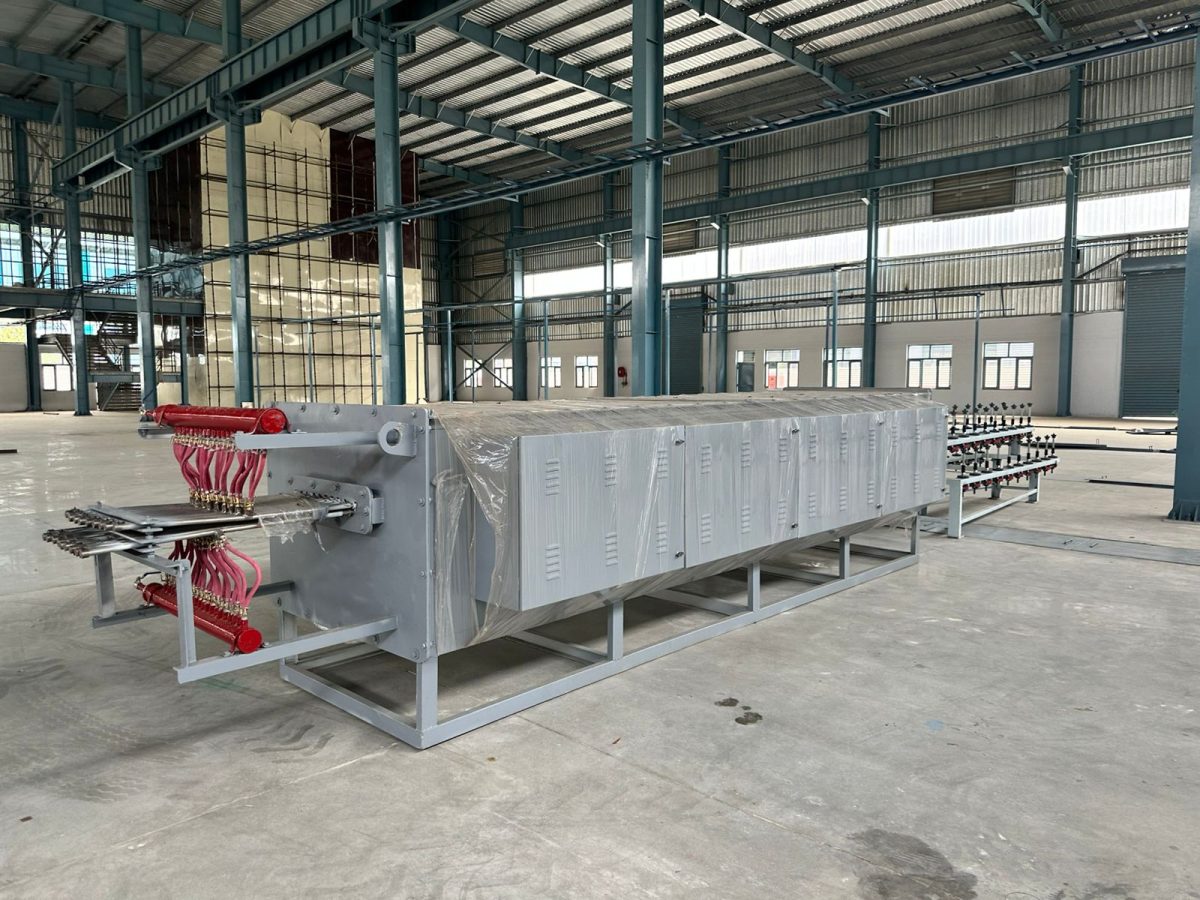
Tariff arbitrage: move energy-intensive work, not production risk
Time-of-use tariffs create an opportunity to shift flexible furnace work into cheaper periods. The applicable windows must always be verified against the local utility contract.
For example, Vietnam’s 2026 tariff adjustment places peak hours from 17:30 to 22:30, Monday to Saturday, while off-peak hours remain 00:00 to 06:00 daily, according to EVN’s published explanation. This structure creates a clear operating signal for electric melting and batch heat treatment.
A practical load-shifting program can include:
- Scheduling high-power melting heats outside evening peak windows
- Starting heat treatment batches during off-peak periods while retaining recipe integrity
- Staggering two induction furnaces instead of starting them simultaneously
- Scheduling rolling mill reheating around contracted demand limits
- Charging scrap, billets or zinc material in advance so the furnace can operate continuously through a lower-cost window
- Using holding capacity only where the additional thermal and metallurgical cost is lower than the tariff premium
Tariff-management strategies: indicative planning ranges
The following figures are engineering planning ranges, not universal guarantees. Actual savings depend on the utility rate, annual operating hours, furnace rating, production flexibility and implementation cost.
| Strategy | Indicative economic lever | Implementation effort | Typical simple payback |
|---|---|---|---|
| Reschedule melting and batch heat treatment into off-peak periods | 5–20% reduction in affected energy charges; demand reduction where peaks are avoided | Low to medium | 1–6 months |
| Stagger furnace starts and auxiliary loads | 5–15% reduction in maximum demand component | Low | 1–4 months |
| Per-furnace sub-metering and dashboards | 2–8% reduction through operational visibility and accountability | Medium | 6–18 months |
| Power-factor correction and reactive compensation | Avoided penalties and reduced apparent-power loading; site-specific | Medium | 6–24 months |
| Harmonic filtering, SVC or STATCOM systems | Improved compliance, fewer trips and capacity recovery; savings are site-dependent | High | 18–48 months |
| Renewable PPA, captive generation or hybrid supply | Price certainty and reduced grid exposure; tariff and regulatory dependent | High | 24–72 months |
Maximum demand and power quality: the hidden cost of electric melting
A single furnace heat can establish the plant’s maximum demand for an entire billing period. A 5-tonne induction furnace consuming approximately 600 kWh/t requires about 3,000 kWh per batch. If that batch is completed in one hour, its average electrical demand is approximately 3 MW, before considering peak power, transformers, pumps, cooling systems and other plant loads.
The commercial formula is straightforward:
Demand-charge saving = reduced peak kW × applicable demand tariff
The operational challenge is that induction and arc furnaces are not passive loads.
Typical power-quality risks
- Induction furnaces: harmonic currents from converters, reduced power factor and transformer loading
- Arc furnaces: rapidly changing current, voltage flicker, harmonic distortion and voltage sag
- Multiple furnace lines: coincident demand peaks and feeder instability
- Rolling mill drives: interaction between furnace loads, variable-frequency drives and plant distribution systems
The electrical architecture should therefore be reviewed alongside furnace capacity. Depending on the study results, the system may require:
- Dedicated or suitably rated furnace transformers
- Detuned capacitor banks or active harmonic filters
- SVC or STATCOM systems for dynamic reactive compensation
- Short-circuit capacity assessment at the point of common coupling
- Power-factor and harmonic monitoring linked to the energy dashboard
- Controlled ramp-up sequences for large induction power supplies
A lower kWh bill is not a successful energy strategy if voltage sag causes a production trip or harmonic distortion damages critical controls.
Fuel-switching optionality versus grid cost
Gas-fired and electric systems should be compared using delivered process cost, not headline energy prices.
Electric melting delivers precise, controllable heat but exposes the plant to energy tariffs, demand charges and power-quality constraints. Gas-fired heating can reduce electrical demand, but it introduces fuel-price volatility, combustion-system requirements and potentially different temperature uniformity characteristics.
For a heat treatment furnace or reheating line, the decision should compare:
- Delivered cost per useful MWh of heat
- Thermal efficiency at the actual load factor
- Peak electricity and demand charges
- Gas infrastructure and pressure availability
- Production flexibility during grid or fuel interruptions
- Emissions, permitting and future compliance requirements
- Cost of maintaining dual-fuel capability
A hybrid energy architecture can be valuable. Electric systems may handle precision heating, while gas-fired systems provide peak support or operational resilience. In a metal recycling furnace or aluminum melting furnace, the correct choice depends on charge condition, melting temperature, holding requirement and local tariff structure.
Renewable PPAs and captive generation can further reduce exposure to volatile grid prices. However, solar generation may align with daytime production while the most expensive tariff period occurs in the evening. A PPA should therefore be evaluated against the complete hourly load profile, including storage, wheeling, banking and backup requirements.
Industry 4.0: convert tariff signals into furnace commands
Smart metering becomes commercially useful when it is connected to production logic.
A modern energy-management layer should collect:
- kW, kWh, kVA and power factor at plant and furnace level
- Harmonic distortion and voltage events
- Furnace recipe, batch size, charge weight and cycle time
- Tonnes processed and rejected
- Tariff period and remaining demand headroom
- Planned production orders and available holding capacity
The control architecture can then support:
- Per-furnace energy dashboards
- Forecasting of the next demand peak
- Recipe scheduling around tariff windows
- Alerts when simultaneous loads threaten contract demand
- Comparison of actual SEC against recipe-specific benchmarks
- Automated staggering of non-critical auxiliary equipment
For a continuous furnace serving a steel rolling mill or the wire and cable industry, the system can protect line continuity while adjusting speed, heating zones or batch sequencing within approved process limits. For a hot dip galvanizing plant, zinc-pot heating, pre-treatment and auxiliary loads can be coordinated with the tariff calendar without compromising coating quality.
Continental Furnaces’ continuous furnace solutions demonstrate the value of automated handling, independent heating zones and integrated controls. Energy procurement becomes significantly more effective when the furnace itself can respond to commercial signals.

A four-phase energy management roadmap
Phase 1: Establish the baseline
Collect at least three months of interval utility data and production records.
Measure:
- SEC in kWh/t by furnace and product
- Maximum demand and the interval that created it
- Peak versus off-peak energy consumption
- Power factor, harmonics and voltage events
- Idle, holding and non-productive furnace time
Phase 2: Model the opportunity
Build an hourly model covering:
- Current tariff and alternative tariff structures
- Flexible and non-flexible production
- Furnace power curves
- Demand-charge exposure
- Gas, grid, PPA and captive-power scenarios
Use scenario testing rather than assumptions. A 2 MW load shifted for four hours is not automatically valuable if the plant creates a new monthly peak elsewhere.
Phase 3: Implement low-risk controls
Prioritise measures with short payback:
- Stagger furnace starts
- Move flexible batches outside peak windows
- Add sub-metering
- Set demand alarms
- Reduce idle holding
- Coordinate furnace and rolling mill schedules
- Maintain critical furnace spare parts to prevent forced operation during expensive recovery periods
Phase 4: Engineer the long-term system
Once the load profile is proven, evaluate:
- Transformer upgrades
- Reactive compensation
- Harmonic filtering
- Renewable PPAs
- Captive or hybrid generation
- Battery or thermal storage where technically justified
- New industrial furnace systems designed around the site’s energy market
Energy procurement is an engineering decision
For a steel rolling mill, foundry, wire and cable industry plant, metal recycling furnace or hot dip galvanizing plant, energy procurement must be integrated with furnace design, scheduling and electrical infrastructure.
Continental Furnaces brings more than 35 years of thermal engineering expertise, ISO-certified quality practices, customised thermal processing equipment and prompt service support. As an experienced industrial furnace manufacturer, we help customers evaluate the complete lifecycle: furnace capacity, controls, power quality, tariff exposure, serviceability and production yield.
Do not wait for the next tariff revision or demand-charge increase. Consult Continental Furnaces to map your furnace load, quantify tariff-arbitrage opportunities and build an energy strategy that delivers sustained competitive advantage. Request a consultation or quotation.