October 2026 | Morning Edition
For steel rolling mills, fabricators, and the wire and cable industry, galvanizing performance is now an economic discipline, not simply a coating operation. Zinc prices, energy intensity, environmental permits, product specifications, and asset availability directly influence contribution margin.
A modern hot dip galvanizing plant must therefore control five connected variables:
- Zinc consumption and coating weight
- Bath temperature and immersion conditions
- Kettle life, dross, and ash generation
- Pre-treatment, pickling, flux, and drying quality
- Energy use, emissions, automation, and traceability
The objective is precise: achieve the required coating under ISO 1461 or ASTM A123/A123M, without routinely applying excess zinc or creating avoidable process losses.
2026 Performance Benchmarks for Galvanizing Plants
The following benchmarks provide a practical starting point for plant-level assessment. They are indicative operating targets, not substitutes for product-specific trials or the applicable standard.
| KPI | Traditional practice | Modern optimization target |
|---|---|---|
| Zinc coating variation | ±10–20% from target | ±3–8% from target |
| Continuous strip coating mass | 120–350 g/m², often over-targeted | 100–275 g/m² where product specification permits |
| Bath temperature | 450–470°C with wider fluctuation | 445–465°C, typically controlled within ±2–5°C |
| Optimized plant energy intensity | 0.40–0.60 GJ/tonne | 0.30–0.35 GJ/tonne for the defined plant boundary |
| Zinc losses to dross, ash, and rework | 8–15% of zinc input | 4–8% with disciplined control |
| Kettle service life | 24–48 months | 36–72 months, subject to design, chemistry, duty, and inspection |
| Coating measurement | Manual sampling | Online measurement plus laboratory verification |
The most valuable improvement is not always a new kettle or a complete line replacement. In many facilities, the first quantum leap comes from measuring zinc input, useful coating, dross, ash, and rejected product as separate material streams.
Coating Weight Control: The Primary Zinc-Saving Lever
A galvanizing operation should target the lowest stable coating weight that fully satisfies the customer specification. Over-coating increases zinc cost, can affect appearance and dimensional fit, and may increase stripping or finishing requirements.
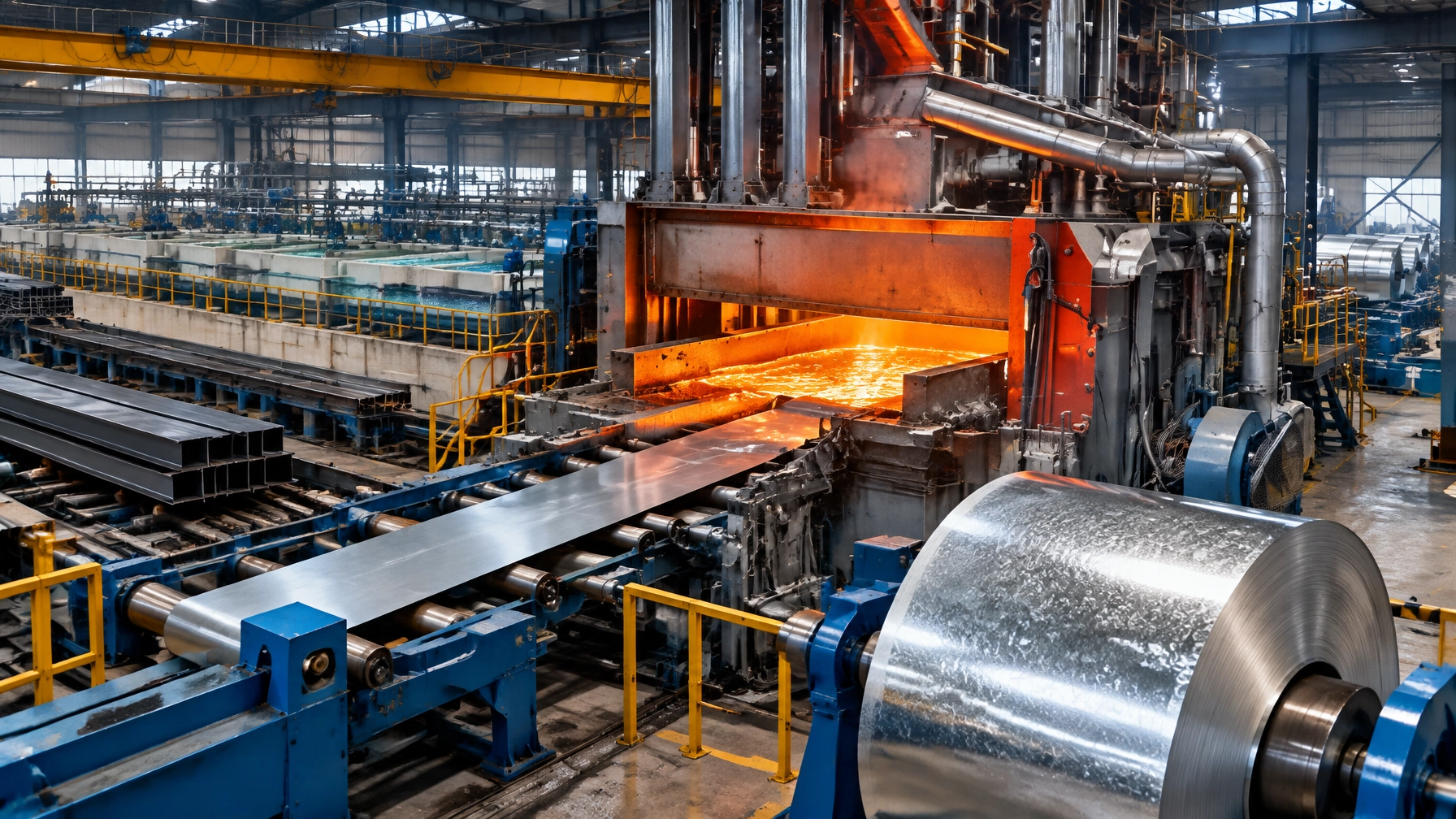
For continuous strip lines, coating mass depends on:
- Strip speed and gauge
- Air-knife pressure and slot geometry
- Knife-to-strip distance
- Bath temperature and zinc viscosity
- Strip entry temperature
- Bath chemistry and surface condition
- Sink-roll stability and strip vibration
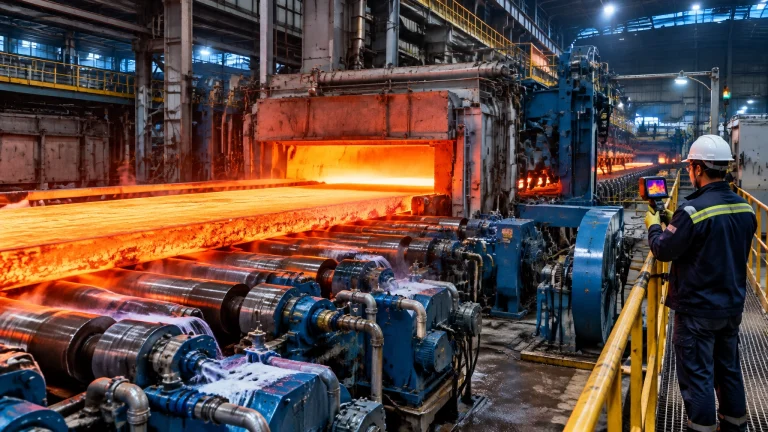
A modern line uses online thickness or coating-mass measurement to close the feedback loop. Air-knife settings should adjust automatically as strip speed, width, or grade changes. Properly applied model-based control can reduce coating-weight variation by 50–65%, allowing the average target to move closer to the specification minimum.
For fabricated steel, ISO 1461 and ASTM A123/A123M define minimum requirements rather than a universal maximum. Typical ISO 1461 minimum mean thicknesses for non-centrifuged fabricated steel are:
| Base steel thickness | ISO 1461 mean minimum | ISO 1461 local minimum |
|---|---|---|
| ≥6 mm | 85 µm | 70 µm |
| ≥3 to <6 mm | 70 µm | 55 µm |
| ≥1.5 to <3 mm | 55 µm | 45 µm |
| <1.5 mm | 45 µm | 35 µm |
ASTM A123 requirements vary by product category and base-metal thickness. Structural shapes above approximately 6.4 mm commonly require an average coating thickness of 100 µm, while several thinner or different product categories require 45–75 µm.
The commercial rule is clear: define the standard, product category, measurement method, and safety margin before production. Do not compensate for uncertain process control by applying excessive zinc.

Bath Temperature, Kettle Life, and Dross Management
Zinc baths are commonly operated between 445°C and 465°C, depending on process design, steel chemistry, product geometry, and flux practice. Excessive temperature or unstable thermal cycling can accelerate iron-zinc reactions, increase dross formation, and raise the risk of localized kettle attack.
A robust control strategy includes:
- Multiple bath-temperature sensors rather than a single measurement point
- Zone-based heating and stable burner or electrical control
- Alarm limits for deviation, rate of change, and stratification
- Routine analysis of iron content and bath chemistry
- Documented dross-removal frequency and mass balance
- Controlled skimming of ash without excessive zinc entrainment
Dross and ash should never be treated as an unavoidable percentage of production. They are process signals. A rising dross rate may indicate:
- Excessive steel reactivity
- Poor pickling or inadequate rinsing
- Unstable flux concentration
- Excessive bath temperature
- Long or inconsistent immersion
- Mechanical disturbance around the kettle
- Contaminated work entering the bath
A well-managed kettle can achieve 36–72 months of service life in suitable duty, although actual life depends on kettle construction, thermal profile, zinc chemistry, operating hours, product mix, and inspection discipline. The focus should be controlled corrosion and predictable asset condition, not simply extending the calendar period between replacements.
Pre-Treatment and Pickling Integration
Galvanizing quality is largely determined before the work reaches the zinc bath. Degreasing, rinsing, pickling, fluxing, and drying must operate as an integrated process rather than as independent tanks.
Phase 1: Stabilize the pre-treatment line
Establish control limits for:
- Acid concentration and dissolved iron
- Pickling temperature and residence time
- Rinse-water quality and carryover
- Flux density, pH, and iron contamination
- Drying temperature and workpiece moisture
- Fume extraction flow and scrubber performance
Reactive steel and residual mill scale can create coating variability and excess zinc consumption. The American Galvanizers Association emphasizes accurate load information, steel chemistry records, appropriate venting and drainage, and removal of contaminants before processing. These measures also reduce handling delays and rework.
Phase 2: Control flux and drying
Flux must support wetting and zinc adhesion without becoming a source of ash, fumes, or trapped residue. A stable flux system should be linked to:
- Workpiece surface condition
- Bath entry temperature
- Drying effectiveness
- Line speed
- Product geometry
Incomplete drying creates violent reactions and unstable coating formation. Over-drying, however, can waste energy and degrade process economics. The correct operating window is established through trials and recorded as a recipe for each product family.

Energy and Emission Compliance
Energy intensity must be measured against a defined boundary. An optimized plant-level target of 0.30–0.35 GJ per tonne of coated steel is a practical benchmark for a well-controlled operation, while the furnace section of a large continuous galvanizing line may show a higher standalone figure.
The 2026 direction is toward:
- High-turndown burners and precise air-fuel control
- Electric or hybrid heating where grid economics support it
- Reduced idle heat during product changes
- Variable-speed pumps and fans
- Insulated tanks, covers, and controlled openings
- Automated sequencing of burners, conveyors, and extraction systems
- Continuous monitoring of NOx, particulate matter, acid fumes, and zinc oxide emissions
Fume extraction must be designed around the actual process points: pickling tanks, fluxing, drying, kettle surface, and finishing. Capturing fumes at source is more effective than relying on general building ventilation. Compliance systems should include differential-pressure monitoring, fan-status alarms, scrubber inspection, and documented discharge testing.
Traditional vs Modern Galvanizing Practice
| Area | Traditional approach | Modern industrial furnace systems |
|---|---|---|
| Process decisions | Operator experience and periodic checks | Recipes, sensors, MES, and closed-loop control |
| Zinc control | Fixed coating targets with safety excess | Dynamic targets linked to grade and specification |
| Bath management | Manual temperature readings | Sensor arrays and predictive control |
| Dross and ash | Removed reactively | Mass-balanced and trended by product family |
| Maintenance | Corrective replacement | Condition-based inspection and stocked furnace spare parts |
| Quality records | Paper or isolated spreadsheets | Traceable digital batches and online measurements |
| Emissions | General ventilation | Source capture, interlocks, and monitored extraction |
| Payback profile | Low initial investment, high recurring loss | Typical control upgrades can target 12–36-month payback |
A Phased Upgrade Roadmap
Phase 1: Assessment and measurement, 0 to 90 days
- Establish zinc consumption in kg/tonne
- Separate coating zinc from dross, ash, scrap, and rework
- Map coating thickness by product and location
- Record bath temperature stability and energy per tonne
- Audit pickling, flux, drying, and fume extraction
- Verify ISO 1461 or ASTM A123/A123M inspection procedures
Phase 2: Process control, 3 to 9 months
- Install or upgrade online coating measurement
- Modernize PLC, HMI, SCADA, and alarm management
- Add bath-temperature sensor arrays
- Create product-specific coating recipes
- Stabilize air knives, immersion time, and line speed
- Introduce digital dross and ash tracking
Phase 3: Asset and environmental improvement, 9 to 18 months
- Optimize heating zones and combustion controls
- Upgrade extraction fans, hoods, and scrubbers
- Add predictive condition monitoring
- Improve kettle handling and sampling procedures
- Maintain critical furnace spare parts for burners, sensors, drives, controls, and safety systems
- Evaluate electrification or hybrid heating for future emissions reduction
Why the Right Engineering Partner Matters
Galvanizing performance sits within a wider thermal-processing ecosystem. A steel rolling mill may also depend on heat treatment furnaces, a melting furnace for steel, an aluminum melting furnace, or a metal recycling furnace. Each asset affects throughput, material quality, energy intensity, and production scheduling.
Continental Furnaces brings more than 35 years of experience as an industrial furnace manufacturer, delivering customized thermal processing equipment, automation upgrades, melting and recycling projects, and responsive service. Our role is not limited to supplying equipment. It is to build an enduring partnership around yield, compliance, maintainability, and lifecycle profitability.
Explore our continuous furnace solutions, melting furnaces and recycling projects, and furnace spares and accessories.
The next step is strategic: benchmark your zinc balance, coating variation, kettle condition, energy intensity, and emission-control performance against the targets above. Then engage a specialist to convert the findings into a phased investment plan.
Contact Continental Furnaces for a plant-specific assessment and move decisively toward sustained competitive advantage in 2026 and beyond.