Monday, 12 October 2026
Furnace modernization has become a capital-allocation decision as much as an engineering one. Energy price volatility, carbon reporting, emissions requirements, scarce skilled labour and long lead times for obsolete components all increase the cost of waiting. At the same time, capital scarcity makes a staged brownfield upgrade attractive. Provided the existing structure can support a reliable, compliant next campaign.
The right question is not simply “repair or replace?” It is: Which option delivers the best lifecycle cost, output and risk profile for this furnace and this product mix? The ranges below are for early planning only. Confirm them with a site thermal audit, engineering inspection, production model and supplier quotations.
Rebuild or replace? Start with the constraints
A staged retrofit is often compelling when the furnace shell and load-handling system remain sound, while losses mainly come from burners, controls, insulation, seals or heat recovery. A full rebuild or replacement is stronger when the structure, capacity or compliance pathway is fundamentally inadequate.
Assess these factors together:
- Refractory campaign life: Record remaining life in months or heats, not just the date of the last relining. If only 12–24 months remain, coordinate refractory work with burner and controls upgrades, or include a full lining rebuild in the capital case.
- Burner and controls obsolescence: Verify parts availability, safety interlocks, instrumentation, PLC support and whether technicians can maintain the system.
- Structural condition: Inspect shell, hearth, roof, supports, doors, rollers, seals, foundations and corrosion. A weak structure can invalidate savings from new combustion equipment.
- Emissions and safety: Identify gaps against applicable local permits and safety requirements. Energy efficiency alone does not guarantee lower NOx or compliance.
- Real throughput need: Compare furnace capacity with downstream rolling, quenching, finishing or packing constraints. Extra furnace capacity has little value if another process sets the plant’s maximum output.
- Fuel and future pathway: Test the upgrade against expected energy prices, carbon reporting obligations and potential electrification or fuel changes.
Modernization options: planning comparison
The table compares screening ranges, not guaranteed outcomes. “Capex per tonne of capacity” is normalized to a full new furnace at 100 units; actual cost depends on furnace type, scope, region and capacity.
| Decision path | Capex per tonne of capacity | Project lead time | Production downtime | Fuel/energy savings | Emissions reduction* | Typical simple payback |
|---|---|---|---|---|---|---|
| Full New Build | 100 units | 40–80+ weeks | 60–180+ days | 20–40% | 15–40% | 48–96 months |
| Staged Retrofit/Rebuild | 30–60 units | 12–36 weeks | 7–42 days | 10–30% | 10–30% | 24–48 months |
| Do Nothing (Run to Failure) | 0 initially; unplanned cost exposure | No planned lead time | 3–30+ days if failure forces outage | 0%; performance may deteriorate | 0%; may worsen | No planned payback |
*Indicative direct emissions impact where reduced fuel use and process changes allow it. Actual emissions depend on fuel, throughput, electricity mix, burner design and measurement boundaries. A full new build can deliver more, but only if the new process and energy supply support it.
Published cases illustrate the potential, not a site guarantee. One older reheat furnace modernization reported a reduction from 550 to 380 kWh/t, about 31%, at a stated discharge temperature of 1,250°C. A separate U.S. Department of Energy aluminum case reported an 11.1% improvement in furnace energy intensity after burner-control adjustments and door-leakage repairs. See the DOE aluminum case study and DOE aluminum combustion retrofit information.
Upgrade priorities by process
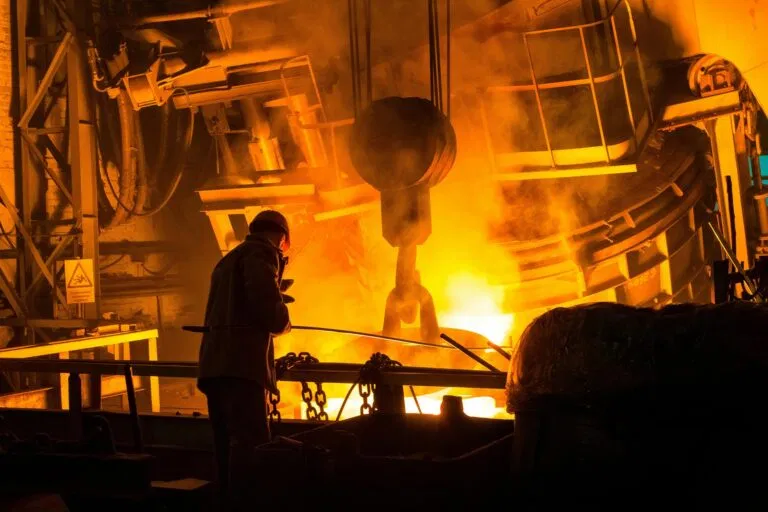
Steel rolling mill reheat furnaces
Start with a heat balance across charging, heating zones, furnace pressure and exhaust. Burner tuning, air-fuel control, improved door seals, zone instrumentation and heat recovery can reduce fuel use without rebuilding the complete furnace. Check scale loss and temperature uniformity alongside kWh/t or fuel per tonne: a low energy figure is not a win if it increases rejects or slows the mill.
Prioritize burner or refractory work where condition assessments support it. A reported 31% reheat-furnace energy reduction is a useful benchmark for target-setting, not a promise for every steel rolling mill.
Heat treatment furnaces: controls, atmospheres and quench
For heat treatment furnaces, modernization must protect metallurgical outcomes as well as reduce energy. Consider:
- Replace unsupported controls and add calibrated temperature and atmosphere measurement.
- Upgrade recipes, alarms, safety interlocks and traceable batch records.
- Assess atmosphere generation, sealing and circulation against product specifications.
- Improve quench agitation, temperature control, filtration and heat rejection where these limit repeatability.
Set acceptance criteria around uniformity, atmosphere, hardness or other customer requirements, then measure energy per tonne or batch. Continental Furnaces’ heat treatment furnace solutions can be configured around the application.

Aluminum melting and melting furnaces for steel
For an aluminum melting furnace, economics are strongly affected by melt loss, dross, charge mix and specific energy consumption. A DOE benchmark for wet-hearth reverberatory gas furnaces gives a broad range of 1,200–1,500 Btu/lb, averaging about 1,350 Btu/lb, approximately 3,140 kWh/t on a gross melt-fuel basis. This is a reference point, not a directly comparable plant target: charge temperature, alloy, furnace type and energy accounting all matter.
Audit door leakage, burner control, bath coverage, holding practice and charging sequence. Track both energy per tonne tapped and metal yield; reducing energy while increasing oxidation or dross can undermine profitability. For a melting furnace for steel, use a separate process baseline and evaluate refractory, burner or power-system condition, capacity and melt quality before choosing a rebuild. Do not transfer aluminum energy benchmarks to steel.

Metal recycling furnace conversions
A metal recycling furnace designed around a narrow, clean charge may struggle with higher scrap fractions. Before increasing recycled or mixed-scrap charging, assess contamination, moisture, charge density, feed handling, fumes, combustion stability and slag or dross removal. Modifications to burners, charging systems, seals, controls and exhaust treatment may enable a wider charge window. Measure yield, energy per tonne and emissions together; a cheaper feedstock is not advantageous if losses or downtime erase its value.
Hot dip galvanizing plant upgrades
In a hot dip galvanizing plant, inspect the zinc pot or kettle, heating system, insulation, temperature control and corrosion condition. Review pre-treatment heating and process stability as well as the zinc bath. Better sensing, control and maintenance can reduce temperature swings and improve consistency; however, a kettle in poor structural condition is a replacement-risk issue, not simply a controls project. See Continental Furnaces’ hot dip galvanizing plant solutions.
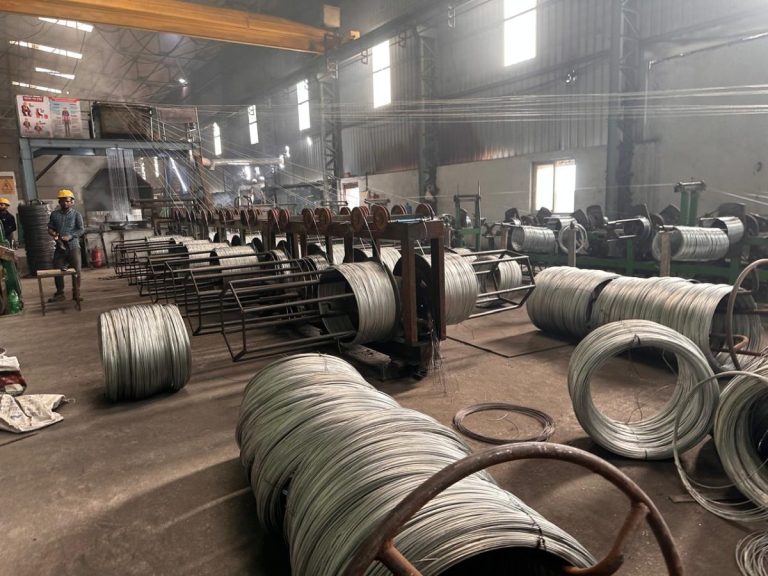
Wire and cable continuous annealing lines
For the wire and cable industry, line speed, atmosphere quality and repeatable annealing are central. Modernize tension and speed control, temperature measurement, sealing and burner or electrical-zone control as an integrated system. Confirm that upgraded zones match actual wire sizes, alloys and production schedules; avoid paying for capacity beyond the line’s downstream capability.
Furnace spare parts and obsolescence
Treat furnace spare parts as part of the modernization scope. Build a critical-spares register covering burners, flame safeguards, sensors, valves, drives, PLCs, refractory shapes and proprietary components. Identify single-source items and realistic delivery times, then agree on stocked spares, interchangeability and documentation before shutdown. Replacing obsolete controls without a verified migration plan can create new integration risks.
Four-phase brownfield roadmap
- Phase 1: Assessment and Thermal Audit, 2–3 weeks. Gather 12 months of production and energy data; inspect refractory and structure; log temperatures, fuel, oxygen and downtime. Deliverables: baseline, condition report, safety/compliance gap list and shortlist of loss sources.
- Phase 2: Prioritization and Engineering, 3–6 weeks. Compare no/low-capex actions, staged retrofit and replacement against throughput, product mix and downstream bottlenecks. Deliverables: concept design, budget range, savings model, risk register and measurable acceptance criteria.
- Phase 3: Execution and Shutdown Planning, typically 12–36 weeks lead time for a retrofit scope. Confirm interfaces, procurement, contractor responsibilities, permits and commissioning sequence. Plan work around refractory cooling, access and production commitments. Deliverables: approved drawings, shutdown schedule, inspection/test plan and critical-spares package. Validate the actual outage window by scope; many retrofits require 7–42 days.
- Phase 4: Verification and Continuous Optimization, 2–8 weeks after restart. Commission safeguards, tune combustion and stabilize recipes. Compare normalized fuel per tonne, yield, throughput, quality and emissions with baseline. Deliverables: acceptance report, operator training, updated maintenance plan and follow-up optimization actions.
Capex approval checklist
Take this checklist into the approval meeting:
- Remaining refractory campaign life, structural condition and inspection evidence
- Baseline energy, yield, throughput, quality and emissions data
- Retrofit, rebuild and replacement costs with outage and lost-production costs
- Payback and ROI sensitivity to energy prices, utilization and scrap mix
- Downstream bottlenecks and the value of any added furnace capacity
- Controls integration, safety validation, spares and vendor lead-time risks
- Acceptance tests with agreed measurement boundaries and performance targets
- Financing, approval-cycle timing and contingency for data gaps or shutdown slippage
The decision is rarely risk-free. Older furnaces often lack reliable drawings or energy records; new controls must integrate with legacy systems; planned shutdowns can overrun; and financing approvals may not match supplier lead times. A staged approach lowers initial exposure, but only when interfaces, outage plans and performance tests are engineered in advance.
Continental Furnaces brings 35+ years as an industrial furnace manufacturer, with thermal audits, customized engineering, ISO-certified quality and responsive service support. Every modernization scope is engineered around the client’s specific industry and product mix. An enduring partnership from assessment through commissioning and lifecycle support.
Request a thermal audit or modernization consultation to establish your baseline, compare rebuild-versus-replace scenarios and build a defensible investment case for sustained competitive advantage.