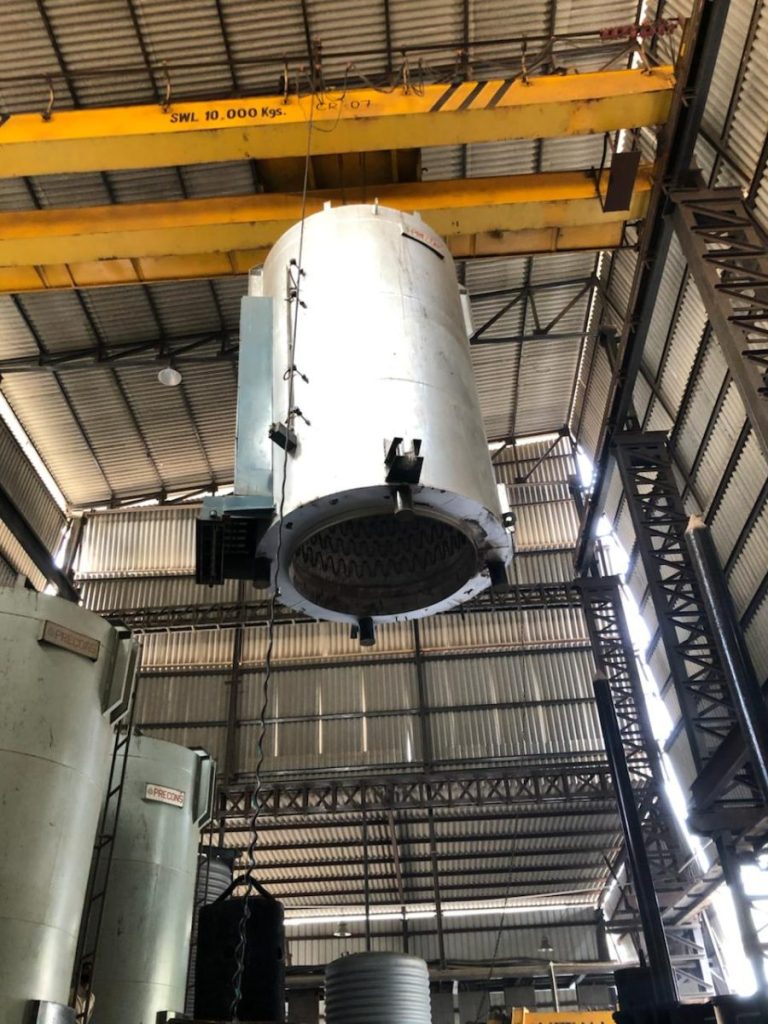
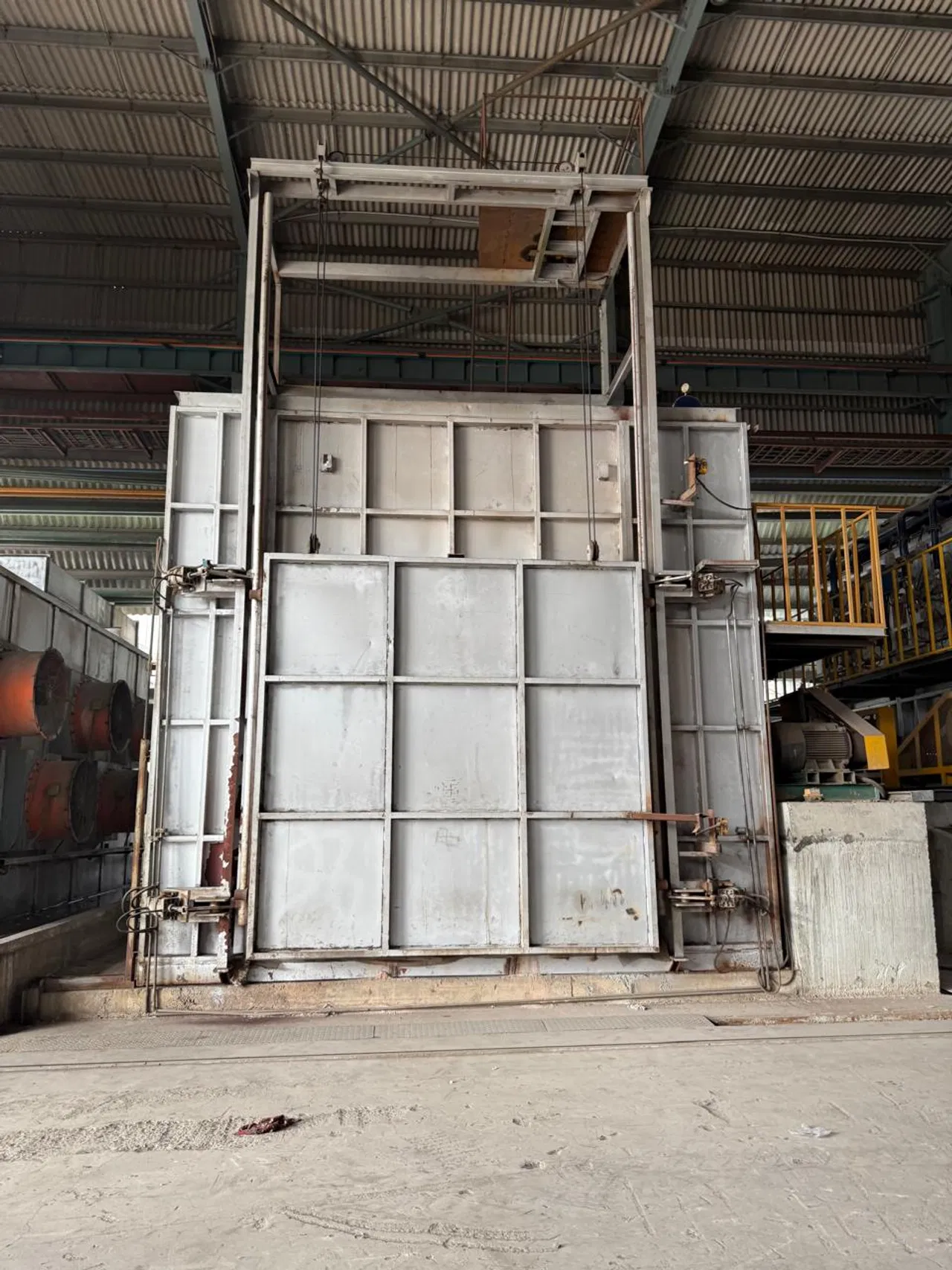
For plant owners, the decision to retrofit or replace an industrial furnace is not a simple maintenance question. It is a capital-allocation decision that affects energy cost, production yield, regulatory compliance, product quality, and long-term competitiveness.
In 2026, a well-engineered retrofit can extend useful furnace life by 10–20 years, reduce energy consumption by approximately 10–30%, and deliver a typical payback period of 2–4 years, depending on furnace condition, operating hours, fuel prices, and retrofit scope.
However, retrofit is not always the correct answer. The right decision begins with a disciplined assessment of the existing thermal processing equipment.
When an Existing Furnace Is a Strong Retrofit Candidate
A furnace is generally a retrofit candidate when its primary structure remains sound but its performance has deteriorated. The following warning signs justify an engineering audit:
- Refractory wear: Cracking, spalling, hot spots, shell distortion, or excessive heat loss from the lining.
- Burner obsolescence: Poor flame stability, high excess air, rising emissions, unavailable components, or inefficient fuel combustion.
- Aging controls: Obsolete PLCs, unsupported HMIs, unreliable thermocouples, manual data recording, and inadequate safety interlocks.
- Thermal efficiency drift: Longer heat-up times, uneven temperature distribution, increased fuel consumption, and frequent overheating.
- High energy per tonne: Specific energy consumption rising despite stable production volumes.
- Frequent downtime: Repeated burner failures, door problems, element failures, fan breakdowns, or emergency refractory repairs.
- Quality instability: Excessive scale, inconsistent hardness, coating defects, temperature deviations, or non-uniform metallurgical results.
- Spare-parts risk: Long lead times or discontinued components for critical drives, controllers, sensors, heating elements, or fuel-train equipment.
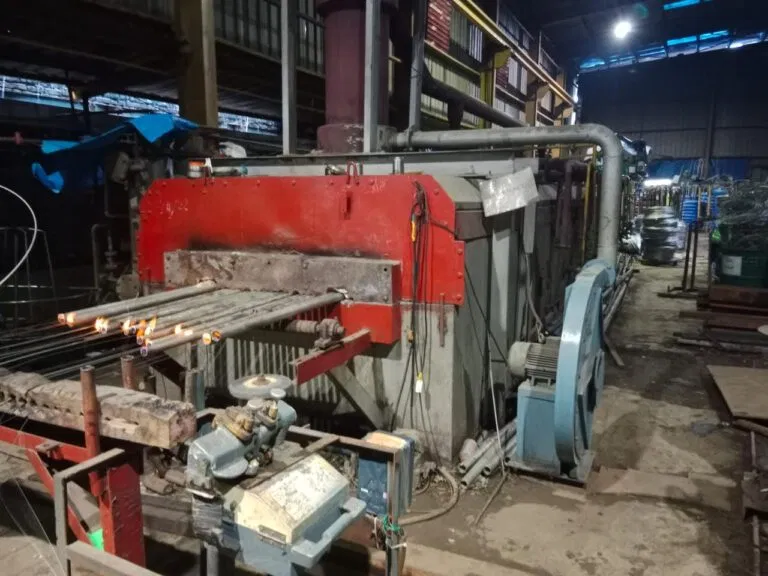
For a steel rolling mill, these problems can reduce reheating consistency and increase scale loss. In the wire and cable industry, temperature variation can directly affect mechanical properties and surface finish. In a galvanizing line, unstable furnace performance can compromise strip or wire preparation before zinc coating.
What Can Be Retrofitted?
A modern retrofit is a coordinated improvement programme, not simply the replacement of one burner or controller.
1. Refractory Relining and Insulation Upgrades
Refractory systems are often the most important life-limiting element in a furnace. A retrofit may include:
- Local refractory patching.
- Partial relining of high-wear zones.
- Complete furnace relining.
- Ceramic-fibre modules, insulating castables, and high-alumina materials.
- Improved expansion joints and anchoring.
- Shell insulation and external hot-spot correction.
- Door, flange, and inspection-port sealing.
A properly designed relining can reduce radiation and conduction losses by 10–20%, shorten heat-up time, and protect the furnace shell from progressive thermal damage.
2. Burner, Firing-System, and Fuel-Train Conversion
Combustion upgrades can deliver one of the fastest returns on investment. Typical improvements include:
- High-efficiency or low-NOx burners.
- Recuperative or regenerative burner systems.
- Oxygen-trim and air–fuel ratio control.
- Variable-frequency drives for combustion air fans.
- Modern flame scanners and ignition systems.
- Automatic fuel-train safety shut-off systems.
- Hydrogen-ready burner architecture, where technically and commercially viable.
Hydrogen readiness requires more than changing the burner tip. The fuel train, seals, piping, flame supervision, control logic, ventilation, materials, and safety assessment must be reviewed together. A staged approach may begin with natural gas optimisation while preserving the possibility of future low-carbon fuel integration.
3. PLC, SCADA, Instrumentation, and Industry 4.0 Monitoring
Control modernisation is essential where the original system is obsolete or unsupported. A current retrofit package can include:
- PLC and HMI replacement.
- SCADA integration.
- New thermocouples, pressure transmitters, flow meters, and oxygen sensors.
- Recipe management for multiple grades and treatment cycles.
- Alarm history and event logging.
- Remote performance monitoring.
- Energy-per-tonne dashboards.
- Predictive maintenance alerts for burners, fans, drives, and heating elements.
The objective is not merely automation. It is repeatable process control with measurable accountability. Operators should be able to track furnace temperature uniformity, fuel consumption, cycle time, downtime cause, and product quality from one production interface.

4. Waste-Heat Recovery and Recuperation
High-temperature exhaust gases represent recoverable value. Depending on flue-gas temperature, duty cycle, and available heat sinks, retrofit options include:
- Recuperators for combustion-air preheating.
- Regenerative burners.
- Heat exchangers for hot water or process air.
- Flue-gas duct upgrades.
- Improved stack dampers and draft control.
- Heat recovery for preheating charge material or adjacent process streams.
Integrated burner, insulation, controls, and heat-recovery projects commonly achieve 12–30% energy savings. The final result must be established through heat balance calculations and measured baseline data.
5. Handling, Doors, Seals, and Electrical Heating Components
Mechanical and electrical systems frequently determine actual availability. Retrofit scope may include:
- Charging and discharging automation.
- Roller tables, conveyors, baskets, and transfer mechanisms.
- Door lifting mechanisms and counterweights.
- Door seals and expansion joints.
- Recuperators and combustion-air fans.
- Electrical heating elements, contactors, thyristors, and busbars.
- Furnace hearths, trays, fixtures, and loading systems.
- Safety guarding and interlocked access points.
These improvements are relevant across heat treatment furnaces, an aluminum melting furnace, a melting furnace for steel, and continuous systems serving rolling mills or cable production.
What Cannot Be Retrofitted Economically?
Retrofit has a defined boundary. Replacement is normally more appropriate when:
- The furnace shell has severe distortion, corrosion, or structural cracking.
- The foundation cannot support the required thermal or mechanical load.
- The existing chamber cannot accommodate the required product size or throughput.
- Capacity must increase beyond the furnace’s physical ceiling.
- The process requires a fundamentally different atmosphere, pressure, or temperature range.
- Utilities such as gas, electricity, cooling water, or extraction are inadequate.
- Critical handling equipment cannot be safely integrated.
- The furnace cannot meet current emissions, safety, or environmental requirements.
- The total retrofit cost approaches the cost of a new furnace with a materially better output profile.
A structurally compromised furnace should not be preserved by adding modern controls. Safety and lifecycle economics take priority.
Retrofit vs. New-Build: Indicative 2026 Comparison
| Decision factor | Retrofit or life extension | New furnace or complete replacement |
|---|---|---|
| Indicative capital cost | 30–60% of new-equipment cost | 100% of new-equipment cost |
| Engineering and delivery lead time | Approximately 3–9 months | Approximately 9–18+ months |
| Typical production downtime | 1–6 weeks, depending on scope | 2–6+ months, including installation |
| Typical payback period | 2–4 years | 4–8 years |
| Energy-saving potential | 10–30% | 20–40%, depending on design |
| Additional service life | 10–20 years when structure is sound | 20–30+ years |
| Capacity ceiling | Limited by chamber, shell, and handling system | Designed for target and future capacity |
| Emissions improvement | Moderate to substantial | Highest potential |
| Production disruption | Lower | Higher |
| Process redesign flexibility | Moderate | High |
These values are indicative planning ranges, not guaranteed project outcomes. A site audit, heat balance, structural inspection, and total-cost-of-ownership model are essential before investment approval.
A Practical Retrofit Roadmap
Phase 1: Assessment and Planning
Establish the current baseline before selecting equipment. Review:
- Fuel or electrical consumption per tonne.
- Production volume and operating hours.
- Furnace temperature uniformity.
- Downtime by failure category.
- Refractory condition and shell temperature.
- Burner emissions and excess-air levels.
- Control-system obsolescence.
- Spare-parts availability.
- Product quality losses, scrap, and scale generation.
The assessment should produce a prioritised list of safety-critical, reliability-critical, and energy-saving interventions.
Phase 2: Engineering and Shutdown Design
Develop the retrofit around the plant’s production calendar. Define:
- Retrofit boundaries and interfaces.
- Long-lead components.
- Temporary production arrangements.
- Isolation, cooling, and dismantling procedures.
- Refractory curing and dry-out requirements.
- Electrical and control-system migration.
- Commissioning responsibilities.
- Acceptance criteria for temperature, output, emissions, and energy performance.
A planned shutdown is a controlled project. An emergency outage is an uncontrolled cost.
Phase 3: Installation, Commissioning, and Ramp-Up
Commissioning should proceed systematically:
- Mechanical inspection and alignment.
- Electrical and instrumentation testing.
- Safety-interlock verification.
- Burner light-off and fuel-train validation.
- Refractory dry-out and thermal profiling.
- Empty-furnace temperature mapping.
- Loaded trial production.
- Energy and throughput measurement.
- Operator training and documentation.
- Final performance acceptance.
The first production week should be treated as a controlled ramp-up, not as a return to normal operation.
Spare Parts and Lifecycle Service Are Part of the Business Case
A retrofit delivers value only when the upgraded system remains supportable. Plant owners should establish a critical-spares strategy covering:
- Burners and flame scanners.
- Thermocouples and sensors.
- PLC, HMI, and communication modules.
- Heating elements and electrical power components.
- Seals, door components, and refractory repair materials.
- Fan bearings, belts, dampers, and drives.
- Safety relays and fuel-train components.
Continental Furnaces provides furnace spares and accessories designed to support reliability, timely replacement, and reduced downtime across industrial furnace systems.
Retrofit as a Decarbonisation and Electrification Strategy
Retrofits support decarbonisation in three practical ways:
- Immediate reduction: Better insulation, combustion control, and heat recovery reduce fuel consumption.
- Transition readiness: Hydrogen-ready burners, upgraded controls, and improved instrumentation prepare the plant for lower-carbon fuels.
- Electrification readiness: New power-management systems, heating elements, transformers, busbars, and control architecture create a foundation for future electric heating where grid capacity permits.
For an aluminum melting furnace, metal recycling furnace, or galvanizing line, the best decarbonisation plan is usually staged. Reduce avoidable losses first, then evaluate fuel conversion or electrification against grid availability, product requirements, and total operating cost.
The Continental Furnaces Partnership
Continental Furnaces brings 35+ years of thermal engineering expertise, custom design capability, ISO-certified quality practices, and prompt service to furnace modernisation projects. Our scope covers heat treatment furnaces, melting furnaces and recycling projects, hot dip galvanizing plants, pickling plants, controls, combustion systems, and lifecycle support.
The correct question is not, “How old is the furnace?” The correct question is, “Which parts of the furnace still provide a sound production platform, and which parts are now limiting profitability?”
Begin with a technical assessment, compare the retrofit case against a new-build total-cost model, and define a shutdown plan before making a capital decision. Consult Continental Furnaces or contact our engineering team to turn an ageing furnace into a safer, more efficient, and more competitive production asset.